Ticiano


Michelin Plate · Macarfi 7.5 Food Rating
Our verdict
A 2025 Michelin Plate recipient in a converted stable building in rural Palencia, Ticiano serves a straightforward à la carte of traditional Castilian cooking, with meat dishes anchoring the menu. The rustic dining room, with its exposed wood ceiling, reflects the surrounding countryside. At the €€ price point, it represents the honest end of Spain's regional dining spectrum.

Pearl is the En Primeur Club membership app, where members save venues, book tables and use the concierge.
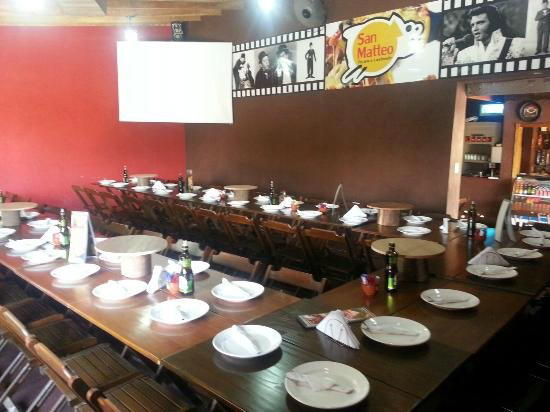
Old Stone, Serious Meat: Dining in Rural Palencia
Rural Castile has a way of making the case for itself through architecture before a single dish arrives. In Villallano, a small village in the province of Palencia, the building that houses Ticiano was once a working stable. The conversion has kept the bones intact: stone walls, a wood-beamed ceiling on the first floor, and the kind of structural honesty that neither a renovation budget nor a design consultant can manufacture. Across Spain's interior, this category of repurposed agricultural building has become the natural home for traditional cooking, and Ticiano fits that pattern with precision. For context on how dining in Villallano compares more broadly, see our full Villallano restaurants guide.
The Castilian Larder and Why It Matters Here
The kitchen at Ticiano operates inside one of Spain's most clearly defined regional larders. Palencia and the wider Castilian plateau have long supplied the country with lamb, suckling pig, and beef raised on open pasture, and the à la carte menu here draws directly from that tradition. This is not cuisine that reinterprets its sources; it presents them. That distinction matters when understanding why a Michelin Plate in this context signals something different from the same recognition applied to a city tasting menu. The Michelin Plate, awarded in 2025, marks a kitchen executing its chosen register with consistency and skill, rather than one pushing form or technique. The reference set for Ticiano is not DiverXO in Madrid or Disfrutar in Barcelona, where progressive technique defines the proposition. It sits instead among the regional houses of inland Spain that treat sourcing and preparation as the primary discipline.
Meat is the column around which the menu is built. In Castile, that means lechazo (milk-fed lamb), cochinillo (suckling pig), and cuts of local beef that benefit from the altitude and the dry grazing conditions of the meseta. These animals reach the table after a short supply chain: the distances between producer, butcher, and kitchen in this part of Spain are measured in tens of kilometres rather than hundreds. That proximity shows in the product. Restaurants in this tradition do not need lengthy sourcing narratives because the sourcing is embedded in geography. The countryside outside Villallano is the explanation. Comparable cooking approaches rooted in regional sourcing can be found at Auga in Gijón and Auberge Grand'Maison in Mûr-de-Bretagne, each working within its own clearly bounded regional larder.
Traditional Cooking as a Critical Category
Spain's dining conversation tends to centre on its avant-garde achievements: the Basque laboratories, the Mediterranean creative houses, the tasting-menu formats that have defined the country's international reputation. Arzak in San Sebastián, Azurmendi in Larrabetzu, El Celler de Can Roca in Girona, Mugaritz in Errenteria, Quique Dacosta in Dénia, Martin Berasategui in Lasarte-Oria, Aponiente in El Puerto de Santa María, Ricard Camarena in València, and Atrio in Cáceres each operate at the far technical end of Spanish cuisine, with prix-fixe formats and price ranges that reflect that ambition. Ticiano operates at the other end of the spectrum entirely, and that is not a qualification: it is a description of function. The €€ price point and the à la carte format together signal a kitchen that measures success by the quality of the raw material and the faithfulness of preparation, not by the number of courses or the complexity of technique.
For the traveller passing through northern Castile, that distinction is useful. This is not a destination restaurant requiring advance planning on the scale of the houses listed above. In a category where reviews are often polarised by expectation mismatch, that score across a broad sample suggests the kitchen delivers what it promises.
The Room Itself
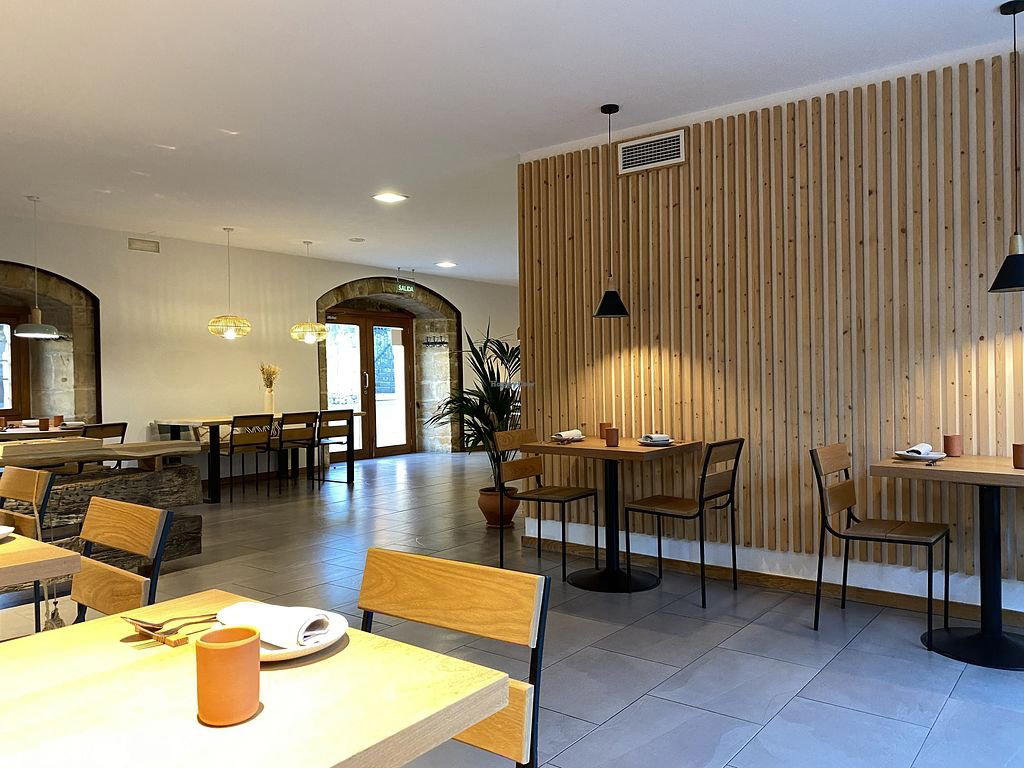
The stable conversion produces a dining room that does not require atmospheric engineering to function. Wood ceilings, stone construction, and the natural proportions of an agricultural building create a warmth that newer rural-themed restaurants spend considerable money trying to simulate. In a broader Spanish context, the instinct to preserve and repurpose rather than demolish and rebuild has produced some of the country's most coherent dining environments, and Villallano's example belongs in that lineage. The room rewards the à la carte format: this is not a space designed around the drama of a tasting menu reveal, but around the simple transaction of ordering what you want and eating it well.
Planning a Visit
Villallano sits in Palencia province in northern Castile, a region more commonly crossed than stopped in by travellers moving between Burgos and the mountain passes of the Cantabrian range. That relative obscurity keeps Ticiano within a local dining circuit rather than a tourist one, which is reflected in both the pricing and the register of the cooking. Phone and website details were not available at time of publication; the address is Calle de la Concepción, 34815 Villallano, Palencia. The €€ price range places this among the most accessible entries in Spain's Michelin-recognised dining. For broader accommodation and leisure options in the area, our Villallano hotels guide, bars guide, wineries guide, and experiences guide provide further reference points for planning time in the province.
Frequently asked questions
Is Ticiano a family-friendly restaurant?
The setting works in its favour here. A converted stone stable with a wood-ceiling dining room in a small Palencia village carries none of the formality that might unsettle a family visit. The à la carte format and focus on traditional meat dishes are the kind of straightforward, shareable cooking that suits mixed-age tables. The Michelin Plate recognition reflects kitchen quality, not white-tablecloth formality.
What's the vibe at Ticiano?
Rural Castile without affectation. The dining room occupies former stables in Villallano, and the conversion keeps the original architecture intact: stone walls, wood ceilings, natural materials doing the work that other restaurants leave to lighting designers. It reads as a working local institution rather than a destination restaurant retrofitted for tourism.
Is Ticiano award-winning?
Ticiano has received recognition including: Occupying former stables in this small village, Ticiano boasts an attractive, rustic dining room with a wood ceiling on the first floor, where the à la carte of traditional cooking stands out for its array of meat dishes.; Michelin Plate (2….
What's the best thing to order at Ticiano?
The à la carte leans heavily on meat, which is where the kitchen's identity sits according to Michelin's 2025 Plate listing. Palencia province sits within the Castilian plateau, one of Spain's primary sources of roast lamb and suckling pig, so the meat programme has genuine regional grounding.
What's the price range at Ticiano?
Pricing at Ticiano is listed as €€.
What's the address for Ticiano?
Ticiano is located at Calle de la Concepción, 34815 Villallano, Palencia, Spain, Villallano.
| Venue | Cuisine | Price | Awards | Notes |
|---|---|---|---|---|
| TicianoThis venue (the venue you are viewing) | Traditional Spanish | Not listed | Michelin Plate · Macarfi 7.5 Food Rating | Not listed |
| Aponiente | Avant-Garde Marine Seafood | $200–300 | 3 Michelin Stars · World's 50 Best #84 | Progressive - Seafood, Creative |
| Arzak | Contemporary Basque Fine Dining | $300–500 | 3 Michelin Stars · World's 50 Best #31 | Modern Basque, Creative |
| DiverXO | Avant-Garde Spanish Tasting Menu | $300–500 | 3 Michelin Stars · World's 50 Best #4 | Progressive - Asian, Creative |
| El Celler de Can Roca | Creative Catalan Fine Dining | $300–500 | 3 Michelin Stars · World's 50 Best #2 | Progressive Spanish, Creative |
| Quique Dacosta | Avant-Garde Spanish Fine Dining | $300–500 | 3 Michelin Stars · World's 50 Best #65 | Creative |
Recognition history
Dated appearances from independent guides and award organizations, with the underlying list record or original source where available.
Michelin Plate
Michelin
Macarfi 7.5 Food Rating
Macarfi
Full recognition history (4 entries)
Michelin Plate
Michelin
Michelin Plate
Michelin
Continue exploring
More in Villallano
Restaurants in Villallano
All restaurants in Villallano →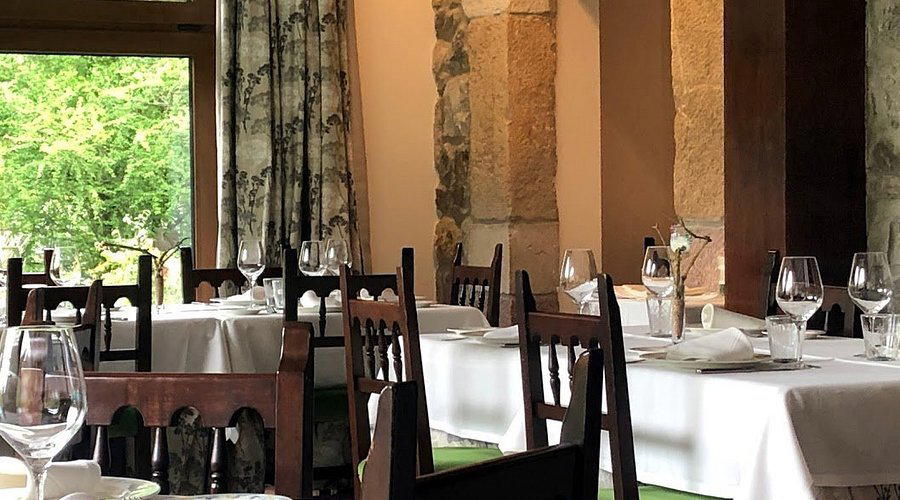
Details
- Rustic
- Cozy
- Intimate
- Family
- Business Dinner
- Historic Building
- A La Carte
- Vegetarian Friendly
- Vegan Options
- Gluten Free Options
Current opening hours
- Monday
- Closed
- Tuesday
- Closed
- Wednesday
- 9 AM–5 PM
- Thursday
- 9 AM–5 PM
- Friday
- 10 AM–5 PM, 8–10:30 PM
- Saturday
- 10 AM–5 PM, 8–10:30 PM
- Sunday
- 10 AM–5 PM
Hours can change for holidays and private events. Hours as of .
Attractive rustic dining room with wood ceiling; some guests note noise issues while others praise the pleasant atmosphere.