Theo Randall
Our verdict
Theo Randall at the InterContinental London Park Lane sits within a tier of London Italian dining where classical technique and seasonal sourcing carry more weight than novelty. The kitchen's long-held reputation rests on hand-rolled pasta and wood-fired cooking traditions rooted in the River Café school. For Mayfair, it reads as a confident, room-anchored Italian in a neighbourhood better known for French and Modern European fine dining.

Pearl is the En Primeur Club membership app, where members save venues, book tables and use the concierge.
The menu
What to order
- Amalfi lemon tart
- Ravioli with butternut squash
- Pappardelle ragu
London's Italian Fine Dining Tier and Where Theo Randall Sits
If you eat one Italian meal in London at the fine dining level, Theo Randall at the InterContinental London Park Lane makes a strong case for being that meal. Not because the address is prestigious, though Park Lane carries its own gravitational pull, but because the kitchen operates from a culinary lineage that London's Italian scene has rarely matched in depth or consistency. The River Café, where the chef built his reputation over more than a decade and earned a Michelin star as head chef, remains one of the most influential Italian kitchens Britain has produced. That formation shows in everything from how the pasta is handled to how the wood-fired oven is used as a primary cooking instrument rather than an accent feature.
London's premium Italian tier is smaller and less discussed than its French or Modern British counterpart. While restaurants like CORE by Clare Smyth, Sketch, The Lecture Room and Library, and The Ledbury dominate the conversation around London's upper dining bracket, serious Italian cooking, rooted in regional specificity rather than crowd-pleasing familiarity, occupies a narrower niche. Theo Randall has held that niche for years, sustained by a format that resists seasonal reinvention for its own sake and instead deepens its command of a defined set of techniques.
The Arc of the Meal: From Antipasti to the Wood Oven
The tasting progression at this level of Italian cooking has its own internal logic, and Theo Randall's kitchen follows it with discipline. Italian fine dining, when done well, builds through restraint: an antipasti course that establishes freshness and sourcing intent, a pasta course that demonstrates technical precision, and a main that centres the fire-cooked protein around which everything else is organised. The wood-fired oven defines the meal's architecture here in a way that differentiates this kitchen from London's broader Italian offer.
The antipasti register should be read as a signal-course. In River Café-influenced kitchens, the quality of olive oil, the choice of aged cheeses, the sourcing of cured meats, and the handling of seasonal vegetables communicate the kitchen's commitments before the technically demanding courses arrive. A poorly chosen anchovy or an under-seasoned bruschetta would be a tell; this kitchen has not built its longevity on those shortcuts.
Pasta is where the River Café tradition has always been most visible and most demanding. Hand-rolled forms, pappardelle, tagliatelle, the occasional stuffed pasta varying by season, require a consistency of touch that separates kitchens trained in Italian classical method from those approximating it. At the fine dining level comparable to what you find at Dinner by Heston Blumenthal or Restaurant Gordon Ramsay, the pasta course carries the weight of the kitchen's identity. Here, it is expected to be the meal's fulcrum, not a bridge between courses.
The secondi, built around the wood-fired oven, tend toward whole fish and quality cuts treated with the Italian preference for simplicity at the point of the protein itself. The oven introduces char and smoke as structural elements rather than flavour crutches, a distinction that matters and one that the leading wood-fired Italian kitchens in Europe, from Tuscany to Rome, have long understood. In a London context, this technique is relatively rare at this price and discipline level, which explains part of the restaurant's continued draw.
The Room: Mayfair Hotel Dining and Its Particular Dynamic
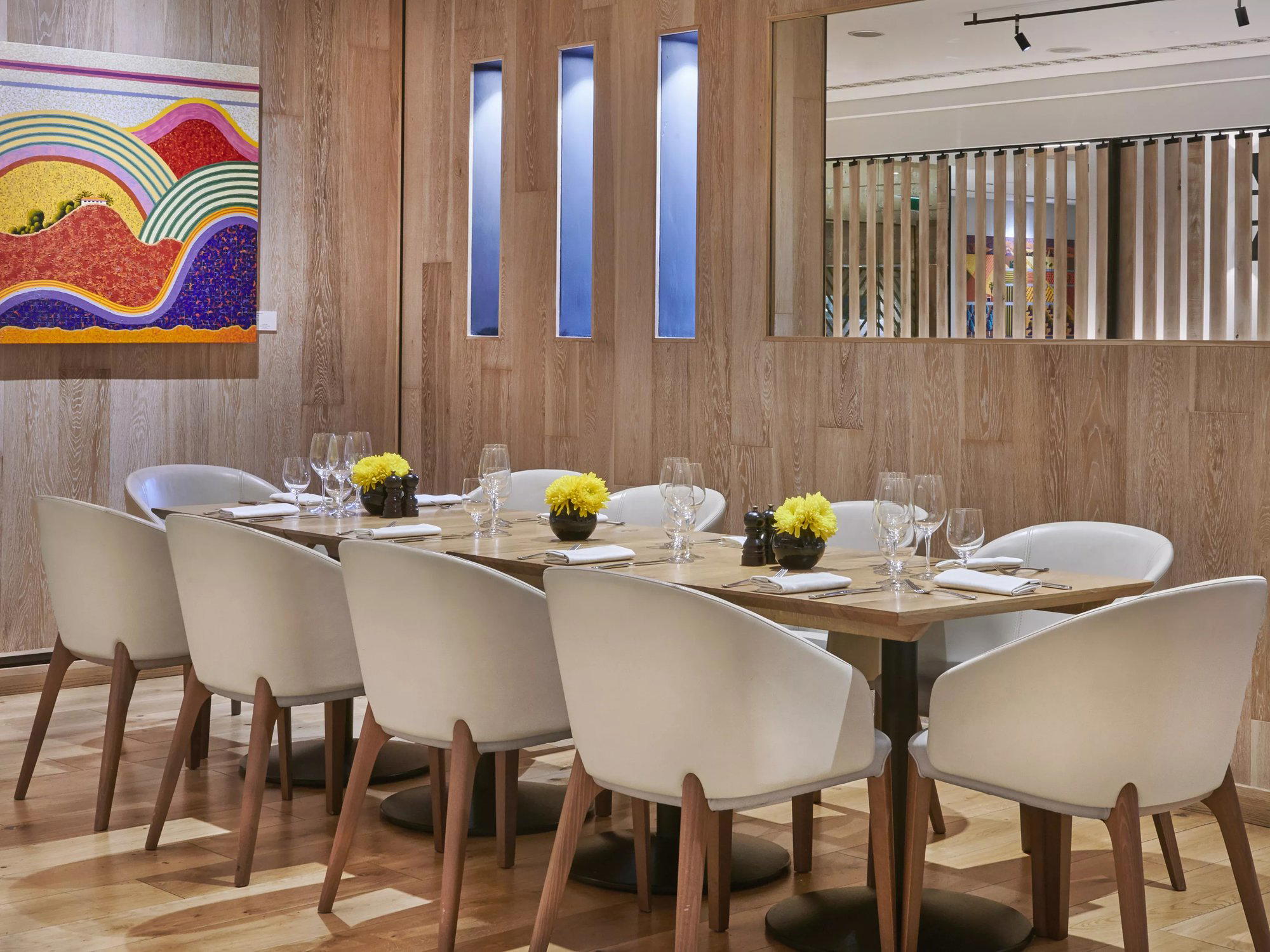
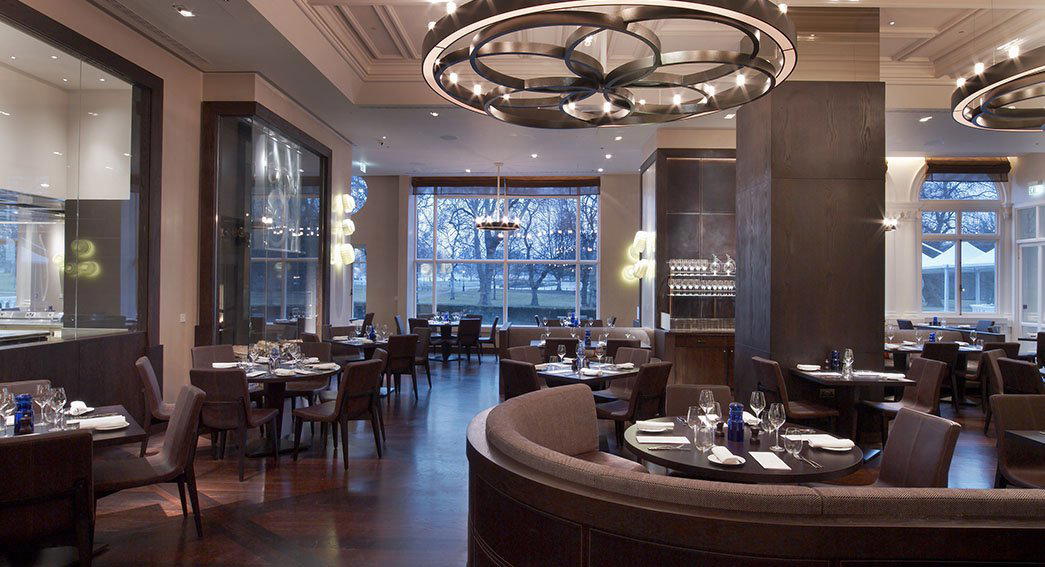
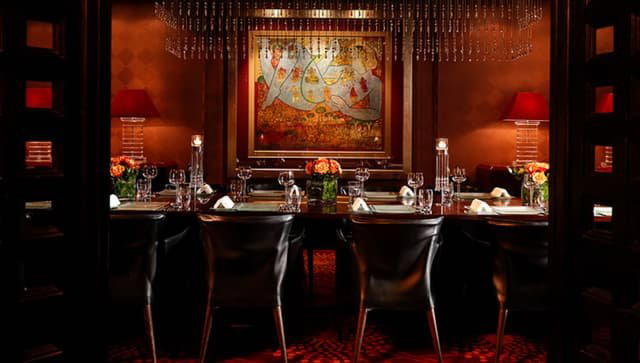
Hotel restaurants in Mayfair occupy a specific social function. They absorb a mix of in-house guests, business lunches, and regulars who value the consistency and formality that freestanding neighbourhood restaurants often cannot sustain. The InterContinental Park Lane setting positions Theo Randall within that dynamic: the room is more formal than most of London's new-wave Italian openings, the service register is closer to classical European fine dining, and the occasion-meal framing is deliberate.
This is worth noting for readers deciding between Theo Randall and a more casual or contemporary Italian elsewhere in the city. The experience is not designed around the loose, convivial energy of a Notting Hill trattoria or a Soho wine-bar-adjacent pasta counter. It is a sit-down, multi-course, occasion-calibrated meal in a Mayfair hotel dining room. For certain contexts, a significant business dinner, a formal celebration, a visitor who wants London's Italian tier on its own terms, this is precisely the right format. For others seeking a more spontaneous or counter-seated experience, the comparison set shifts.
Comparable hotel-restaurant formats in the UK market include Le Manoir aux Quat' Saisons in Great Milton and, at the destination dining end, Gidleigh Park in Chagford. Both operate within the same framework of hotel-anchored formal dining with a kitchen identity strong enough to draw non-resident guests. Within London itself, Dinner by Heston Blumenthal at the Mandarin Oriental sits in the same structural category, though in a different culinary tradition entirely.
Reputation, Lineage, and Longevity
London's dining scene has a habit of moving quickly past restaurants that do not generate constant press. Theo Randall has operated against that tendency by building on verifiable culinary credentials rather than novelty cycles. The River Café Michelin star, earned under conditions where the kitchen's cooking was the criterion rather than the brand, gives this operation a foundation that many newer London Italian openings lack. Longevity in the Mayfair hotel dining format is itself a signal: the attrition rate for hotel restaurants that fail to develop an identity beyond their address is significant, and Theo Randall has maintained a distinct kitchen identity across years of operation.
For readers who want to map London's broader premium dining terrain, the EP Club guides to London restaurants, London hotels, London bars, and London experiences provide full coverage. Outside London, the country's most decorated kitchens include The Fat Duck in Bray, L'Enclume in Cartmel, Moor Hall in Aughton, and Hand and Flowers in Marlow. Internationally, for readers contextualising the Italian fine dining tradition against other world-class European kitchens, Le Bernardin in New York City and Atomix represent the depth of commitment to a single culinary tradition that Theo Randall's kitchen mirrors in its own category. is also available for those building a full itinerary around the wine programme.
Planning Your Visit
Location: Park Lane, London W1J 7QY, within the InterContinental London Park Lane. Reservations: Advance booking is advised for dinner and weekend lunch; the hotel format means walk-ins are occasionally possible at lunch on quieter weekdays, but the kitchen's reputation means availability cannot be assumed. Format: Multi-course Italian fine dining with à la carte and set menu options typical of this tier. Occasion: Suited to formal business dining, celebrations, and visitors seeking London Italian at the classical end of the spectrum. Nearby: Hyde Park Corner and Green Park stations are both within walking distance, making this one of the more accessible Mayfair hotel dining rooms by public transport.
Frequently asked questions
What do regulars order at Theo Randall?
Can I walk in to Theo Randall?
What has Theo Randall built its reputation on?
How does Theo Randall compare to other high-end Italian dining in London?
Style and Standing
Comparable venues nearby, for context on price, style, and recognition.
| Venue | Cuisine | Price | Awards | Notes |
|---|---|---|---|---|
| Theo RandallThis venue (the venue you are viewing) | Authentic Regional Italian | $100–150 | Not listed | Not listed |
| Sette by Scarpetta | Modern Italian from Scarpetta | $50–100 | Not listed | Knightsbridge |
| Caffè Concerto Knightsbridge | Italian Patisserie & Cafe | $20–30 | Not listed | Knightsbridge |
| VyTA | Modern Italian | Not listed | Not listed | Covent Garden |
| O Ver Borough | Authentic Neapolitan Italian with Wood-Fired Pizza | $30–50 | Not listed | Bankside |
| Carbone | Upscale Italian‑American supper club | $150–200 | Prix Versailles World Selection · Wine Spectator Best of Award of Excellence | Mayfair |
Continue exploring
More in London
Restaurants in London
All restaurants in London →
Bars in London
All bars in London →

Details
- Elegant
- Sophisticated
- Romantic
- Date Night
- Special Occasion
- Business Dinner
- Hotel Restaurant
- Open Kitchen
- Extensive Wine List
- A La Carte
- Tasting Menu
- Set Menu
- Wine
- Vegetarian Friendly
Current opening hours
- Monday
- Closed
- Tuesday
- 12–2 PM, 6–10 PM
- Wednesday
- 12–2 PM, 6–10 PM
- Thursday
- 12–2 PM, 6–10 PM
- Friday
- 12–2 PM, 6–10 PM
- Saturday
- 12:30–2 PM, 6–10 PM
- Sunday
- 12:30–5 PM
Hours can change for holidays and private events. Hours as of .
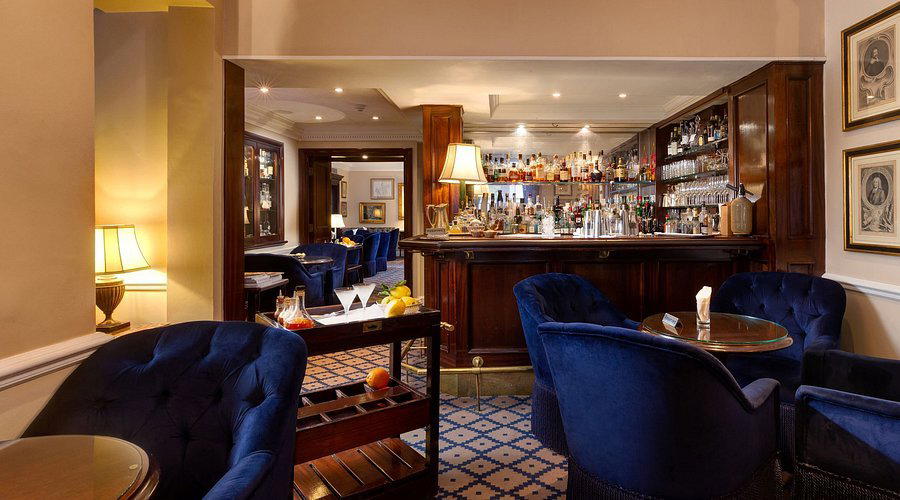
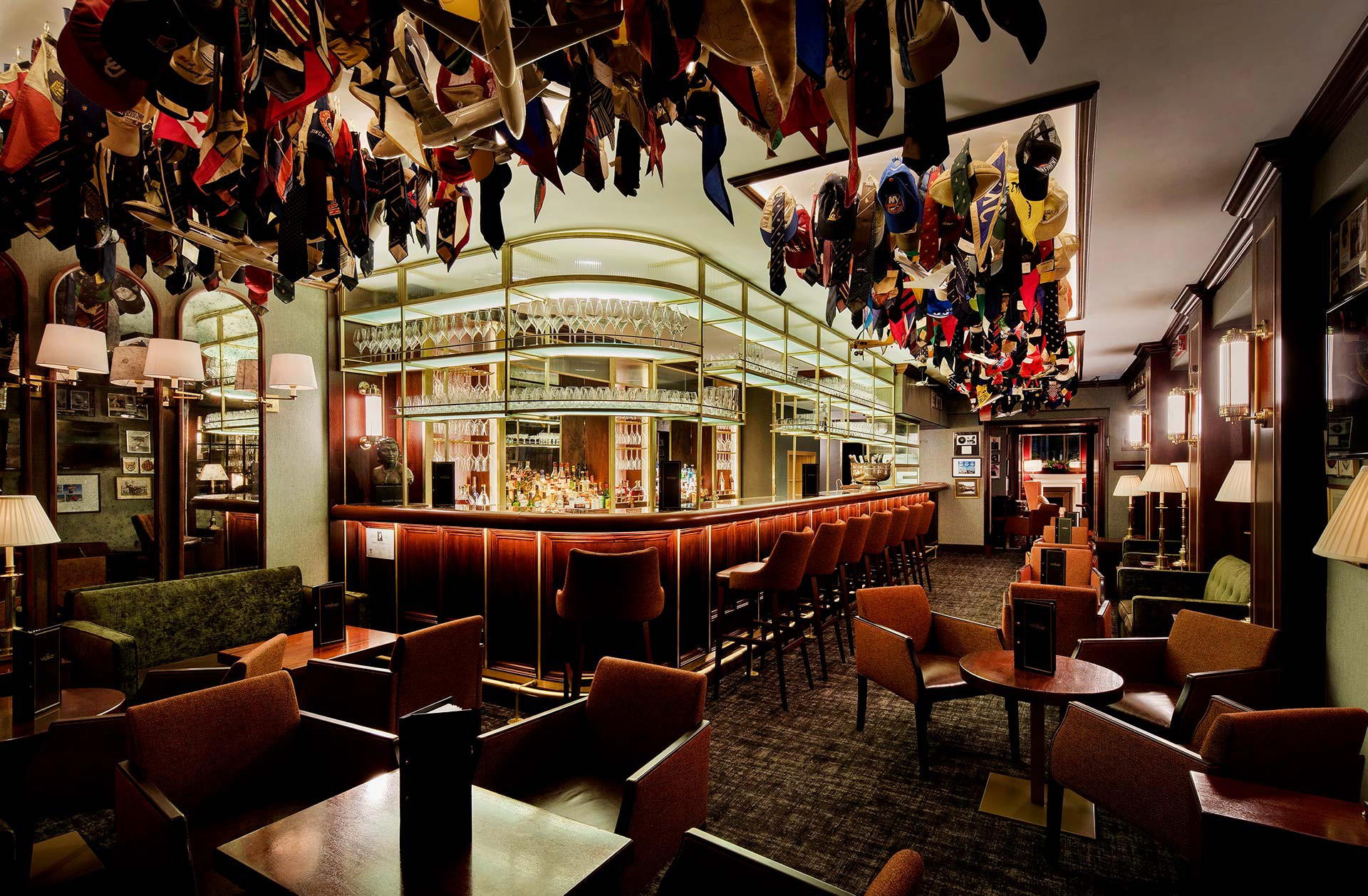
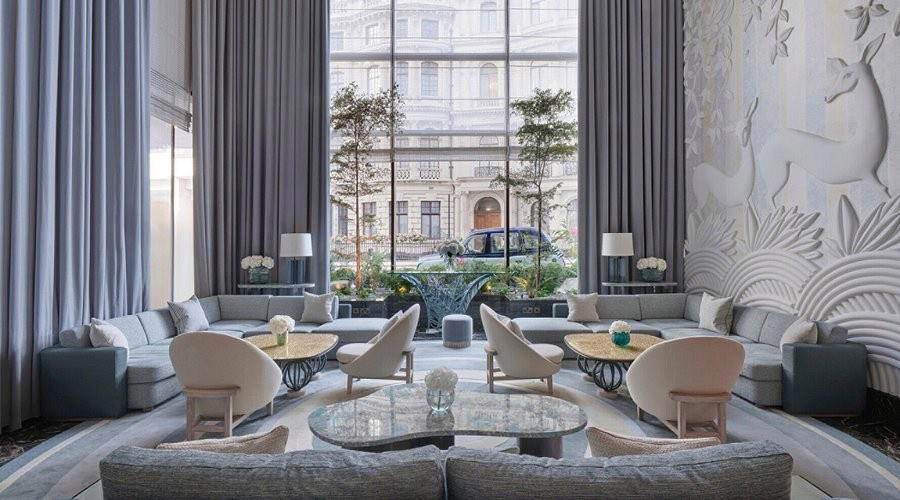
Elegant and refined dining room with warm, welcoming atmosphere, lively yet allowing private conversation, enhanced by attentive service.