Trinity






1 Michelin Star · Star Wine List · AA Rosettes 3 Rosettes
Our verdict
Open since 2006 near Clapham Common, Trinity holds a Michelin star and an Opinionated About Dining top-500 ranking for its technically precise Modern British cooking under Adam Byatt and head chef Harry Kirkpatrick. The restaurant has expanded across several formats — a ground-floor dining room, a first-floor space, a chef's-counter experience called Tableside, and an alfresco kitchen — while sustaining the neighbourhood focus that defines its identity.

Pearl is the En Primeur Club membership app — saves, bookings, and concierge access live there. Same editors, same standards.
- Address
- 4 The Polygon, London SW4 0JG, United Kingdom
- Phone
- +44 20 7622 1199
- Hours
- Daily 12:15–2 PM, 6–8:30 PM
- Website
- trinityrestaurant.co.uk
- Directions
- Get directions
- Booking
- Book on SevenRooms
The menu
What to order
- Warm semi-smoked salmon
- Beef tartare
A G&T; Made with House-Distilled Gin, and Then the Real Work Begins
The house-distilled gin served at the start of a meal at Trinity is a small signal of how the kitchen thinks: take something familiar, apply deliberate craft, and let the result speak without fanfare. It is an apt introduction to the kind of Modern British cooking that has kept this Clapham address in the conversation since 2006 — not through spectacle or provocation, but through accumulated precision.
Trinity sits on The Polygon, a quiet residential precinct at the eastern end of Clapham Common, and the address itself says something about the restaurant's position. This is not a destination that trades on footfall or proximity to a hotel corridor. Its audience comes specifically, and it has held a Michelin star (confirmed 2024) alongside an Opinionated About Dining Casual Europe ranking of 429th in 2025 (it was 287th the year prior), which places it inside a competitive tier of London fine dining that includes peer addresses with far more central postcodes.
What Modern British Looks Like When It Stops Performing
The tension at the centre of Modern British cuisine — between a tradition rooted in classical technique and a contemporary instinct to interrogate every assumption, is rarely resolved cleanly. Some kitchens lean into assertiveness, using British produce as raw material for a kind of culinary theatre. Trinity's approach runs in a different direction. The technique here is often content to render itself invisible, serving the ingredient rather than announcing the cook.
That restraint shows in documented dishes: raw, lightly salted prawns with blood-orange segments over a concentrated bouillabaisse jelly; yellowfin tuna briefly seared and set on avocado purée with cold XO consommé and kohlrabi; a sardine bolognaise dumpling noted for seasoning precision rather than conceptual novelty. The dessert register applies the same logic, Clapham honey soufflé with beeswax ice cream, or gariguette strawberry and mascarpone savarin, bringing technical refinement to forms that don't require reinvention.
The kitchen operates under head chef Harry Kirkpatrick, with Adam Byatt as the presiding figure. Byatt's cooking, critics note, has developed at an oblique angle to the more overtly performative end of London fine dining. That alignment matters when comparing Trinity to the upper end of the Modern British field: addresses like CORE by Clare Smyth work in the same price register but operate with higher Michelin recognition and a more prominent central profile. Trinity's identity is deliberately local in scale, even if the cooking places it in a national conversation.
For more from the Modern British category across the country, the EP Club guides to The Fat Duck in Bray, L'Enclume in Cartmel, Moor Hall in Aughton, Gidleigh Park in Chagford, Hand and Flowers in Marlow, Le Manoir aux Quat' Saisons in Great Milton, Winteringham Fields in Winteringham, and House of Tides in Newcastle Upon Tyne cover the field regionally.
The Room, and the Rooms
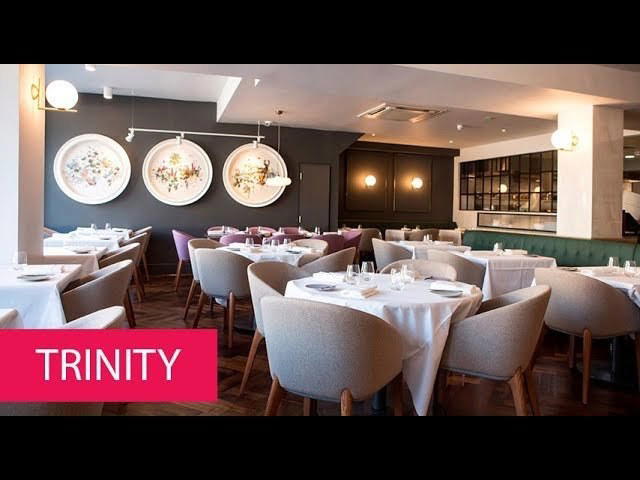
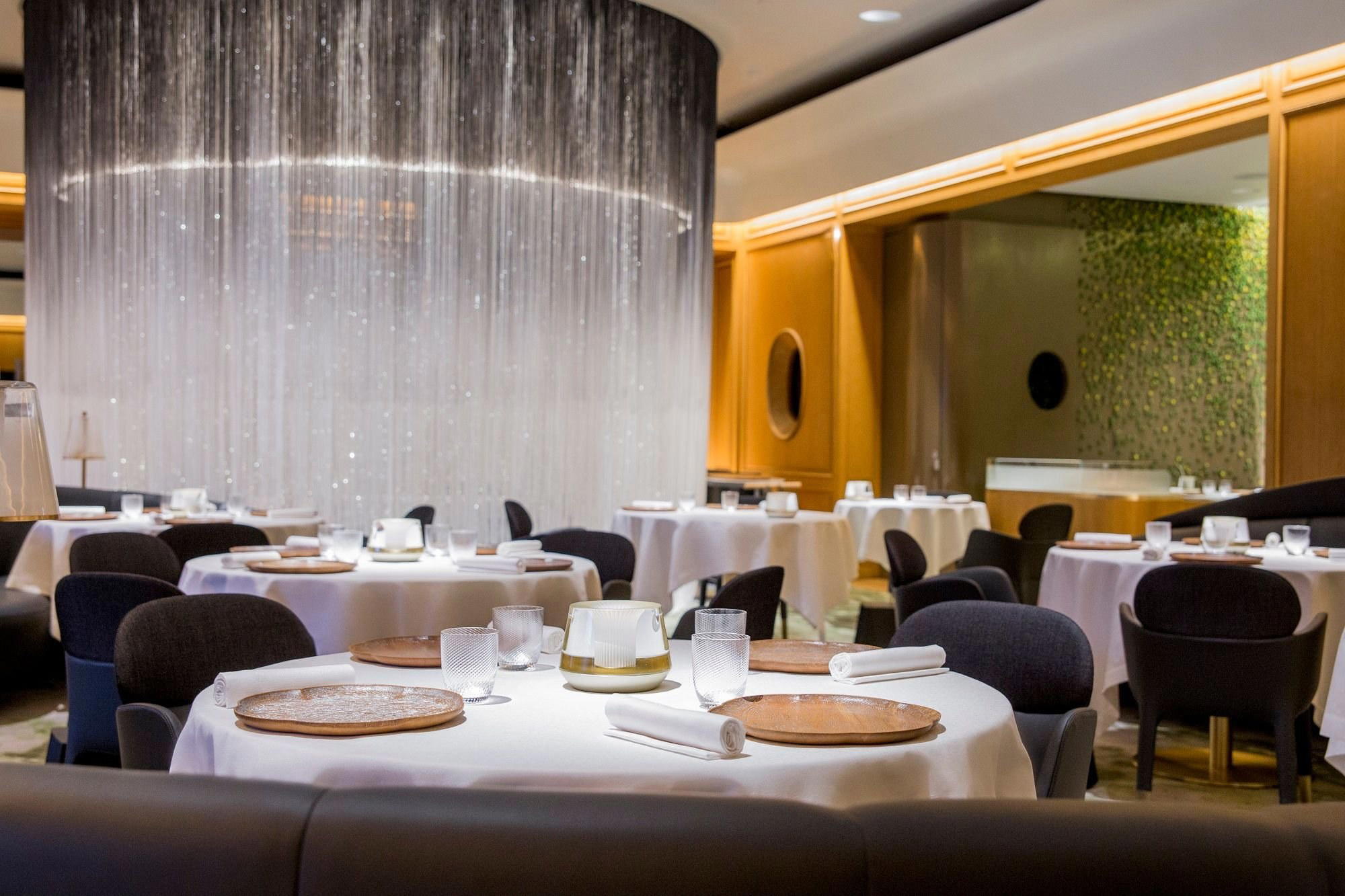
What distinguishes Trinity's physical identity from most London fine-dining addresses is the accumulation of formats under one roof. The ground floor operates as the primary dining room, with the open kitchen giving the space a brasserie energy that reviewers consistently describe as lively rather than hushed. The first-floor room sits among the treetops and offers a different register. Tableside is a chef's-counter experience with bespoke artworks built into the format. Most recently, Outside, an alfresco space with a mobile kitchen, was added to the rear.
This layering of formats is a studied response to how neighbourhood fine dining has evolved. The single-register destination, formal dining room, prix fixe, full evening commitment, has lost ground across London to venues that offer multiple entry points without diluting the kitchen's ambition. Trinity's expansion into counter dining and outdoor formats follows the pattern visible at addresses like Kitchen Table and Evelyn's Table, where the counter format creates a different (and often more immersive) relationship between kitchen and guest.
Across nearly two decades at this address, the restaurant has absorbed the physical and conceptual changes that would have reshaped most kitchens beyond recognition, while retaining a consistency of approach that reviewers describe as high standards maintained year after year. That kind of institutional continuity is less common in London than the industry's mythology suggests.
The Wine Program
Around 450 bins with an emphasis on mature clarets and Burgundies form the backbone of a list that has built depth steadily since 2006. By-the-glass pricing opens at £11, which positions Trinity's accessible entry point at the moderate end of the London fine-dining range. The broader list includes a Domaine Aléofane white Crozes-Hermitage, a Greek Xinomavro, and a Coravin selection, a configuration that signals genuine range rather than safe claret-and-champagne defaults. For a neighbourhood restaurant in SW4, the wine program operates at the same level of seriousness as the kitchen.
Trinity in London's Broader Dining Field
London's fine-dining tier has consolidated around a handful of well-publicised central addresses, which makes Trinity's positioning worth examining directly. The restaurant holds one Michelin star and an OAD casual Europe ranking, placing it in a tier below the two- and three-star addresses in Notting Hill, Chelsea, and the West End, but clearly above the broader category of upscale neighbourhood restaurants that trade on atmosphere rather than kitchen credibility.
Visitors approaching London dining more broadly can use our full London restaurants guide for category-level navigation, alongside our London hotels guide, our London bars guide, our London wineries guide, and our London experiences guide.
Critical Assessment
The OAD ranking movement, from 287th in 2024 to 429th in 2025, is worth noting without over-interpreting. Some diners flag pricing as steep for a neighbourhood context, and that tension is honest: a ££££ price point in SW4 requires the kitchen to perform at a level that justifies the comparison with central London competition, not local alternatives.
On balance, Trinity occupies a clear position: serious technique, genuine wine depth, an evolving multi-format setup, and the kind of eighteen-year track record that operates as its own credential in a city where restaurant attrition runs high. The occasional balance note, a sweetbread dish where a strong reduction needed more asparagus to find its register, or a chateaubriand composition where the counterpoint elements needed tightening, reflects honest critical engagement rather than structural weakness. The kitchen's ambition is not in doubt.
For London's counter-led fine dining, Evelyn's Table and Kitchen Table operate in a comparable register of ambition. Trinity's distinction within this landscape is that it services a full neighbourhood role across multiple formats while sustaining the same kitchen standards at the core.
Know Before You Go
- Address: 4 The Polygon, London SW4 0JG
- Hours: Monday to Sunday, 12 PM–3 PM and 6 PM–8:30 PM
- Price range: ££££
- Cuisine: Modern British
- Awards: Michelin 1 Star (2024); OAD Casual Europe #429 (2025); OAD Casual Europe #287 (2024)
- Getting there: Clapham Common Underground station (Northern line) is the nearest stop; The Polygon is a short walk from the Common's eastern end
- Formats available: Ground-floor dining room, first-floor room, Tableside chef's counter, Outside alfresco kitchen
Frequently asked questions
Is Trinity Michelin-listed?
Trinity has received recognition including: “A real gem in this corner of South West London” – Adam Byatt’s renowned venue by Clapham Common “has maintained its high standards year after year”; and its “clever and technically accomplished” cuisine under chef Harry Kirkpatrick is uni….
What do people recommend at Trinity?
Critical sources single out dishes where restraint produces concentrated results: a sardine bolognaise dumpling has been cited for its seasoning precision, while raw lightly salted prawns with blood-orange and bouillabaisse jelly illustrate Adam Byatt's preference for technique that stays quiet rather than announces itself. Desserts drawing on local produce, such as a Clapham honey soufflé with beeswax ice cream, recur in reviews as the kind of thing that converts first-timers into regulars. The Michelin-starred kitchen works a constantly evolving seasonal menu, so the specific dishes shift, but the underlying approach to balance and restraint carries through.
Awards and Standing
Comparable venues nearby, for context on price, style, and recognition.
| Venue | Cuisine | Price | Awards | Notes |
|---|---|---|---|---|
| TrinityThis venue — the venue you are viewing | Modern British Fine Dining | $100–150 | 1 Michelin Star · Star Wine List | Not listed |
| Portland | Modern British Fine Dining | $100–150 | 1 Michelin Star · Star Wine List | Marylebone |
| St. Barts | Modern British Tasting Menu | $150–200 | 1 Michelin Star · Star Wine List | Smithfield |
| HIDE | Modern British Fine Dining | $200–300 | 1 Michelin Star · Star Wine List | Mayfair |
| Trishna | Coastal Indian | $50–100 | 1 Michelin Star · Star Wine List | Marylebone |
| Endo at The Rotunda | Modern Japanese Omakase | Not listed | 1 Michelin Star · La Liste Top Restaurants | White City |
Recognition history
Dated appearances from independent guides and award organizations, with the underlying list record or original source where available.
Michelin 1 Star
Michelin
Star Wine List
Star Wine List
AA Rosettes 3 Rosettes
AA Rosettes
Harden's Top 100 UK Restaurants #42
Harden's
National Restaurant Awards Top 100 #8 · No. 8
National Restaurant Awards · 2026 National Restaurant Awards Top 100
Full recognition history (14 entries)
Opinionated About Dining Casual in Europe Recommended
Opinionated About Dining
Michelin 1 Star
Michelin
National Restaurant Awards Top 100 #4
National Restaurant Awards
Opinionated About Dining Casual in Europe Ranked #429
Opinionated About Dining
The Best Chef One Knife
The Best Chef
The Good Food Guide GFG Very Good
The Good Food Guide
Michelin 1 Star
Michelin
Opinionated About Dining Casual in Europe Ranked #287
Opinionated About Dining
Opinionated About Dining Casual in Europe Recommended
Opinionated About Dining
Continue exploring
More in London
More from Chef Adam Byatt
Browse all →
Restaurants in London
Browse all →
Bars in London
Browse all →
Hotels in London
Browse all →



Details
- Elegant
- Intimate
- Sophisticated
- Date Night
- Special Occasion
- Celebration
- Open Kitchen
- Extensive Wine List
- Sommelier Led
- A La Carte
Current opening hours
- Monday
- 12:15–2 PM, 6–8:30 PM
- Tuesday
- 12:15–2 PM, 6–8:30 PM
- Wednesday
- 12:15–2 PM, 6–8:30 PM
- Thursday
- 12:15–2 PM, 6–8:30 PM
- Friday
- 12:15–2 PM, 6–8:30 PM
- Saturday
- 12:15–2 PM, 6–8:30 PM
- Sunday
- 12:15–2 PM, 6–8:30 PM
Hours can change for holidays and private events. Last verified .
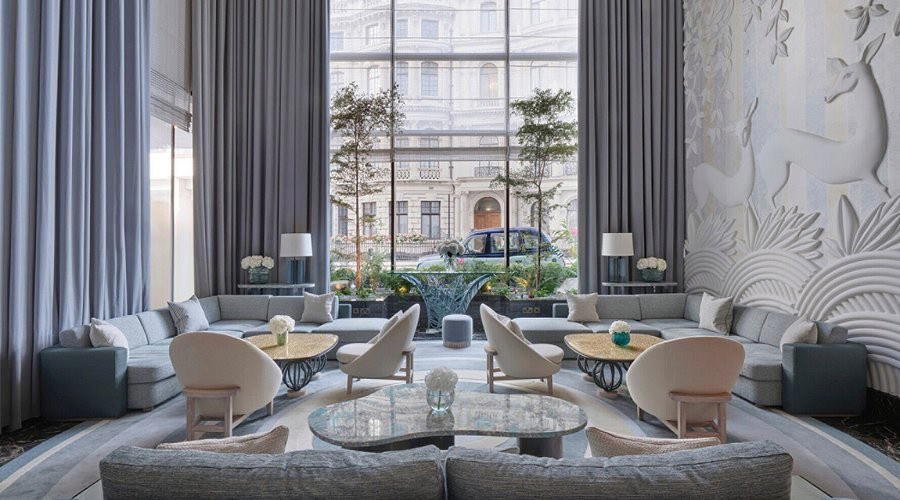
Relaxed and lively with a tasteful dining room, open kitchen views, and warm, professional service.