
Michelin Guide Plate · Michelin Plate
Our verdict
On Peck Seah Street in Tanjong Pagar, The Prince brings contemporary Arabic cooking into a room defined by earthy tones, Moorish motifs, and rattan pendant lights. The menu moves from hummus and falafel through to whole roast chicken and grilled seabass, with a 'Feed Me' option that hands the decision to the kitchen. It is the kind of place that rewards a group rather than a solo visit.

Pearl is the En Primeur Club membership app, where members save venues, book tables and use the concierge.
The menu
What to order
- Lamb porterhouse with ottoman spice
- Whole Mediterranean seabass
- Fried cauliflower
- Cashew hummus
- Baba ghanoush
- Duck pastilla
- Lamb kofta
A Middle Eastern Room in a Chinese Heritage Street
Peck Seah Street sits in Tanjong Pagar, one of Singapore's denser concentrations of shophouse-era architecture, where the ground floors have long cycled between trades, coffee shops, and, more recently, restaurants drawing on cuisines far removed from the neighbourhood's Cantonese origins. The city's dining scene has become practiced at this kind of displacement: a cuisine arrives in a heritage building, finds its footing among regulars who work or live nearby, and quietly builds a following. Arabic cooking has followed that same pattern in Singapore, with a small but committed set of kitchens putting the cuisine's core vocabulary, the charred meats, the layered dips, the slow-roasted proteins, through a contemporary lens. The Prince, at 48 Peck Seah Street, is one of those kitchens.
What the Room Communicates Before the Food Arrives
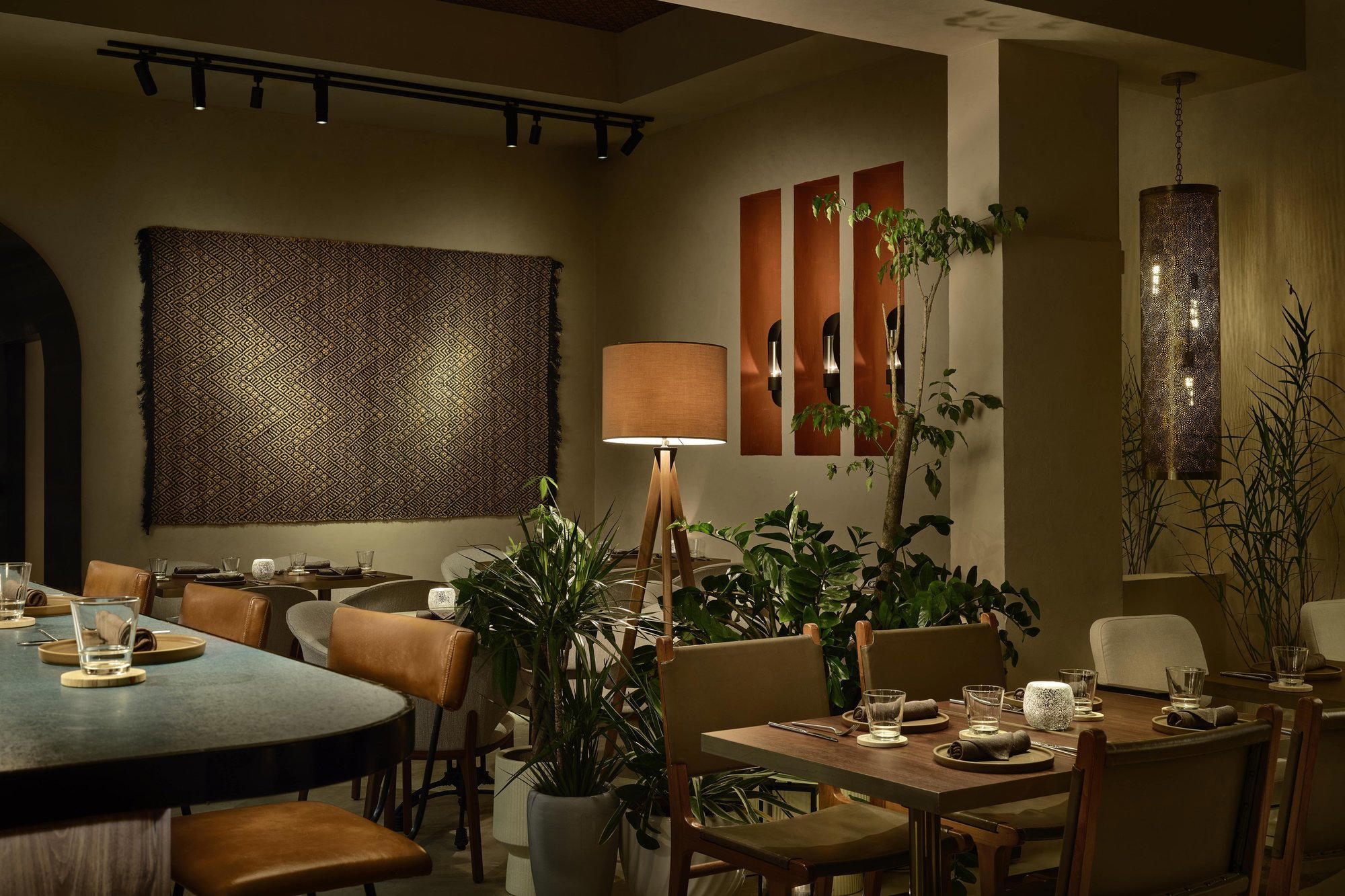
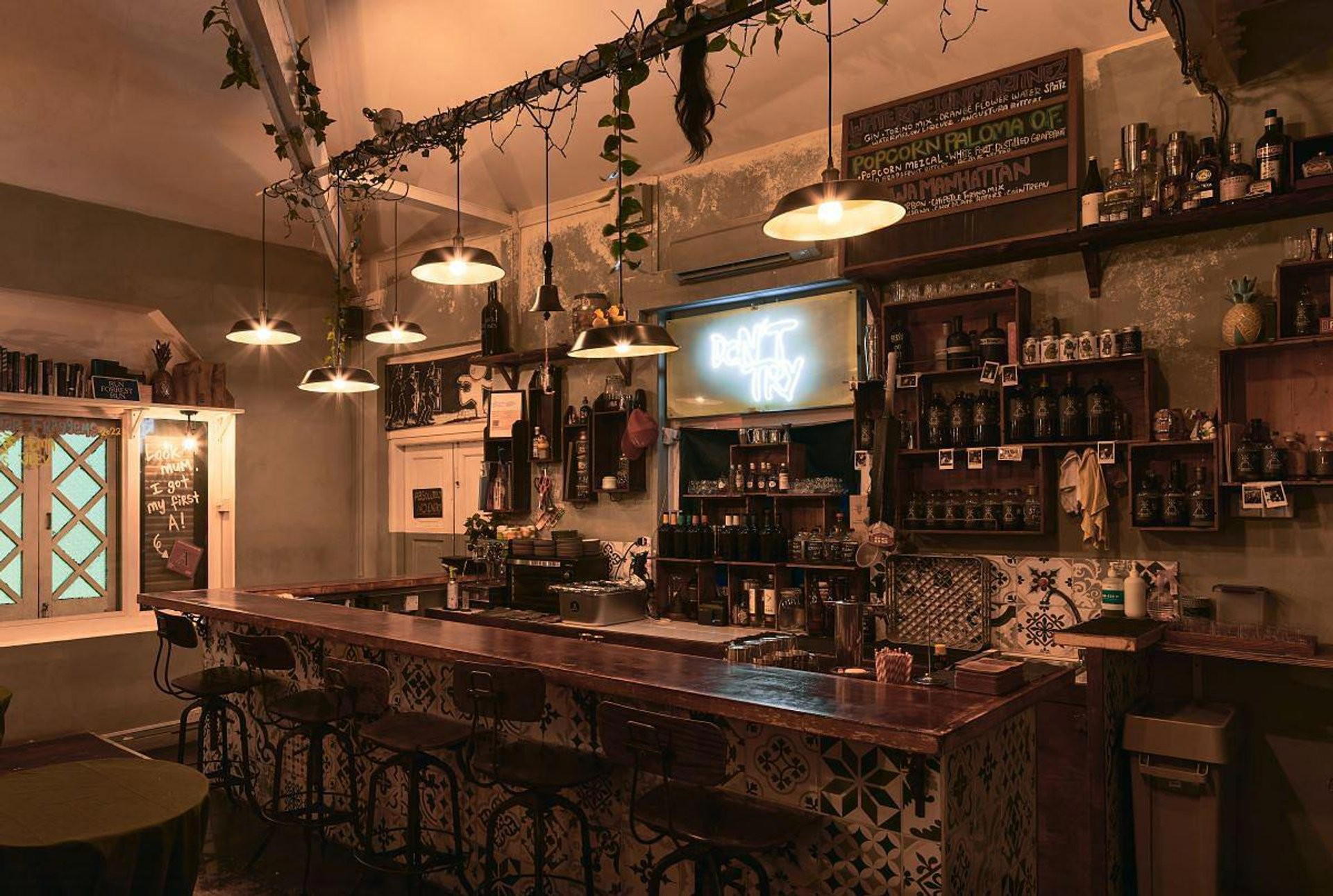
The EA-GN-08 frame is useful here because at The Prince, the atmosphere does considerable editorial work. Earthy ochres and warm browns run across the walls, Moorish geometric motifs appear in the decorative language, and rattan pendant lights cast the kind of diffuse, amber-tinted light that flatters both the food and the people eating it. These are deliberate references to Middle Eastern interiors, translated without literalism into a Singapore shophouse footprint.
The room divides into two distinct zones, and the choice between them shapes the evening. The front section anchors around a bar, casual in posture, oriented toward drinks and shorter stays. Moving toward the rear, the open kitchen comes into view, and the dynamic shifts: there is the sound of grilling, the occasional flare of a flame, and the movement of chefs working in a format that has become standard in contemporary dining as a way of collapsing the distance between kitchen process and dining room. In Singapore, where food culture treats watching the cook as part of eating, this layout is well-calibrated. For context on how the city's higher-end kitchens use open formats across different cuisines, the EP Club Singapore restaurants guide maps the broader picture.
The Menu's Architecture
Cooking at The Prince operates inside a recognisable Arabic framework, then applies a contemporary edit to it. Hummus, falafel, and kebab appear as anchors, dishes whose reference points are so well established across the Levant and Gulf that any kitchen working with them is implicitly in conversation with a long tradition. The interest lies in where the contemporary spin lands: whether the hummus is adjusted in texture or acidity, whether the kebab takes its char from wood or gas, whether the falafel retains its density or tilts toward something lighter.
Menu extends toward larger-format dishes that reward sharing: whole roast chicken and grilled seabass both suggest a kitchen comfortable with proteins that require timing and attention. Whole-animal or whole-fish cooking carries its own logic in Arabic traditions, where communal eating around a central platter is the default mode rather than an occasion. The Prince appears to understand this, given the explicit encouragement to come with a group and share. The 'Feed Me' option, which delegates selection to the kitchen, operates as a trust signal: it is the format that confidence-rich kitchens offer when they want the meal to be shaped by what is performing well rather than by what a diner can predict from a printed list.
Restaurants elsewhere that have built reputations on similar philosophy of letting the kitchen lead, places like Lazy Bear in San Francisco or the format logic behind Alinea in Chicago, operate at a different price point and ambition level, but the underlying trust-based structure is the same. At The Prince, the 'Feed Me' format is available without the formality or the prix-fixe commitment of those rooms, which positions it as an accessible version of that dining mode.
Where This Fits in Singapore's Broader Dining Map
Singapore's restaurant culture is dominated by its haute cuisine tier, the French and European contemporary kitchens that hold the city's Michelin stars and draw the longest reservation queues. Places like Odette, Les Amis, and Zén define one end of the spectrum; Jaan by Kirk Westaway and Meta occupy another tier within the city's decorated rooms. The Prince operates on a different register entirely: casual in entry, communal in format, rooted in a cuisine that sits outside the city's dominant European and pan-Asian axes.
That positioning is itself an editorial statement. Arabic cuisine in Singapore has not attracted the same institutional attention as the city's Japanese, French, or Peranakan kitchens, which means restaurants working in this space are building their reputations on repeat visits and word of mouth rather than award cycles. Internationally, kitchens that work at the intersection of Middle Eastern tradition and contemporary technique have attracted serious recognition, Aponiente in El Puerto de Santa María and Alléno Paris au Pavillon Ledoyen each represent how deeply a regional food tradition can be worked when a kitchen commits to it over time. The Prince is not claiming that level of ambition; it is claiming something more immediate: a well-designed room, a legible menu, and a format that suits the way Singapore actually eats.
For those building a broader Singapore itinerary around food and drink, the EP Club Singapore bars guide, hotels guide, and experiences guide cover the full picture. The wineries guide is also worth consulting for those tracking Singapore's growing interest in wine-forward dining.
Planning a Visit
The Prince sits on Peck Seah Street, within walking distance of Tanjong Pagar MRT, making it direct to reach from the central business district or from the shophouse dining corridors of Keong Saik Road. The room's dual format, bar at the front, kitchen-view dining at the rear, means arriving early gives you a choice of where to settle; later arrivals tend to fill the bar end first. Given that the menu is built around sharing and the 'Feed Me' format benefits from a table of three or more, this is a reservation worth making rather than a walk-in gamble, particularly on weekend evenings when Tanjong Pagar's dining density pulls significant foot traffic. Contact information is not currently listed publicly, so checking directly via the venue's own channels is the most reliable route for booking and allergy inquiries.
Frequently asked questions
at The Prince?
Do I need a reservation for The Prince?
What is the defining dish or idea at The Prince?
Do they accommodate allergies at The Prince?
Is The Prince suitable for a large group or a celebratory dinner?
Nearby-ish Comparables
Comparable venues nearby, for context on price, style, and recognition.
| Venue | Cuisine | Price | Awards | Notes |
|---|---|---|---|---|
| The PrinceThis venue (the venue you are viewing) | Modern Arabic | $50–100 | Michelin Guide Plate · Michelin Plate | Not listed |
| Magpie | Modern Borderless Fusion | $50–100 | Michelin Plate · Michelin Guide Plate | TIONG BAHRU |
| Nómada | Contemporary Spanish with Global Influences | $50–100 | Michelin Guide Plate · Michelin Plate | CHINATOWN |
| Quenino | Contemporary Southeast Asian Fine Dining | $100–150 | Michelin Plate · Wine Spectator Award of Excellence | TANGLIN |
| Jumbo Seafood | Singaporean Chilli Crab Seafood | $50–100 | Not listed | SIGLAP |
| Open Farm Community | Farm-to-Table Fusion | Not listed | Michelin Plate | RIDOUT |
Recognition history
Dated appearances from independent guides and award organizations, with the underlying list record or original source where available.
Michelin Plate
Michelin · 2026 Michelin Plate
Michelin Guide Plate
Michelin Guide
Continue exploring
More in Singapore
Restaurants in Singapore
All restaurants in Singapore →
Bars in Singapore
All bars in Singapore →
Details
- Romantic
- Elegant
- Modern
- Sophisticated
- Date Night
- Group Dining
- Celebration
- Special Occasion
- Open Kitchen
- Craft Cocktails
- Extensive Wine List
- Small Plates
- A La Carte
- Prix Fixe
- Family Style
- Craft Cocktails
- Wine
- Vegetarian Friendly
Current opening hours
- Monday
- 12–2:30 PM, 5:30–11 PM
- Tuesday
- 12–2:30 PM, 5:30–11 PM
- Wednesday
- 12–2:30 PM, 5:30–11 PM
- Thursday
- 12–2:30 PM, 5:30–11 PM
- Friday
- 12–2:30 PM, 5:30–11 PM
- Saturday
- 12–3 PM, 5:30–11 PM
- Sunday
- 12–3 PM, 5:30–11 PM
Hours can change for holidays and private events. Hours as of .
Dark, moody lighting with Moorish motifs and rattan pendant lights creating a warm, intimate atmosphere; bar area at front with open kitchen views at rear; described as romantic with yellow accent lighting.