The Pirates' House
One of Savannah's most historically layered dining destinations, The Pirates' House at 20 E Broad Street occupies a building dating to 1753 that has shifted from sailors' tavern to storied restaurant over nearly three centuries. The address draws visitors seeking both Southern cooking and the atmospheric weight of a space that Robert Louis Stevenson reportedly used as inspiration for Treasure Island.
Pearl is the En Primeur Club membership app — saves, bookings, and concierge access live there. Same editors, same standards.
- Address
- 20 E Broad St, Savannah, GA 31401
- Phone
- +19122335757
- Website
- thepirateshouse.com
- Directions
- Get directions
 Saves & bookings on Pearl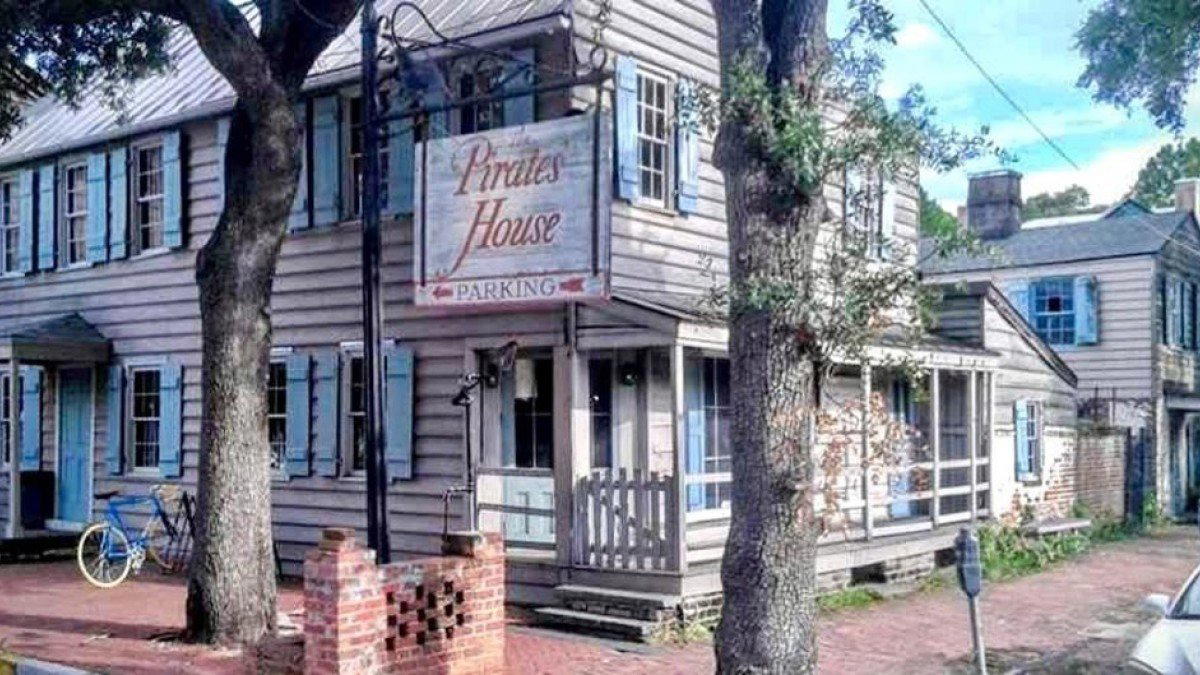
A Building That Keeps Reinventing Its Purpose
The Pirates' House is a restaurant in Savannah, Georgia, serving Southern American Seafood at about $60 per person. Few restaurant addresses in the American South carry as much accumulated history as 20 E Broad Street in Savannah. The structure dates to 1753, making it one of the oldest buildings in Georgia, and its trajectory from sailors' inn to tourist landmark to functioning dinner house traces the city's own complicated evolution across nearly three centuries. That kind of longevity demands a particular kind of reinvention, and The Pirates' House has gone through several distinct phases of it, each one responding to a different version of what Savannah needed from its dining scene.
The building began as a seamen's tavern at the edge of what was then Georgia's earliest settlements, positioned near the waterfront to serve the transient population of sailors moving through one of the Eastern Seaboard's busiest colonial ports. That original function gave it a roughness that later became its most marketable asset. By the mid-twentieth century, as Savannah began developing a self-conscious sense of its own heritage tourism, the address shifted into formal restaurant operation, capitalizing on the atmospheric density of its warren of rooms, tunnels, and low-ceilinged spaces. The current iteration is the product of that long hospitality arc, a place where the physical environment does significant narrative work before any food arrives at the table.
The Atmosphere as the Primary Argument
Arriving at The Pirates' House, the building announces itself before you reach the entrance. The exterior sits close to the street in a part of downtown Savannah where the eighteenth-century grid still governs the layout, and the scale of the structure feels proportionally different from the antebellum architecture that dominates most of the historic district. Inside, the dining spaces multiply into a series of interconnected rooms rather than a single open floor, each carrying a different atmospheric register. The oldest sections preserve low ceilings, exposed brick, and the kind of spatial compression that pre-industrial construction produced naturally.
This physical environment places the restaurant in a specific category of Southern dining that has less to do with the cuisine tier occupied by, say, The Grey or Alligator Soul, and more to do with the tradition of grand, theatrically atmospheric restaurants that American cities built around their most significant historical addresses. New Orleans has several equivalents. Charleston has a handful. Savannah, with its unusual concentration of intact colonial-era structures, has the conditions to support this kind of venue, and the restaurant has occupied that position for decades.
Where History and Southern Cooking Meet
The reputation of the restaurant rests on Southern cooking served in a setting that provides more historical context than almost any comparable address in Georgia. That combination defined the venue's positioning through its mid-century reinvention, when Savannah was not yet the nationally recognized heritage destination it has become, and it has sustained the address through the more competitive dining environment that followed the city's rise in visitor numbers over the past two decades.
Southern cooking in Savannah operates across a wide range of registers, from the ingredient-focused regional American cooking at The Grey to the old-school community boarding-house tradition preserved at Mrs. Wilkes' Dining Room, where dishes arrive family-style without a menu. The restaurant occupies its own point in that spectrum, oriented toward the kind of accessible, occasion-friendly Southern dining that works for family groups, out-of-town visitors, and first-time arrivals to the city who want the food and the story delivered together. Counterparts elsewhere in the country, from Emeril's in New Orleans to more casual equivalents, have shown that heritage-location restaurants can sustain serious culinary standards when ownership commits to both the food and the fabric of the building equally.
The Robert Louis Stevenson Connection
The venue's most frequently cited cultural credential is the claim that Robert Louis Stevenson used the original tavern as partial inspiration for Treasure Island. That assertion has circulated long enough to be embedded in the restaurant's identity, and the building's documented age makes the timeline plausible even if direct archival evidence is, as with most such literary-location claims, difficult to pin down with certainty. What the claim does is position the restaurant within a tradition of literary-atmospheric venues that use association with cultural history to generate a visitor experience distinct from the food alone. Whether or not the connection is fully substantiated, it has shaped how the venue markets itself and how generations of visitors have understood the building.
That kind of narrative layering is, in itself, a legitimate form of hospitality. The dining rooms at The Inn at Little Washington or the setting at Blue Hill at Stone Barns demonstrate that environment and story are not secondary to food, they are part of the experience architecture. At the restaurant, the story is older and wilder than most American restaurants can claim.
Planning Your Visit
The restaurant is located at 20 E Broad Street in Savannah's historic district, close to the riverfront and within walking distance of many of the city's major squares. Its position in the downtown grid makes it accessible on foot from most central accommodation, and the address is well-known enough that it rarely requires explanation to local transport providers.
For visitors structuring a broader Savannah dining itinerary, the restaurant fills a specific slot: the atmospheric, historically grounded meal that provides cultural context for the city alongside the food. For more ingredient-focused regional cooking, The Grey and Alligator Soul operate at a different register. For hotel dining, Aqua Star and 1540 Room serve their respective properties. Ardsley Station covers a different neighbourhood entirely. The restaurant is, broadly, for visitors who want the atmosphere and the history to be as deliberate a part of the evening as the food itself.
The multi-room format means the venue can accommodate larger parties that would be impractical at smaller Savannah addresses, which makes it a practical option for group dining in addition to its cultural draw.
A Credentials Check
Comparable venues nearby, for context on price, style, and recognition.
| Venue | Cuisine | Price | Notes |
|---|---|---|---|
| The Pirates' HouseThis venue — the venue you are viewing | Southern American Seafood | $$ | Not listed |
| Cotton & Rye | Modern American Gastropub | $$ | Habersham Street |
| Ardsley Station | Modern American Southern | $$ | Ardsley Park |
| Vic's On the River | Contemporary Southern Seafood | $$$ | Downtown |
| Vici Rooftop | Polished Coastal Cuisine | $$$ | Downtown |
| Local 11ten | Contemporary Southern with Local Ingredients | $$$ | Historic District - South |
At a Glance
- Well Known
- Historic
- Whimsical
- Rustic
- Family
- Group Dining
- Celebration
- Casual Hangout
- Historic Building
- Private Dining
Current opening hours
- Monday
- 11 AM–9 PM
- Tuesday
- 11 AM–9 PM
- Wednesday
- 11 AM–9 PM
- Thursday
- 11 AM–9 PM
- Friday
- 11 AM–9:30 PM
- Saturday
- 11 AM–9:30 PM
- Sunday
- 11 AM–9 PM
Hours can change for holidays and private events. Last verified .
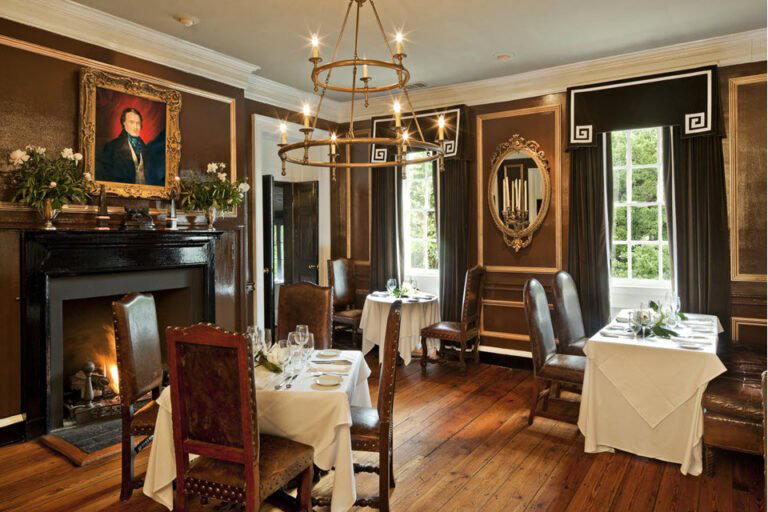
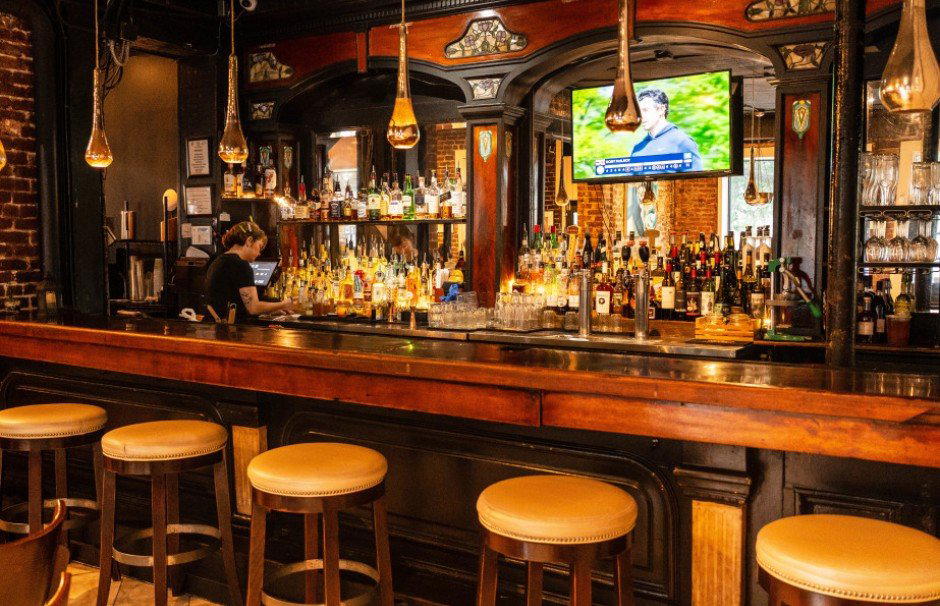
Charming pirate-themed historic interior with dim lighting, lively atmosphere, and immersive seafaring decor evoking old-world adventure.