
Michelin Plate
Our verdict
A converted 1800s post office in Cloverhill, The Olde Post Inn holds consecutive Michelin Plate recognition (2024–2025) for cooking that leans into the ingredients County Cavan does well: game, seasonal produce, and the kind of slow-made sauces that signal a kitchen with classical confidence. The price sits at €€€, and stylish bedrooms mean you can stay the night without compromise.

Pearl is the En Primeur Club membership app, where members save venues, book tables and use the concierge.
The menu
What to order
- Scallops on Black Pudding
- Venison with Red Cabbage
- Turbot with Dublin Bay Prawns
- Bacon & Cabbage Terrine
- Rhubarb Trifle
Stone Floors, Firelight, and a Kitchen That Knows Its County
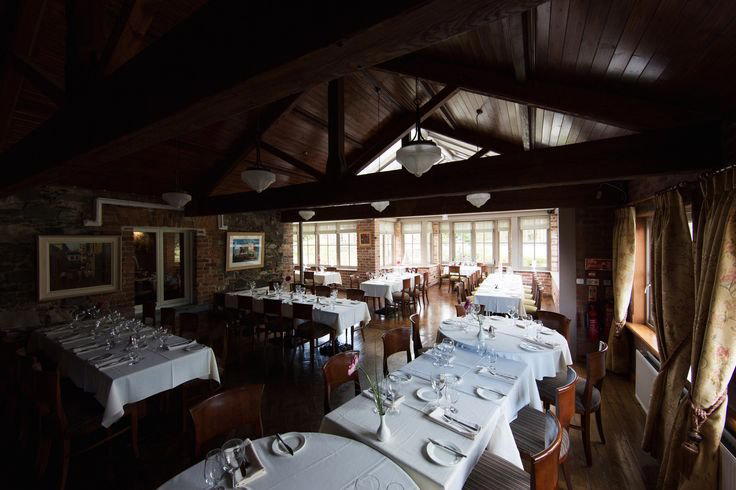
There is a particular atmosphere that old Irish post offices carry even after the postmaster has long gone, thick stone walls, flag-floored rooms worn smooth by generations of foot traffic, and a sense that the building was built to outlast its occupants. In Cloverhill, a small settlement in County Cavan, that atmosphere is the entry point to The Olde Post Inn. You arrive to a bar where a turf or wood fire is the gravitational centre, aperitif in hand before you have fully decided whether to eat in the original building or move through to the conservatory addition. Both work. The original rooms carry the weight of the 1800s structure; the conservatory gives light and a different relationship with the surrounding countryside. The choice between them is less about quality and more about what kind of evening you want.
What Cavan Puts on the Plate
County Cavan sits in the Ulster Lakelands, a county defined by drumlins, waterways, and a farming tradition that has historically kept its produce close to home rather than routing it south to urban restaurant supply chains. That geography matters here. The kitchen at The Olde Post Inn draws on local ingredients with particular emphasis on game, which is neither a novelty angle nor a seasonal special but a consistent identity marker for the cooking. Game sourced from the surrounding region carries a flavour profile that farmed protein rarely matches, leaner, more mineral, shaped by what the animal ate and where it moved. When a kitchen commits to that ingredient category at the level this one does, it positions itself differently from the modernist Irish restaurants in Dublin and Cork that are more likely to foreground coastal seafood or foraged botanicals. This is inland, agricultural Ireland on the plate, and it reads as a deliberate choice rather than a limitation.
The broader framework of the menu is classical: dishes that have recognisable structure, where technique serves the ingredient rather than redefines it. Sauces are cited repeatedly as a point of distinction, and in classical European cooking that is a meaningful signal. A sauce is where training and time show most clearly, it cannot be assembled quickly, cannot be faked with a good garnish, and does not benefit from the kind of theatrical plating that can distract from less rigorous cooking. The Michelin Plate recognition awarded in both 2024 and 2025 reflects a kitchen delivering consistent quality within this framework, placing The Olde Post Inn alongside Irish regional restaurants that prioritise ingredient integrity and execution depth over conceptual novelty. For context on how this fits the wider Irish dining picture, venues like Aniar in Galway and Chestnut in Ballydehob occupy a similar regional-sourcing position, though with a more progressive modern idiom. The Olde Post Inn's classical orientation gives it a distinct identity within that cohort. Further afield, Auberge Grand'Maison in Mûr-de-Bretagne and Auga in Gijón offer useful international comparators, regional restaurants where classical technique and local sourcing combine to produce cooking that reads as rooted rather than derivative.
The Regional Restaurant Case
Ireland's Michelin-recognised restaurant map has historically concentrated in Dublin and in the coastal counties of Cork, Kerry, and Clare. The presence of a Michelin Plate venue in County Cavan, not a county that appears regularly in national food coverage, matters as a signal. It suggests the kind of sustained quality that survives the scrutiny of repeated inspector visits, and it does so without the marketing infrastructure or tourist footfall that supports urban counterparts. Regional Irish cooking at this level depends on relationships: with local farmers, gamekeepers, and seasonal suppliers who are not operating at industrial scale. That supply network is harder to build and harder to maintain than sourcing from a national distributor, which is part of why consistently strong regional kitchens merit attention that goes beyond their geographic remoteness.
Restaurants in a comparable position across Ireland include Campagne in Kilkenny, Homestead Cottage in Doolin, and House in Ardmore, each operating in smaller population centres with a similar reliance on local sourcing and a classical or near-classical cooking approach. The dining tier here is €€€, which positions The Olde Post Inn above casual pub dining but below the €€€€ bracket occupied by Dublin's Chapter One by Mickael Viljanen or the tasting-menu specialists like Liath in Blackrock and Terre in Castlemartyr. That price positioning reflects a kitchen that is serious without demanding the kind of financial commitment that multi-course tasting menus require.
Staying, Planning, and Getting the Most From the Visit
The stylish bedrooms on site reframe the logistics of a visit considerably. Cloverhill is not a destination you pass through on the way to somewhere else, you come here with intention. Having the option to stay means you can approach the evening without a clock running on a return drive, order a second glass, and sit with the fire rather than watching the time. The combination of a €€€ restaurant with accommodation in a converted historic building places The Olde Post Inn in a small category of Irish country dining experiences where the meal and the overnight are designed as a single proposition rather than two separate decisions. If you are planning around the game season, that is the period when the kitchen's specialist focus aligns most directly with what is on the menu. Booking ahead is advisable, particularly on weekends, given the venue's size and its recognition in the Michelin guide. For a broader picture of where The Olde Post Inn sits among Cavan's options, see our full Cavan restaurants guide; accommodation context is in our Cavan hotels guide. Those planning a full county visit will also find our Cavan bars guide, wineries guide, and experiences guide useful for building out the itinerary beyond a single dinner. For Irish country cooking in a comparable register, dede in Baltimore, Bastion in Kinsale, and Lady Helen in Thomastown offer useful points of comparison, each with their own regional sourcing logic and a similar commitment to cooking that earns its Michelin attention outside the capital.
Frequently asked questions
Is The Olde Post Inn okay with children?
The venue's format, a relaxed flag-floored bar, a conservatory dining room, and a traditional Irish menu built around game and seasonal local produce, suits families who are comfortable with a sit-down dinner in a country restaurant setting. There is no specific children's menu documented, so it is worth contacting the inn directly to confirm current arrangements before booking.
What is the atmosphere like at The Olde Post Inn?
The building dates to the 1800s when it served as a post office, and the original stone-flagged bar with an open fireplace sets the tone before you move to table. Dining happens either in that atmospheric original room or in a conservatory addition that brings in natural light. The overall register is warm and unhurried, a country inn rather than a formal restaurant, though the kitchen's Michelin Plate recognition in both 2024 and 2025 reflects serious cooking behind the relaxed front-of-house.
Is The Olde Post Inn award-winning?
The Olde Post Inn has received recognition including: Start by enjoying a fireside aperitif in the flag-floored bar of this old 1800s post office, then dine either in the atmospheric original building or in the appealing conservatory. The experienced Chef-Owner uses top local ingredients to cr….
What do regulars order at The Olde Post Inn?
The chef-owner's kitchen has a documented strength in two areas: game dishes and sauces, both flagged by Michelin as highlights of the €€€ menu. County Cavan's farming and waterway tradition feeds directly into the sourcing, so expect the game-led plates to reflect what the region produces season to season rather than a fixed year-round offering.
How It Stacks Up
| Venue | Cuisine | Price | Awards | Notes |
|---|---|---|---|---|
| The Olde Post InnThis venue (the venue you are viewing) | Modern Irish Fine Dining | $50–100 | Michelin Plate | Not listed |
| Patrick Guilbaud | Modern French Fine Dining | $150–200 | 2 Michelin Stars · La Liste Top Restaurants | Irish - French, Modern French |
| Aniar | Modern Irish Terroir Tasting Menu | $150–200 | 1 Michelin Star · La Liste Top Restaurants | Modern Irish, Modern Cuisine |
| Bastion | Progressive American, Modern Cuisine | Not listed | Michelin 1 Star | Not listed |
| LIGИUM | Modern Wood-Fired Fine Dining | $100–150 | 1 Michelin Star · The Best Chef One Knife | Creative |
| Host | Nordic, Modern Cuisine | Not listed | Not listed | Not listed |
Recognition history
Dated appearances from independent guides and award organizations, with the underlying list record or original source where available.
Michelin Plate
Michelin
Full recognition history (3 entries)
Michelin Plate
Michelin
Michelin Plate
Michelin
Continue exploring
More in Cavan
Hotels in Cavan
Browse all →
Details
- Romantic
- Cozy
- Elegant
- Classic
- Intimate
- Date Night
- Special Occasion
- Celebration
- Group Dining
- Business Dinner
- Private Dining
- Historic Building
- Open Kitchen
- Sommelier Led
- Local Sourcing
- Farm To Table
- Set Menu
- A La Carte
- Tasting Menu
- Wine
- Cocktails
- Vegetarian Friendly
- Allergy Accommodating
Warm and welcoming with open fires, turf smoke, soft lighting, and picture-postcard charm; intimate conservatory and dining spaces with tasteful period decoration.