Our verdict
On Odengatan in Stockholm's Vasastan district, The Italian Cousins occupies the kind of neighbourhood slot that Italian trattorias have historically filled across northern Europe: a reliable, convivial address where the wine list does serious work and the kitchen keeps a regional Italian focus. For visitors to Stockholm seeking something outside the New Nordic circuit, it sits in a distinct and useful tier.

Pearl is the En Primeur Club membership app, where members save venues, book tables and use the concierge.
The menu
What to order
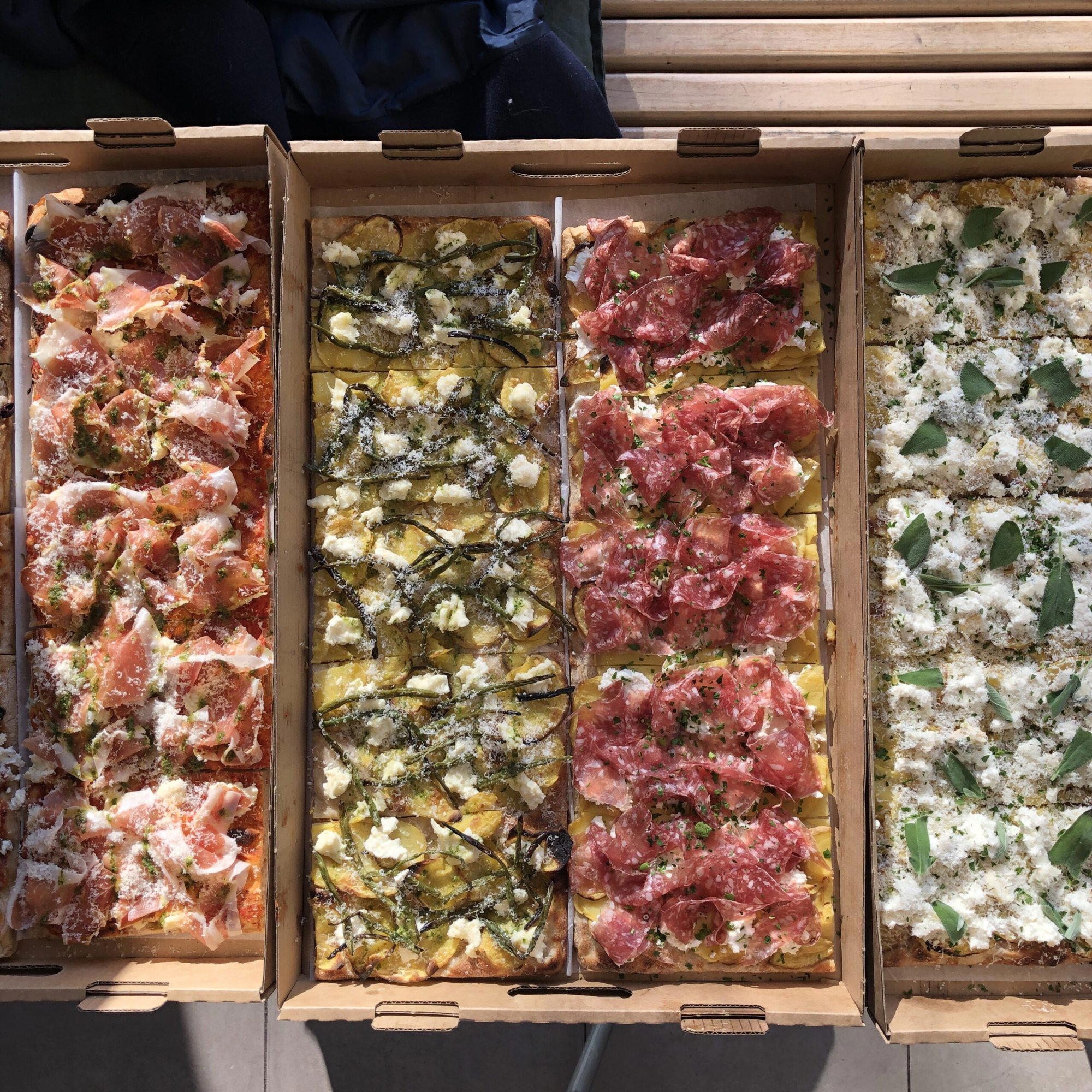
- Pizza al taglio
- Hams and cheeses boards
Where Vasastan Meets the Italian Table
Stockholm's Odengatan runs through Vasastan, one of the city's most architecturally consistent residential districts, where early-twentieth-century apartment blocks line broad, quiet streets and the dining scene tends toward the neighbourhood-permanent rather than the destination-temporary. This is not the strip of Östermalm fine dining, nor the compressed competition of Gamla Stan. It is, instead, the kind of address where an Italian kitchen can operate with real conviction, close enough to the city's dining centre to attract informed visitors, but rooted enough in its block to cultivate a local following that returns regularly.
The Italian Cousins sits at Odengatan 78, away from the busier commercial nodes and closer to the residential rhythm that defines this part of Vasastan. Approaching on foot, the area reads as lived-in Stockholm: not tourist-facing, not aggressively fashionable, but settled and purposeful. That context matters for understanding what kind of restaurant this is and what it is designed to do.
The Italian Register in Stockholm's Dining Map
Italian cooking occupies an interesting position in Stockholm's restaurant culture. The city's high-profile dining conversation is dominated by Nordic and New Nordic formats, venues such as Frantzén, AIRA, and Aloë command most of the critical attention, and Adam / Albin and Operakällaren anchor the more formal Swedish-European tradition. Italian restaurants, by contrast, tend to fly lower in the city's prestige hierarchy, which has historically allowed the better ones to build loyal followings without the scrutiny that comes with award-season exposure.
That dynamic shapes what The Italian Cousins can be. In a market where the Italian category is not over-represented at the top tier, a kitchen that takes regional Italian cooking seriously, and a wine list curated with genuine attention to the Italian peninsula's diversity, operates with less competitive pressure from direct peers and more freedom to develop a consistent identity over time. The question for any Italian address in this position is always the same: does the wine list reflect the same seriousness as the kitchen, or is it an afterthought assembled to price points rather than to purpose?
The Wine Argument, Why the Cellar Matters Here
Italian wine is among the most geographically and varietally complex in the world. A thoughtfully assembled Italian list spans Nebbiolo-based wines from the Langhe and Valtellina, Sangiovese from Chianti Classico through to Brunello and Morellino, indigenous whites from Campania and Friuli, natural and skin-contact producers from across the peninsula, and the full spectrum of southern Italian varieties that have been undervalued globally for decades. Building such a list in Stockholm requires import relationships, cellar discipline, and a genuine point of view, it cannot be assembled from a single distributor's catalogue and passed off as curation.
For a neighbourhood Italian in Vasastan, the wine list functions as the primary signal of seriousness. Kitchens at this tier often share broadly similar competence, pasta technique, sourcing, the balance between simplicity and craft. What separates the restaurants that earn a return visit from those that satisfy once and fade is almost always the depth and intelligence of what is poured. A list that moves beyond Barolo and Chianti into Etna Rosso, Aglianico, Greco di Tufo, or the producers working in amber-wine territory signals that someone in the building has thought carefully about the Italian canon, not just its most legible chapters. That kind of thinking is what positions a neighbourhood Italian as a wine destination in its own right, rather than simply a delivery mechanism for carbohydrates and a glass of house red.
Swedish dining culture has also developed a sophisticated relationship with wine over the past two decades, driven in part by Systembolaget's expanding range and in part by the influence of the sommelier community that has grown up around Stockholm's fine dining venues. Diners who eat regularly at addresses like AIRA or the more progressive Nordic kitchens have developed palates that expect the wine service to carry genuine knowledge. That educated local audience is the natural constituency for a well-run Italian list in a neighbourhood like Vasastan.
Placing The Italian Cousins in a Broader Swedish Context
Looking beyond Stockholm, Sweden's serious Italian-adjacent and wine-forward dining culture is represented across the country at different scales. Enoteket in Norrköping is an example of a wine-led format outside the capital that has built a coherent identity around cellar depth. Vollmers in Malmö represents the broader proposition that Sweden's leading dining is not confined to Stockholm, while 28+ in Gothenburg has long maintained a wine program that operates as the centrepiece of the experience rather than its supporting act. Venues like VYN in Simrishamn, ÄNG in Tvååker, and Knystaforsen in Rydöbruk demonstrate how regional Swedish dining outside the major cities has invested in wine programs that punch considerably above the expectations of their geography.
Within that national pattern, a Stockholm neighbourhood Italian that takes its cellar seriously occupies a coherent and useful position: accessible in format, specific in focus, and connected to the same current of wine intelligence that runs through the country's more decorated addresses. For visitors who want to understand how Swedes actually eat and drink on non-occasion evenings, a considered neighbourhood Italian of this kind is a more honest lens than the tasting-menu circuit.
Internationally, the standard against which serious Italian wine programs are measured is set by restaurants where the list functions as the primary critical argument, venues at the level of Le Bernardin in New York City or the tightly focused formats represented by Atomix show what happens when a restaurant commits fully to a single intellectual discipline. The Italian Cousins operates at a different scale and price register, but the underlying logic is the same: specificity of focus produces a more coherent experience than breadth without conviction.
Planning a Visit
The Italian Cousins is located at Odengatan 78, 113 22 Stockholm. Vasastan is well-served by public transport, with Odenplan metro station providing direct connections across the city and the T-Centralen interchange reachable in a few minutes. For visitors staying in central Stockholm or the Östermalm area, the journey by metro is efficient; on foot from the city centre, the walk through Vasastan's residential streets takes roughly twenty minutes and is pleasant in the longer daylight hours of Swedish spring and summer. Seasonal timing matters in Stockholm more than in most European capitals: the city's dining culture shifts noticeably between the long summer evenings, when terrace and outdoor eating becomes central, and the compressed winter months, when indoor rooms and warm kitchens carry particular appeal. A neighbourhood Italian with a serious wine list is well-positioned for winter visits, when the combination of hearty cooking and considered pours fits the atmospheric conditions precisely. For specific hours, booking availability, and current menu information, direct contact with the venue is recommended. Our full Stockholm restaurants guide provides broader context on how this address fits within the city's dining tiers. Readers planning a wider Swedish trip should also consider Signum in Mölnlycke, PM & Vänner in Växjö, Brasserie Park in Jönköping, and Adrian Restaurang in Borås as part of a broader itinerary across the country's regional dining.
Frequently asked questions
What part of town is THE ITALIAN COUSINS in?
THE ITALIAN COUSINS is located at îOdengatan 78, 113 22 Stockholm, Sweden, Stockholm.
Is The Italian Cousins in Stockholm a good choice for Italian wine?
Italian restaurants operating at the neighbourhood level in Stockholm often carry a more focused Italian cellar than broader European restaurants, and the Italian regional premise at Odengatan 78 suggests the list follows the kitchen's geography. Italy's wine range alone, from Piedmont's Nebbiolo to Sicily's indigenous varieties, gives a committed Italian room significant depth to work with. For specifics on the current wine list, reaching out to the restaurant directly is the surest route.
What do people recommend at THE ITALIAN COUSINS?
The Italian Cousins draws repeat visitors for its commitment to regional Italian cooking in a Vasastan setting where that kind of specificity is relatively rare. Without a published menu on record, the most reliable approach is to ask staff what is driving the kitchen on the night, Italian-focused restaurants at this neighbourhood scale typically rotate dishes around seasonal supply. Odengatan 78 is the address to confirm current offerings directly.
How far ahead should I plan for THE ITALIAN COUSINS?
Vasastan restaurants with a loyal residential following tend to fill quickly on Thursday through Saturday, and The Italian Cousins operates in one of Stockholm's most tight-knit dining neighbourhoods. For weekend evenings, building in at least a week's lead time is a reasonable baseline for this part of the city.
What's the defining dish or idea at THE ITALIAN COUSINS?
The defining idea is Italian regional cooking applied with neighbourhood-restaurant discipline rather than the showmanship of Stockholm's higher-profile Italian rooms. The name itself signals something about the ethos, familial, specific, and grounded in a tradition where the cooking does the argument rather than the concept. That positioning puts it closer to a serious Roman or Milanese trattoria in spirit than to the Nordic-Italian fusion format that dominates Stockholm's more visible dining conversation.
Peers in This Market
Comparable venues nearby, for context on price, style, and recognition.
| Venue | Cuisine | Price | Awards | Notes |
|---|---|---|---|---|
| THE ITALIAN COUSINSThis venue (the venue you are viewing) | Roman-Style Pizza al Taglio | $10–20 | Not listed | Not listed |
| Basta Urban Italian | Urban Italian | $20–30 | Not listed | Norrmalm |
| Trattoria Montanari | Authentic Italian Trattoria from Marche | $30–50 | Not listed | Östermalm |
| Deli Di Luca | Authentic Italian | $20–30 | Not listed | Södermalm |
| Ateljéns Pizza | Italian Pizza | $20–30 | Star Wine List | Gamla Enskede |
| Ciccio's | Italian-American | $20–30 | Not listed | Östermalm |