The Grain Store

Michelin Plate
Our verdict
Part of The Maltings hotel in Weybourne, The Grain Store occupies converted brick and flint barns on the North Norfolk coast and draws its menu from the surrounding landscape. Lunch is concise and unfussy; dinner expands into small plates, larger dishes, and sharing formats that foreground local seafood and slow-cooked meats. A keenly priced wine list and an on-site shop round out the offer.

Pearl is the En Primeur Club membership app — saves, bookings, and concierge access live there. Same editors, same standards.
- Address
- The St, Weybourne NR25 7SY, United Kingdom
- Phone
- +44 1263 804731
- Website
- themaltingsweybourne.com
- Directions
- Get directions
- Booking
- Book on the venue's website
The menu
What to order
- Burrata with pea pesto
- Norfolk tomato gazpacho
- Basque cheesecake
Brick, Flint, and the North Norfolk Table
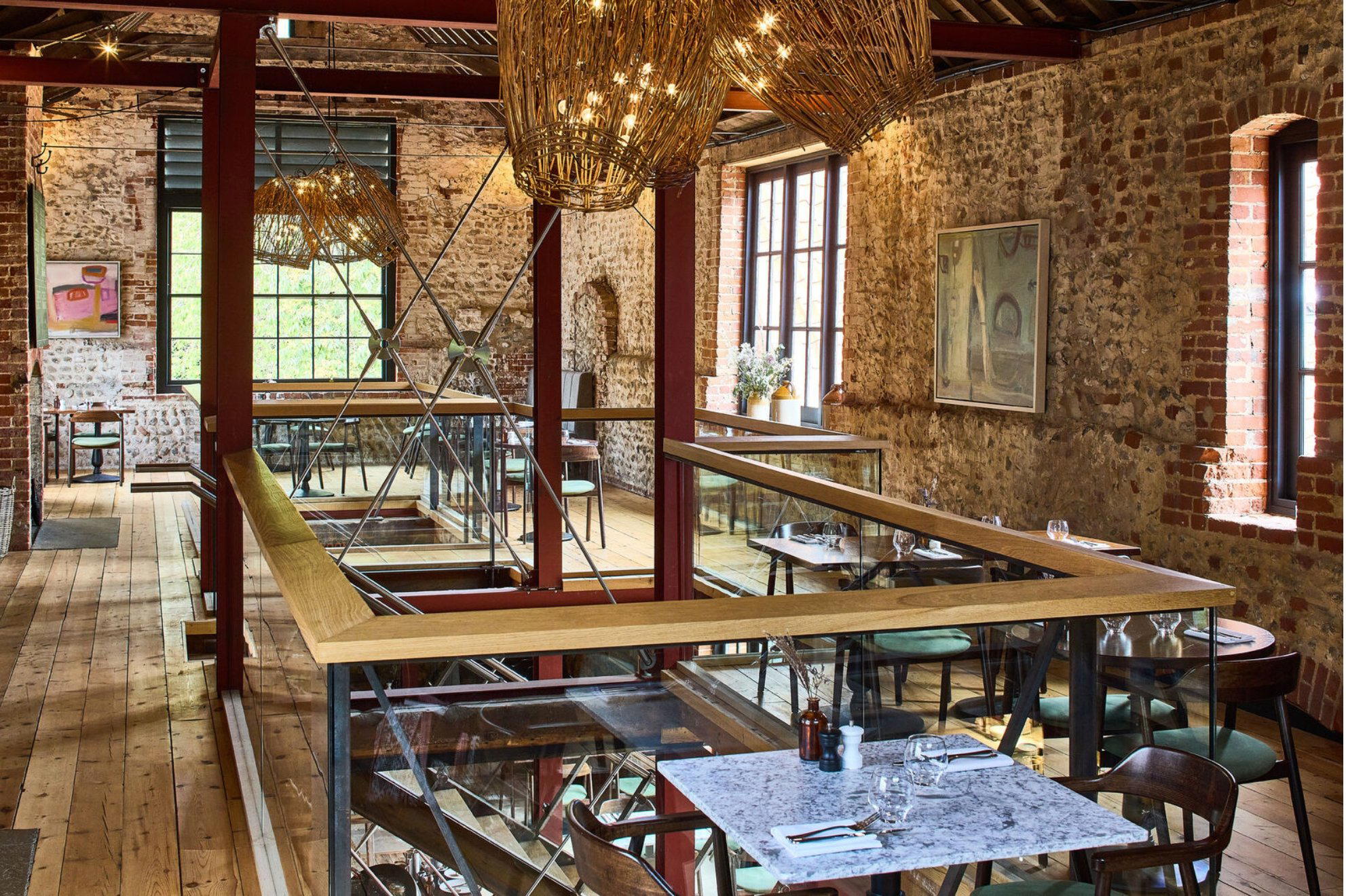
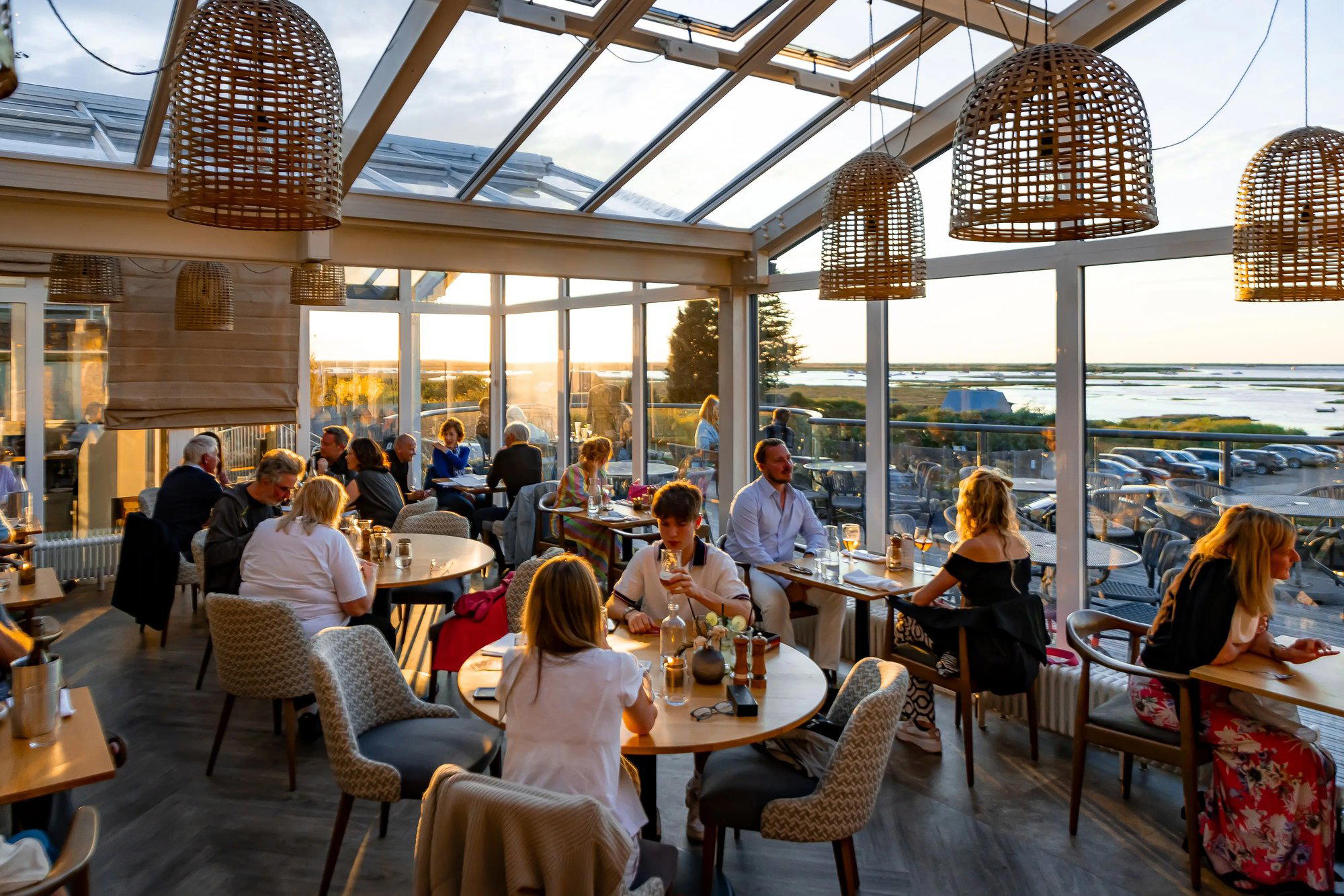
The North Norfolk coast has a particular way of asserting itself architecturally. Drive into Weybourne and the building stock shifts almost immediately: brick and flint walls, low-slung rooflines, the kind of structures that read as grown from the ground rather than placed on it. The Grain Store sits inside that vernacular with some conviction. It occupies a cluster of converted barns that now form The Maltings hotel, and the transition from agricultural utility to restaurant space has been handled with enough restraint that the bones of the original buildings remain legible. You arrive at a place that feels continuous with its setting, not imposed on it.
That relationship between setting and plate is the operative idea here. The North Norfolk coast is one of the more productive stretches of British shoreline for anyone serious about ingredient provenance: crab and lobster from the inshore fleet, oysters from the estuaries around Brancaster and beyond, lamb from the salt marshes that flank the coast. A restaurant sitting in Weybourne that does not engage with that supply chain would be missing the point of the location entirely. The Grain Store does not miss it.
What the Coast Puts on the Menu
The dinner format at The Grain Store runs across small plates, larger plates, and sharing dishes, a structure that has become common in British coastal cooking partly because it suits the variable scale of what the sea delivers. A Norfolk fish platter, available for the table to share, positions local catch as the centrepiece rather than the accompaniment. The option to add local oysters to that platter is not incidental: oysters from this stretch of coast carry a salinity and mineral profile that reflects the particular tidal character of the area, and offering them as an addition rather than a separate course keeps the seafood focus coherent.
The lamb tagine on the sharing menu reads as a deliberate counterpoint to the seafood. North Norfolk salt-marsh lamb has a distinct flavour profile shaped by the same coastal grasses and estuary vegetation that define the landscape, and a slow-cooked format like a tagine gives the meat the time it needs. That the kitchen reaches for a North African preparation rather than a more conventionally British one says something about the confidence with which the cooking absorbs outside influence without abandoning its local anchor.
Lunch menu operates on a different register: simpler, more concise, suited to the pace of a coastal midday rather than a full evening sitting. That calibration by meal period is sensible in a hotel restaurant context, where guests arriving off a coastal walk want clarity rather than complexity, and evening visitors are more likely to be settling in for something longer.
Ingredient Sourcing as Editorial Position
British coastal restaurants have increasingly sorted themselves into two camps: those that source locally as a marketing position and those that source locally as an operational discipline. The distinction shows in the menu. When a wine list is described as keenly priced rather than curated for prestige, and when the kitchen's vocabulary runs to clean, honest flavours rather than constructed techniques, the editorial position is legibility over performance. The point is to let the ingredient carry the plate, which only works if the ingredient is genuinely worth carrying.
Norfolk as a food-producing county is frequently underestimated in the national conversation about British ingredient culture. The focus tends to fall on the southwestern counties, on Devon and Cornwall, when discussions of coastal sourcing arise. But the Norfolk coast has its own case: a productive inshore fishery, significant shellfish cultivation, arable land that produces strong cereals and root vegetables, and livestock that benefits from the distinctive coastal grazing. A kitchen that takes that supply seriously has a competitive raw material to work with, and the menu at The Grain Store reads as one that knows what it has available.
For context on where this sits in the wider British dining picture, the high-end destination restaurants that attract international attention, places like L'Enclume in Cartmel, Moor Hall in Aughton, or Gidleigh Park in Chagford, operate in a different price tier and with a different level of technical ambition. The Grain Store is not in competition with those rooms. It belongs to a different and arguably more useful category: the serious regional restaurant that treats its locality as the primary text. Compared to destination-format coastal cooking at places like hide and fox in Saltwood, The Grain Store takes a less technically elaborate path, but the sourcing logic is similar.
The Wine Shop and What It Implies
The presence of a small shop attached to the restaurant, where guests can purchase bottles from the wine list to take away, is a signal worth reading carefully. It suggests a wine program assembled with some conviction, where the list is not purely functional but has been put together by people who want guests to drink more of it at home. A keenly priced list in this context means accessible rather than prestige-driven, which fits the overall register of the cooking. It also extends the visit in a practical way, giving guests at The Maltings hotel a reason to spend time with the wine selection beyond the meal itself.
Planning a Visit
The Grain Store is part of The Maltings hotel on The Street in Weybourne, which places it conveniently for guests staying on site as well as visitors arriving from the surrounding area. Weybourne itself sits on the North Norfolk Coast Area of Outstanding Natural Beauty, within easy reach of Sheringham and Holt, and the broader coastal walking routes that make this stretch of the county worth a multi-day visit. For those planning time in the area, our full Weybourne hotels guide covers accommodation options beyond The Maltings, and our full Weybourne restaurants guide maps the wider dining scene in the village and along the coast. If you are extending your time in Norfolk or the surrounding region, our Weybourne bars guide, wineries guide, and experiences guide provide additional coverage. The restaurant operates both lunch and dinner services; the lunch menu is the more concise option, while dinner is the format that allows the full range of sharing plates and larger dishes to come into play. Booking in advance is advisable, particularly during the summer coastal season and on weekends, when demand from both hotel guests and local visitors is at its highest.
Frequently asked questions
Is The Grain Store child-friendly?
The Grain Store's format of small, large, and sharing plates — including a Norfolk fish platter and lamb tagine — lends itself to flexible ordering that works well for families. The converted barn setting in Weybourne is relaxed rather than formal, which generally suits all ages. No specific children's menu is listed, but the sharing-plate structure gives the table room to adapt.
What's the overall feel of The Grain Store?
The restaurant occupies converted brick and flint barns that form part of The Maltings hotel on The Street in Weybourne — the architecture sets a tone of working rural character rather than polished country-house comfort. Lunchtime runs a simple, concise menu; dinner expands to a broader spread of plates designed for sharing. The wine list is keenly priced, and a small attached shop lets you take a bottle home.
What awards or recognition does The Grain Store have?
The Grain Store has received recognition including: Tucked away on the North Norfolk coast, The Grain Store forms part of The Maltings hotel – a collection of former brick and flint barns that have now been converted into bedrooms and this rustic restaurant. The lunchtime menu is simple and ….
What's the signature dish at The Grain Store?
The Norfolk fish platter, to which diners can add local oysters, is the dish that most directly expresses what The Grain Store is doing — coastal ingredients presented without elaboration. The lamb tagine is among the listed sharing dishes on the dinner menu and represents the heavier end of the card.
What's The Grain Store's location?
The Grain Store is located at The St, Weybourne NR25 7SY, United Kingdom, Weybourne.
How hard is it to get a table at The Grain Store?
No booking lead-time data is publicly documented for The Grain Store, but its position within The Maltings hotel means in-house guests have ready access. As one of the more considered restaurants on the North Norfolk coast in Weybourne, demand is likely to tighten in summer months. Contacting the hotel directly is the most reliable route to securing a table.
What's the signature at The Grain Store?
The combination of local oysters added to a Norfolk fish platter is the clearest expression of The Grain Store's editorial position: coastal provenance, clean flavours, minimal interference. The attached wine shop — where guests can buy bottles from the same list served at dinner — is the other detail that separates this from a standard hotel restaurant.
Comparable Spots, Quickly
Comparable venues nearby, for context on price, style, and recognition.
| Venue | Cuisine | Price | Awards | Notes |
|---|---|---|---|---|
| The Grain StoreThis venue — the venue you are viewing | Modern British Gastropub | $50–100 | Michelin Plate | Not listed |
| Pippin's | Modern British Gastropub | $50–100 | Michelin Plate | Earl's Court |
| Rogues | Modern British Small Plates | $50–100 | Michelin Plate · The Good Food Guide GFG Exceptional | Cambridge Heath |
| Knepp Wilding Kitchen | British Wilding Farm-to-Table | $50–100 | Michelin Plate | Dial Post |
| Rosi | Modern British | $50–100 | Michelin Plate · Wine Spectator Best of Award of Excellence | Mayfair |
| Restaurant Auction House | Modern British Fine Dining | $50–100 | Michelin Plate | Louth |
Recognition history
Dated appearances from independent guides and award organizations, with the underlying list record or original source where available.
Michelin Plate
Michelin
Continue exploring
More in Weybourne
Restaurants in Weybourne
Browse all →
Bars in Weybourne
Browse all →
Hotels in Weybourne
Browse all →

Details
- Rustic
- Modern
- Cozy
- Elegant
- Date Night
- Special Occasion
- Family
- Open Kitchen
- Historic Building
- Extensive Wine List
- Local Sourcing
- Small Plates
- A La Carte
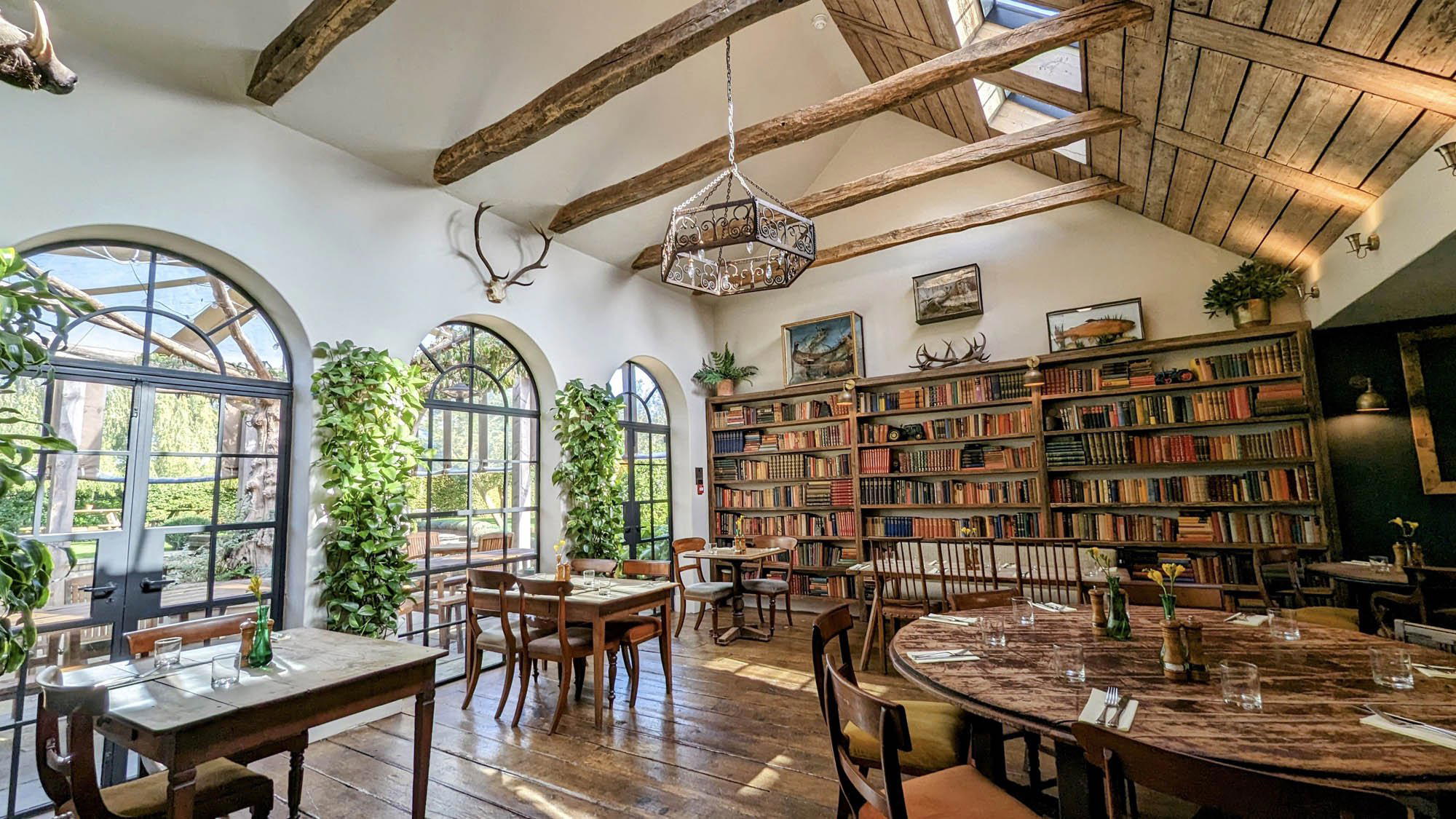
Smart casual space with exposed brick and flint walls, iron girders, glass features, and a soaring raftered ceiling, blending urban vibe in an ancient building.