The Fig Tree

The Good Food Guide GFG Good
Our verdict
Operating from a High Street address in Hurstpierpoint since 2016, The Fig Tree runs an evening tasting menu of six courses anchored in regional produce, with a fixed-price lunch menu. Tandoori monkfish tacos and turbot with crab signal a kitchen that reads far beyond its village postcode, while English sparkling wine and a Coravin-enabled by-the-glass list make the drinks programme worth attention in its own right.

Pearl is the En Primeur Club membership app — saves, bookings, and concierge access live there. Same editors, same standards.
- Address
- 120 High St, Hurstpierpoint, Hassocks BN6 9PX, United Kingdom
- Phone
- +44 1273 832183
- Hours
- Mon–Tue ClosedWed 6:30–8:30 PMThu–Sat 12–8:30 PMSun Closed
- Website
- figtreerestaurant.co.uk
- Directions
- Get directions
- Booking
- Book on OpenTable
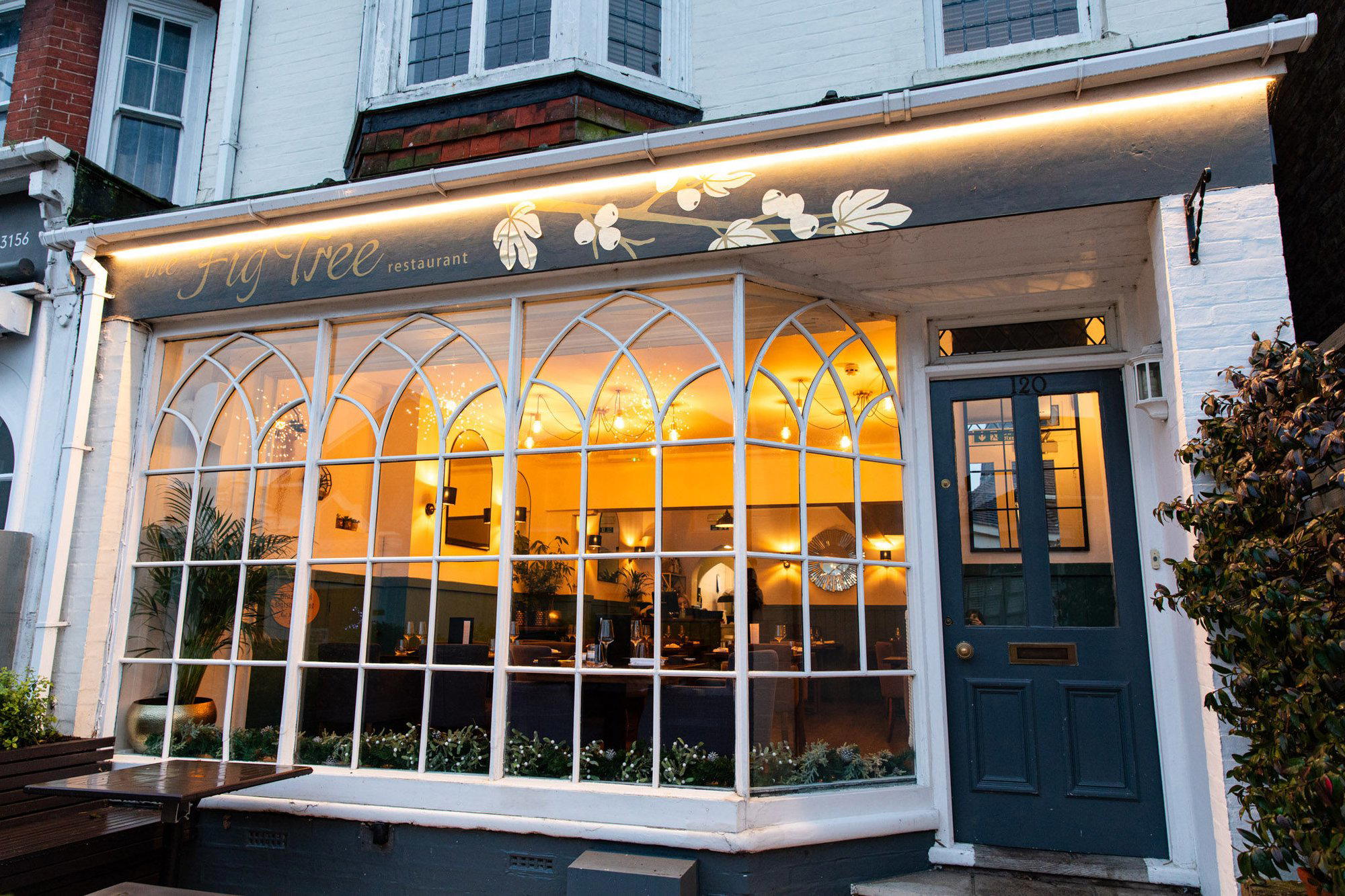
A Village Address, a Kitchen Facing Outward
The South Downs edge has always attracted a certain kind of English ambition: the kind that prefers a stone high street to a city postcode, that would rather source from the chalk downland at its back than compete for column inches in London. Hurstpierpoint sits precisely in that tradition, a pretty Sussex village where the architecture still reads Victorian and the pace slows noticeably from the Brighton commuter belt to the south coast.
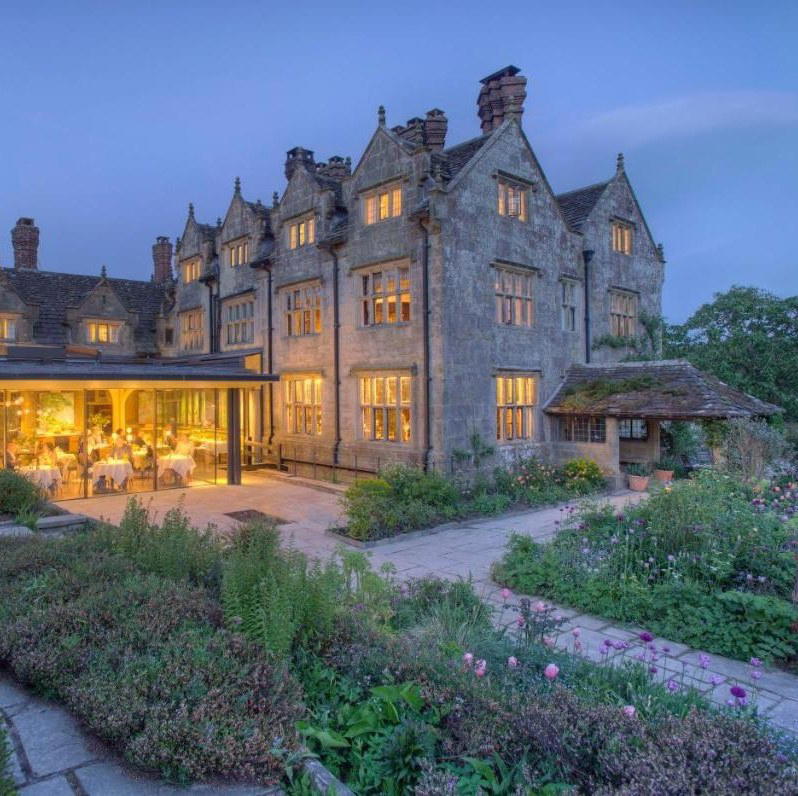
From the outside, the premises read as charmingly traditional as the street around them. Inside, the cooking moves in a different direction entirely. This is not a gastropub or a country-house dining room operating on reputation; it is a format-led restaurant where the evening structure is a six-course tasting menu, with a seventh course available in the form of British cheeses. That decision, to commit to a single tasting format at dinner while offering a fixed-price lunch menu, positions The Fig Tree within the same tier as destination restaurants operating from similarly unlikely postcodes elsewhere in England, places like L'Enclume in Cartmel or Moor Hall in Aughton, where geography is part of the proposition rather than an obstacle to it.
The Sourcing Logic Behind the Menu
At The Fig Tree, regional produce shapes the cooking. The South Downs National Park, which begins almost at the village edge, provides the broader terroir context, and the menu moves through its geography course by course.
Seafood arrives as a recurring strength. Sea bass with parsnip and tarragon, turbot paired with crab: these are combinations where the secondary ingredients amplify rather than distract from the main. The crab returns in a dish alongside fresh lemon and dill, a classical pairing that works precisely because the crab is doing enough on its own to carry the restraint. Sourcing seafood well in inland Sussex requires active relationships with coastal suppliers, and the consistency with which it appears on the menu suggests those relationships are in place.
The kitchen's handling of British ingredients extends to its more challenging flavour pairings. Quail with celeriac and truffle is a dish where the truffle functions as scent rather than bulk, cutting through the earthiness of the root without overwhelming the bird. Horseradish, often reduced to a condiment role, appears in the vegetarian menu alongside beetroot and celeriac as a genuinely fiery presence. These are decisions that reflect a kitchen confident enough in its ingredient quality to let individual flavours hold the frame.
The amuse-bouche sequence is where the sourcing logic takes its most lateral turn. A tandoori monkfish taco and a salt-beef cracker are not Sussex produce dressed in global reference; they are technically considered small bites that signal the kitchen's broader culinary vocabulary. For comparison, restaurants like hide and fox in Saltwood operate in a similar register along the southeast coast, where proximity to London's dining culture informs a more cosmopolitan approach to regional produce without abandoning the sourcing ethic.
The Drinks Programme and What It Signals
English sparkling wine has moved from novelty to credible category over the past decade, and the South Downs chalk belt is one of its most discussed production zones. The Fig Tree's drinks list reflects this geography directly, giving English sparkling wine genuine prominence rather than token placement. That decision alone tells you something about the kitchen's relationship with the region.
Beyond the sparkling wine focus, the programme uses a Coravin preservation system to maintain a serious by-the-glass offering. Coravin is not a mass-market tool; it represents an investment in giving guests access to bottles that would not otherwise be commercially viable to open for single pours. Bottle prices open at £26, which for a tasting menu restaurant of this seriousness sits at an accessible entry point. For those planning a longer stay in the area, our experiences guide covers the surrounding options.
How The Fig Tree Sits in the Broader English Country Dining Picture
The category of serious restaurants operating outside major cities has grown significantly in England over the past fifteen years. The model, destination dining in a rural or small-town setting, demands that the food itself justify the journey, since there is no ambient city energy to carry a weaker meal. Hand and Flowers in Marlow and Gidleigh Park in Chagford operate in this same register, as does Le Manoir aux Quat' Saisons in Great Milton, though that last example comes with country house infrastructure and pricing to match.
The Fig Tree operates without that infrastructure. It is a restaurant on a village high street, open since 2016, with a tasting menu format and a vegetarian option that is described as packed with flavour rather than an afterthought: leeks in crispy puff pastry, a rhubarb and custard finale that reads as genuinely comforting rather than apologetically simple. The comparison set for The Fig Tree is not London's £££££ tasting rooms, places like The Ledbury or Midsummer House in Cambridge, but the cohort of mid-scale destination restaurants where cooking quality, sourcing rigour, and format coherence carry the room without the support of a famous name or a city's gravitational pull.
Restaurants like Restaurant Sat Bains in Nottingham or Opheem in Birmingham represent a different inflection of the same instinct: serious cooking in a city context that does not require London validation. The Fig Tree does something similar within the village-restaurant tradition, bringing tasting menu discipline to a setting that could easily have defaulted to a more casual format. For international readers accustomed to the urban ambition of somewhere like Le Bernardin in New York City, the comparison is less about scale than about the underlying commitment to getting the ingredients right before anything else. Emeril's in New Orleans offers a useful transatlantic parallel in how a kitchen can express a specific regional larder with formal precision.
Planning a Visit
The Fig Tree sits at 120 High Street in Hurstpierpoint, BN6 9PX, on the edge of the South Downs National Park. Dinner runs as a six-course tasting menu, with a seventh cheese course available on request; lunch offers a fixed-price menu with genuine choice. The bottle list opens at £26, with a Coravin by-the-glass selection that extends the options considerably above that floor. Hurstpierpoint is accessible from Brighton in under half an hour by road, and the surrounding area warrants an overnight stay for those who want to combine the meal with time in the Downs.
Frequently asked questions
Is The Fig Tree suitable for children?
The evening format is a six-course tasting menu with no à la carte option, which makes it a poor fit for young children or diners who need flexibility on portions and pacing. Lunch offers a fixed-price menu with choice, which gives slightly more room. The Fig Tree at 120 High Street, Hurstpierpoint is oriented toward adult diners who want to give the kitchen their full attention.
What's the overall feel of The Fig Tree?
From the outside, the High Street address reads as traditionally English village; inside, the cooking runs in a different direction entirely. James and Jodie Dearden have run the restaurant since 2016, and the format — tasting menus in the evening, fixed-price carte at lunch — signals intent over comfort. The room does not perform; the food does.
What's the must-try dish at The Fig Tree?
Seafood is the kitchen's most consistent area of strength. Turbot paired with crab has appeared as a recurring combination, and sea bass with parsnip and tarragon shows the same produce-led logic. The amuse-bouche sequence, which has included a tandoori monkfish taco and a salt-beef cracker, also signals where the kitchen is most confident.
Where exactly is The Fig Tree?
The Fig Tree is located at 120 High St, Hurstpierpoint, Hassocks BN6 9PX, United Kingdom, Hurstpierpoint.
How The Fig Tree Hurstpierpoint compares with similar nearby venues.
| Venue | Cuisine | Awards |
|---|---|---|
| The Fig TreeThis venue — the venue you are viewing | Modern British Fine Dining | The Good Food Guide GFG Good |
| Ginger Fox | Modern British | Not listed |
Recognition history
Dated appearances from independent guides and award organizations, with the underlying list record or original source where available.
The Good Food Guide GFG Good
The Good Food Guide
Continue exploring
More in Hurstpierpoint
Restaurants in Hurstpierpoint
Browse all →
Bars in Hurstpierpoint
Browse all →
Hotels in Hurstpierpoint
Browse all →

Details
- Elegant
- Cozy
- Intimate
- Sophisticated
- Date Night
- Special Occasion
- Celebration
- Standalone
- Extensive Wine List
- Local Sourcing
- Tasting Menu
- A La Carte
- Set Menu
- Vegetarian Friendly
- Allergy Accommodating
Current opening hours
- Monday
- Closed
- Tuesday
- Closed
- Wednesday
- 6:30–8:30 PM
- Thursday
- 12–8:30 PM
- Friday
- 12–8:30 PM
- Saturday
- 12–8:30 PM
- Sunday
- Closed
Hours can change for holidays and private events. Last verified .
Relaxed and welcoming with good ambience, attentive professional service, and a charming traditional interior.