The Chef’s Table at Blue Duck Station


Cuisine Good Food Guide Selection · The Best Chef One Knife
Our verdict
Set within the working pastoral landscape of New Zealand's central North Island, The Chef's Table at Blue Duck Station places Jack Cashmore's cooking inside one of the country's more remote and consequential food settings. The format rewards guests willing to travel for a meal that sits well outside the standard restaurant circuit, drawing on the station's own land and surrounding rivers for its ingredients.

Pearl is the En Primeur Club membership app — saves, bookings, and concierge access live there. Same editors, same standards.
- Address
- 4265 Oio Road, Whakahoro Retaruke, Ōwhango 3990, New Zealand
- Phone
- +64 7 895 6276
- Hours
- Mon–Wed ClosedThu–Sun 5–11:30 PM
- Website
- thechefstable.co.nz
- Directions
- Get directions
- Booking
- Book on Tock
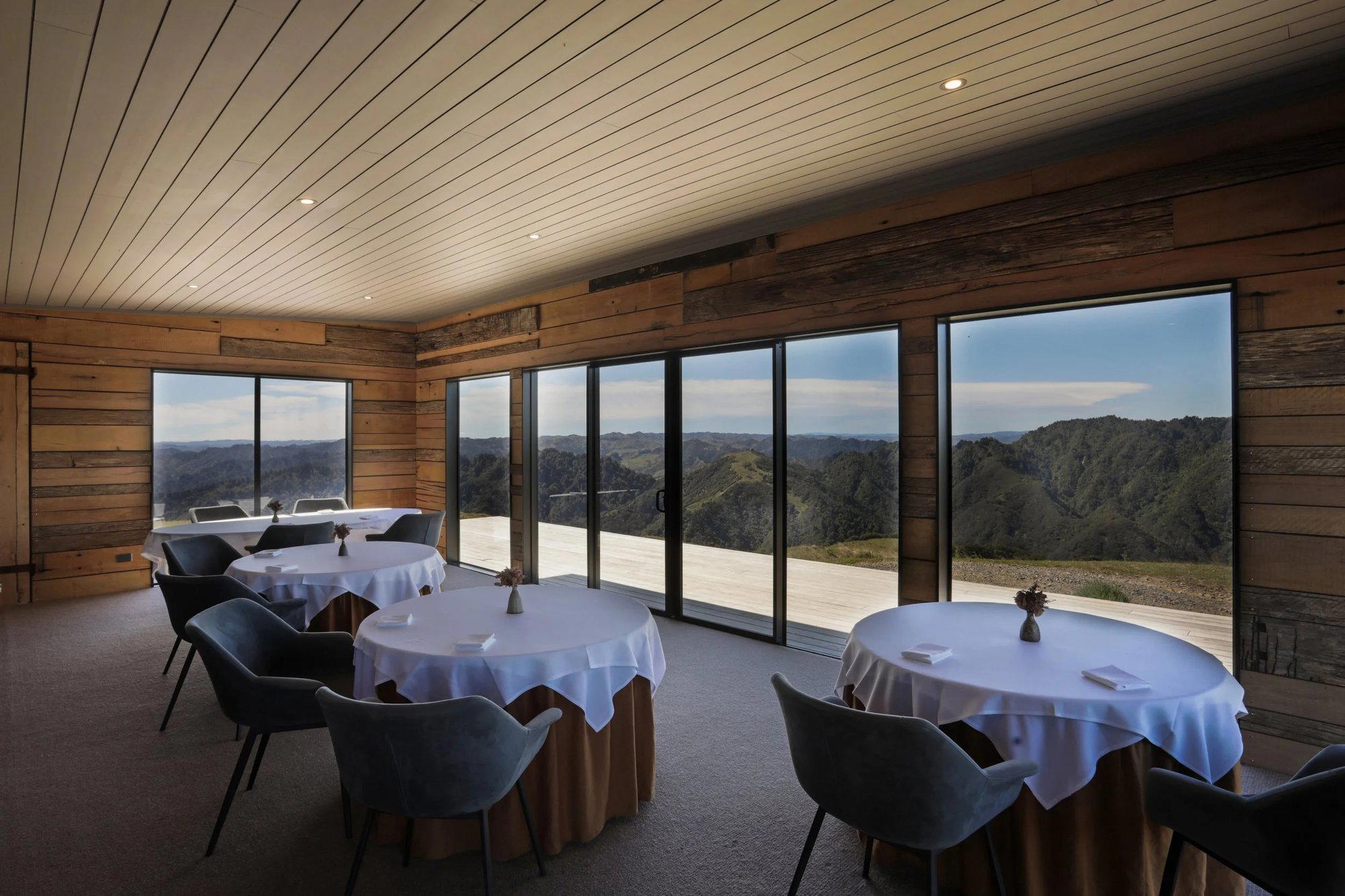
Where the Menu Begins Outside the Kitchen
Arriving at Blue Duck Station requires commitment. The drive to Owhango, deep in the Whanganui National Park corridor of New Zealand's central North Island, strips away the usual urban restaurant calculus. There are no neighbouring competitors, no passing trade, no casual walk-ins. The isolation is not incidental to the experience — it is the experience's first course. The property sits along the Retaruke River, where the working farm and conservation reserve operate as a single ecosystem, and the food coming out of Jack Cashmore's kitchen draws directly from that setting.
Blanket Bay in Glenorchy and Otahuna Lodge Restaurant in Tai Tapu occupy adjacent territory — lodge-based dining where the property's landscape is the editorial frame. What Blue Duck Station adds is the functional farm dimension: cattle, conservation work, and a river system with active birdlife all feeding the context around the table. For a broader map of where this fits in New Zealand's serious dining scene, our full Owhango restaurants guide provides the regional picture.
The Chef in a Remote Setting
New Zealand's most discussed chef tables have historically clustered in Auckland, Wellington, and Queenstown. Ahi in Auckland and Charley Noble in Wellington represent that urban tier, where supplier relationships are built through a city's market infrastructure. The decision to place serious cooking in a location as remote as Owhango inverts that model entirely. Jack Cashmore's position here is one shared by a small cohort of New Zealand chefs who have traded the recognition economy of city dining for the creative latitude of working directly with a primary producer setting. It is a more demanding arrangement, resupply is harder, seasonal constraints are tighter, and the guest must travel to the kitchen rather than the kitchen positioning itself near the guest.
That trade-off produces a different kind of authority in the cooking. At venues like Craggy Range in Havelock North or Elephant Hill in Napier, winery estate dining achieves a similar connection between land and plate, though within Hawke's Bay's more accessible tourism infrastructure. Blue Duck Station operates further from that infrastructure, which shapes both the format and the expectation of the guest arriving.
Pastoral New Zealand and the Chef's Table Format
The chef's table format, where cooking is either performed in front of guests or narrated directly by the kitchen, has spread across a wide range of price points and ambitions globally. At its most refined, as seen at Le Bernardin in New York City or Atomix in New York City, the format is an exercise in sustained technical narrative. In a farm-station context, the narrative shifts from technique toward provenance: the kitchen's authority comes from proximity to source rather than accumulated classical training signals.
Blue Duck Station's use of this format reflects a strand of New Zealand hospitality that has become more considered over the past decade. The high-country and conservation-station dining model, where guests are overnight visitors or day-trippers on extended farm stays, positions food as one part of a larger land experience. The Bay House in Westport gestures toward a similar geography-first dining proposition on the South Island's West Coast. What distinguishes the central North Island version is the Whanganui catchment: the rivers, native bush, and high-country pasture create a specific ingredient palette that does not replicate elsewhere in the country.
The Regional Context
Owhango sits between Taupo and Taumarunui, a stretch of State Highway 4 that most travellers use as a transit corridor rather than a destination. The Tongariro and Whanganui national parks bracket either side, drawing visitors for tramping and river journeys rather than for eating. That the region has produced a serious chef's table format says something about the broader shift in New Zealand destination dining: hospitality operators in remote areas have recognised that the scarcity of quality food in these regions is itself an argument for excellence, not an excuse for adequacy.
For comparison, Malabar Beyond India in Taupo and Fife Lane in Mount Maunganui demonstrate that serious cooking in the central and upper North Island is not confined to Auckland's gravitational pull. Blue Duck Station extends that regional distribution further into genuinely rural territory.
If the meal itself is the draw, the surrounding region offers additional reasons to stay longer. Our full Owhango hotels guide covers accommodation options for those planning an overnight visit, and the station itself accommodates guests. For anyone extending their central North Island visit, our full Owhango bars guide, our full Owhango wineries guide, and our full Owhango experiences guide map the fuller picture of what the area offers.
Practical Intelligence for Getting There
The address, 4265 Oio Road, Whakahoro Retaruke, Ōwhango, signals the level of planning required. This is not a restaurant you drop into between other appointments. Guests travelling from Auckland face a drive of roughly three hours; from Wellington, the route via Taumarunui adds similar time. The station's remote position means that dining here almost always connects to an overnight stay, either on the property or in the surrounding area. Booking protocols, current hours, and format details are best confirmed directly with the property before travelling any distance, given the logistical investment involved in reaching it.
For those assembling a broader New Zealand itinerary around serious food, Amisfield in Queenstown and Cod and Lobster in Nelson represent the South Island's contribution to the estate-dining and regional-product model. Blue Duck Station sits in a distinct North Island register: denser bush, volcanic plateau geology, and a river system that has shaped the local food culture in ways the drier Marlborough and Central Otago landscapes do not replicate.
Frequently asked questions
What's The Chef’s Table at Blue Duck Station known for in terms of accolades?
The Chef’s Table at Blue Duck Station has received recognition including: Chef: Jack Cashmore document.addEventListener("DOMContentLoaded", function { var el = document.getElementById("Achievements_chefs"); if (el && el.parentNode) { el.parentNode.removeChild(el); } });.
What's the address for The Chef’s Table at Blue Duck Station?
The Chef’s Table at Blue Duck Station is located at 4265 Oio Road, Whakahoro Retaruke, Ōwhango 3990, New Zealand, Owhango.
Who is the chef or culinary lead at The Chef’s Table at Blue Duck Station?
The chef associated with The Chef’s Table at Blue Duck Station is Jack Cashmore.
Can I walk in to The Chef’s Table at Blue Duck Station?
Reservations are recommended for The Chef’s Table at Blue Duck Station in Owhango. Confirm current policy via the venue's official channels.
Quick Comparison
Comparable venues nearby, for context on price, style, and recognition.
| Venue | Cuisine | Price | Awards | Notes |
|---|---|---|---|---|
| The Chef’s Table at Blue Duck StationThis venue — the venue you are viewing | Contemporary Farm-to-Table Fine Dining | Not listed | Cuisine Good Food Guide Selection · The Best Chef One Knife | Not listed |
| Logan Brown | Contemporary New Zealand Fine Dining | $50–100 | 1 Michelin Star · La Liste Top Restaurants | Te Aro |
| San Ray | Cal-Mex Wood-Fired Bistro | Not listed | Star Wine List · Cuisine Good Food Guide 1 Hat | Grey Lynn |
| Tala | Contemporary Samoan | $150–200 | 1 Michelin Star · La Liste Top Restaurants | Parnell |
| The Ortega Fish Shack | Fresh NZ Seafood Shack | $50–100 | 1 Michelin Star · Cuisine Good Food Guide Selection | Mount Victoria |
| Kazuya | European-Japanese Fusion Fine Dining | $100–150 | Cuisine Good Food Guide 2 Hat | Eden Terrace |
Recognition history
Dated appearances from independent guides and award organizations, with the underlying list record or original source where available.
Cuisine Good Food Guide Selection
Cuisine Good Food Guide
The Best Chef One Knife
The Best Chef
Full recognition history (3 entries)
Cuisine Good Food Guide 2 Hat
Cuisine Good Food Guide
Details
- Elegant
- Scenic
- Intimate
- Sophisticated
- Special Occasion
- Celebration
- Date Night
- Open Kitchen
- Panoramic View
- Standalone
- Farm To Table
- Local Sourcing
- Mountain
- Tasting Menu
- Vegetarian Friendly
- Allergy Accommodating
Current opening hours
- Monday
- Closed
- Tuesday
- Closed
- Wednesday
- Closed
- Thursday
- 5–11:30 PM
- Friday
- 5–11:30 PM
- Saturday
- 5–11:30 PM
- Sunday
- 5–11:30 PM
Hours can change for holidays and private events. Last verified .
Intimate fine dining setting with floor-to-ceiling views of the surrounding mountains and farmland; open kitchen allows diners to observe the chef's work; rustic-elegant aesthetic using reclaimed timber and farm materials.