Thali
On Old Brompton Road in Earl's Court, Thali occupies a stretch of South Kensington that has long supported neighbourhood Indian dining rather than destination-driven spectacle. The address places it within walking distance of the area's residential core, where regulars expect consistency over theatre. For a considered Indian meal in SW5 without the Mayfair premium, this is a practical first consideration.
Pearl is the En Primeur Club membership app — saves, bookings, and concierge access live there. Same editors, same standards.
- Address
- 166 Old Brompton Rd, London SW5 0BA, United Kingdom
- Phone
- +44 20 7373 2626
- Website
- thali.london
- Directions
- Get directions
 Saves & bookings on Pearl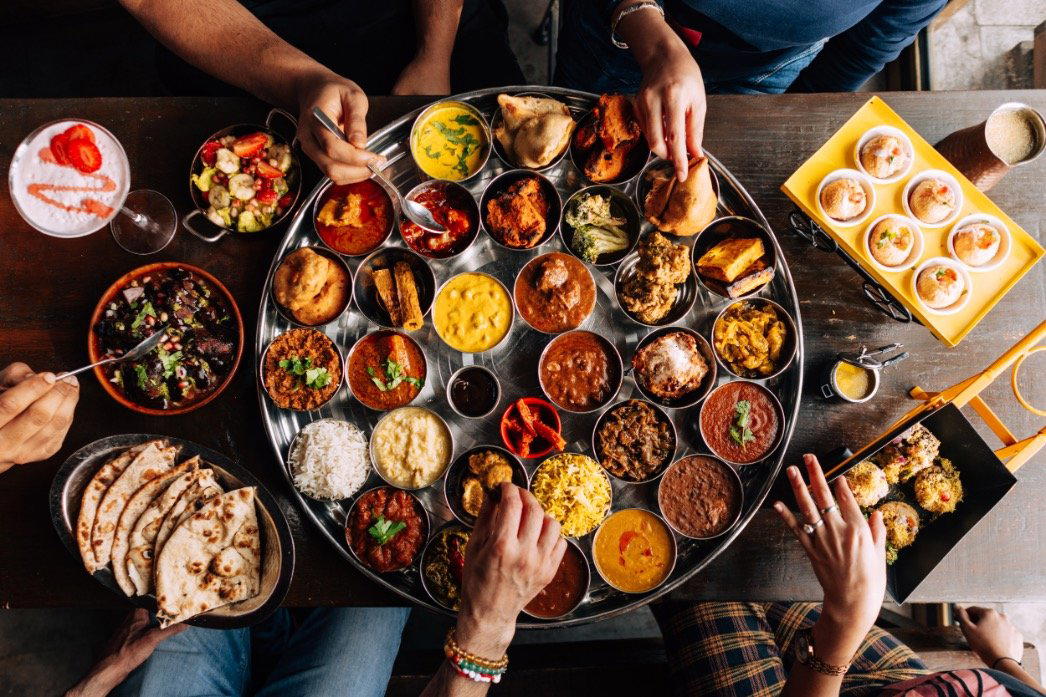
Earl's Court and the Indian Restaurant Tier It Belongs To
If you eat one style of cuisine repeatedly in London, Indian is the one most likely to disappoint you through sheer variability of quality across postcodes. The gap between a credentialed Mayfair address like Gymkhana and a functional high-street operation is wider here than in almost any other cuisine category. Old Brompton Road sits between those poles, and Thali, at number 166, occupies a stretch of SW5 where the dominant expectation is a reliable neighbourhood meal rather than a tasting-menu event. That positioning is neither a criticism nor an endorsement: it is simply the context in which the restaurant operates, and it shapes every decision about when and why you would choose it.
Earl's Court and the surrounding grid of streets feeding into South Kensington have historically supported a dense layer of mid-register restaurants serving the area's residential population. Unlike the Michelin-tracked addresses further east, CORE by Clare Smyth in Notting Hill, The Ledbury further north, the Old Brompton corridor does not generate much critical heat. That absence of critical attention is itself a piece of neighbourhood intelligence: the restaurants here survive on repeat local business, which imposes its own discipline on quality and value.
What the Address Tells You About the Experience
The SW5 postcode carries practical implications for anyone travelling to Thali. The neighbourhood is accessible from Earl's Court Underground station on both the District and Piccadilly lines, placing it within direct reach of central London and, via the Piccadilly line, directly from Heathrow. For visitors staying in the South Kensington hotel corridor, it sits within reasonable walking distance, which makes it a logical option for an evening that does not require a taxi or a significant pre-booking window.
Old Brompton Road itself is a commercial strip rather than a destination dining street. The buildings are Victorian, the pavement is wide, and the retail mix runs toward cafés, dry cleaners, and estate agents rather than the kind of independent food culture you find around Broadway Market or Maltby Street. For a restaurant operating here, the competitive set is not London's Indian fine-dining tier, it is the surrounding neighbourhood, where a credible thali format at a reasonable price point is a more useful proposition than elaborate ceremony.
The thali format itself is worth understanding as a structural choice. In Indian restaurant culture, the thali, a composed plate or tray of multiple small preparations served simultaneously, functions as both a practical and philosophical statement. It allows a kitchen to demonstrate range across spice profiles, textures, and regional influences in a single sitting without the sequential logic of a European tasting menu. At the better end of the format, you see distinct dal preparations, rotating vegetable dishes, bread service, rice, and accompaniments that shift by day or season. The format demands kitchen discipline because every element arrives at once and must hold its temperature and texture together. It is, in short, a harder format to execute consistently than a la carte.
The Neighbourhood Indian in London's Broader Context
London's Indian restaurant scene splits into at least three tiers. At the leading, a small number of addresses with serious culinary credentials, Gymkhana, Jamavar, Benares, operate at price points and ambition levels comparable to the city's French and modern European fine-dining addresses. Below that, a middle tier of established neighbourhood restaurants, often family-run, with loyal local followings and menus that have not changed substantially in a decade. At the bottom, a large category of delivery-focused operations with dining rooms that function as an afterthought. Thali, by address and format, operates in the middle tier, where the evaluation criteria are different from the leading: you are not asking whether the tasting menu is coherent, you are asking whether the dal is seasoned correctly, whether the bread arrives hot, and whether the price-to-portion relationship makes sense for a Tuesday evening in a residential postcode.
For comparison, London's most formally recognised Indian dining experiences occupy a different price bracket entirely. A dinner at Gymkhana or Brigadiers in the City will run considerably higher per head than a neighbourhood thali operation, and the service format, room investment, and sourcing credentials differ accordingly. The comparison matters only insofar as it helps calibrate expectation: Thali is not competing with those addresses, and should not be evaluated as if it were.
If you are building a London dining itinerary weighted toward Michelin-tracked addresses, Restaurant Gordon Ramsay, Sketch's Lecture Room, Dinner by Heston Blumenthal, Thali fills a different slot: the low-effort, low-stakes evening meal for nights when the objective is sustenance and neighbourhood texture rather than a three-hour commitment. If you are travelling beyond the capital, L'Enclume in Cartmel, Moor Hall in Aughton, The Fat Duck in Bray, Hand and Flowers in Marlow, Gidleigh Park in Chagford, and Le Manoir aux Quat' Saisons in Great Milton represent the country's most serious dining commitments outside London. For international reference, Le Bernardin in New York and Atomix in New York set a useful global benchmark. You can also browse London wineries for regional drink context.
Planning Your Visit
| Factor | Thali (SW5) | Mid-tier London Indian (general) | London Indian fine dining (Mayfair/City) |
|---|---|---|---|
| Address type | Residential high street | Residential/suburban high street | Destination dining street or hotel |
| Booking pressure | Low to moderate (walk-ins likely possible) | Low to moderate | High (weeks to months ahead) |
| Price per head (estimated) | Mid-range neighbourhood | Mid-range | ££££ (comparable to European fine dining) |
| Nearest transit | Earl's Court (District/Piccadilly) | Varies | Green Park, Bond Street, Bank |
| Leading for | Casual evening, neighbourhood meal | Regular local dining | Special occasion, full-commitment dinner |
Quick Comparison
Comparable venues nearby, for context on price, style, and recognition.
| Venue | Cuisine | Price | Notes |
|---|---|---|---|
| ThaliThis venue — the venue you are viewing | Modern North Indian | $$$ | Not listed |
| Annayu | Modern Indian Fine Dining | $$$ | Harlington |
| Oudh 1722 | Awadhi fine dining from Lucknow in a historic Borough townhouse | $$$ | Borough |
| The India | Traditional North Indian Cuisine | $$$ | Holborn |
| Gul & Sepoy | Modern Rustic Royal Indian | $$$ | Spitalfields |
| Salloos | Authentic Pakistani & North Indian | $$$ | Belgravia |
Continue exploring
More in London
Restaurants in London
Browse all →
Bars in London
Browse all →
Hotels in London
Browse all →



At a Glance
- Cozy
- Elegant
- Intimate
- Sophisticated
- Date Night
- Group Dining
- Special Occasion
- Private Dining
- Extensive Wine List
Current opening hours
- Monday
- 6 PM–12 AM
- Tuesday
- 6 PM–12 AM
- Wednesday
- 6 PM–12 AM
- Thursday
- 6 PM–12 AM
- Friday
- 6 PM–12 AM
- Saturday
- 6 PM–12 AM
- Sunday
- Closed
Hours can change for holidays and private events. Last verified .
Cosy candlelit upstairs dining with blue plastered walls, ornate gold-framed mirrors, discreet oriental carvings, and a warm, subtly accented atmosphere.