
Tabelog 100 #74
Our verdict
Tempura Sakuma places Koriyama’s tempura tradition in a slower, more ritualized register: counter craft, fish-led cooking, and a room suited to both family meals and business dining. Its selection for Tabelog Tempura 100 in 2022, 2023, and 2025 gives it national context without turning the experience into trophy dining.

Pearl is the En Primeur Club membership app, where members save venues, book tables and use the concierge.
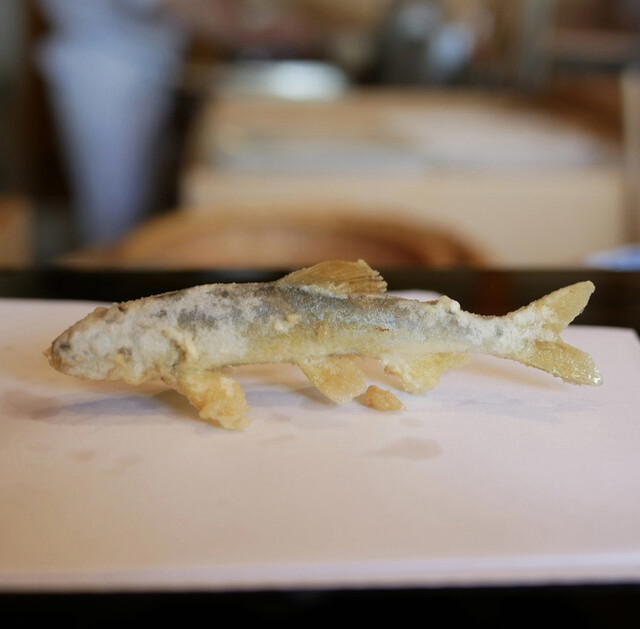
The menu
What to order
- Tempura rice bowl (tendon)
- Seasonal seafood tempura
- Seasonal vegetable tempura
Approach tempura in Fukushima with measured expectations and the meal can feel refreshingly unhurried. The appeal is sequence, not theatre: batter, oil, ingredients, rest, repeat. In a regional city where serious dining often lives in modest rooms rather than hotel towers, a tempura meal asks diners to notice pacing, temperature, and the etiquette of waiting for each piece rather than treating the meal as a shared platter.
Tempura Sakuma belongs to Fukushima dining’s disciplined side. Its 2025 Tabelog Hyakumeiten recognition places it in a category where consistency matters as much as ambition. That recognition is useful because tempura is unforgiving: a room can look casual, but the cooking exposes every compromise in timing, oil management, and ingredient handling.
Fukushima tempura, judged by rhythm rather than spectacle
Travellers often misunderstand tempura as a single texture. In Japan, the better version is a timed ritual: the kitchen controls the sequence; the diner keeps pace. Each piece should not cool while conversation takes over. Pleasure builds through small variations in heat, moisture, and crispness. That is why focus matters, and why different dining setups can serve different meals without changing the core expectation: tempura should arrive with intention.
Fukushima’s dining culture rewards places that serve regulars, families, and visitors without flattening the experience. Compared with regional names such as Rantei Vivian, Marushin, Harukiya Kooriyama bunten, Ootomo Pan Ten, and Soba Saizen Ryusenbo, this address occupies a more technique-specific lane. The comparison is less about luxury than purpose. Soba, bread, local set meals, and tempura answer different needs; tempura asks for narrower focus and a willingness to let the kitchen dictate tempo.
The tempura emphasis is the clue. Tempura houses that define themselves through the category rather than a generic fried assortment signal a more serious reading of the form. The cooking depends on restraint, not abundance. Batter should protect rather than smother; oil should frame rather than dominate. The diner’s task is simple but exacting: eat promptly, avoid over-seasoning, and accept that the meal’s structure was decided before the first piece lands.
Outside Japan’s major dining capitals, the ritual feels different. In Tokyo, tempura can become a luxury contest measured by scarcity and course price. In Fukushima, the form is less burdened by performance, making the fundamentals easier to read. Selection for a national tempura-focused list gives Tempura Sakuma authority, but the stronger reason to pay attention is its regional specialist model: focused, accessible, and rooted in repeat-use hospitality rather than occasion-only drama.
A room built for several versions of the same meal
The physical format matters because tempura changes with distance from the fryer. A more concentrated meal keeps the experience closest to its ideal rhythm. More conversational settings shift the experience toward family and business dining, where comfort can carry more weight. That flexibility is common in regional Japan, where a serious restaurant may host grandparents, colleagues, children, and solo diners in the same week.
Tempura Sakuma is best understood not as a hushed temple to technique, but as a local specialist with enough range for different social uses. The useful expectation is focus rather than ceremony: a place where the category leads the meal, and where the pleasure depends less on display than on the kitchen’s control of heat, timing, and texture.
The drinks framing at a tempura meal should support, not distract. Sake, shochu, wine, beer, or tea can each work when chosen with restraint. Sake follows the meal’s saline and umami register; wine, chosen carefully, can handle oil without overwhelming batter. The point is not novelty, but keeping the meal clean and responsive.
Fukushima travellers should think in categories rather than rankings. A tempura meal here pairs well with a broader scan of the prefecture through Our full Fukushima restaurants guide, while non-restaurant planning sits separately in Our full Fukushima hotels guide, Our full Fukushima bars guide, Our full Fukushima wineries guide, and Our full Fukushima experiences guide. For nearby dining contrast, other Fukushima dining rooms, casual specialists, and cafés show the region beyond one genre.
Where it fits in a Japan itinerary
For travellers moving through Japan, a regional tempura address offers perspective. The country’s dining map is not only capital-city counters and high-price tasting menus; it also depends on specialist restaurants serving local demand over time. Tempura Sakuma’s appeal sits in that regional context, where audiences quickly learn the difference between competence and craft.
The restaurant’s Tabelog score of 3.55 should be read in context. On Japanese review platforms, specialist restaurants outside major tourist circuits can sit in a narrow scoring band despite strong local reputation and category recognition. The stronger trust signal is its 2025 Tabelog Hyakumeiten recognition, which places the restaurant inside a cuisine-specific frame rather than a broad popularity contest.
Its strongest use case is the diner who wants tempura as a meal with rules, not a side order. This is not the place to treat fried food casually. Approach it as a sequence: let the pacing work, keep focus on the category’s quiet demands, and allow the kitchen’s timing to shape the experience. In that sense, the restaurant is less a detour for completists than a useful correction to the idea that serious Japanese tempura culture is confined to the capital.
Readers comparing Japanese dining formats can place it alongside other dining in Fukushima and beyond without turning the comparison into a ranking. Different rooms answer different cravings: noodles, bread, local set meals, casual cafés, and specialist restaurants all carry their own logic. Fukushima tempura is still best understood at its source: in a room where timing, heat, and restraint carry the meal.
Frequently asked questions
What part of town is Tempura Sakuma in?
Fukushima.
What are the opening hours for Tempura Sakuma?
Opening hours are not specified here; check directly with Tempura Sakuma before visiting.
How much does it cost to eat at Tempura Sakuma?
Pricing at Tempura Sakuma is listed as Dinner: JPY 5,000 - JPY 5,999; Lunch: JPY 1,000 - JPY 1,999.
What makes Tempura Sakuma worth seeking out?
Tempura Sakuma earned 2025 Tabelog Hyakumeiten recognition for tempura, with a Tabelog score of 3.55. The setup is practical and focused, with listed pricing of Dinner: JPY 5,000 - JPY 5,999; Lunch: JPY 1,000 - JPY 1,999 in Fukushima.
Category Peers
Side-by-side context: comparable cuisine and price.
| Venue | Cuisine | Price | Awards | Notes |
|---|---|---|---|---|
| Tempura SakumaThis venue (the venue you are viewing) | Traditional Japanese Tempura | $50–100 | Tabelog 100 #74 | Not listed |
| Jikaseimen Urota | Modern ramen with house-made noodles | $10–20 | Tabelog 100 #89 | Fukushima |
| Hisuinosato | Seasonal Japanese Kaiseki | $300–500 | Not listed | Fukushima |
| Hachi no Ki | Japanese ginger pork set-meal diner | $10–20 | Tabelog 100 #8 | Fukushima |
| Tempura Hirai | Seasonal Tempura Omakase | $50–100 | Tabelog 100 #99 | Fukushima |
| Chuka Soba Mugen | Chukasoba Ramen | $10–20 | Michelin Bib Gourmand · Tabelog 100 #8 | Fukushima |
Recognition history
Dated appearances from independent guides and award organizations, with the underlying list record or original source where available.
Tabelog 100 #74 · No. 74
Tabelog · Tabelog 100 - Tempura - 2025
Continue exploring
More in Koriyama
Restaurants in Koriyama
All restaurants in Koriyama →
Hotels in Koriyama
Browse all →
Details
- Cozy
- Classic
- Family
- Business Dinner
- Group Dining
- Casual Hangout
- Solo
- Chefs Counter
- Private Dining
- Standalone
- Sake Program
- Extensive Wine List
- Street Scene
- A La Carte
- Set Menu
- Counter Dining
- Sake
- Wine
- Shochu
- Pescatarian Friendly
Current opening hours
- Monday
- Closed
- Tuesday
- 11:30 AM–2:30 PM, 5:30–9 PM
- Wednesday
- 11:30 AM–2:30 PM, 5:30–9 PM
- Thursday
- 11:30 AM–2:30 PM, 5:30–9 PM
- Friday
- 11:30 AM–2:30 PM, 5:30–9 PM
- Saturday
- 11:30 AM–2:30 PM, 5:30–9 PM
- Sunday
- 11:30 AM–2:30 PM, 5:30–9 PM
Hours can change for holidays and private events. Last verified .
A relaxed, traditional Japanese tempura house with counter seats and tatami rooms, offering spacious, comfortable seating and a calm, understated atmosphere suited to families, friends, and business meals.