Tempura Hirai

Tabelog 100 #99
Our verdict
Tempura Hirai puts Fukushima’s small-scale tempura culture into a serious, compact format: counter seating, private-room tables, and a dinner price band of JPY 6,000 to JPY 7,999. Its selection for Tabelog 100 - Tempura - 2025 places it in a national conversation usually dominated by Tokyo and Kansai counters, which makes the Fukushima setting part of the point.

Pearl is the En Primeur Club membership app, where members save venues, book tables and use the concierge.
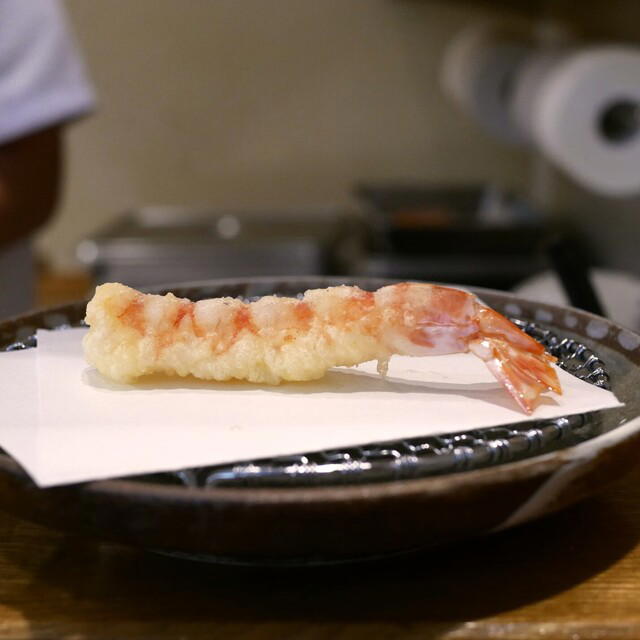
The menu
What to order
- Seasonal vegetable tempura (e.g., asparagus, young corn, snap peas)
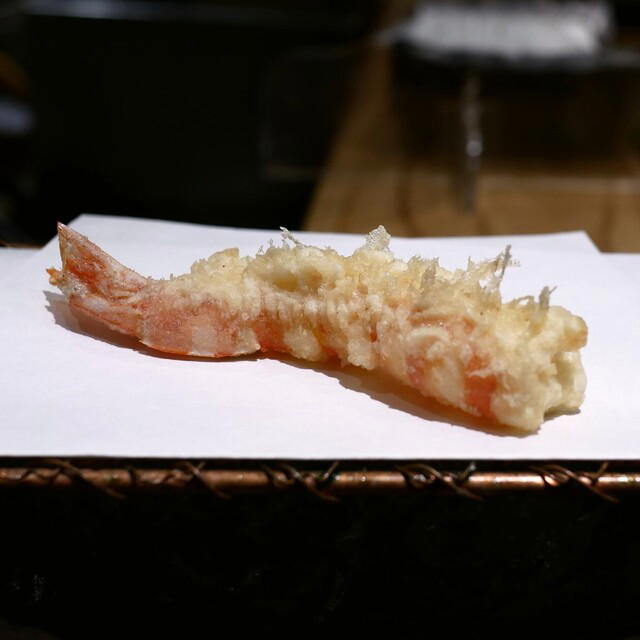
- Tempura of live kuruma ebi (prawn)
- Tempura anago (conger eel)
- Uni seaweed-wrapped tempura
- Banana tempura with rum and cream
- Tempura ice cream
Fukushima is not theatrical on approach: urban rhythm, compact blocks, station-side streets, and a restaurant built around frying, timing, and proximity. Tempura rewards such a room. Unlike sushi, where aging and knife work often carry the intellectual weight before the meal, tempura reveals hierarchy in seconds: oil temperature, batter restraint, pacing, and whether each piece avoids heaviness.
That is why Fukushima’s place in the tempura conversation matters. Japan’s high-end canon is often read through Tokyo counters, Ginza price pressure, and established houses with national name recognition. A Fukushima restaurant selected for Tabelog 100 - Tempura - 2025 shifts the lens. Tempura Hirai belongs to a focused regional tier where the format is clearly defined, the category tightly framed, and the value equation far from the capital. At JPY 6,000 to JPY 7,999 for dinner, it sits as a serious Fukushima choice: distinct from more casual stops such as Bistro Mikasa, and part of the same broader decision set as Shioya or Tori Ken for diners choosing one considered night out rather than a casual stop.
Fukushima tempura in a national category usually centered elsewhere
Tempura carries a useful contradiction. It entered Japan through early modern contact with Portuguese frying techniques, then became distinctly Edo: quick, seasonal, and structured around immediacy. Today that history splits into everyday tempura, including tendon bowls and set meals, and more focused tempura meals, where the kitchen’s control of sequence and pace becomes central to the experience.
Tempura Hirai sits between those readings. Its listed categories are tempura and ten-don, but its appeal points specialist: a restaurant where frying is not incidental, and where the bowl format can sit beside a more craft-focused reading of the same tradition. That gives the restaurant broader social use in Fukushima without turning the experience into a formal temple of silence.
The Tabelog 100 - Tempura - 2025 selection is the clearest external signal. Tabelog’s Hyakumeiten lists are not Michelin stars or a global fine-dining hierarchy. Their value is different: they identify category strength inside Japanese user culture, where ramen, soba, tempura, tonkatsu, and other specialists are judged against deep domestic expectations. For a Fukushima restaurant, inclusion gives stronger credential than generic praise: the cooking is assessed inside a demanding national genre, not merely against local convenience.
Fukushima’s dining scene rewards that distinction. The city has a practical restaurant base, with price bands from everyday noodles at Jikaseimen Urota to casual Western-style meals, grills, izakaya formats, and other Japanese restaurants. For broader planning, Our full Fukushima restaurants guide is the starting point, while Our full Fukushima hotels guide, Our full Fukushima bars guide, Our full Fukushima wineries guide, and Our full Fukushima experiences guide frame the city beyond dinner. Tempura Hirai belongs in the restaurant conversation, but its wider appeal is cultural: a local table working inside one of Japan’s exacting frying traditions.
A focused room, a narrow craft, and a price point with purpose
The strongest reason to prioritize this restaurant is concentration, not spectacle. A focused tempura restaurant creates a particular rhythm, and the appeal is clearest for diners who want the meal to revolve around timing, heat, batter, and sequence. For travelers building Fukushima into a Tohoku itinerary, it is the kind of dinner that should be planned as the evening’s main event rather than treated as an afterthought.
The beverage question matters because tempura is about balance. Tempura can be awkward with heavy reds and high-sugar drinks; sake and shochu usually make structural sense, while wine needs acidity and restraint. Whatever the final choice, the pairing should support lightness rather than bury it. In a specialist setting, that widens the meal’s register without changing the core subject.
Compared with cheaper everyday tables, the dinner spend asks for intention. Compared with Tokyo tempura counters that can run far higher, it reads controlled. That is the regional advantage when cooking is disciplined: the diner pays for a specialized format, not a capital-city address premium. The trade-off is limited flexibility. The format depends on kitchen pacing and a meal built around the fryer. This is a plan-ahead dinner, not a spontaneous second stop after a long evening elsewhere.
Tempura Hirai’s Tabelog score of 3.72 and its 2025 Hyakumeiten recognition give it a clearer outside signal than many local favorites receive. Scores alone do not prove quality, but in a specialist category they help explain why the restaurant matters beyond convenience. For travelers, that often means more than decorative luxury cues.
How to place it in a wider Japan itinerary
Tempura Hirai suits readers who know Japanese dining strength is not confined to the usual city triad. The same itinerary logic that sends diners toward other focused Fukushima dining rooms applies here: choose the restaurant for the form it represents, not a checklist of luxury gestures. Across Japan, that form might mean a single-subject counter, a regional specialist, or a focused room where one technique carries the evening rather than a menu built to cover every possible occasion.
For international readers, the comparison is broader. A focused Japanese specialist has more in common with a single-subject counter abroad than with a grand restaurant covering every occasion. Narrow formats can carry a city’s food intelligence better than broad menus, especially when the craft is easy to understand but difficult to execute well. In Fukushima, tempura is the lens. Choose this restaurant when the evening’s point is Japanese frying as craft, in a focused setting, at a price focused on technique rather than ceremony.
Frequently asked questions
Is Tempura Hirai a family-friendly restaurant?
Tempura Hirai is in Fukushima and is best approached as a focused tempura meal. For families or small groups, confirm current seating and suitability directly when planning.
What should I expect atmosphere-wise at Tempura Hirai?
Expect a focused Fukushima restaurant centered on tempura and ten-don. The experience is best understood through timing, frying, and the pace of a specialist kitchen rather than broad-menu dining.
What does dinner at Tempura Hirai typically cost?
Pricing at Tempura Hirai is listed as JPY 6,000 - JPY 7,999.
What is Tempura Hirai known for?
Tempura Hirai is known for tempura and ten-don in Fukushima, with recognition in Tabelog 100 - Tempura - 2025.
Price and Recognition
Comparable options at the same price tier.
| Venue | Cuisine | Price | Awards | Notes |
|---|---|---|---|---|
| Tempura HiraiThis venue (the venue you are viewing) | Seasonal Tempura Omakase | $50–100 | Tabelog 100 #99 | Not listed |
| Shioya | Edo-style Tempura Omakase | $50–100 | Tabelog 100 #89 | Fukushima, Edo-style Tempura Omakase |
| Tori Ken | Yakitori | $50–100 | Tabelog 100 #62 | Fukushima, Yakitori |
| Jikaseimen Urota | Modern ramen with house-made noodles | $10–20 | Tabelog 100 #89 | Fukushima, Modern ramen with house-made noodles |
| Dateya | Traditional Fukushima ramen shop | $10–20 | Tabelog 100 #65 | Fukushima, Traditional Fukushima ramen shop |
| Bistro Mikasa | Yoshoku (Japanese-style Western) Bistro | $10–20 | Tabelog 100 #2 | Fukushima, Yoshoku (Japanese-style Western) Bistro |
Recognition history
Dated appearances from independent guides and award organizations, with the underlying list record or original source where available.
Tabelog 100 #99 · No. 99
Tabelog · Tabelog 100 - Tempura - 2025
Continue exploring
More in Fukushima City
Restaurants in Fukushima City
All restaurants in Fukushima City →
Hotels in Fukushima City
Browse all →
Details
- Intimate
- Elegant
- Cozy
- Date Night
- Special Occasion
- Business Dinner
- Solo
- Chefs Counter
- Standalone
- Open Kitchen
- Local Sourcing
- Farm To Table
- Sustainable Seafood
- Omakase
- Counter Dining
- Set Menu
- Sake
- Beer
- Pescatarian Friendly
An intimate counter-focused setting with only 13 seats, where guests watch the chef fry each piece to order; the atmosphere is refined yet warm rather than formal, emphasizing focus on the food and quiet conversation.