

Star Wine List · White Guide Sweden Restaurants - Very Fine Level
Our verdict
Positioned at Tegelbacken 2 in central Stockholm, this waterside address pairs relaxed, colourful interiors with views across to the Parliament building. It occupies a rare spot in the city's mid-tier dining scene where cosiness and a degree of formal elegance coexist without tension. For visitors working through Stockholm's broader restaurant map, it offers an accessible counterpoint to the capital's more austere tasting-menu houses.

Pearl is the En Primeur Club membership app — saves, bookings, and concierge access live there. Same editors, same standards.
- Address
- Tegelbacken 2, 111 52 Stockholm, Sweden
- Phone
- +46 8 25 16 55
- Hours
- Mon ClosedTue–Sat 5–11:30 PMSun Closed
- Website
- tegelbacken.com
- Directions
- Get directions
The menu
What to order
- Halibut_carpaccio
- Truffle_tortellini
- Snow_crab
- Sea_bass
- Duck
Water, Parliament, and the Case for Central Stockholm Dining
Stockholm's most-discussed restaurant addresses tend to cluster in Östermalm or scatter across the inner archipelago islands, leaving the central transport corridor around Tegelbacken somewhat overlooked by the city's more ambitious dining conversation. That geographic oversight is partly practical: this is a district of commuter flows, ferry terminals, and the low hum of government buildings rather than the residential density that tends to sustain neighbourhood-led restaurant culture. Yet the waterfront position here, with unobstructed sightlines toward the Parliament building on Helgeandsholmen, offers something that neither Östermalm's polished dining rooms nor Södermalm's informal eateries can replicate: a literal view of the civic centre of Sweden, framed by open water.
Tegelbacken the restaurant takes its name directly from this square and ferry stop, sitting at address number 2 in a location that makes it as much a function of its urban geography as its kitchen output. In a city where Frantzén defines one extreme of gastronomic ambition and the broader mid-market strains to keep pace with Scandinavian ingredient culture, a venue that leans into visual setting and accessible atmosphere occupies a distinct niche.
The Ingredient Question in Swedish Mid-Market Dining
Swedish restaurant culture at the upper tier has spent the past fifteen years building a near-unassailable identity around seasonal, locally sourced produce: forest mushrooms, cold-water fish, cured game, and the root vegetables that carry northern kitchens through long winters. That conversation has been led by the starred houses, among them Operakällaren, AIRA, and Adam / Albin, where sourcing provenance is a central part of the editorial premise of the menu itself.
The more interesting question is what happens to that sourcing ethos as it filters down through the pricing tiers. In the Scandinavian context, mid-market dining still carries an expectation of ingredient transparency that would be unusual in, say, comparable French or American casual dining. Compare this to the rigorous French technique underpinning Le Bernardin in New York City, where the sourcing conversation is as present in the room as on the plate, or the Southern ingredient celebration that has always defined Emeril's in New Orleans. In Stockholm, that expectation of knowable provenance applies across a wider range of price points than in most comparable European capitals.
Venues at Tegelbacken's position in the market serve a dual function: they are where tourists from the ferry terminal eat before or after travel, and where Stockholm office workers find a setting comfortable enough to be worth a deliberate visit rather than a default. Getting that balance right in a city where even Aloë operates at an intensely creative register means leaning into what the location itself offers rather than competing on culinary sophistication alone.
Colour, Cosiness, and the Stockholm Interior Aesthetic
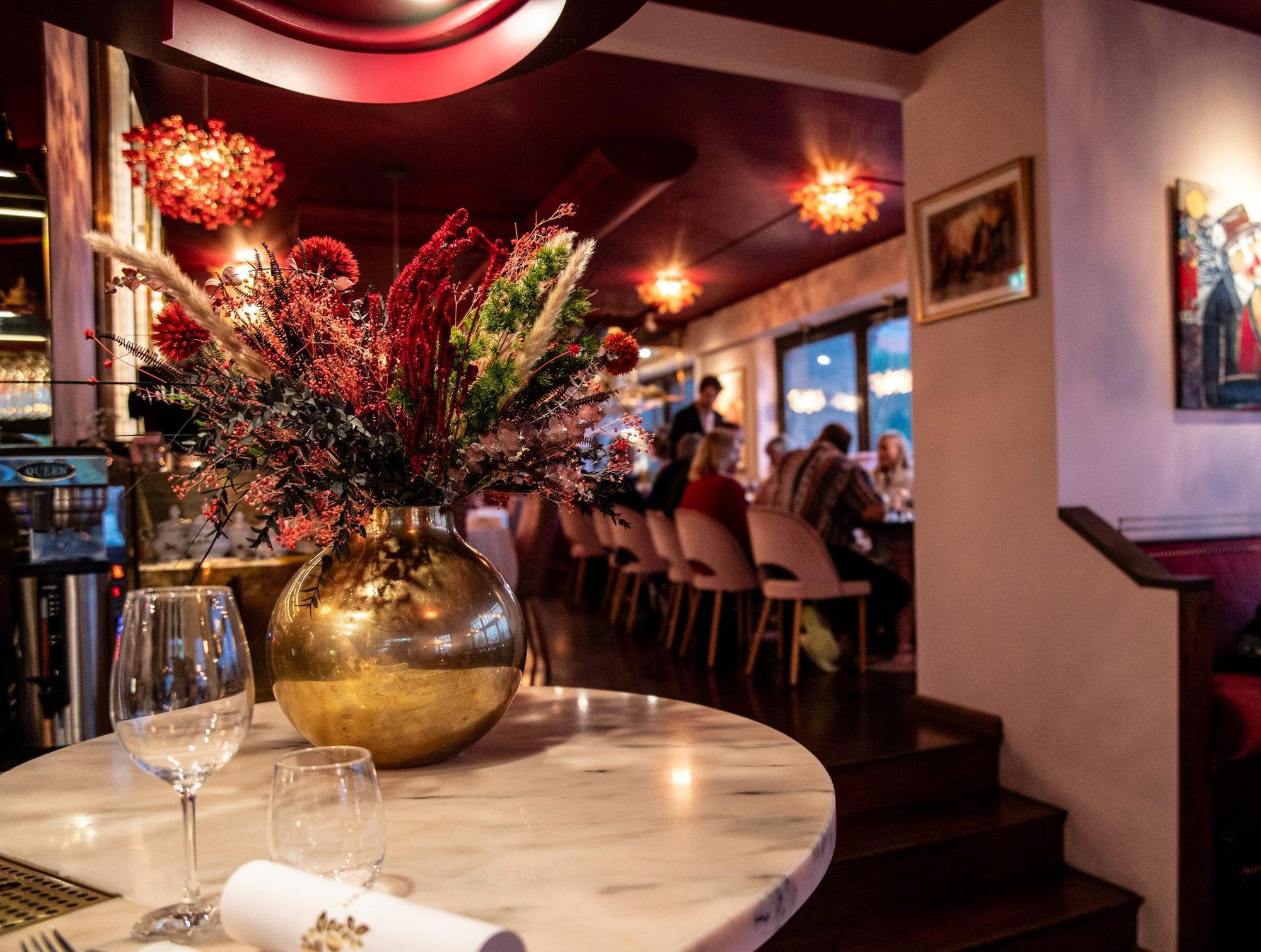
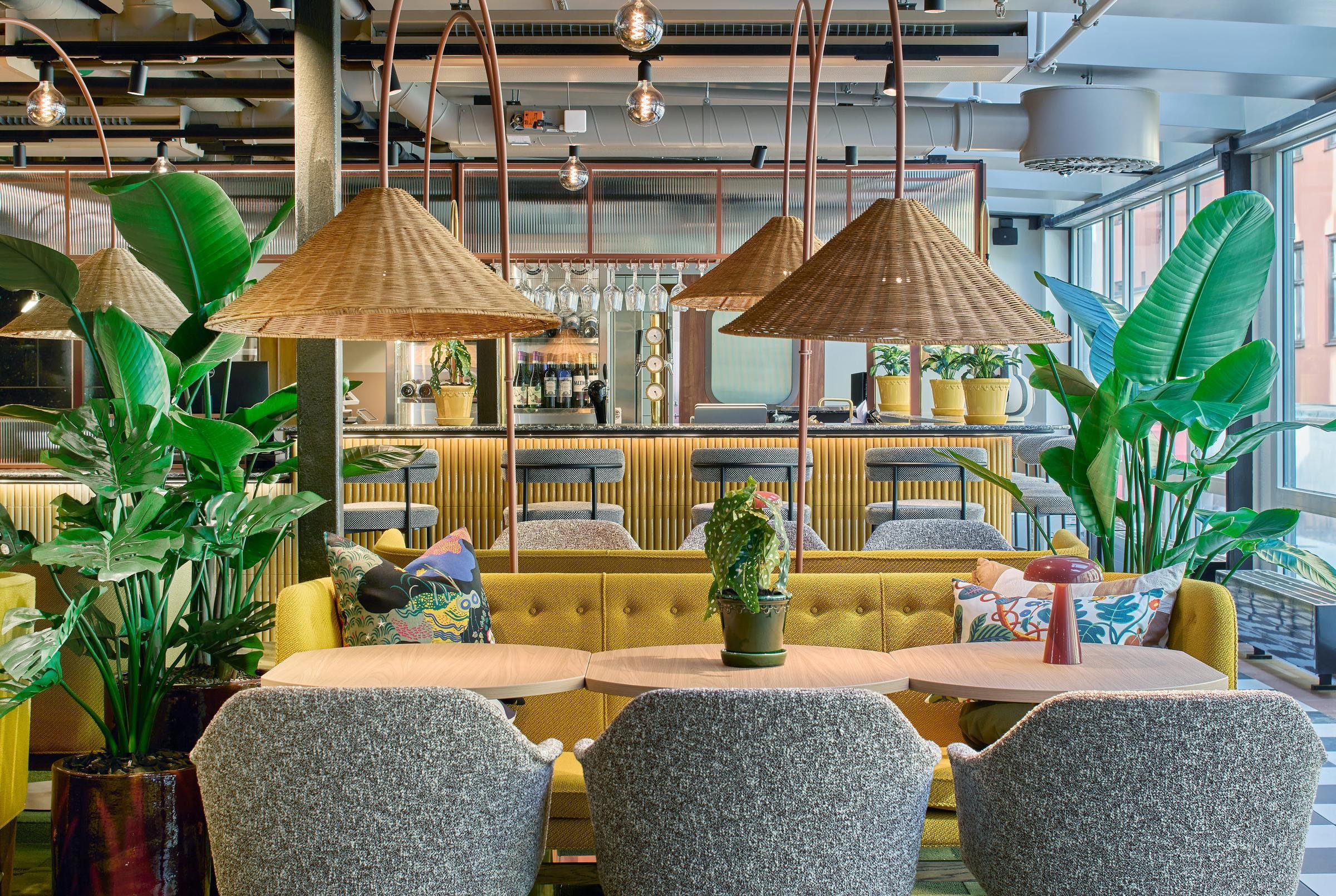
Stockholm's better-regarded dining rooms often tend toward restraint in their interiors: pale woods, low-temperature lighting, and a deliberate avoidance of visual noise that mirrors the Nordic minimalism associated with the country's design exports. Tegelbacken takes a different position. The description of the space as literally colourful places it outside that dominant aesthetic register, suggesting an interior that foregrounds warmth and personality over pared-back formality.
That choice has a logic. The waterfront position and the parliamentary backdrop already supply the visual drama from the windows. Inside, the warmth and cosiness that the venue is noted for functions as a counterpoint to the expansive view rather than competing with it. The combination of relaxed ease and what is described as elegant flair occupies a tone that is neither the dressed-down informality of Stockholm's casual lunch spots nor the deliberate austerity of its high-end tasting rooms.
For context within Sweden's broader dining geography, this kind of accessible mid-market warmth is more readily found in the regional cities than in Stockholm itself. PM & Vänner in Växjö and Vollmers in Malmö both operate in markets where the distance from capital-city competition allows for a slightly less pressured approach to atmosphere. In Stockholm's centre, the same approach is rarer and therefore more notable.
Positioning Against the Stockholm Restaurant Field
Stockholm's fine-dining tier operates in a narrow, competitive bracket. The three-Michelin-star position held by Frantzén, the sustained critical attention directed at Adam / Albin's New Nordic work, and the modernist commitments of AIRA together define a tier that prices and formats itself for destination dining. Below that, the city has a wide field of neighbourhood restaurants and hotel dining rooms, but relatively fewer venues that occupy a confident middle ground, where setting, approachability, and a genuine kitchen identity coexist without obvious compromise.
Tegelbacken's central position near the ferry and transport hub at Tegelbacken square gives it a catchment that the more destination-focused restaurants in Östermalm do not share. Travellers arriving at or departing from the adjacent ferry connections, delegates near the Parliament, and office workers from the surrounding government district all intersect at this address in a way that requires a different hospitality register than a reservation-only tasting counter would demand.
For readers building a broader picture of Sweden's restaurant scene beyond Stockholm, the regional ambition evident at Signum in Mölnlycke, ÄNG in Tvååker, VYN in Simrishamn, and Knystaforsen in Rydöbruk provides useful calibration. These are venues where a strong sense of place, often rooted in hyper-local ingredient sourcing, defines the offer. Tegelbacken's version of sense-of-place is primarily geographic and atmospheric rather than ingredient-driven, but within its own category that clarity of positioning has value.
For a complete picture of eating and drinking in the capital, see our full Stockholm restaurants guide, alongside our Stockholm bars guide, Stockholm hotels guide, Stockholm wineries guide, and Stockholm experiences guide.
Know Before You Go
| Address | Tegelbacken 2, 111 52 Stockholm, Sweden |
|---|---|
| Location | Central Stockholm, adjacent to Tegelbacken ferry terminal and square, with waterfront views toward the Parliament building |
| Leading For | Waterside setting, accessible mid-market dining, a relaxed atmosphere with visual warmth |
| Nearest Transport | T-Centralen (Stockholm Central Station) is within walking distance; ferry connections at Tegelbacken quay |
| Booking | Contact information not currently listed; walk-in availability likely given the central, transit-adjacent location |
| Price Range | Not confirmed; positioned contextually in Stockholm's accessible mid-market tier |
Frequently asked questions
Is Tegelbacken award-winning?
Tegelbacken has received recognition including: Tegelbacken is a colourful (literally speaking) little gem in the middle of central Stockholm that offers equal parts relaxed cosiness and elegant flair. With a view of the water and the Parliament bu....
Where do I go for Tegelbacken?
Tegelbacken is located at Tegelbacken 2, 111 52 Stockholm, Sweden, Stockholm.
What's the must-try dish at Tegelbacken?
What the venue is documented for is a balance of relaxed cosiness and elegant flair in central Stockholm, suggesting a kitchen that prioritises approachability over theatrical tasting menus. Check directly with the restaurant at Tegelbacken 2 for current seasonal offerings.
Do they take walk-ins at Tegelbacken?
No booking policy data is confirmed for Tegelbacken. Given its central Stockholm location at Tegelbacken 2 with water and Parliament views, demand during peak lunch and dinner hours can be expected to be steady. Contacting the venue ahead of your visit is the safest approach.
What is Tegelbacken known for?
Tegelbacken is noted for pairing a colourful, cosy interior with an elegantly relaxed atmosphere in the middle of central Stockholm, a combination that sets it apart from the pared-back restraint common to the city's dining rooms. Its position at Tegelbacken 2 gives the room direct views of the water and the Parliament building, placing it among the more visually distinctive addresses in the city centre.
In Context: Similar Options
Comparable venues nearby, for context on price, style, and recognition.
| Venue | Cuisine | Price | Awards | Notes |
|---|---|---|---|---|
| TegelbackenThis venue — the venue you are viewing | Modern Swedish Fine Dining | $100–150 | Star Wine List · White Guide Sweden Restaurants - Very Fine Level | Not listed |
| Brasserie Elverket | Swedish Brasserie | Not listed | Star Wine List | Östermalm |
| OMAKA | Modern European Brewery Restaurant | Not listed | White Guide Sweden Restaurants - Very Fine Level | Östermalm |
| Nektar mat & vin | Seasonal Nordic Small Plates with Southern European Influences | $50–100 | Star Wine List | Vasastan |
| Brasserie Makalös | Classic French Brasserie | Not listed | Star Wine List | Norrmalm |
| Supper | Modern South American Sharing Plates | $30–50 | Star Wine List | Östermalm |
Recognition history
Dated appearances from independent guides and award organizations, with the underlying list record or original source where available.
Star Wine List
Star Wine List
White Guide Sweden Restaurants - Very Fine Level
White Guide
Continue exploring
More in Stockholm
Restaurants in Stockholm
Browse all →
Bars in Stockholm
Browse all →
Details
- Cozy
- Elegant
- Date Night
- Special Occasion
- Celebration
- Waterfront
- Open Kitchen
- Extensive Wine List
- Waterfront
- Small Plates
- Tasting Menu
- Vegetarian Friendly
- Vegan Options
Current opening hours
- Monday
- Closed
- Tuesday
- 5–11:30 PM
- Wednesday
- 5–11:30 PM
- Thursday
- 5–11:30 PM
- Friday
- 5–11:30 PM
- Saturday
- 5–11:30 PM
- Sunday
- Closed
Hours can change for holidays and private events. Last verified .
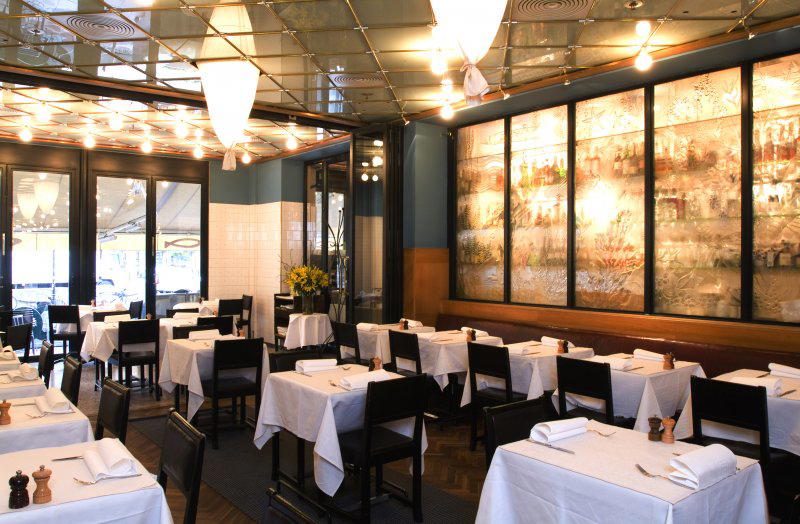
Warm, colorful decor with playful glamour, cozy lighting, and large windows offering water views.