Taberna Albricoque occupies a stretch of Lisbon's riverside Alfama edge, where the old city meets the rail corridor along Rua dos Caminhos de Ferro. The format reads as a traditional Portuguese taberna updated for a contemporary audience, with the kind of team coherence between kitchen, floor, and wine service that defines the better end of the city's neighbourhood dining tier.
Pearl is the En Primeur Club membership app — saves, bookings, and concierge access live there. Same editors, same standards.
- Address
- Rua dos Caminhos de Ferro nº98, 1100-395 Lisboa, Portugal
- Phone
- +351927559359
- Website
- tabernaalbricoque.eatbu.com
- Directions
- Get directions
 Saves & bookings on Pearl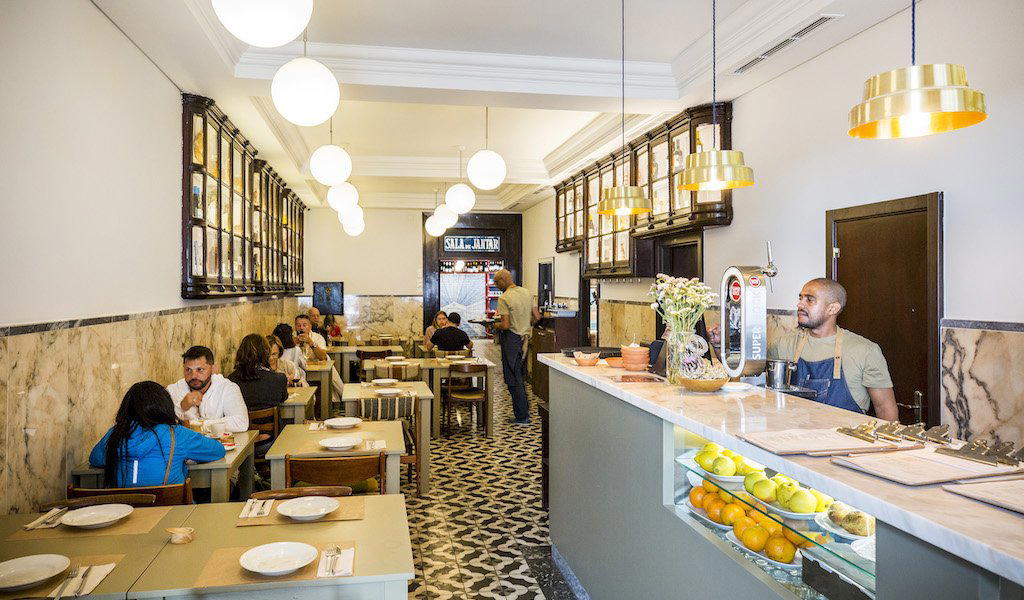
Where Alfama Gives Way to the Rails
Rua dos Caminhos de Ferro runs along the base of Alfama where Lisbon's oldest quarter flattens toward the Tagus waterfront. The street takes its name from the railway infrastructure that once defined this stretch, and the neighbourhood retains that functional, unglamorous character even as the broader area has attracted increasing attention from travellers working outward from the Bairro Alto and Chiado circuits. Arriving at number 98, the building reads as part of the working fabric of the street rather than something positioned against it. That relationship between setting and format matters in Lisbon's taberna tradition, where the atmosphere of the room is expected to follow from the neighbourhood rather than override it.
The taberna format itself carries specific expectations in the Portuguese context. It sits below the full restaurant tier in formality but above the tasca in ambition, historically functioning as a neighbourhood wine-and-food operation where simple preparations and a direct approach to local product were the point. In contemporary Lisbon, that format has been renegotiated across dozens of openings, with some operators using the label loosely and others maintaining its structural logic. The interest in Taberna Albricoque lies in how it positions within that revised landscape.
The Seasonal Case for Timing Your Visit
Lisbon's dining scene shifts noticeably between seasons. Spring and early autumn represent the periods when the city's kitchens are working with the widest range of local product: stone fruits, fresh legumes, the first autumn mushrooms, and the transition into preserved and cured formats that define the colder months. The taberna tradition is specifically oriented toward this kind of seasonally driven cooking, where the menu is determined by what arrives rather than by a fixed list constructed for the year. For a venue on Rua dos Caminhos de Ferro, the proximity to the Mercado de Santa Clara and the broader Alfama supply network means seasonal alignment is structurally built into the operation rather than being a marketing position. Visitors arriving between September and November or April and June will find the format operating at its most coherent, when the produce calendar and the kitchen's repertoire align most naturally.
Team Structure as the Defining Variable
Across Lisbon's better neighbourhood dining operations, the gap between a competent execution and a genuinely satisfying experience often comes down to how the kitchen, floor, and wine program function together. At the top of the city's restaurant tier, venues like Belcanto and CURA operate with formal brigade structures where those roles are clearly demarcated and resourced. At the taberna level, the dynamic is different: smaller teams carry more responsibility across the full guest experience, which means the relationship between the person directing the kitchen, the person managing the room, and whoever is selecting and presenting wine becomes the primary mechanism through which the place either coheres or fragments.
In practice, this team dynamic expresses itself in the moment when a wine recommendation intersects with what the kitchen is sending out, or when a front-of-house decision about pacing adjusts the rhythm of a meal that might otherwise feel rushed. The taberna format historically compressed these roles, with fewer staff carrying broader accountability. Contemporary Lisbon's better operators in this tier have maintained that compression while raising the level of individual capability expected within it. The result, when it works, is a dining experience that feels more collaborative and less transactional than the formal restaurant circuit.
Portugal's broader fine dining scene offers useful contrast. At the country's most decorated addresses, including Vila Joya in Albufeira, Ocean in Porches, and The Yeatman in Vila Nova de Gaia, team structures are deep and the handoff between departments is carefully choreographed. At neighbourhood taberna level, the choreography is less visible but not less deliberate. The constraint of smaller teams can actually produce a more immediate, responsive experience when the individuals involved are operating with genuine authority over their respective domains.
Wine, Service, and the Logic of the Room
The wine program at a taberna-format venue in Lisbon typically reflects the Alentejo and Lisboa denominações as primary reference points, with smaller producers from the Douro, Bairrada, and the Algarve appearing depending on the wine lead's sourcing preferences. The glass-focused approach suits the informal register of the room, allowing guests to move across styles during a meal without committing to bottles at each course. Portugal's natural wine producers have increased their footprint in Lisbon's neighbourhood restaurants over the past five years, and a taberna with credible wine selection will typically carry at least a portion of the list from smaller, lower-intervention operations. This matters because the wine-and-food relationship at taberna level is less about formal pairing and more about regional coherence: what grows near what gets cooked, assembled with enough knowledge on the floor to make the connection legible.
Front-of-house at this level in Lisbon operates in both Portuguese and English across most of the better venues, reflecting the city's established position as a European travel destination. For context on how Lisbon's neighbourhood dining tier has developed, our full Lisbon restaurants guide maps the scene from tabernas through to the city's tasting-menu operations.
Positioning in the Lisbon Dining Circuit
Visitors building a Lisbon itinerary across multiple price points and formats tend to use venues like Taberna Albricoque as the baseline of the neighbourhood dining tier, calibrated against the city's formal restaurant circuit for comparison. The gap in format and ambition between a well-run Alfama taberna and a creative tasting-menu operation such as Eleven or the progressive precision of 50 Seconds from Martin Berasategui is substantial. But these tiers serve different functions in a trip's architecture. The taberna provides the grounding, the daily-use version of Portuguese food culture, while the formal operations offer concentrated, technically constructed experiences. Neither substitutes for the other, and a well-planned Lisbon visit typically includes both.
Elsewhere in Portugal, the neighbourhood restaurant tradition has produced notable operations at multiple price points. Antiqvvm in Porto, A Cozinha in Guimarães, and Casa de Chá da Boa Nova in Leça da Palmeira each represent points on that continuum in the north. In the south, Al Sud in Lagos, Bon Bon in Lagoa, and A Ver Tavira in Tavira demonstrate how the regional dining tradition adapts to the Algarve context. For internationally calibrated reference, the team-first service model at venues like Le Bernardin in New York and Atomix shows how kitchen-floor-wine coherence plays out at much higher price points. And among Lisbon's more experimental current operators, 2Monkeys offers a further point of comparison in the creative tier. For Madeira, Il Gallo d'Oro in Funchal represents the island's highest-decorated dining address.
Planning Your Visit
Taberna Albricoque is located at Rua dos Caminhos de Ferro 98, in the lower Alfama zone close to the waterfront. The area is accessible from the city centre on foot via the riverfront promenade or by tram from Praça do Comércio. Given the taberna format and the neighbourhood's increasing foot traffic from late spring through September, booking ahead is advisable, particularly for weekend evenings when the combination of local and visiting diners compresses availability.
- Grilled Octopus
- Mackerel Tartare
- Sardines on Toast
- Roasted Cod
- Cockle Turnovers
- Chickpea Stew with Oxtail
- Cinnamon Flan
Continue exploring
More in Lisbon
Restaurants in Lisbon
Browse all →
Bars in Lisbon
Browse all →
Hotels in Lisbon
Browse all →

At a Glance
- Cozy
- Rustic
- Intimate
- Classic
- Casual Hangout
- Group Dining
- Special Occasion
- Historic Building
- Standalone
- Local Sourcing
- Farm To Table
Current opening hours
- Monday
- Closed
- Tuesday
- 7–11 PM
- Wednesday
- 12–3 PM, 7–11 PM
- Thursday
- 12–3 PM, 7–11 PM
- Friday
- 12–3 PM, 7–11 PM
- Saturday
- 12–3 PM, 7–11 PM
- Sunday
- Closed
Hours can change for holidays and private events. Last verified .
Warm and inviting with historic charm, featuring original hydraulic tile floors and marble walls that evoke the building's 1905 origins as a traveler's tavern. Intimate and unpretentious atmosphere conducive to sharing food and conversation.
Know Before You Go
- Getting there
- Rua dos Caminhos de Ferro nº98, 1100-395 Lisboa, Portugal