Swaad Bern
Swaad Bern sits on Bernstrasse in Ostermundigen, a municipality that abuts Bern's eastern edge and draws a more local, less tourist-oriented crowd than the federal capital's centre. The restaurant's name, 'swaad' meaning taste or flavour in several South Asian languages, signals the cultural register it occupies: subcontinental cuisine served outside the usual urban cluster, in a neighbourhood where that proposition remains relatively uncommon.
Pearl is the En Primeur Club membership app — saves, bookings, and concierge access live there. Same editors, same standards.
- Address
- Bernstrasse 95 Ostermundigen, 3072 Bern, Switzerland
- Phone
- +41315583388
- Website
- swaadbern.ch
- Directions
- Get directions
 Saves & bookings on Pearl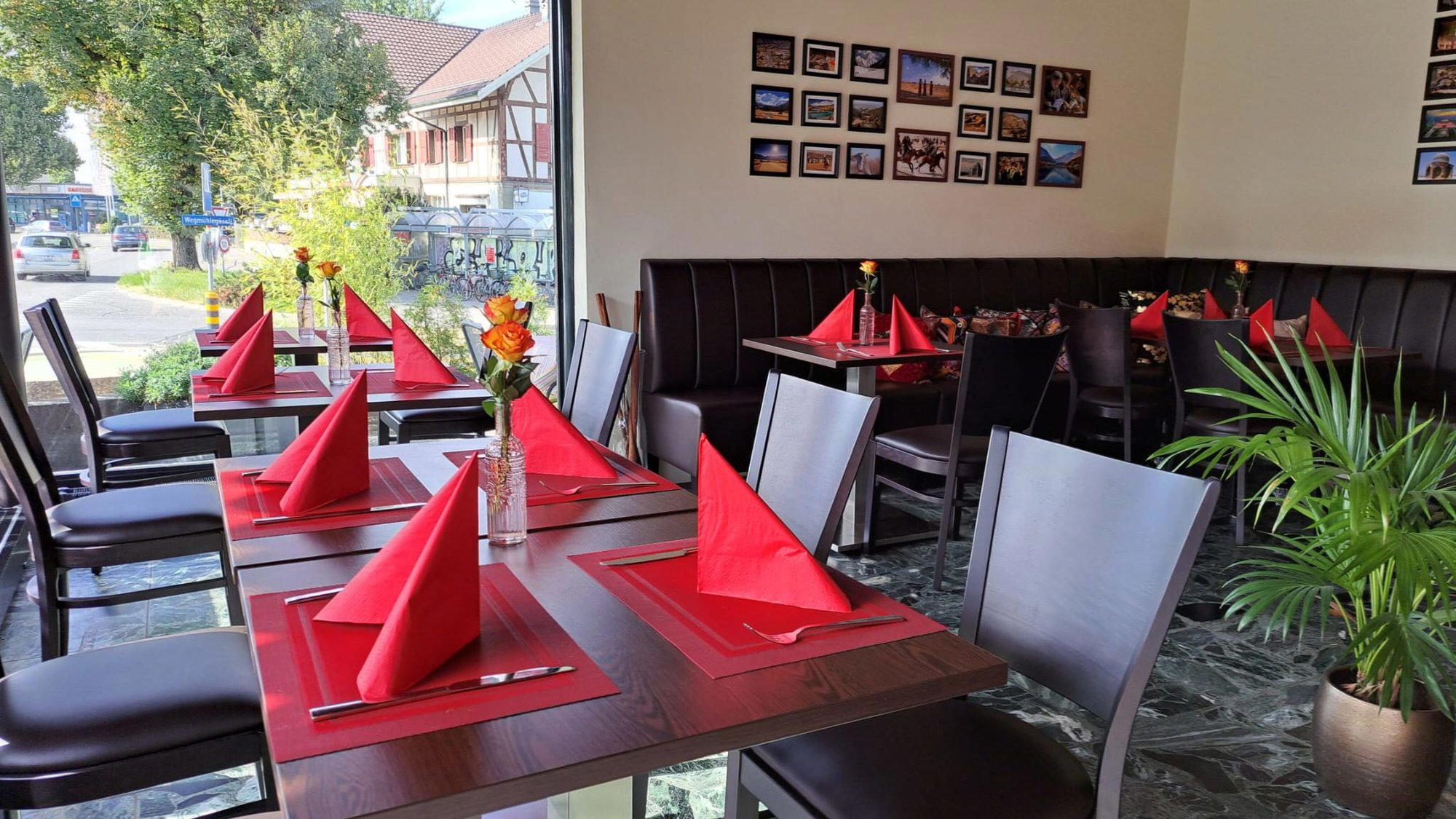
Where Bern's Eastern Edge Meets South Asian Cooking
Ostermundigen sits directly east of Bern, close enough to share a postcode region yet distinct enough to operate on its own terms. The municipality runs along Bernstrasse, a corridor of mid-century residential blocks, independent shops, and neighbourhood restaurants that serve a predominantly local clientele rather than tourists orbiting the Zytglogge or the Bundeshaus.
The Cultural Register of 'Swaad'
The word swaad, rendered variously as swad, svaad, or svad depending on whether the source language is Hindi, Punjabi, Urdu, or Gujarati, translates broadly as taste, flavour, or the pleasure of eating. It appears in everyday speech across the northern subcontinent in phrases that treat eating not as nutrition but as sensory and social experience. A restaurant carrying that name in Switzerland is making a quiet declaration: the frame of reference here is the home kitchen and the shared table, not the formalised curry-house template that spread across Europe from the 1960s onward.
That template, which took root first in the United Kingdom and later in German-speaking Europe, standardised a narrow band of North Indian and British-Indian dishes into a predictable format. South Asian restaurants that have opened across Swiss cities in the past two decades have increasingly moved away from that model, whether toward regional specificity, Keralan seafood, Gujarati vegetarian, Hyderabadi biryani, or toward a more contemporary presentation that keeps flavour structures intact while adjusting format. Swaad Bern's position in that broader shift is worth understanding before you arrive.
South Asian Dining in the Bern Canton
Bern's dining scene has historically been defined by its Bernese specialities, Rösti, Berner Platte, hearty cold-weather cooking that reflects the city's role as a federal seat rather than a cosmopolitan hub. The subcontinental restaurant presence in the canton is smaller than in Zurich or Geneva, where larger South Asian diaspora communities have supported a more varied restaurant ecosystem. That relative scarcity means the few South Asian restaurants operating in and around Bern occupy more distinct positions than they would in a larger market. Proximity to the capital's lunch and dinner circuits without being inside them gives a Bernstrasse address a different economic logic: lower rents, neighbourhood regulars, and less competition from the hotel-restaurant tier that dominates central Bern's evening dining.
The contrast with Switzerland's high-end dining tier is worth stating plainly. Restaurants such as Hotel de Ville Crissier in Crissier, Schloss Schauenstein in Fürstenau, and Cheval Blanc by Peter Knogl in Basel operate in an awards-driven, tasting-menu format at the upper end of Swiss dining, a tier that also includes Memories in Bad Ragaz, 7132 Silver in Vals, and focus ATELIER in Vitznau. Swaad Bern does not compete in that segment; it operates in the neighbourhood-restaurant category where accessibility, price, and cultural familiarity matter more than tasting-menu architecture. That is not a limitation, it is a different set of priorities serving a different kind of visit.
The Neighbourhood Approach
Restaurants on arterial roads in Swiss commuter municipalities follow a specific logic. They depend on repeat custom from local residents, on lunch trade from nearby offices and workshops, and on a price point that makes weekly or fortnightly visits viable. That commercial structure tends to produce menus with more breadth than depth: a range wide enough to satisfy a table with mixed preferences, rather than a tightly edited selection built around a single regional tradition. What the address and name together suggest is a restaurant pitched at the Ostermundigen resident rather than the Bern tourist.
Switzerland's Broader South Asian Restaurant Moment
Across Swiss cities, South Asian cooking has gained more editorial attention in the past five years than in the previous two decades combined. Publications that once treated Indian restaurants as a functional rather than critical category have begun reviewing them with the same seriousness applied to French or Japanese kitchens. That shift has partly followed the national restaurant press, venues in Zurich such as IGNIV Zürich by Andreas Caminada have demonstrated that sharing formats can anchor serious dining, a structural overlap with the way subcontinental food is often served at its most authentic. Geneva's high-end tier, represented by addresses like L'Atelier Robuchon, operates in a different register entirely, but the broader critical infrastructure that supports those restaurants has gradually extended its attention to the middle tier of ethnic dining in Swiss cities.
The same dynamic is visible internationally: Le Bernardin in New York City and Atomix in New York City represent the level at which South Asian and French-influenced fine dining each attract sustained critical scrutiny, a standard that filters down into how food writing across categories has changed. Other Swiss addresses worth knowing in this broader context include Colonnade in Lucerne, Da Vittorio in St. Moritz, Einstein Gourmet in Sankt Gallen, La Brezza in Ascona, La Table du Lausanne Palace in Lausanne, and Magdalena in Schwyz.
Planning a Visit
Swaad Bern is located at Bernstrasse 95 in Ostermundigen, reachable by tram or bus from central Bern in under fifteen minutes. As a neighbourhood restaurant on a commuter artery, it is most logically visited for lunch or an early dinner without the advance booking requirements associated with tasting-menu formats. Current hours, booking method, and pricing are direct to check directly. The Bernstrasse address places it within easy reach of both Bern's old city and the eastern residential quarters.
A Pricing-First Comparison
Comparable venues nearby, for context on price, style, and recognition.
| Venue | Cuisine | Price | Notes |
|---|---|---|---|
| Swaad BernThis venue — the venue you are viewing | Ostermundigen, Indian & Pakistani | $$ | Not listed |
| Restaurant Uma | Not listed | $$$$ | Ostermundigen, Modern Swiss & European Fine Dining |
| Paprika | City Center, Modern Indian | $$ | Not listed |
| FlowFood | Reussbühl, Ayurvedic Indian Vegetarian | $$ | Not listed |
| Kobal Curry Restaurant | Not listed | $$ | Aussersihl, Indian & Sri Lankan Curry House |
| Kottu Roti Foodtruck | Not listed | $ | Industriequartier, Sri Lankan Street Food |
Continue exploring
More in Ostermundigen
Restaurants in Ostermundigen
Browse all →
Bars in Ostermundigen
Browse all →
Hotels in Ostermundigen
Browse all →
Wineries in Ostermundigen
Browse all →
At a Glance
- Cozy
- Casual Hangout
- Family
- Standalone
- Local Sourcing
Current opening hours
- Monday
- 11:30 AM–2 PM, 5–10 PM
- Tuesday
- 11:30 AM–2 PM, 5–10 PM
- Wednesday
- 11 AM–5 AM
- Thursday
- 11:30 AM–2 PM, 5–10 PM
- Friday
- 11:30 AM–2 PM, 5–10 PM
- Saturday
- 5–10 PM
- Sunday
- Closed
Hours can change for holidays and private events. Last verified .
Small, cozy, and inviting with beautifully adorned walls showcasing dramatic photography.