Stadlmaier-Alm sits in the hills above Leoben at Klein-Gößgraben 9, representing the tradition of Styrian alpine hospitality that defines rural Upper Styria. In a region where mountain dining carries genuine cultural weight, this address belongs to a category of alm-style venues that reward travellers willing to move beyond the town centre.
Pearl is the En Primeur Club membership app — saves, bookings, and concierge access live there. Same editors, same standards.
- Address
- Klein-Gößgraben 9, 8700 Leoben, Austria
- Phone
- +436764352072
- Website
- de-de.facebook.com
- Directions
- Get directions
 Saves & bookings on Pearl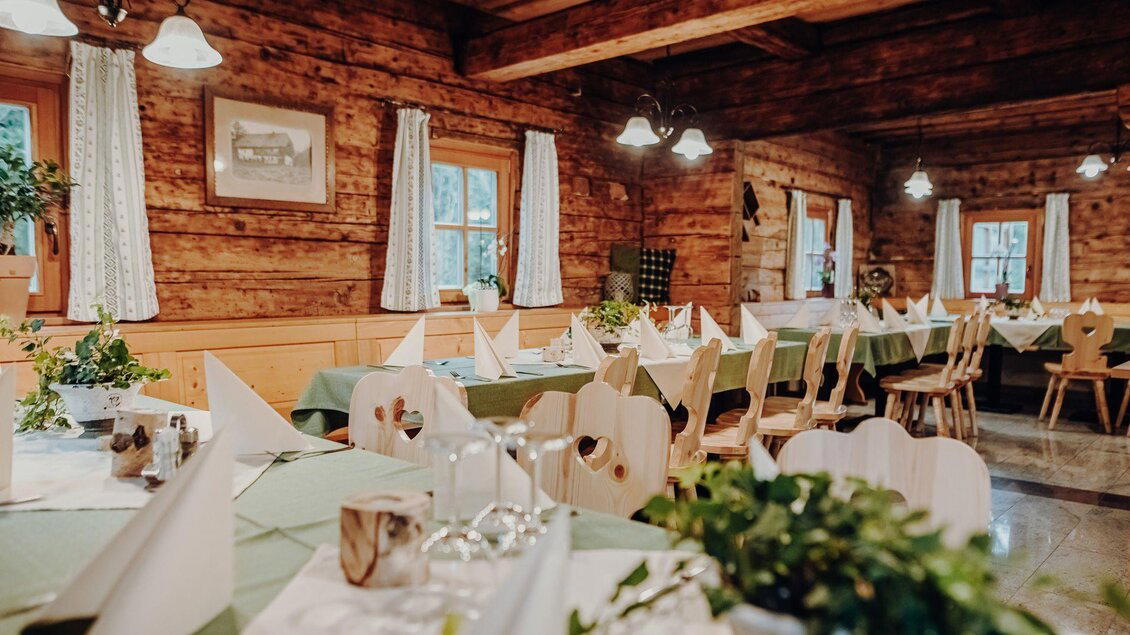
Alpine Styria at the Table: What Alm Dining Means in Upper Austria
The word Alm carries specific weight in the Austrian alpine tradition. It refers to high-pasture farmsteads, historically used for summer grazing, that have evolved over generations into a distinct hospitality category: somewhere between a mountain refuge and a rural inn, operating on local produce, seasonal rhythms, and the kind of cooking that does not travel well to city restaurants. Across Styria, this format has remained stubbornly regional, shaped more by geography and agricultural tradition than by any broader hospitality trend. Stadlmaier-Alm is a Traditional Austrian Buschenschank in Leoben, Austria. It sits at Klein-Gößgraben 9 above the industrial city of Leoben, inside that tradition rather than outside it.
Leoben itself is not a typical alpine dining destination. Its identity is industrial, anchored by steel and the Montanuniversität, Austria's specialist mining and metallurgy university. The city's food scene reflects that character: practical, locally anchored, and not oriented toward gastronomic tourism. That context matters, because it places venues like Stadlmaier-Alm in a particular position. The alm format here is not a curated rural aesthetic assembled for visitors; it is a function of the terrain and the eating habits of the people who live in it. For travellers coming from Vienna or from internationally recognised Austrian addresses such as Steirereck im Stadtpark in Vienna or Döllerer in Golling an der Salzach, the register is entirely different.
The Styrian Alm Format: Cultural Roots and What to Expect
Upper Styria has a recognisable culinary vocabulary built around a handful of core ingredients: pumpkin seed oil pressed in the region and used across salads and soups; cured and smoked meats from small farms; freshwater fish from mountain streams; hearty bread-based dishes; and dairy products from alpine pastures. These are not decorative nods to tradition but the actual architecture of how people eat in this part of Austria. The alm dining format presents these ingredients with minimal mediation, which is either its greatest strength or its limitation depending on what a visitor is looking for.
This format sits at some distance from the kind of creative Austrian cooking found at recognised addresses such as Kräuterreich by Vitus Winkler in Sankt Veit im Pongau or Gourmetrestaurant Tannenhof in Sankt Anton am Arlberg. Those kitchens translate alpine ingredients through a contemporary fine-dining lens. Alm cooking in Upper Styria does not attempt that translation. The cooking is weighted toward comfort and tradition, and the experience is less about precision than about authenticity of place.
Setting and Approach: Reading the Environment
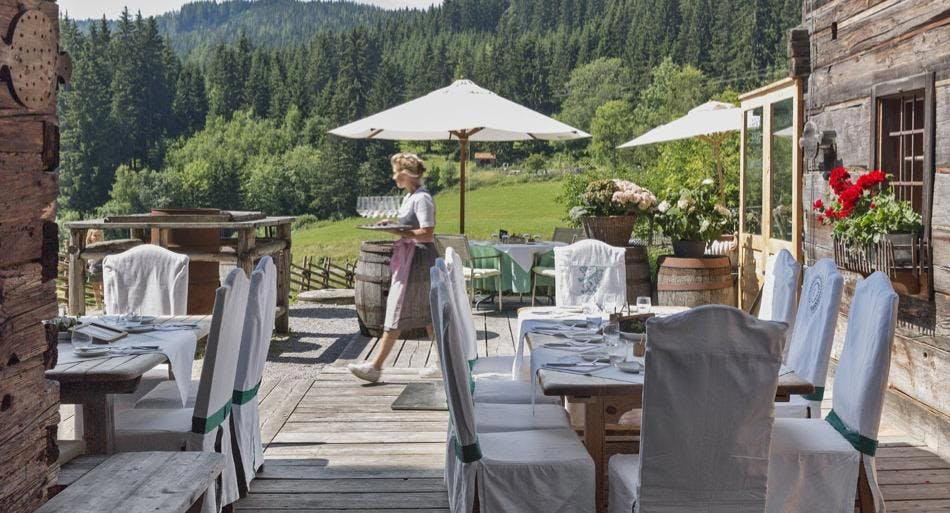
The address, Klein-Gößgraben 9, places Stadlmaier-Alm in the valley approaches above Leoben, in terrain typical of the Mur valley's forested hillsides. Alm venues in this geography are generally reached by road rather than on foot, and the arrival experience is a meaningful part of the visit: the transition from the city into forested rural terrain signals a shift in register that is difficult to replicate in an urban setting. Austrian mountain venues at this type of elevation tend toward timber construction and enclosed terrace formats, with interiors that prioritise warmth and shelter over design statement.
The architectural character of alm venues across this region follows a broadly consistent logic: exposed wood, ceramic stoves or open hearths, low ceilings, and a general absence of the design language associated with urban hospitality. This is a feature of the category rather than a limitation of any individual venue. Travellers comparing this format to the polished interiors of Taubenkobel in Schützen am Gebirge or Landhaus Bacher in Mautern an der Donau are essentially comparing different categories of Austrian dining experience.
Leoben's Dining Scene in Context
Within Leoben itself, the dining offer ranges from direct Austrian taverns to a small number of more ambitious addresses. Port361 and Stadt Meierei represent the more urban end of Leoben's restaurant offer. The restaurant occupies a different niche entirely, defined by its mountain location rather than its position in the town's commercial dining circuit. This geographic separation is significant: alm venues in Austria function as destinations in their own right, not as alternatives to urban restaurants.
For travellers building a broader Austrian itinerary that includes addresses such as Ikarus in Salzburg, Obauer in Werfen, or Ois in Neufelden, a stop at a working alm venue in Upper Styria provides a genuinely different point of reference. The gap between a recognised fine-dining address and a rural alm is not a quality gap so much as a format gap. The comparison is closer to asking what an alm experience adds to an Austrian journey than whether it competes with starred kitchens.
Austria's mountain dining tradition occupies a different position in the national food culture than its celebrated city and destination restaurants. While addresses like Stüva in Ischgl, Griggeler Stuba in Lech, or Schwarzer Adler in Hall in Tirol have developed sophisticated kitchen programs within alpine settings, the alm format in Upper Styria preserves a more unmediated version of mountain hospitality. The two traditions coexist without one superseding the other, and for a category-aware traveller, that distinction is worth holding onto. Context from the broader Austrian scene, including addresses like Restaurant 141 by Joachim Jaud in Mieming, shows how widely the alpine format varies across the country's regions.
Planning Your Visit
The restaurant is located at Klein-Gößgraben 9, 8700 Leoben. The venue is recommended for reservations, and its regular hours are Monday and Tuesday closed, Wednesday closed, Thursday closed, Friday 2 to 8 PM, Saturday 10 AM to 8 PM, and Sunday 10 AM to 6 PM. Alm venues in this region frequently operate on seasonal patterns tied to weather and local demand, with reduced hours or closures outside peak periods. The approach road from central Leoben follows the valley terrain, and a vehicle is the practical access option. Travellers whose reference points sit closer to Le Bernardin in New York City or Atomix in New York City should calibrate expectations accordingly: the value here is in the format and the setting, not in technical kitchen ambition.
Booking and Cost Snapshot
Comparable venues nearby, for context on price, style, and recognition.
| Venue | Cuisine | Price | Notes |
|---|---|---|---|
| Stadlmaier-AlmThis venue — the venue you are viewing | Not listed | $$ | Not listed |
| Stadt Meierei | City Center, Refined Austrian Cuisine | $$$ | Not listed |
| Port361 | Donawitz, Modern European Fine Dining | $$$$ | Not listed |
| Hotel Exel | city center, Austrian Regional | $$ | Not listed |
| Schupfer's Dorfschmiede | Not listed | $$ | Bad Mitterndorf, Traditional Austrian with Innovative Twists |
| Ritzingerhütte | Viehbergalm, Traditional Austrian Alpine | $$ | Not listed |
Continue exploring
More in Leoben
Restaurants in Leoben
Browse all →
Bars in Leoben
Browse all →

Hotels in Leoben
Browse all →

At a Glance
- Rustic
- Cozy
- Scenic
- Casual Hangout
- Family
- Historic Building
- Local Sourcing
- Mountain
Current opening hours
- Monday
- Closed
- Tuesday
- Closed
- Wednesday
- Closed
- Thursday
- Closed
- Friday
- 2–8 PM
- Saturday
- 10 AM–8 PM
- Sunday
- 10 AM–6 PM
Hours can change for holidays and private events. Last verified .
Rustic and cozy alpine atmosphere with welcoming hospitality in a scenic mountain setting.