
Tabelog 100 #24
Our verdict
Kumamoto’s Sri Lankan and curry scene sits far from Japan’s usual premium-dining script, which is exactly why Sri Lanka Kumamoto matters. Its Tabelog 100 selection for Asian and Ethnic cuisine in West Japan, modest price band, and Shimotori location make it a useful counterpoint to the city’s higher-ticket kappo, steak, and tempura rooms.

Pearl is the En Primeur Club membership app, where members save venues, book tables and use the concierge.
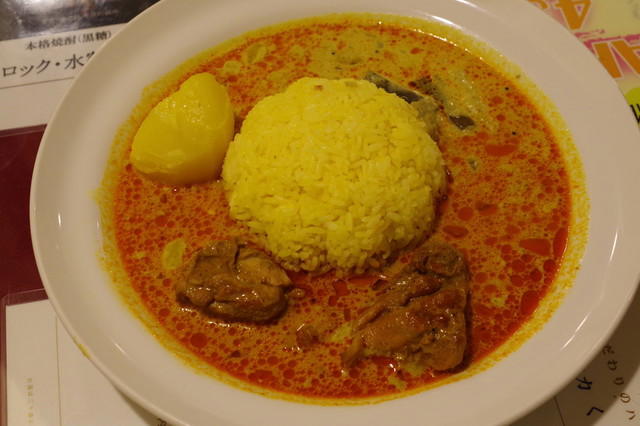
The menu
What to order
- Sri Lankan curry set
- Rice and curry set
- Spice curry with coconut milk
Kumamoto is a practical dining city: shopping streets, late meals, office workers, students, and visitors moving between central errands and evening plans. Here, Sri Lankan cooking reads differently from the polished tasting-menu grammar of Japanese destination dining. Curry, rice, spice, and a faster rhythm carry the meal; appetite, not ceremony, sets the pace.
Sri Lanka Kumamoto sits in the part of Japan’s dining culture where imported cuisines adapt to local habits without losing core structure. Sri Lankan food in Japan often travels through curry first, but better examples are not just curry shops with a foreign label. They build meals around spice layering, rice as the central field, and sides that shift heat, acidity, and texture across the plate. That matters in Kumamoto, whose restaurant identity is often discussed through Kyushu staples and drinking culture rather than South Asian cooking.
Sri Lankan curry in a city better known for Kyushu staples
The category widens how Kumamoto can be read as a food city. At one end are higher-spend rooms such as IL CASINO, and specialist Japanese formats such as Tsuru Hachi. By contrast, Sri Lankan and curry-led cooking occupies a more democratic lane: quicker, cheaper, and easier to fold into sightseeing or local errands.
That lower tier does not mean less seriousness. Selection for Tabelog Hyakumeiten in 2024 places Sri Lanka Kumamoto in a curated regional category, not just a casual neighbourhood bracket. Tabelog’s listed score of 3.69 reinforces the point: not luxury dining, but clearly noticed in a crowded everyday category.
The ingredient question is central. Japanese curry often leans sweet, thick, and comforting; Sri Lankan curry traditions depend more on spice sequencing, rice, and the interplay of accompaniments. Without inventing dish details, that distinction helps travellers: the meal is about components working together, not one centrepiece protein. In a city where many premium meals foreground local ingredients in more formal courses, this format asks diners to think in combinations.
Why the sourcing story is about spice, not luxury produce
Ingredient sourcing here is less about rare labels than whether the kitchen can sustain Sri Lankan food’s grammar in a Japanese regional city. Spice-driven cuisines need pantry discipline: dried spices, rice, pickles, relishes, and condiments must behave as a system. The restaurant’s listing across Sri Lankan, curry, Asian, and ethnic categories reflects Japan’s hybrid classification, where diners search by genre but judge by balance and repeatability.
Price position becomes part of the editorial case. A modest curry meal can reveal more than a ceremonial dinner because it shows how a city eats between occasions. Kumamoto’s premium tables, from beef-focused rooms to specialist counters, answer the special-night question. Sri Lanka Kumamoto answers another: where does a serious, low-friction meal fit when the day is built around sightseeing, shopping, trains, and a second round of drinks?
The local context adds a useful clue. Sri Lankan spice in Kumamoto is not a formal luxury exercise; it is a practical city habit meeting imported heat, acidity, and rhythm. That intersection is more useful than another generic claim about authenticity.
How to place it within a Kumamoto itinerary
The Kumamoto setting puts the restaurant in the city’s dining conversation, among places travellers already compare when planning a short stay. For a broader scan, Our full Kumamoto restaurants guide gives the wider frame, while category-adjacent pages such as BARON and other Kumamoto dining rooms show how varied the dining map has become.
For a full Kumamoto plan, the restaurant works better as a sharp casual anchor than the trip’s sole dining event. Pair it with broader hospitality and nightlife research through Our full Kumamoto hotels guide, Our full Kumamoto bars guide, Our full Kumamoto wineries guide, and Our full Kumamoto experiences guide. The smarter read is not Sri Lankan curry as a detour from Kumamoto dining, but as proof that everyday food culture has more range than the usual Kyushu checklist suggests.
Japan’s broader casual-dining network gives context. Curry and Asian formats can sit beside other regional specialists, casual counters, café-led itineraries, and small-format city restaurants. Beyond Japan, travellers can compare the same casual-specialist logic with unnamed dining rooms built around everyday usefulness rather than ceremony; within Japan, they might also weigh Tokyo, Kamakura, and other stops generically when thinking about how modest specialist venues shape a trip.
The verdict is simple: this is a valuable Kumamoto address because it changes the city’s dining conversation. It is not competing with formal counters on luxury cues; it competes on usefulness, genre clarity, price accessibility, and recognition in a regional Asian and ethnic cuisine list. For travellers who care how a city actually eats, that can be more instructive than another high-spend reservation.
Frequently asked questions
Is Sri Lanka Kumamoto child-friendly?
The available record supports Sri Lanka Kumamoto as a casual, accessible option in Kumamoto. Check the venue's official channels for the latest family and seating details.
What is the atmosphere like at Sri Lanka Kumamoto?
Expect a casual Kumamoto dining room built around Sri Lankan, curry, Asian, and ethnic categories. The setting suits a straightforward lunch or dinner rather than a formal occasion.
What does dinner at Sri Lanka Kumamoto typically cost?
Dinner at Sri Lanka Kumamoto is listed at JPY 1,000 - JPY 1,999; lunch is also listed at JPY 1,000 - JPY 1,999.
When can I go to Sri Lanka Kumamoto?
Check Sri Lanka Kumamoto's official channels or current listing before visiting, as specific opening hours are not provided here.
Where exactly is Sri Lanka Kumamoto?
Kumamoto.
Side-by-Side Snapshot
Comparable venues by cuisine and price in the same metro.
| Venue | Cuisine | Price | Awards | Notes |
|---|---|---|---|---|
| Sri Lanka KumamotoThis venue (the venue you are viewing) | Sri Lankan Curry & Home-Style Dishes | $1–10 | Tabelog 100 #24 | Not listed |
| Kairakuen | Kumamoto Chinese specializing in Tai-pien noodles | $10–20 | Tabelog 100 #19 | Shinmachi, Chuo Ward |
| Mexico Restaurant Toru Tacos | Authentic Mexican tacos & tortas | $30–50 | Tabelog 100 #11 | Karashimacho / Sakuramachi, central Kumamoto |
| Valeur | Creative Chinese and dumplings | $30–50 | Tabelog 100 #7 | Chuo Ward, Jotomachi |
| Katsuretsu Tei Minami kumamoto ten | Kumamoto tonkatsu specialist | $20–30 | Tabelog 100 #34 | Chuo Ward |
| Reef Burger | American-style Burger Shop | $10–20 | Tabelog 100 #11 | Nishi Kumamoto |
Recognition history
Dated appearances from independent guides and award organizations, with the underlying list record or original source where available.
Tabelog 100 #24 · No. 24
Tabelog · Tabelog 100 - Asian cuisine / Ethnic cuisine - WEST - 2024
Continue exploring
More in Kumamoto
Restaurants in Kumamoto
All restaurants in Kumamoto →
Bars in Kumamoto
All bars in Kumamoto →




Details
- Cozy
- Lively
- Casual
- Solo
- Casual Hangout
- After Work
- Group Dining
- Standalone
- Beer Program
- A La Carte
- Set Menu
- Beer
- Whisky
- Vegetarian Friendly
- Vegan Options
Current opening hours
- Monday
- 11 AM–5 PM, 6–11 PM
- Tuesday
- 11 AM–5 PM, 6–11 PM
- Wednesday
- 11 AM–5 PM, 6–11 PM
- Thursday
- 11 AM–5 PM, 6–11 PM
- Friday
- 11 AM–5 PM, 6–11 PM
- Saturday
- 11 AM–5 PM, 6–11 PM
- Sunday
- 11 AM–5 PM, 6–11 PM
Hours can change for holidays and private events. Hours as of .
Casual, cozy downtown curry house atmosphere with a lively feel, simple décor, and a relaxed setting for enjoying Sri Lankan home cooking and drinks.