Sosban and the old Butchers




1 Michelin Star · La Liste Top Restaurants · AA Rosettes 4 Rosettes
Our verdict
A former butcher's shop on the Menai Strait that now operates as one of North Wales's most decorated restaurants, Sosban and the Old Butchers runs a nine-course surprise menu built entirely around local and sustainable ingredients. Earning 83.5 points on La Liste 2025 and 81 points in 2026, it opens just three evenings a week, with solo chef-patron Stephen Stevens cooking at an open kitchen bench for a handful of tables.

Pearl is the En Primeur Club membership app, where members save venues, book tables and use the concierge.
The menu
What to order
- Cod with fermented onion fudge
A Converted Butcher's Shop and What It Says About Welsh Fine Dining
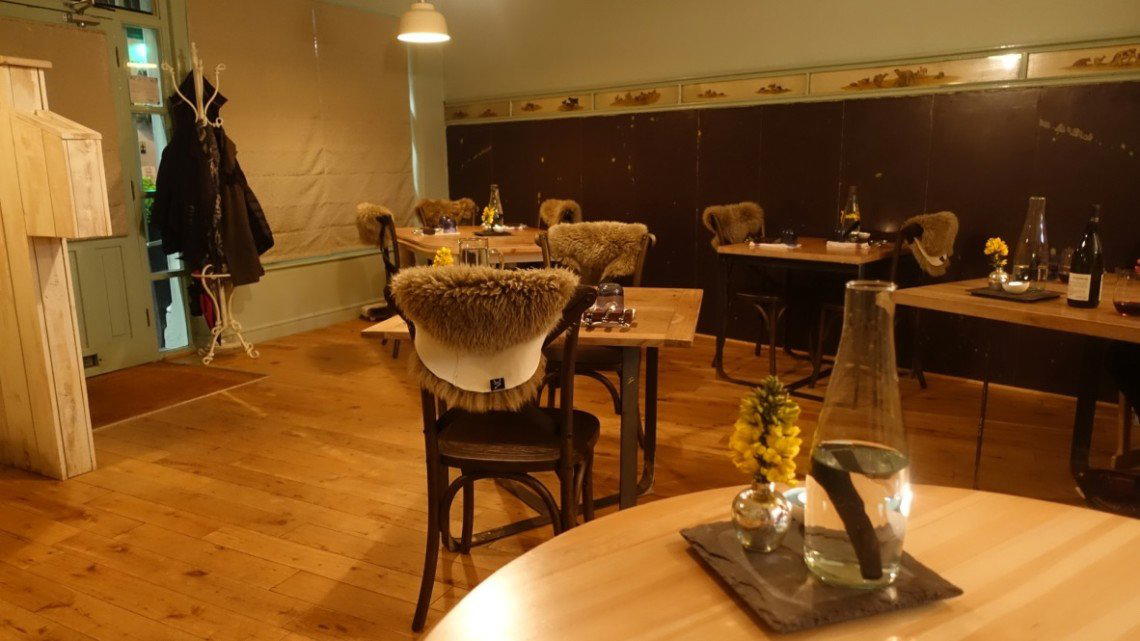
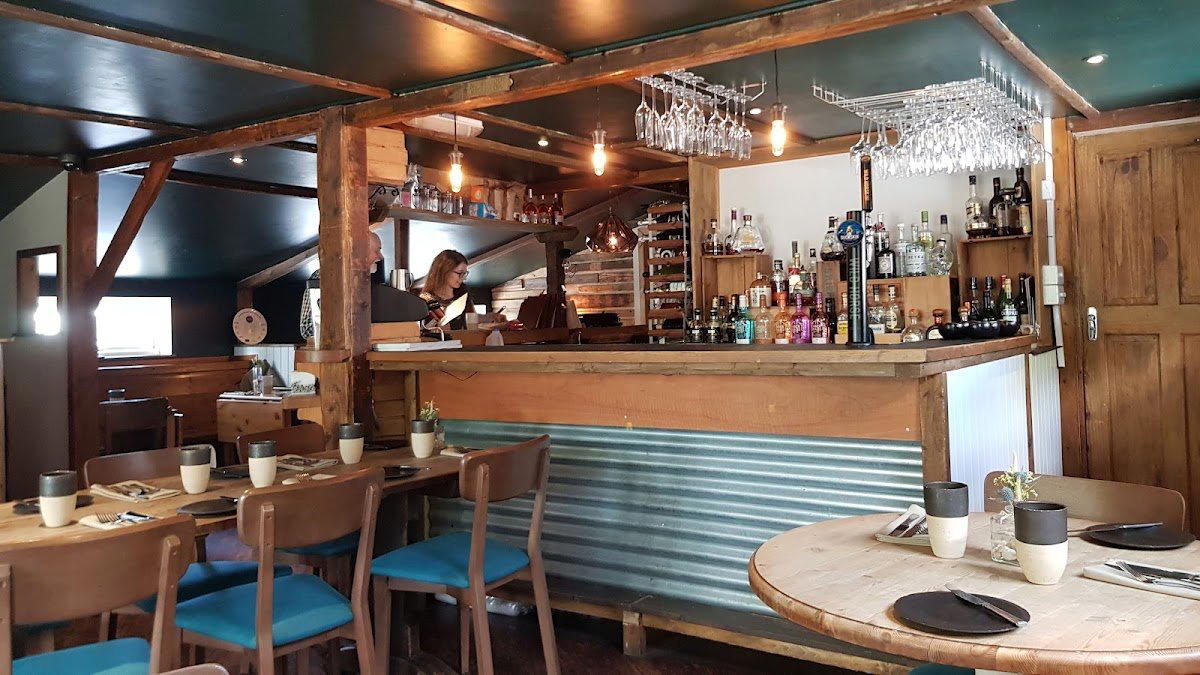
Sosban and the Old Butchers is a one-star Michelin restaurant in Menai Bridge, with a tasting menu price of about $175 per person. Inside Trinity House, the former butcher's shop that now operates as Sosban and the Old Butchers, the room reads as an exercise in honesty about place: Welsh slate walls, sheepskin-covered chairs, hand-painted animal tiles that carry the memory of the building's past. There are four plain tables and a kitchen workbench where chef-patron Stephen Stevens works alone, in full view. The physical environment is not decoration for its own sake; it is a statement about the kind of cooking you are about to eat.
L'Enclume in Cartmel, Moor Hall in Aughton, Gidleigh Park in Chagford and The Ledbury in London all represent the kind of serious British cooking that attracts international attention. Sosban occupies a different geography: Menai Bridge on the Anglesey side of the Menai Strait. It serves a nine-course surprise menu on Thursday, Friday, and Saturday evenings.
The Logic of Day-Boat Cooking in North Wales
North Wales has a coastline that functions as a larder for the kitchen. Welsh seafood, at this scale of operation, is not a marketing category, it is a structural reality. When the cod arrives at the table, it has come from boats working close waters, and Stevens works with that in mind. The surprise menu, which changes with what is available, is shaped upstream by what fishermen land, not downstream by what the kitchen decides to cook.
That sourcing logic shows up clearly in the cooking. The day-boat cod, blowtorched and served with onion fudge and fermented spring onions, draws on a fermentation approach that concentrates and extends the natural intensity of the fish. The addition of liquorice, noted across multiple visits by reviewers, works as a thread that connects savoury and sweet registers without announcing itself. Cod skin appears in a different register earlier in the meal: as a crisp cracker, layered with curried banana and soured peanut, it reframes a by-product as the opening statement of the evening.
For readers who track this kind of approach across the broader range of ambitious British cooking, comparisons with Midsummer House in Cambridge or hide and fox in Saltwood are instructive: each operates with a clear regional sourcing logic, a short tasting format, and a chef presence that keeps the kitchen accountable to the room. What Sosban adds is a zero-waste discipline and a geographic specificity, North Wales, not the British Isles in general, that narrows its sourcing further than most.
Nine Courses, No Menu, and the Structure of the Surprise Format
The surprise or blind tasting format is a deliberate choice for the kitchen. Rather than a gesture toward spontaneity, it is an operational and philosophical choice: the kitchen can respond to what is leading on a given day, and the diner surrenders the habit of pre-planning each course. At Sosban, nine courses arrive without prior description, and the architecture of the meal moves through a clear progression of registers. The cooking does not stay in one register. Chicken liver parfait is embedded with diced eel, then sharpened with IPA vinegar and finished with finely grated Hafod Welsh Cheddar, a single dish that spans fat, acid, umami and salt without becoming a catalogue of techniques. Confit lamb's tail arrives with mustard custard, apple, mustard leaf and coffee, its assertive richness counterweighted by acidity and bitterness. A savoury-to-sweet crossover uses liquorice again alongside lemon and olive oil before the meal moves toward a dessert built from whipped buttermilk, compressed apple and celeriac ice cream, a signature construction that has evolved across multiple years of service.
The ambition on display at a kitchen of this scale has prompted consistent comparison with restaurants whose infrastructure is considerably larger. The Fat Duck in Bray, Dinner by Heston Blumenthal and Le Manoir aux Quat' Saisons each represent an investment in layered technique from within large, well-resourced kitchens. Stevens produces comparable density of invention without that apparatus. Even the bread, noted repeatedly by reviewers as a course in its own right, receives the same creative attention as the headline dishes.
Drinks Pairing at a Restaurant Without a Wine List
Absence of a wine list is less unusual in this format than it might appear. A number of single-chef tasting counters in Britain and internationally have moved toward drinks pairings that work with the specific progression of flavours in the menu rather than offering a conventional by-the-glass selection. At Sosban, individual glasses are available in 125ml pours alongside the pairing, giving diners the option to track specific courses with specific drinks without committing to the full sequence. For reference, the approach taken at Atomix in New York City and Le Bernardin illustrates how high-precision tasting formats across price tiers have shifted toward pairing programs that treat drinks as part of the editorial structure of the meal, not an appendix to it.
Planning a Visit: What to Know
Sosban and the Old Butchers opens Thursday through Saturday, from 7 PM to 11 PM, and is closed Sunday through Wednesday. The format is a nine-course surprise menu, with no advance knowledge of dishes provided. The restaurant is at Trinity House, 1 High St, Menai Bridge LL59 5EE, on the Anglesey side of the Menai Strait. Menai Bridge is accessible from Bangor by a short drive across the Menai Suspension Bridge, and the A55 connects the area to Chester and the wider North Wales road network. Given the small number of covers and the three-day operating week, early booking is strongly advisable; demand is driven in part by the La Liste recognition and the restaurant's profile within British fine dining, which places it alongside names such as Restaurant Andrew Fairlie in Auchterarder, Opheem in Birmingham and Hand and Flowers in Marlow in terms of the booking window required.
Frequently asked questions
Is Sosban and the old Butchers a family-friendly restaurant?
The format is not designed around families with young children. The La Liste-recognised cooking demands sustained attention across the table.
What should I expect atmosphere-wise at Sosban and the old Butchers?
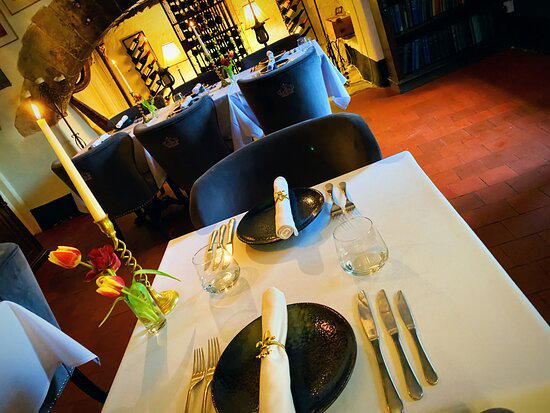
The room is small and deliberate: four plain tables, Welsh slate walls, sheepskin-covered chairs, and hand-painted animal tiles that reference the building's previous life as a butcher's shop on Menai Bridge's High Street. Covered windows reinforce a sense of enclosure. Stephen Stevens cooks alone and is visible from the dining room, which makes the atmosphere closer to a kitchen counter than a conventional restaurant.
Does Sosban and the old Butchers have a Michelin star or similar recognition?
Sosban and the old Butchers has received recognition including: La Liste Top Restaurants (2026): 81pts; Covered windows add a feeling of exclusivity to this intimate restaurant; once inside, you’ll discover an appealingly rustic room with Welsh slate walls, sheepskin-covered chairs and hand-painted anim….
What should I order at Sosban and the old Butchers?
There is no menu to order from. The kitchen runs a nine-course surprise format, meaning dishes arrive without prior announcement. The cooking draws on North Wales produce, with day-boat fish and local ingredients running through the sequence. La Liste scored the restaurant 83.5 points in 2025 and specifically cited the cod with fermented onion fudge as a standout.
| Venue | Cuisine | Price | Awards | Notes |
|---|---|---|---|---|
| Sosban and the old ButchersThis venue (the venue you are viewing) | Modern British Fine Dining | $150–200 | 1 Michelin Star · La Liste Top Restaurants | Not listed |
| The Ledbury | Modern British Fine Dining | $300–500 | 3 Michelin Stars · World's 50 Best #42 | Modern European, Modern Cuisine |
| Sketch, The Lecture Room and Library | Modern French Fine Dining | $200–300 | 3 Michelin Stars · World's 50 Best #18 | Modern French |
| CORE by Clare Smyth | Modern British Fine Dining | $150–200 | 3 Michelin Stars · World's 50 Best #97 | Modern British |
| Restaurant Gordon Ramsay | French Fine Dining | $200–300 | 3 Michelin Stars · World's 50 Best #13 | Contemporary European, French |
| Dinner by Heston Blumenthal | Modern British, Traditional British | Not listed | Michelin 2 Star | Not listed |
Recognition history
Dated appearances from independent guides and award organizations, with the underlying list record or original source where available.
Michelin 1 Star
Michelin
La Liste Top Restaurants
La Liste
AA Rosettes 4 Rosettes
AA Rosettes
The Good Food Guide GFG Exceptional
The Good Food Guide
Full recognition history (6 entries)
La Liste Top Restaurants
La Liste
Michelin 1 Star
Michelin
Continue exploring
More in Menai Bridge


Details
- Intimate
- Rustic
- Cozy
- Special Occasion
- Date Night
- Open Kitchen
- Historic Building
- Extensive Wine List
- Local Sourcing
- Tasting Menu
Current opening hours
- Monday
- Closed
- Tuesday
- Closed
- Wednesday
- Closed
- Thursday
- 7–11 PM
- Friday
- 7–11 PM
- Saturday
- 7–11 PM
- Sunday
- Closed
Hours can change for holidays and private events. Last verified .
Rustic room with Welsh slate walls, sheepskin chairs, hand-painted tiles, covered windows for exclusivity, open kitchen, soft background music creating a relaxed yet special atmosphere.