Söderköpings Brunn

Star Wine List
Our verdict
Söderköpings Brunn has operated on the banks of Göta Kanal since the 1700s, first as a health resort and kurhotell, now as a renovated spa hotel that draws visitors from across Östergötland. The setting alone — canal-side, low-key, genuinely historic — puts it in a different register from the polished Scandinavian design hotels that dominate Swedish travel coverage. For anyone approaching the region from Stockholm or Gothenburg, it represents a grounded alternative to the country's more conspicuous hospitality tier.

Pearl is the En Primeur Club membership app — saves, bookings, and concierge access live there. Same editors, same standards.
- Address
- Skönbergagatan 35, 614 30 Söderköping, Sweden
- Phone
- +46 121 109 00
- Website
- sbrunn.se
- Directions
- Get directions
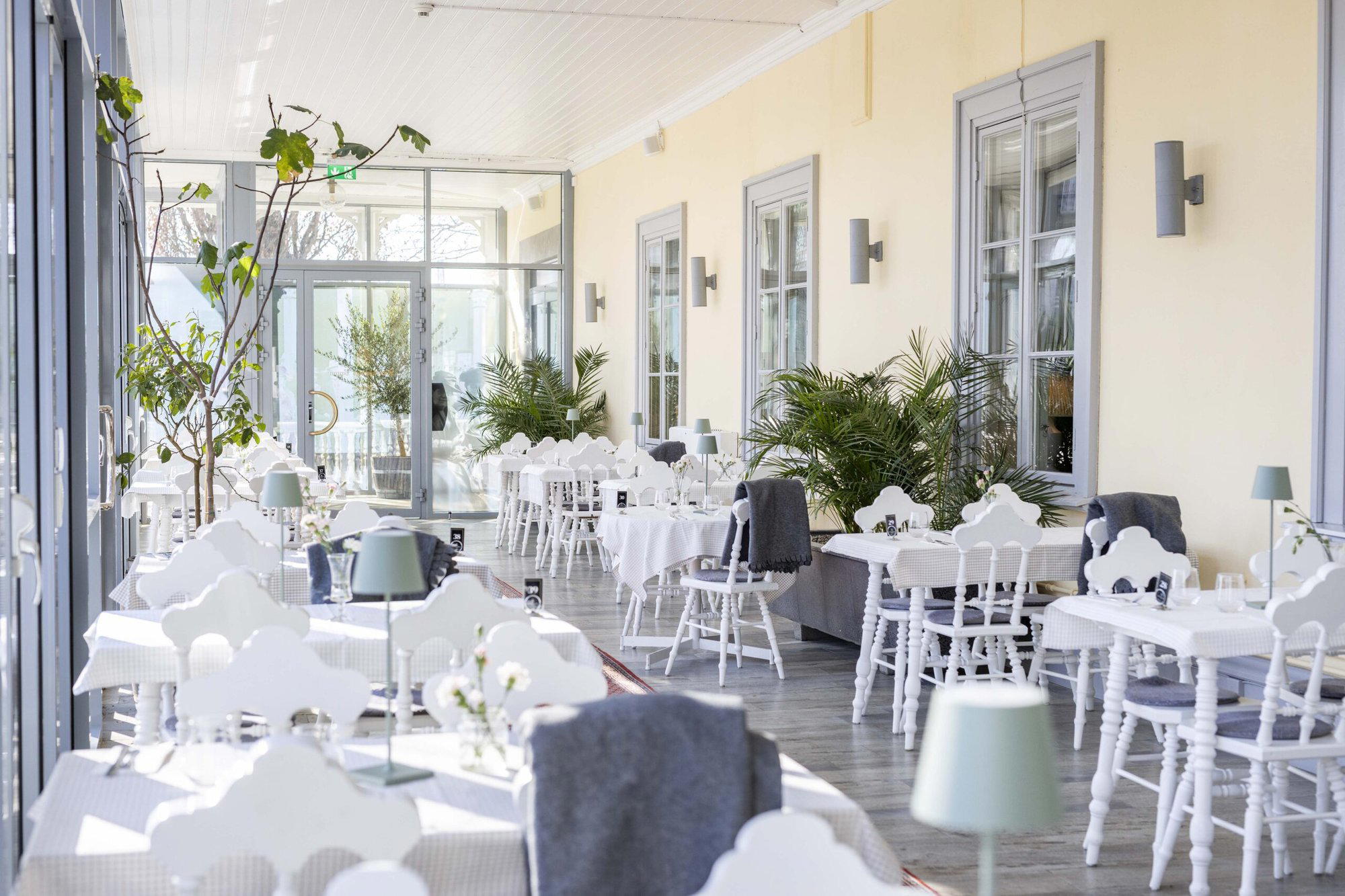
A Canal-Side Property Three Centuries in the Making
Göta Kanal, the 190-kilometre waterway linking the Swedish east and west coasts, passes through a series of small towns that rarely feature in the country's premium dining conversation. Stockholm commands attention with venues like Frantzén in Stockholm, and southern Sweden has built a credible fine dining circuit with addresses including Vollmers in Malmö and VYN in Simrishamn. Söderköping sits outside that circuit, and Söderköpings Brunn sits outside it even further — not through neglect, but through a different set of priorities entirely.
The property dates to the 1700s, originally functioning as a kurhotell, the Central European spa-hotel model that combined mineral water treatments with accommodation. That lineage matters for understanding what the place is and what it is not. It was never conceived as a restaurant destination or a design statement. It developed from a tradition of restorative travel, where the point was the setting, the pace, and the therapeutic logic of being somewhere quiet near water. The recently renovated hotel maintains that orientation. Visitors approach along Skönbergagatan through a town of around 8,000 people, arriving at a property where the canal proximity shapes the atmosphere more than any interior design decision.
Ingredient Sourcing in Östergötland's Agricultural Context
Östergötland is one of Sweden's historically productive agricultural provinces, and that context matters when thinking about how a property like Söderköpings Brunn sources its kitchen supply. The New Nordic movement, which has shaped high-end Swedish dining from ÄNG in Tvååker to Knystaforsen in Rydöbruk, drew heavily on exactly the kind of regional produce that the countryside around Söderköping has supplied for generations: root vegetables, freshwater fish, game, foraged plants, and dairy from smaller producers operating at a scale that suits farm-to-kitchen relationships.
The broader Swedish hotel dining model, particularly at properties with a spa or wellness function, has moved steadily toward menus that reflect immediate geography. This is partly ideological, partly practical. A property drawing guests who arrive specifically to slow down and connect with a place has an obvious interest in food that communicates where it comes from. Herring from the Baltic, lamb from Östergötland pastures, and berries from the surrounding forests represent a provenance logic that reinforces the restorative premise of the stay itself. Whether Söderköpings Brunn's current kitchen program reflects this in detail is something leading confirmed directly with the property, but the regional context creates both the supply infrastructure and the guest expectation for it.
For comparison, properties in western Sweden like PM & Vänner in Växjö and 28+ in Gothenburg have built strong reputations partly through explicit regional sourcing commitments. The canal-country properties in Östergötland occupy a quieter tier of that same national trend, without the recognition infrastructure that formal award programs provide to urban venues. That absence of formal credentials is not a signal of lower quality; it reflects a different relationship with visibility.
The Spa Hotel Format and What It Signals
Sweden's spa hotel segment has developed its own internal hierarchy over the past two decades. At one end, large resort properties near skiing or coastal zones compete on facility scale. At the other, smaller historic properties compete on atmosphere, heritage, and specificity of setting. Söderköpings Brunn belongs clearly to the second category: a property where the appeal is rooted in what was already there before any renovation decision, not in what was built to attract a premium segment.
The kurhotell tradition from which it derives sits closer in spirit to the Austrian and German wellness hotel model than to the Scandinavian design-hotel wave that produced internationally profiled properties across Stockholm, Malmö, and Gothenburg. That distinction shapes the guest experience at a practical level. The setting near Göta Kanal rewards slow movement: walking the towpath, watching the lock system operate, and spending time in a town whose scale encourages a kind of attention that larger Swedish cities don't permit in the same way. This is where the property's character is clearest, and it is where the recently completed renovation investments presumably concentrate their effect.
For guests considering the broader Swedish hotel market, properties like those in our full Söderköping hotels guide provide further context for positioning Söderköpings Brunn within its local competitive set. The canal towns of central Sweden remain less mapped by international travel media than coastal alternatives, which means the due diligence falls on the traveller rather than arriving pre-packaged via editorial coverage.
Reaching Söderköping and Planning the Visit
Söderköping sits roughly 40 kilometres south of Linköping, which has rail connections to both Stockholm and Gothenburg. The town is small enough that arriving without a car limits movement, though the compact centre and canal-side location mean that Söderköpings Brunn itself is walkable from most local points. For guests arriving from Stockholm, the journey runs approximately two hours by train to Linköping, with onward connections by bus or hired vehicle. For anyone based in Gothenburg, the route follows the E4 corridor through Linköping.
The property's identity as a spa hotel means that the visit logic differs from a restaurant-led destination trip. Guests typically stay rather than arrive for a single meal, and the booking decision involves both accommodation and spa access rather than a table reservation alone. The renovation work noted in the property's record suggests updated facilities, which in the Swedish spa context usually means expanded treatment offerings, refreshed pool infrastructure, or improved room specifications. Confirming current availability and rates directly with the property is advisable, as the renovation timeline may affect which facilities are fully operational during any given visit window.
For those planning a broader regional itinerary, the canal itself provides a structural logic. Göta Kanal travel typically moves between Östergötland and Västergötland, and Söderköping sits near the eastern end of that route. Combining a stay at Söderköpings Brunn with dining at nearby addresses or exploring the wider Östergötland food scene gives the trip a cumulative character that single-venue visits can't replicate. See our guides to Söderköping restaurants, bars, wineries, and experiences for a fuller picture of what the town offers beyond the property itself.
For travellers who have visited high-profile Swedish dining addresses like Signum in Mölnlycke, Fyr in Halmstad, or Hotell Borgholm in Borgholm, Söderköpings Brunn represents a deliberate step away from culinary destination logic. The canal, the history, and the spa format are the proposition here. The food operates in service of that, rather than driving the visit independently.
Frequently asked questions
Is Söderköpings Brunn award-winning?
Söderköpings Brunn has received recognition including: Söderköpings Brunn hails from the 1700s and is beautifully located near Göta Kanal. Formerly a ”kurhotell” health resort, nowadays it’s the spa that attracts visitors. The recently renovated hotel and....
Where is Söderköpings Brunn in Söderköping?
Söderköpings Brunn is located at Skönbergagatan 35, 614 30 Söderköping, Sweden, Söderköping.
Do I need a reservation for Söderköpings Brunn?
Reservations are recommended for Söderköpings Brunn in Söderköping. Confirm current policy via the venue's official channels.
Is Söderköpings Brunn okay with children?
Spa-oriented hotels in Sweden typically segment their facilities, with dedicated adult-only wellness areas and separate zones where families are welcome. Söderköpings Brunn's setting beside Göta Kanal gives children room to explore, and the small-town character of Söderköping adds to that appeal. check the venue's official channels via Skönbergagatan 35 to confirm which spa facilities are open to under-18s.
How It Stacks Up
Comparable venues nearby, for context on price, style, and recognition.
| Venue | Cuisine | Price | Awards | Notes |
|---|---|---|---|---|
| Söderköpings BrunnThis venue — the venue you are viewing | Swedish | Not listed | Star Wine List | Not listed |
| Lagerqvist | Classic Swedish Grill & Cocktails | $20–30 | Star Wine List | Gamla Staden |
| Stångs Magasin | Modern Swedish | $50–100 | Star Wine List · White Guide Sweden Restaurants - Fine Level | city center |
| Restaurang Domtrappkällaren | Classic Swedish | $50–100 | Star Wine List | Historic Centre |
| Stufvenäs Gästgifveri | Swedish Seasonal Cuisine | Not listed | Star Wine List · Wine Spectator Best of Award of Excellence | Söderåkra |
| Ato Sushi | Modern Japanese Sushi | $20–30 | Not listed | Gamla Staden |
Recognition history
Dated appearances from independent guides and award organizations, with the underlying list record or original source where available.
Star Wine List
Star Wine List
Continue exploring
More in Söderköping
Restaurants in Söderköping
Browse all →
Bars in Söderköping
Browse all →
Hotels in Söderköping
Browse all →
Details
- Classic
- Historic
- Cozy
- Family
- Celebration
- Historic Building
- Extensive Wine List
- Local Sourcing
- A La Carte
- Gluten Free Options
Large, airy dining room with linen tablecloths, old silverware, and starched waiters evoking upper-class spa era elegance.