Our verdict
On the Plateau-Mont-Royal's most character-dense commercial strip, Société de Développement de l'Avenue du Mont-Royal occupies a civic role that shapes the street's independent dining identity. The organization sits at 1012 Avenue du Mont-Royal Est, embedded in the neighbourhood fabric that has kept this stretch of Montreal resistant to chain homogenization. For anyone mapping the city's food and drink scene, understanding the avenue's governing logic starts here.

Pearl is the En Primeur Club membership app — saves, bookings, and concierge access live there. Same editors, same standards.
- Address
- 1012 Avenue du Mont-Royal E #101, Montréal, QC H2J 1X6, Canada
- Phone
- (514) 522-3797
- Hours
- Mon–Thu 8:30 AM–5 PMFri 8:30 AM–12 PMSat–Sun Closed
- Website
- mont-royal.net
- Directions
- Get directions
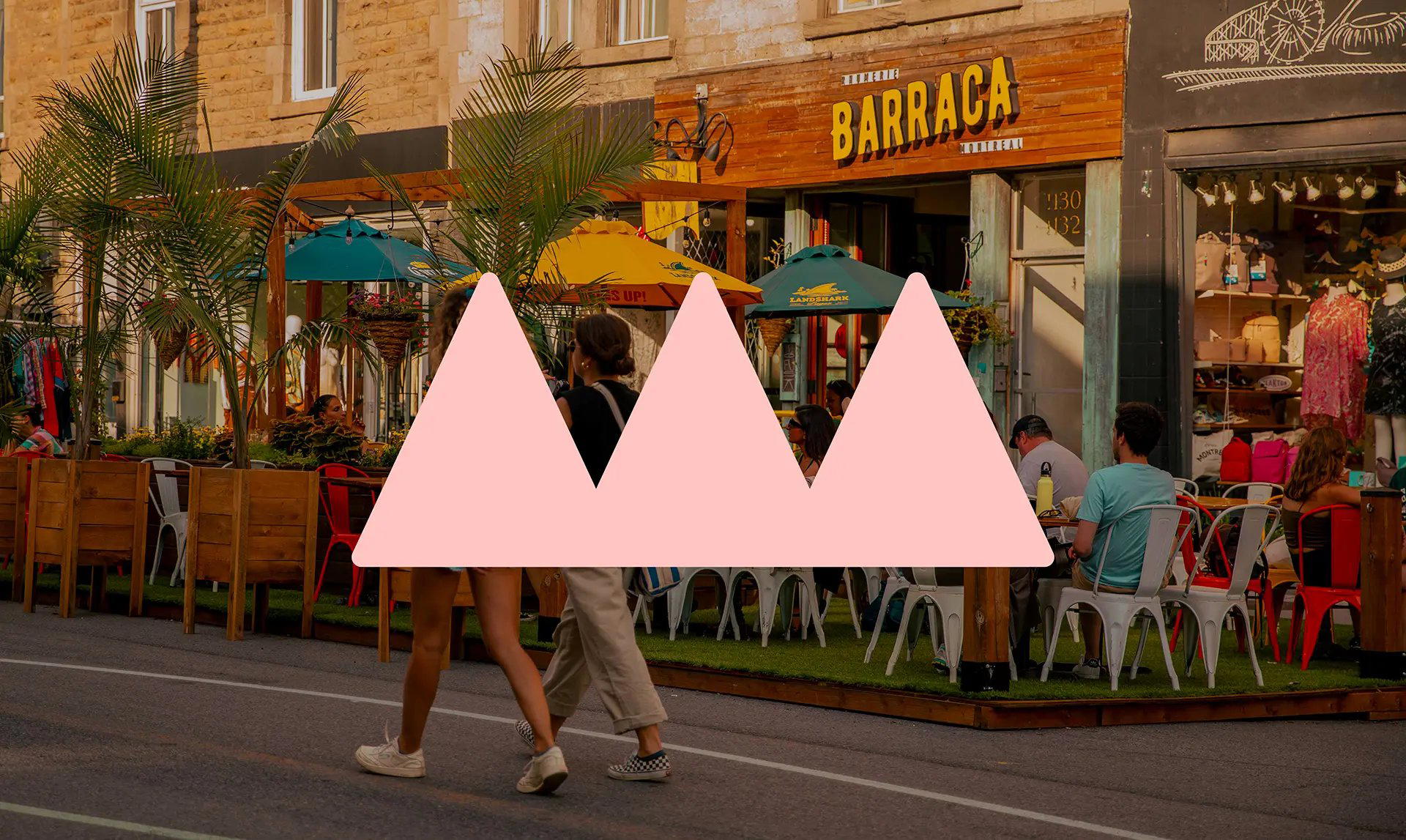
The Avenue as a Dining Ecosystem
Avenue du Mont-Royal Est is one of Montreal's more instructive streets for anyone interested in how independent commerce survives in a city that increasingly competes with itself. The strip runs through the Plateau-Mont-Royal, a neighbourhood whose dining identity has been shaped by decades of francophone working-class roots, successive waves of artistic and bohemian occupation, and a present-day equilibrium between long-standing local institutions and newer kitchens drawing on the city's broader culinary ambitions. The Société de Développement de l'Avenue du Mont-Royal, operating from its address at 1012 Avenue du Mont-Royal Est, is the organizational layer that holds much of this together — the civic infrastructure behind what visitors experience as spontaneous neighbourhood character.
Montreal's commercial strips operate under a development société model that is distinct from anglophone North American business improvement districts. These organizations exercise real influence over tenant mix, streetscape programming, and the promotional architecture that makes certain avenues feel curated without feeling corporate. On Mont-Royal, that influence has historically favoured independent operators, which explains why the strip reads so differently from, say, a gentrified main street where national chains have filled the ground floor of every new condo build.
What Keeps Regulars on This Street
The regulars on Avenue du Mont-Royal are not a monolithic group, but they share a preference for knowing where they are. The bistro where the server has been there eight years, the fromagerie that still hand-labels its cheese boards, the kitchen that closes when the chef decides rather than when a corporate policy dictates — these are the textures that create loyalty on a street level. Civic organizations like the Société exist, in part, to maintain the conditions that make this kind of tenure possible.
That loyalty is also a function of density. The avenue is walkable in a way that encourages a specific kind of evening: one restaurant for dinner, another bar for a glass afterward, a detour through a bookshop or record store between the two. This is the rhythm that Montreal's leading commercial strips sustain, and it depends on a critical mass of independents operating in proximity. When that mass tips toward chains or short-tenure pop-ups, the rhythm breaks. The Société's organizational role is, among other things, to prevent that tipping.
For a broader read on where Montreal's dining scene sits right now, across price tiers, neighbourhoods, and culinary traditions, our full Montreal restaurants guide maps the city's current landscape in useful detail.
The Plateau in Montreal's Culinary Hierarchy
Montreal dining has always operated across multiple registers simultaneously. At the formal end, places like Jérôme Ferrer's Europea and the tasting-menu precision of Mastard compete for the kind of attention that earns international recognition. Sabayon occupies a similarly considered tier. At the neighbourhood level, places like 3 Pierres 1 Feu and Abu el Zulof represent the kind of specific, locally rooted cooking that gives Montreal its actual texture beyond the tasting-menu circuit.
Avenue du Mont-Royal sits closer to that second register. The street is not where you go for a $300 per-head dinner with wine pairings. It is where you go when you want to eat well without performing the act of eating well, where the cooking is taken seriously but the room does not ask you to be. That positioning is deliberate and defended, and the Société's organizational mandate is part of what makes it durable.
In the broader Canadian context, this kind of neighbourhood-anchored dining identity is not automatic. Alo in Toronto operates at the formal prestige end with little equivalent neighbourhood street culture beneath it. AnnaLena in Vancouver and Restaurant Pearl Morissette in Lincoln signal what the country's serious dining ambition looks like in different geographic registers. Further afield, Tanière³ in Quebec City demonstrates what a fully committed local-ingredient philosophy looks like at tasting-menu scale within the francophone Quebec tradition that Mont-Royal's street culture shares at a more casual register.
What makes Montreal's Plateau different from Toronto's equivalent strips or Vancouver's Cambie corridor is partly linguistic, the French-language commercial environment creates a specific social texture, and partly historical. The Plateau absorbed successive waves of immigrant communities, and the food culture that resulted is genuinely layered rather than curated to look layered. The Société's work is to maintain the organizational conditions that keep that layering intact.
Accessing the Avenue
Avenue du Mont-Royal is served directly by the Mont-Royal metro station on the Orange Line, which deposits visitors at the heart of the commercial strip. The street is navigable on foot from there in either direction, with restaurants, cafés, and food retail running continuously. Parking exists but is contested, particularly on weekend evenings; arriving by metro or on foot is the practical choice for anyone planning to move between venues over the course of an evening. The strip operates year-round, though the summer terrace season shifts the street's energy substantially, sidewalk dining extends the footprint of most operators and changes how the avenue reads as a social space.
For context on what independent dining looks like when it pushes into more remote or radical formats, Eigensinn Farm in Singhampton and Fogo Island Inn Dining Room represent the opposite pole from an urban commercial strip, destination formats where location itself is the organizing logic. Narval in Rimouski shows what serious culinary ambition looks like when it operates outside Montreal altogether. And for reference points beyond Canada, Le Bernardin in New York City and Lazy Bear in San Francisco illustrate the formal prestige tier that Montreal's neighbourhood dining deliberately positions itself against. The Pine in Creemore, Busters Barbeque in Kenora, and Cafe Brio in Victoria each illustrate how seriously Canada's smaller-city dining culture takes itself when given organizational and creative room to develop.
Frequently asked questions
What's the address for Société de Développement de l'Avenue du Mont-Royal?
Société de Développement de l'Avenue du Mont-Royal is located at 1012 Avenue du Mont-Royal E #101, Montréal, QC H2J 1X6, Canada, Montreal.
What does the Société de Développement de l'Avenue du Mont-Royal actually do for the street?
Based at 1012 Avenue du Mont-Royal E #101 in Montreal's Plateau, the Société functions as the avenue's commercial improvement district body — coordinating public events, supporting independent merchants, and advocating for the street's retail and hospitality tenants. Its work is most visible during seasonal programming that draws foot traffic to the corridor's restaurants, boutiques, and service businesses.
What's the best thing to order at Société de Développement de l'Avenue du Mont-Royal?
The Société de Développement de l'Avenue du Mont-Royal is not a restaurant or café — it is the commercial development organisation governing the Avenue du Mont-Royal Est corridor in Montreal's Plateau neighbourhood. For ordering recommendations, the avenue itself hosts dozens of independent restaurants and bistros; the organisation's role is to support and develop those businesses, not to serve food directly.
Is Société de Développement de l'Avenue du Mont-Royal reservation-only?
The Société de Développement de l'Avenue du Mont-Royal operates as a business development body at 1012 Avenue du Mont-Royal E, Montreal, and does not take dining reservations. Individual restaurants along Avenue du Mont-Royal Est vary widely — some Plateau bistros accept walk-ins, while others filling a dozen seats require advance booking.
What's Société de Développement de l'Avenue du Mont-Royal best at?
The organisation's primary function is sustaining the independent commercial character of Avenue du Mont-Royal Est in Montreal's Plateau. It coordinates street-level programming, supports local merchants, and works to keep the avenue from the chain-retail drift that has reshaped comparable streets in other North American cities.
Is Société de Développement de l'Avenue du Mont-Royal good for vegetarians?
As a commercial development body based at 1012 Avenue du Mont-Royal E in Montreal, the Société does not operate a food service, so vegetarian options are not applicable here. The avenue it governs, however, runs through a neighbourhood with a historically high concentration of independent cafés and restaurants that routinely accommodate plant-based diners.
Cuisine and Credentials
| Venue | Cuisine | Price | Awards | Notes |
|---|---|---|---|---|
| Société de Développement de l'Avenue du Mont-RoyalThis venue — the venue you are viewing | This venue | Not listed | Not listed | Not listed |
| L’Express | Classic French Bistro | $50–100 | Michelin Plate · Star Wine List | Not listed |
| Schwartz’s | Montreal Smoked Meat Deli | $20–30 | Michelin Plate | Not listed |
| Toqué | Modern Quebecois Fine Dining | $100–150 | Michelin Plate · La Liste Top Restaurants | Not listed |
| Jérôme Ferrer - Europea | Modern French Fine Dining with Quebec Influences | $150–200 | 1 Michelin Star · Relais Chateaux Award | Modern Cuisine |
| Mastard | Modern Quebec Terroir Fine Dining | $50–100 | 1 Michelin Star · Canada's 100 Best Restaurants #63 | Modern Cuisine |
Details
Current opening hours
- Monday
- 8:30 AM–5 PM
- Tuesday
- 8:30 AM–5 PM
- Wednesday
- 8:30 AM–5 PM
- Thursday
- 8:30 AM–5 PM
- Friday
- 8:30 AM–12 PM
- Saturday
- Closed
- Sunday
- Closed
Hours can change for holidays and private events. Last verified .