Sobrecueva
Sobrecueva sits in Cangas de Onís, the gateway town to the Picos de Europa in Asturias, a region where the sourcing story behind a plate often matters as much as what lands on it. Asturian cooking here draws from mountain pastures, cold Atlantic waters, and one of Spain's most distinctive dairy traditions, placing Sobrecueva within a dining culture shaped by geography as much as technique.
Pearl is the En Primeur Club membership app — saves, bookings, and concierge access live there. Same editors, same standards.
- Address
- 33589 Cangas de Onís, Asturias, Spain
- Directions
- Get directions
 Saves & bookings on Pearl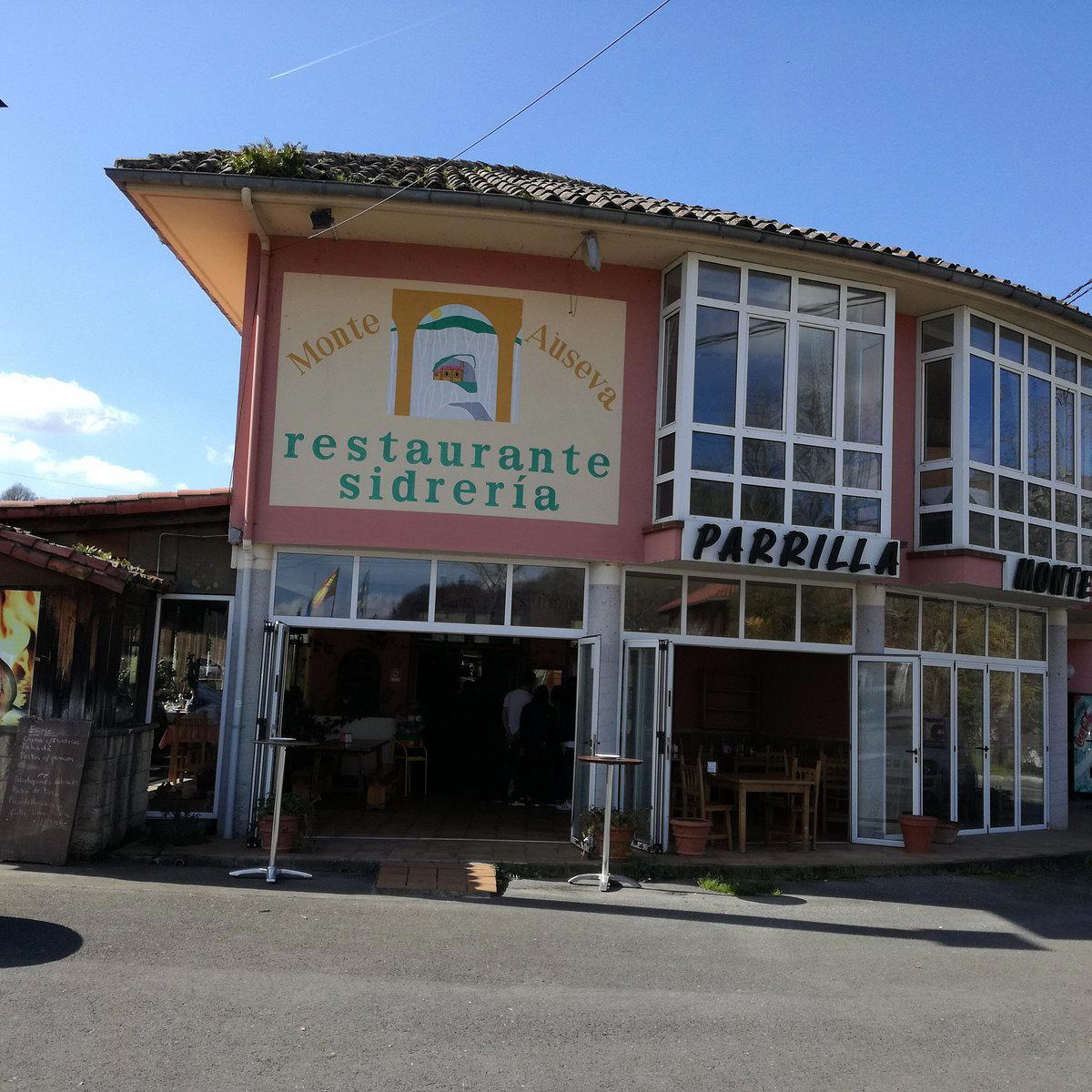
Where the Mountains Start and the Menu Follows
Cangas de Onís sits at the edge of the Picos de Europa, the limestone massif that separates coastal Asturias from the Castilian meseta. It is the kind of town where the landscape is not background detail but the actual engine of local food culture. The rivers carry salmon and trout. The high meadows support some of Spain's most closely watched artisan cheese production. The Atlantic, less than an hour north, feeds a fishing tradition that dates back centuries. A restaurant here does not choose its sourcing philosophy so much as inherit it from the surrounding geography.
Sobrecueva occupies this context directly. Located in Cangas de Onís at the foot of the Picos, it operates within a regional food scene defined by proximity to raw material rather than by urban prestige. That positioning places it in a different competitive register from the multi-starred Basque and Galician institutions that dominate northern Spain's dining conversation, and in some ways makes the sourcing question more immediate, not less.
Asturian Ingredients and What They Represent
Asturias holds a particular place in Spanish gastronomy that is often discussed in terms of tradition rather than innovation, though that framing undersells the region's seriousness. The Protected Designation of Origin cheeses produced here, Cabrales, Gamonéu, Afuega'l Pitu, represent a precision of terroir that parallels what wine appellations do for production regions in France or Italy. Cabrales, aged in mountain caves above 1,000 metres, carries flavour compounds shaped by altitude, humidity, and the mixed-milk blend of cow, sheep, and goat. When it appears on a menu in Cangas de Onís, it has often travelled no further than 30 kilometres from pasture to plate.
The same logic applies to the seafood supply chain operating along the Cantabrian coast. Ports like Ribadesella and Llanes, both within reach of Cangas, land fish under day-boat conditions that larger coastal cities rarely achieve at volume. Merluza a la sidra, hake cooked in Asturian cider, is among the more geographically specific dishes in the Spanish canon: the cider from local apple orchards, the fish from Cantabrian waters, the technique refined across generations of home and restaurant kitchens along this stretch of coast.
This is the sourcing infrastructure that shapes what a restaurant in Cangas de Onís works with. The ingredients are not imported for effect; they are the default output of a landscape that has been producing the same notable raw materials for centuries.
The Cangas De Onís Dining Scene in Context
Cangas de Onís is not a fine dining destination in the way that San Sebastián or Bilbao functions, it does not draw visitors primarily for its restaurant density. It draws visitors for the national park, for Romanesque architecture, and for the camino routes that pass through it. Restaurants here operate within a different visitor economy, one where the relationship between food and place tends to be expressed through authenticity of sourcing rather than technical complexity of preparation.
That said, Asturias as a whole has developed a serious restaurant culture, anchored in part by Casa Marcial in Arriondas, which holds two Michelin stars and sits roughly 20 kilometres from Cangas. The broader northern Spanish scene, including Arzak in San Sebastián, Azurmendi in Larrabetzu, and Mugaritz in Errenteria, has established a credible framework for understanding Spanish cooking at the level of landscape and seasonal material. Asturian restaurants working within that tradition, even at a more grounded register, are operating inside a well-developed regional argument about what food should express.
Further afield, Spain's progressive restaurant tier, Quique Dacosta in Dénia, Aponiente in El Puerto de Santa María, El Celler de Can Roca in Girona, Martin Berasategui in Lasarte - Oria, DiverXO in Madrid, represents a different category of ambition. What connects those restaurants to what Cangas de Onís does well is a shared insistence on reading the ingredient before deploying the technique.
Cangas de Onís is most accessible by car from Oviedo, roughly 70 kilometres to the west along the AS-114. The town fills noticeably in July and August when Picos de Europa traffic peaks, making late spring and September the more practical windows for anyone prioritising a quieter visit with full local food access. Asturian sidrerías and traditional restaurants along the main streets tend to operate lunch-heavy schedules, with evening service often starting later than in Madrid or Barcelona. Visitors arriving from outside the region typically base themselves in Cangas for two to three nights, using it as the eastern anchor of a coastal Asturias circuit that might also include Llanes and Ribadesella.
For readers building an Asturias-plus itinerary that extends into broader Spanish fine dining, several reference points are worth noting. Cenador de Amós in Villaverde de Pontones and Atrio in Cáceres both offer the experience of serious Spanish cooking in non-urban, historically rich settings, a rough parallel to what the Picos de Europa context provides in Asturias. Nerua Guggenheim Bilbao in Bilbao, Ricard Camarena in València, Cocina Hermanos Torres in Barcelona, and Noor in Córdoba extend the conversation across Spain's regional dining spectrum. Internationally, the sourcing-first philosophy that defines Asturian cooking at its most considered has parallels at Le Bernardin in New York City and Lazy Bear in San Francisco, both of which treat ingredient provenance as a structural argument rather than a menu note.
Side-by-Side Snapshot
Comparable venues nearby, for context on price, style, and recognition.
| Venue | Cuisine | Price | Notes |
|---|---|---|---|
| SobrecuevaThis venue — the venue you are viewing | Asturian Spanish with notable blue cheese | $$ | Not listed |
| El Molín De Mingo | Creative Asturian mountain farmhouse restaurant | $$$ | Peruyes |
| Bar Casa Tia | Traditional Menorcan Tapas | $$ | Cala en Porter |
| Restaurante Casa Chema | Traditional Asturian with Vegan Options | $$ | El Caleyo |
| Quince Nudos | Modern Asturian rice-focused restaurant | $$$ | / Playa de Santa Marina |
| Pasiones | Vegan Spanish Tapas | $$ | Gijon-Este |
Continue exploring
More in Cangas De Onis
Restaurants in Cangas De Onis
Browse all →
Bars in Cangas De Onis
Browse all →
Hotels in Cangas De Onis
Browse all →

At a Glance
- Rustic
- Casual Hangout
- Historic Building
- Local Sourcing
rustic cave setting focused on artisanal cheese production.