A casual stop in Massawa's port-city eating culture, Snack Bar Harat sits in the tier of local snack houses that have long served the city's working population and passing travellers. In a place where the Red Sea defines what lands on the plate, understanding where the food comes from matters more than any menu description. See our full Massawa context for how it fits the broader scene.

Pearl is the En Primeur Club membership app — saves, bookings, and concierge access live there. Same editors, same standards.
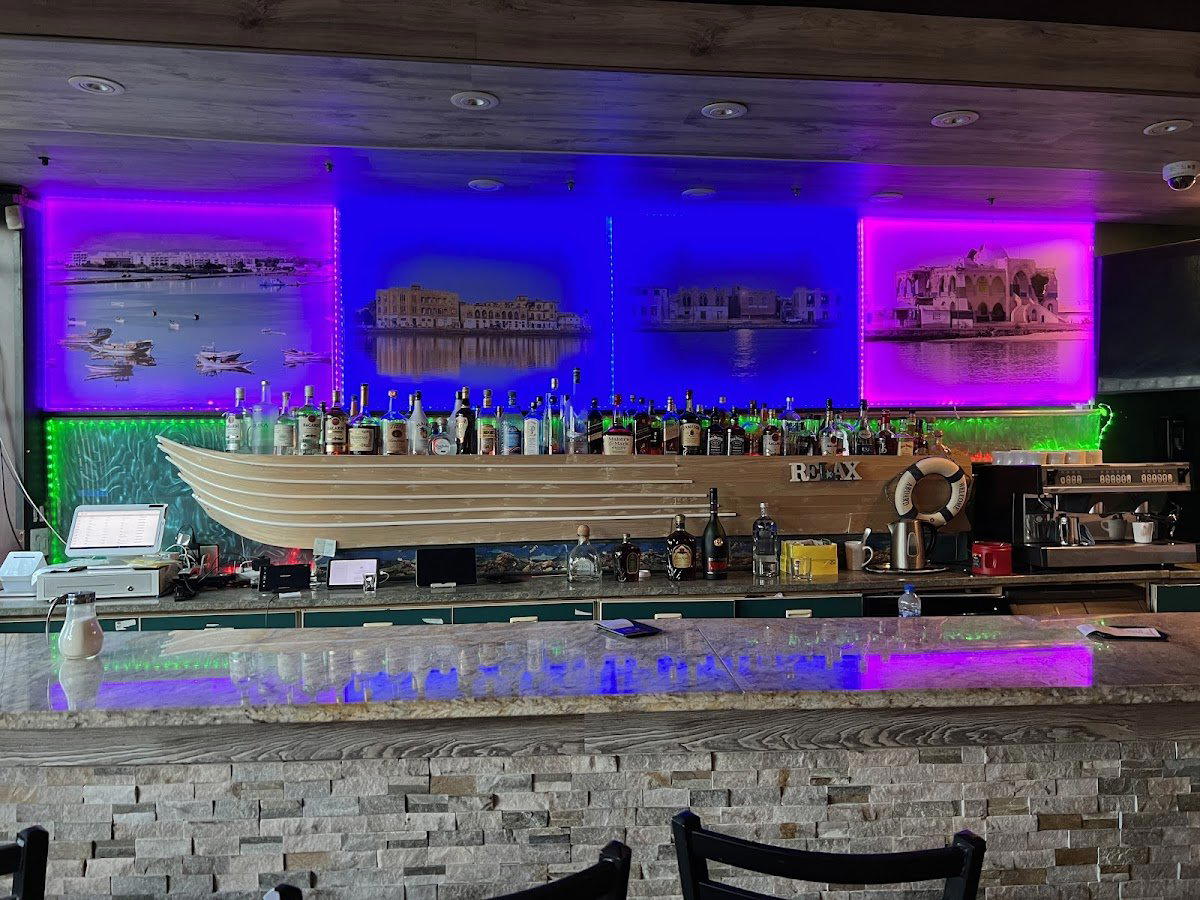
Eating at the Edge of the Red Sea
Massawa is not a city that makes eating complicated. The port has always determined the pantry: what arrives by boat, what is pulled from the water that morning, what dries on racks near the shoreline. Snack bars and small eating houses in this part of Eritrea operate within that logic entirely, and Snack Bar Harat belongs to that tradition. The food comes from the surrounding environment because in Massawa, there is no practical alternative, and that constraint produces a directness that more elaborately supplied kitchens rarely match.
The Red Sea coast around Massawa is one of the more productive fishing zones in the region. Reef fish, shellfish, and small pelagic species move through these waters in volumes that have supported coastal communities for centuries. The snack-house format that characterises much of Massawa's eating culture was built to handle this supply: fast preparation, high turnover, minimal storage, with whatever arrived from the water or the morning market shaping the day's offer. Ingredient sourcing here is not a marketing position — it is a structural reality baked into how these places operate.
For a contrasting sense of how coastal ingredient logic plays out in a fully documented fine-dining context, Aponiente in El Puerto de Santa María has built an entire tasting format around marine ingredients that most kitchens ignore. The comparison is not to suggest equivalence, but to illustrate that proximity to the source is a principle that operates across wildly different price points and formats.
What the Snack-House Format Actually Means
Eritrea's snack bars occupy a specific place in the country's eating culture. They are not restaurants in the full-service sense, nor are they street stalls. The format sits between the two: a fixed address, some seating, a tight and mostly verbal menu, and food that moves quickly from preparation to plate. In coastal cities like Massawa, the category has historically served dock workers, traders, and travellers passing through the port, and the food reflects those practical origins.
The sourcing logic that defines these spots is worth understanding before you arrive. There is no supply chain insulating the kitchen from what is or is not available on a given day. When the catch is good, the menu expands. When it is not, the kitchen works with what came in from the market or inland. This is a different relationship with ingredients than the one found at, say, Arpège in Paris, where sourcing discipline is a deliberate philosophical position backed by relationships with named producers. In Massawa, the sourcing discipline is imposed by geography and infrastructure, and it produces food with a corresponding honesty.
Local staples beyond seafood tend toward the familiar Eritrean pantry: injera in various forms, legume-based preparations, and dishes that draw on the country's overlapping Italian colonial and East African culinary histories. Massawa, more than Asmara, leans toward the sea. The Italian thread in Eritrean cooking — pasta, bread baking, a certain approach to tomato, surfaces in coastal spots in ways that feel more integrated than imitative, a product of decades rather than decades of deliberate preservation.
Massawa's Eating Scene in Wider Context
Massawa does not appear on any international award circuit. Michelin does not cover Eritrea; neither does the World's 50 Best or any of the other credentialing systems that attach prestige to restaurants from Atomix in New York to 8½ Otto e Mezzo in Hong Kong. That absence does not indicate a lack of culinary seriousness, it indicates that those systems are not designed to operate in places with limited tourism infrastructure and no hotel-group lobby working on behalf of local operators.
What Massawa does have is a coherent and long-established eating culture shaped by its position as Eritrea's principal port. The snack houses and small restaurants clustered around the old town and the newer mainland area serve a population that has eaten this food for generations. There is no novelty premium here, no tasting-menu theatrics of the kind found at Alinea in Chicago or Lazy Bear in San Francisco. The value is in the directness of the cooking and the fact that the ingredient chain is genuinely short.
For Eritrean dining in a more urban and documented context, Al Sicomoro Restaurant in Asmara represents a different tier of the country's restaurant scene, with a longer operational history and a setting that draws on the capital's preserved Italian colonial architecture. Massawa operates at a different register, and the snack-house format is part of that character rather than a limitation of it.
Our full Massawa restaurants guide maps the broader scene, including where to find the city's most reliable seafood spots and how the old town's eating options differ from those on the mainland causeway side.
Planning a Visit
In Massawa, this is not unusual for smaller eating establishments, many of which operate without a significant online presence and rely on local knowledge for foot traffic. The approach for travellers is direct: the old town district, particularly around the port and the Ottoman-era market area, concentrates most of the city's casual eating options, and asking locally will get you there faster than any digital search. Travel to Massawa from Asmara is typically done by road, a journey of roughly 115 kilometres that descends from the highland plateau to sea level and takes between two and three hours depending on conditions. The climate at sea level is considerably hotter than the capital, and the midday heat in summer months makes early morning or evening eating the more comfortable option.
Travellers who engage Eritrea's tourism infrastructure at all tend to be those with a specific interest in the country's history, architecture, or regional position, not incidental visitors. That self-selecting quality means the audience for Massawa's eating culture tends to be patient with informal logistics and genuinely curious about what the place produces on its own terms. For that kind of reader, the snack-house circuit in Massawa is worth the practical uncertainty it involves.
Comparison Snapshot
| Venue | Cuisine |
|---|---|
| Snack Bar HaratThis venue — the venue you are viewing | This venue |
At a Glance
- Casual Hangout
- Local Sourcing
Warm hospitality with lively local flavors in a quieter lunch setting.