Where Edinburgh's Vietnamese Table Fits In
Edinburgh's restaurant scene has long organised itself around a clear hierarchy: the Michelin-starred Scottish-produce houses at the leading, a confident modern-European middle tier, and everything else competing for attention in the margins. That structure has been loosening. Restaurants like AVERY and Condita have demonstrated that ambitious cooking outside the Scottish-larder formula can find a serious audience in the city, and the space they opened has made room for cuisines that were previously underrepresented at the serious end of the market.
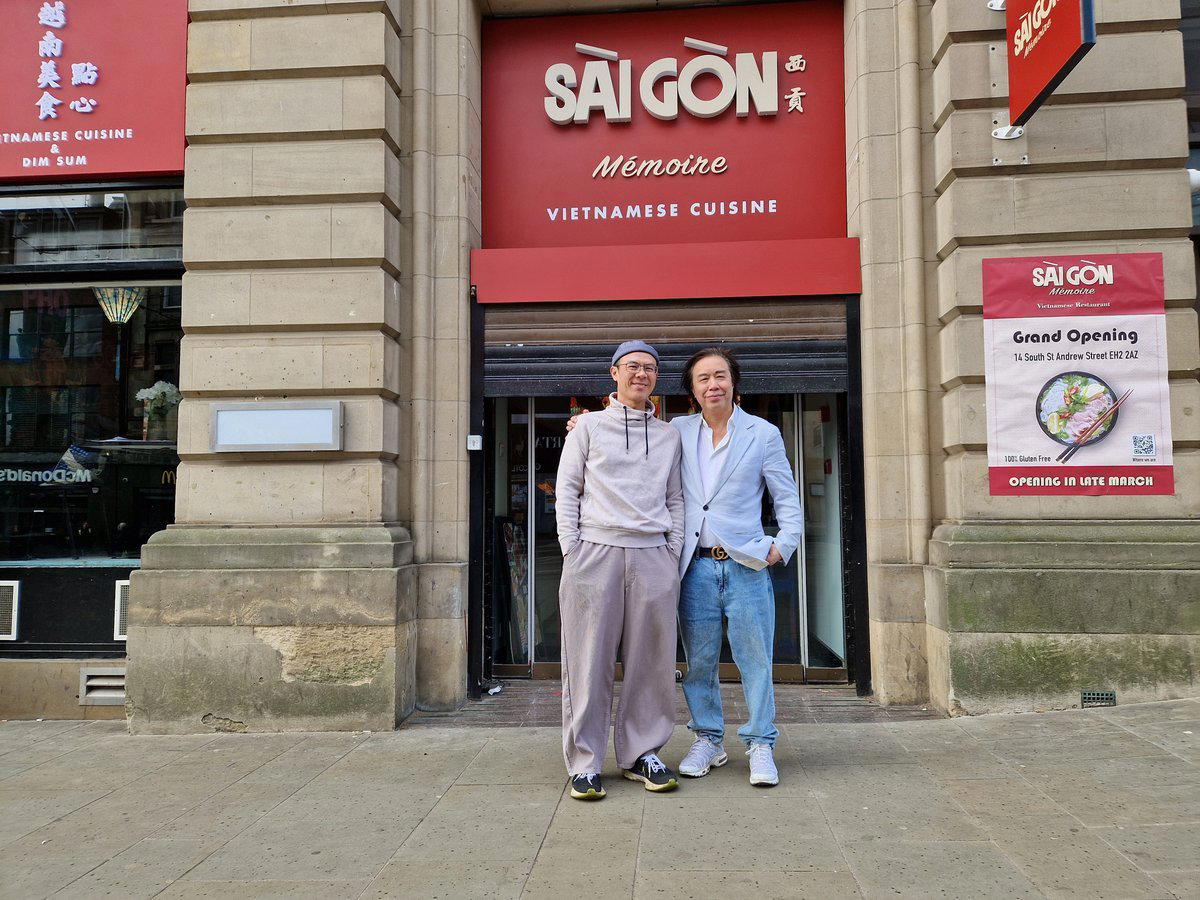
Vietnamese cooking occupies a particular position in that shift. Unlike, say, Japanese or Indian cuisine, which have well-established fine-dining reference points in the UK, Vietnamese food in Britain has mostly been framed through the lens of casual eating: pho counters, bánh mì shops, family-run restaurants serving food that is excellent but rarely positioned as a destination in its own right. A restaurant like Sàigòn Mémoire, sitting at 14 South St Andrew Street in central Edinburgh, represents a different proposition: Vietnamese cooking in a setting that invites the kind of attention usually reserved for the city's European-heritage establishments.
The Architecture of a Vietnamese Menu
The most instructive thing about how a Vietnamese restaurant communicates its ambitions is the structure of its menu. Vietnamese cuisine in its southern, Ho Chi Minh City tradition draws on a different set of organising principles than the French-influenced tasting-menu format that dominates Edinburgh's formal dining tier. The food is built around brightness and contrast: the interplay of fresh herbs and fermented depth, the tension between hot broth and cooling garnish, the way a single dish can hold sweet, sour, salty, and bitter in equilibrium without any one element dominating.
A menu that takes that tradition seriously will resist the temptation to Europeanise the structure into a neat procession of small-to-large courses. The more honest approach presents dishes that want to arrive together, or in an order determined by the kitchen's logic rather than convention. Whether Sàigòn Mémoire has committed fully to that format or adapted it for an Edinburgh audience is the key question any informed visitor should bring to the table. The name alone signals an intention: mémoire, memory, suggesting a cooking approach that draws on source rather than interpretation.
Compare this to the approach taken at Edinburgh's established formal restaurants. Martin Wishart and The Kitchin both operate within the logic of the French-trained tasting menu, where the architecture of the meal is as deliberate as any individual dish. Timberyard sits slightly outside that frame with its Nordic-influenced sharing format, which is structurally closer to how a Vietnamese meal is meant to work. The comparison matters: it positions Sàigòn Mémoire not as an outlier but as part of a broader reconfiguration of how Edinburgh restaurants think about meal structure.
South St Andrew Street as a Location Signal
The address places Sàigòn Mémoire squarely in central Edinburgh, within easy reach of the New Town's main dining corridor. South St Andrew Street sits between St Andrew Square and the eastern edge of the shopping district, an area that has attracted a range of restaurant formats in recent years. It is not a destination street in the way that Leith's restaurant cluster around The Shore functions, but it is accessible and densely served by public transport, with Waverley station a short walk away. For visitors staying in the New Town or on the Royal Mile, the location requires no particular effort to reach.
The significance of a Vietnamese restaurant choosing central Edinburgh rather than a peripheral neighbourhood is worth noting. In many UK cities, Southeast Asian restaurants have historically concentrated in areas with established immigrant communities, which creates excellent food but limits visibility among certain dining audiences. A central address signals a deliberate decision to compete directly with the city's European-heritage restaurants for the same customer, on their own ground. That is a different kind of ambition than simply offering good food.
The Broader UK Context for Southeast Asian Fine Dining
Question of where Vietnamese cuisine sits within the UK's fine-dining conversation is one that restaurants across the country are negotiating simultaneously. In London, the conversation is more advanced: there are several Vietnamese restaurants that have earned serious critical attention, and the framework for evaluating them has matured. Outside London, the category is thinner. Edinburgh has a smaller restaurant economy than London, but it is not without sophistication. The city that sustains restaurants of the calibre of AVERY and has historically supported the ambitions of multi-starred European establishments is capable of sustaining serious Southeast Asian cooking.
For context on how ambitious Asian-influenced cooking has developed in other UK cities, Opheem in Birmingham offers a useful reference point: a restaurant that took Indian cuisine into territory that earned formal recognition, demonstrating that the critical infrastructure for non-European fine dining exists outside London when the cooking is genuinely at that level.
Internationally, the benchmark for Korean cuisine operating at the highest formal level is set by places like Atomix in New York City, where a non-European culinary tradition has been presented within a rigorous fine-dining structure without losing its essential character. The challenge for any restaurant doing something similar with Vietnamese food is the same: how do you honour the source material while meeting the practical expectations of a customer who has booked a table rather than walked in off the street?
Know Before You Go
Know Before You Go- Address: 14 South St Andrew Street, Edinburgh EH2 2AZ
- Cuisine focus: Vietnamese, with roots in the southern Ho Chi Minh City tradition
- Location: Central Edinburgh, New Town, close to St Andrew Square and Waverley station
- Booking: Contact the restaurant directly; specific booking methods are not confirmed at time of writing
- Price range:; budget accordingly for a sit-down Vietnamese restaurant in a central Edinburgh address
- Nearby reference points: A short walk from Martin Wishart (Leith) and within the same dining circuit as The Kitchin