Shri Balaji Bhavan
Shri Balaji Bhavan on Hillcroft Street sits at the center of Houston's South Asian dining corridor, serving South Indian vegetarian cooking that reflects decades of community continuity. The kitchen operates within a tradition that treats plant-based, dairy-forward South Indian cuisine as a complete culinary system, not a dietary concession. For Houston's Indian diaspora and curious visitors alike, it remains a reference point for the genre.
Pearl is the En Primeur Club membership app — saves, bookings, and concierge access live there. Same editors, same standards.
- Address
- 5655 Hillcroft St, Houston, TX 77036
- Phone
- +1 713 783 1126
- Website
- shribalajibhavan.com
- Directions
- Get directions
 Saves & bookings on Pearl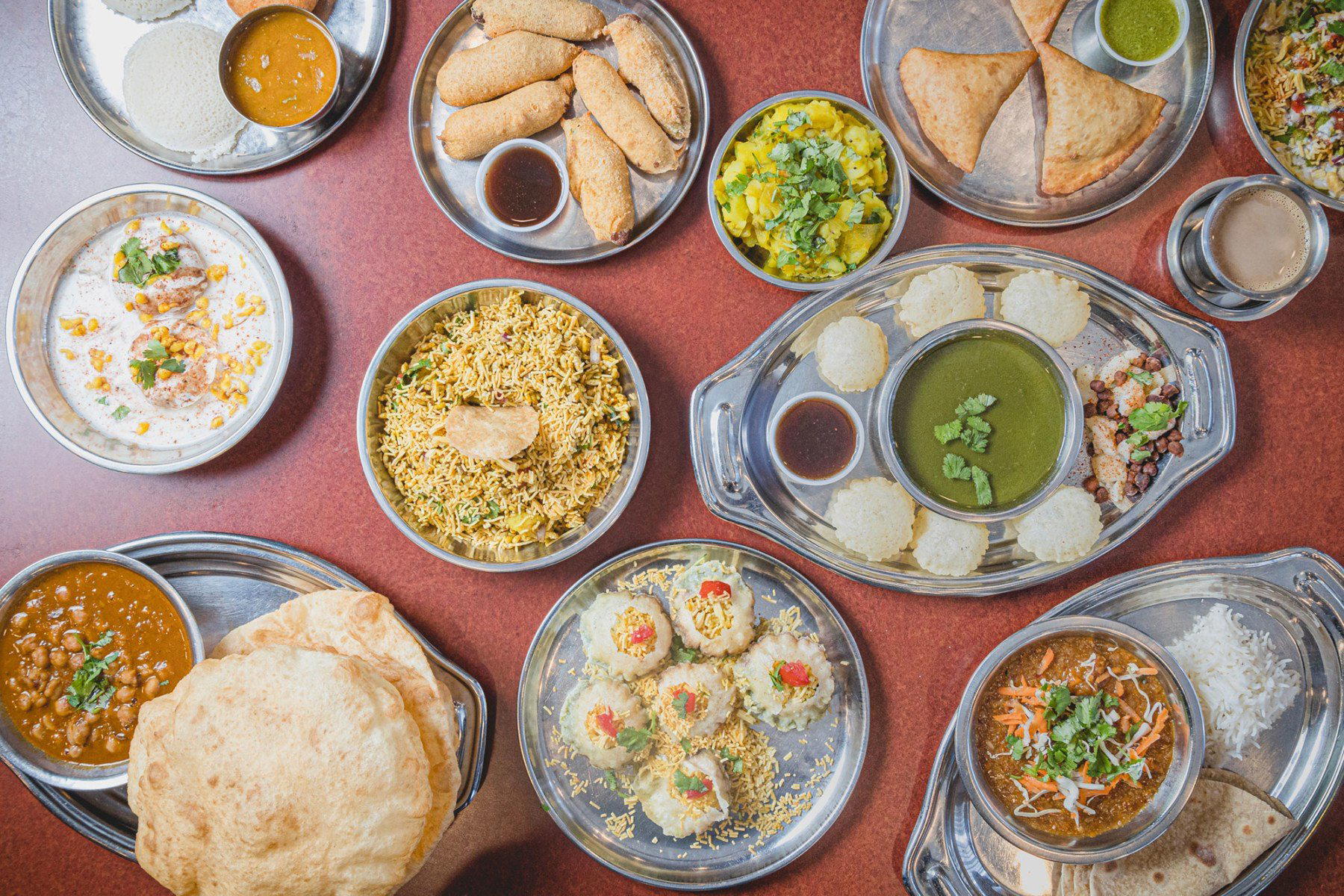
Hillcroft and the Grammar of South Indian Vegetarian Cooking
Houston's Hillcroft Avenue corridor is one of the more concentrated expressions of South Asian commercial life in the American South. Within a stretch of a few blocks, Tamil, Telugu, and Hindi grocery stores, sweet shops, and restaurants occupy strip malls that have served the city's Indian diaspora since the 1980s. To understand what this place represents, it helps to understand the culinary tradition it belongs to.
South Indian vegetarian cooking, particularly in the Tamil Brahmin and broader Shaivite tradition, operates on principles that predate modern sustainability discourse by centuries. The diet is lacto-vegetarian, structured around legumes, lentils, rice, and fermented preparations. Fermentation is central: the dosa batter, left to ferment overnight, develops sourness and airiness without any chemical leavening. The idli steams without fat. The sambar, a tamarind-lentil broth with vegetables, uses no animal protein. This is a complete culinary vocabulary, not an edited version of a meat-based cuisine.
The Sustainability Argument Built Into the Cuisine Itself
American dining culture has spent the past decade retrofitting sustainability frameworks onto existing kitchen practices, composting programs, local sourcing pledges, reduced-waste menus. South Indian vegetarian cooking, by contrast, arrives with those values structurally embedded. The cuisine's reliance on fermented batter means minimal food waste: batter that thickens beyond dosa use becomes idli batter; excess becomes uttapam. The lentils and legumes that form the protein base of the diet carry one of the lowest carbon footprints in global food systems, requiring a fraction of the water and land that comparable animal protein demands.
This is the context in which a restaurant like Shri Balaji Bhavan matters beyond its immediate neighborhood. At a time when farm-to-table tasting menus at places like Blue Hill at Stone Barns in Tarrytown or Single Thread Farm in Healdsburg build sustainability frameworks into their pricing and positioning, the South Indian vegetarian tradition achieves comparable ecological outcomes through centuries-old culinary structure, and at a price point accessible to the community it serves. The ethics here are not a marketing layer. They are the recipe.
Across American cities with significant Indian populations, the South Indian vegetarian restaurant occupies a structurally important but editorially underwritten position. Houston is no exception. The city has a growing roster of ambitious Indian dining: Musaafer operates at the $$$$ tier with a menu designed to reframe Indian cuisine for a fine-dining audience. Shri Balaji Bhavan operates in a different register entirely, community-facing, everyday, and rooted in regional specificity rather than pan-Indian synthesis.
What the Kitchen Does and Why It Holds Up
The South Indian vegetarian format that Shri Balaji Bhavan represents is built around a short list of preparations executed with precision and repetition. The dosa, a thin, fermented rice-and-lentil crepe, is the format's central test. Done correctly, it arrives with a lacework of crisp edges and a pliable center, served alongside sambar and coconut chutney. The masala variant contains spiced potato filling. The rava dosa, made with semolina, is more immediate and less fermented in flavor, with a lacy, porous texture that differs structurally from the rice-batter version.
Idlis, steamed rice cakes, represent the other pillar. The quality depends almost entirely on batter fermentation and steaming time; a properly made idli is cloud-soft and pulls apart cleanly without stickiness. Vadas, the fried lentil doughnuts served in sambar or as a dry accompaniment, add texture contrast. The thali format, where available, presents this range of preparations as a composed plate, a structure that mirrors the ecological logic of the cuisine by using smaller quantities of many components rather than a large central protein.
These are not exotic preparations for the restaurant's core audience. For Houston's Tamil and Telugu communities, this is functional, familiar food, the kind eaten on weekend mornings before temple visits or picked up between errands. That community continuity is itself a trust signal. Restaurants that serve diaspora communities long-term do so because the product holds to standard; the customer base notices immediately when it doesn't.
Houston's South Asian Corridor in the Wider City Context
Houston's dining identity is often narrated through its high-end venues: March for Venetian-influenced tasting menus, Le Jardinier Houston for French-inflected vegetable-forward cooking, BCN Taste & Tradition for Spanish-focused programming. These are the venues that appear in national dining coverage. But Houston's actual breadth is visible on Hillcroft, where a single street concentrates decades of South Asian culinary life and serves as the primary dining infrastructure for one of the city's largest immigrant communities.
This corridor functions as Houston's equivalent of what other American cities have in their Chinatowns, Little Italys, or Koreatown strips, a dense, community-facing food ecosystem that predates and outlasts any individual trend cycle. Compared to the fine-dining tier, the Hillcroft corridor represents a different form of culinary permanence: not driven by critical recognition or seasonal menus, but by daily utility and generational loyalty.
The Hillcroft corridor offers a counterpoint worth understanding. Sustainability at these high-end venues is a consciously constructed identity. At the restaurant, it is simply the cuisine.
Planning a Visit
The restaurant sits on Hillcroft Street in the 77036 zip code, in the stretch that forms the heart of Houston's South Asian commercial district. The area is accessible by car from most Houston neighborhoods, and the surrounding strip malls offer ample parking. For first-time visitors, mornings and early afternoons tend to be the period when South Indian breakfast items, dosas, idlis, and vadas are most reliably available. Houston's South Asian corridor is worth treating as a half-day destination: the area also supports Indian grocery stores, sweet shops stocking mithai and chaat, and several other South Indian vegetarian restaurants.
Price and Positioning
Comparable venues nearby, for context on price, style, and recognition.
| Venue | Cuisine | Price | Notes |
|---|---|---|---|
| Shri Balaji BhavanThis venue — the venue you are viewing | Not listed | $ | Not listed |
| Khyber North Indian Grill | Not listed | $$ | Upper Kirby, North Indian & Pakistani Grill |
| Hunan Return of the Phoenix | Houston, Hunan Chinese | $ | Not listed |
| Don Cafe | Not listed | $ | Sharpstown, Authentic Vietnamese Banh Mi & Cafe |
| Russo's New York Pizzeria | Not listed | $$ | Meyerland, New York-Style Pizza & Italian |
| HK Dim Sum | Bellaire West, Hong Kong Dim Sum | $$ | Not listed |
Continue exploring
More in Houston
Restaurants in Houston
Browse all →

Bars in Houston
Browse all →
Hotels in Houston
Browse all →

At a Glance
- Casual
- Casual Hangout
- Family
- Standalone
Current opening hours
- Monday
- 11 AM–9 PM
- Tuesday
- Closed
- Wednesday
- 11 AM–9 PM
- Thursday
- 11 AM–9 PM
- Friday
- 11 AM–9 PM
- Saturday
- 11 AM–9 PM
- Sunday
- 11 AM–9 PM
Hours can change for holidays and private events. Last verified .
Casual strip mall eatery with basic decor focused on authentic vegetarian street food and thalis.