Shiuli
Shiuli occupies a quietly residential stretch of Strawberry Hill in Twickenham, operating at a remove from London's central dining circuit. The address alone signals something deliberate: a restaurant that has chosen neighbourhood roots over zone-one visibility. For southwest London, it represents the kind of destination dining that rewards the commute rather than the postcode.
Pearl is the En Primeur Club membership app — saves, bookings, and concierge access live there. Same editors, same standards.
- Address
- 128-130 Heath Rd, Strawberry Hill, Twickenham TW1 4BN, United Kingdom
- Phone
- +44 20 8703 8201
- Website
- shiulirestaurant.com
- Directions
- Get directions
 Saves & bookings on Pearl
The Case for Crossing the River
If you do one thing on a dining excursion beyond central London, make it Shiuli, a Modern Indian Fine Dining restaurant in Twickenham, southwest London, priced at about $68 per person. Strawberry Hill is not a neighbourhood you pass through; arriving at Shiuli on Heath Road means you have made a decision. That friction is the point. Southwest London has developed a quieter, more considered dining culture than its zone-one counterparts, and restaurants in this corridor tend to serve a community that values consistency over spectacle. Shiuli sits in that current, positioned well outside the competitive noise of central addresses like CORE by Clare Smyth or Sketch, The Lecture Room and Library.
Richmond, Twickenham, and the Strawberry Hill corridor have attracted a wave of independent operators who find in the area a customer base willing to travel within the city rather than out to rural destinations like The Fat Duck in Bray or Le Manoir aux Quat' Saisons in Great Milton. The trade-off is scale: rooms stay smaller, menus stay focused, and the dining ritual reflects that intimacy.
How the Meal Moves
Dining here does not follow the kinetic pace of a central London service, where tables turn and the room fills with the buzz of proximity to theatre or office districts. The pacing tends toward the unhurried: courses arrive with considered gaps, and the meal is structured as an evening in itself rather than a prelude to something else. This is a dining tradition that has largely migrated from the countryside into select urban pockets, and southwest London has proven receptive to it.
The ritual matters as much as the food. At restaurants that operate at this remove from the centre, the expectation is that guests have made a plan around the table. Booking ahead carries more weight than at walk-in-friendly central venues. The room is likely to feel deliberate rather than spontaneous, and the service cadence reflects that. For comparison, the formal tasting formats at The Ledbury or Restaurant Gordon Ramsay operate on a more ceremonially timed sequence; neighbourhood restaurants like Shiuli tend to allow more natural breathing room between stages without the structural rigidity of a multi-course tasting programme.
You notice the details that would disappear in a busier room: the temperature of a dish, the texture of a sauce, the moment when a room shifts from full to settled. These are the conditions that Indian cooking, with its layered spice architecture and sequential texture shifts, rewards particularly well. Whether Shiuli works in a tasting format, an à la carte structure, or a shorter prix-fixe, the neighbourhood context shapes how those courses land.
Indian Cooking in a London Neighbourhood Context
The city moved from a critical mass of mid-price curry-house formats to a more stratified range that now includes high-tasting-menu operations like Atomix in New York in spirit if not in geography, regional specialists working with sourcing precision comparable to L'Enclume in Cartmel, and neighbourhood restaurants that sit between those poles. Shiuli occupies the neighbourhood tier of this spectrum, which is one honest position: close enough to the community to reflect its tastes, ambitious enough to draw guests from beyond the postcode.
Southwest London's demographics make it a credible setting for cooking with South Asian roots. The area has a long-established British-Indian population and the culinary literacy that accompanies it. A restaurant operating on Heath Road in Twickenham is not delivering novelty to an uninformed audience; it is working within a context of existing knowledge and comparison. That raises the stakes quietly. The standard of reference is not just other neighbourhood restaurants but family cooking, regional memory, and the accumulated experience of a community that knows what the food should taste like.
This is a different pressure than the one faced by Dinner by Heston Blumenthal or similar high-concept central addresses, where the audience often arrives with limited prior framework and the restaurant can set its own terms. In a neighbourhood with depth of knowledge, the kitchen has to meet expectations before it can exceed them.
Getting There and Planning the Visit
Strawberry Hill sits on the overground network via Strawberry Hill station on the London Waterloo to Shepperton line, making it accessible from Waterloo in under thirty minutes. The Heath Road address is a short walk from the station, which makes arrival direct for those coming from central London. For southwest London residents, the address is essentially local; for visitors based in zones one or two, it is a deliberate excursion that works well when timed around a full evening rather than a quick meal.
Given the neighbourhood format and the dining rhythm described above, booking in advance is advisable rather than optional. Neighbourhood restaurants in this tier tend to run at high occupancy on Friday and Saturday evenings, and a walk-in approach risks disappointment. Rural alternatives for a comparable destination-dining commitment include Moor Hall in Aughton, Gidleigh Park in Chagford, or Hand and Flowers in Marlow for those willing to travel further from the capital.
Standing Among Peers
Comparable venues nearby, for context on price, style, and recognition.
| Venue | Cuisine | Price | Notes |
|---|---|---|---|
| ShiuliThis venue — the venue you are viewing | Modern Indian Fine Dining | $$$ | Not listed |
| Manthan | Modern Indian Fine Dining | $$$ | Mayfair |
| Gunpowder Tower Bridge | Modern Indian Small Plates | $$$ | Borough |
| Thali | Modern North Indian | $$$ | Earl's Court |
| Bombay Brasserie | Modern Indian Brasserie | $$$ | Earl's Court |
| Bombay Palace | Traditional Indian | $$$ | Paddington |
Continue exploring
More in London
Restaurants in London
Browse all →
Bars in London
Browse all →
Hotels in London
Browse all →




At a Glance
- Cozy
- Elegant
- Modern
- Intimate
- Sophisticated
- Date Night
- Special Occasion
- Celebration
- Open Kitchen
- Craft Cocktails
- Local Sourcing
Current opening hours
- Monday
- 5–10 PM
- Tuesday
- 5–10 PM
- Wednesday
- 5–10 PM
- Thursday
- 5–10 PM
- Friday
- 12–2:30 PM, 5–10:30 PM
- Saturday
- 12–2:30 PM, 5–10:30 PM
- Sunday
- 1:30–10 PM
Hours can change for holidays and private events. Last verified .
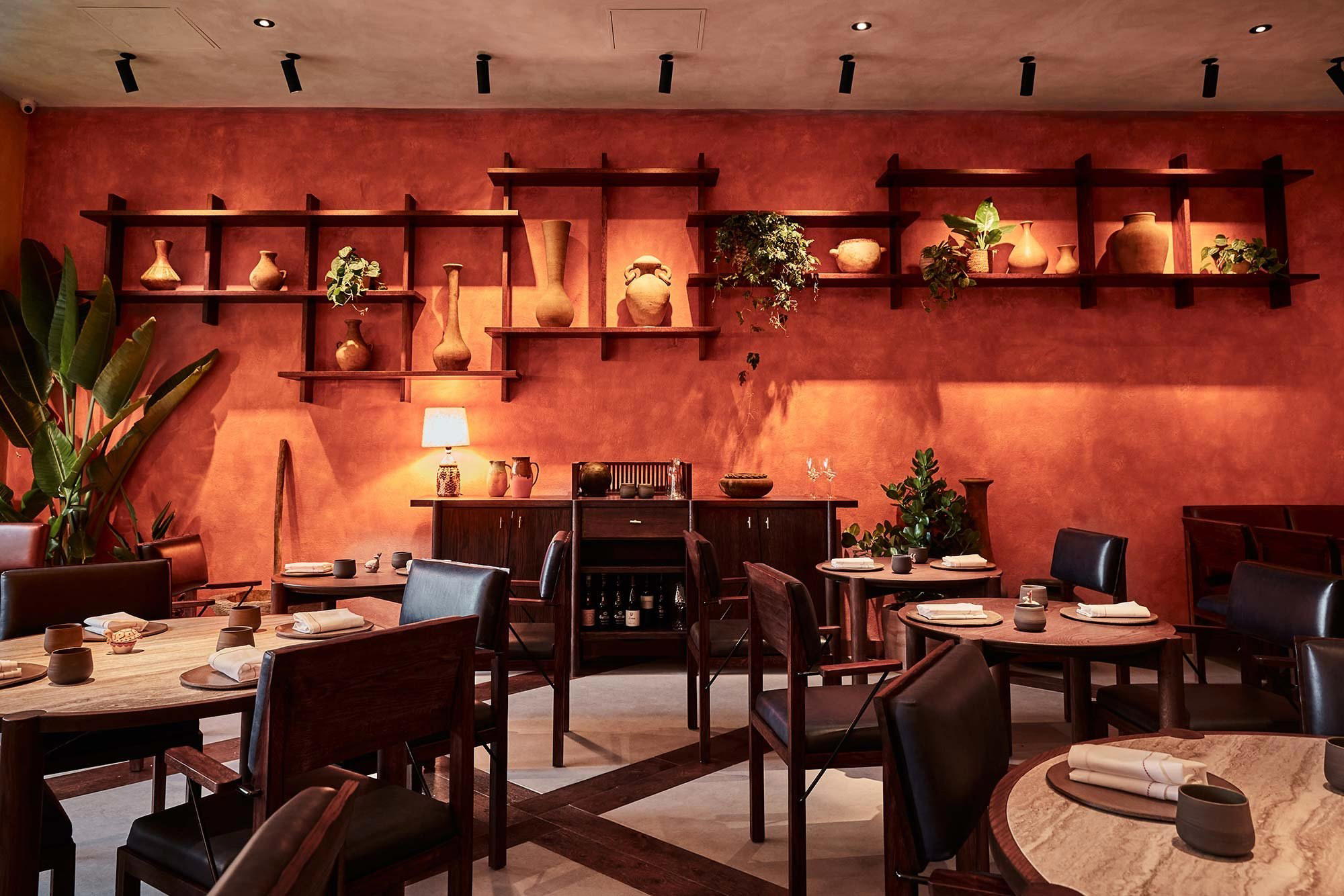
Warm and relaxing atmosphere featuring soft fairy lights, soothing music, and aromatic spices, creating an elegant yet welcoming dining experience.