
Our verdict
Shibousai Kitagawa brings Chinese cooking into Matsusaka’s dining conversation, a city more often read through beef culture and Ise-Shima proximity than through regional Chinese technique. Its recognition for Chinese cuisine that carries a Japanese spirit gives the restaurant a useful critical frame: craft, restraint, and local context matter more here than spectacle.

Pearl is the En Primeur Club membership app, where members save venues, book tables and use the concierge.
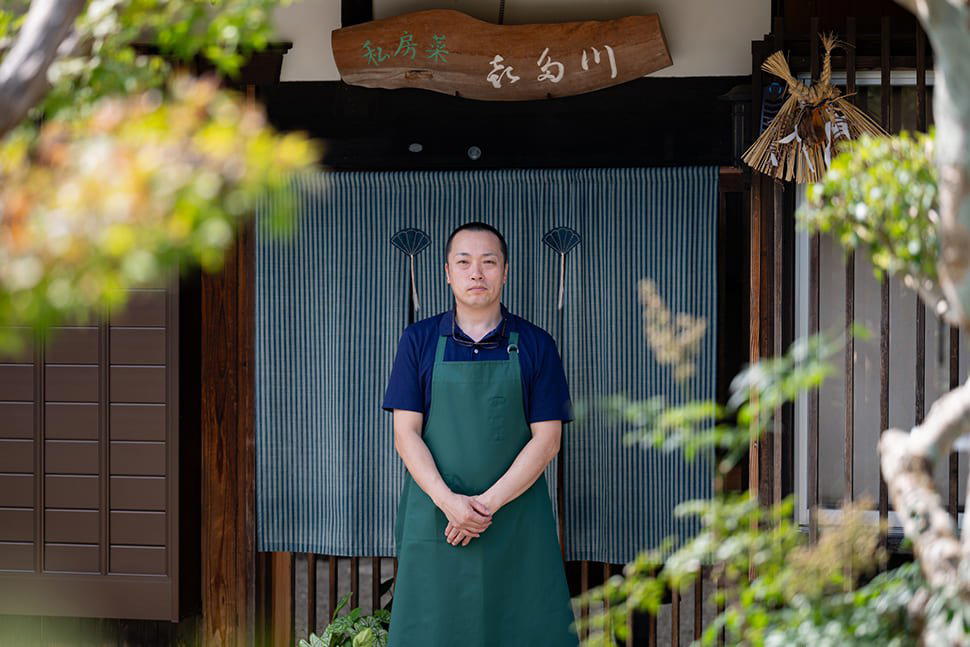
The menu
What to order
- Courses featuring Matsusaka beef
- Ise-ebi spiny lobster preparations
- Seasonal vegetable and seafood appetizers
- Rice course using organically grown local rice
Approaching Chinese dining in Matsusaka means leaving big-city shorthand behind. This is not Tokyo’s hotel-dining circuit or Osaka’s counter-driven speed. The city’s restaurant culture is shaped by regional travel patterns, Mie produce, and a beef identity so dominant that Chinese cuisine must make its case through precision rather than volume. Shibousai Kitagawa enters that conversation with unusual public recognition: it was ranked No. 8 in the 2024 Japan Times Destination Restaurants selection for Chinese cuisine in Mie Prefecture. The line matters because it points away from imported grandeur toward adaptation, restraint, and place.
The editorial lens here is Chinese craft, useful without forcing the restaurant into a narrow subgenre. Serious Chinese cooking is timing: heat, texture, seasoning, and service rhythm leave little room for disguise. In Japan, higher-craft Chinese restaurants often translate that discipline through smaller portions, cleaner seasoning, and seasonal pacing. Matsusaka adds pressure. In a city dominated by beef restaurants, Chinese cooking competes not by copying that weight, but by offering another register of comfort and control.
Chinese technique filtered through a Matsusaka sense of restraint
Japanese Chinese cooking has never been one category. At one end are neighborhood chuka staples built for speed, familiarity, and generous portions. At the other are restaurants treating Chinese technique as a craft language, adjusted through Japanese seasonality and service discipline. Shibousai Kitagawa sits nearer that more considered conversation, not because of a published tasting-menu format or chef biography, but because its recognition frames Chinese cuisine through a Japanese regional sensibility.
That framing matters in Matsusaka. The city’s dining identity is often measured through its beef restaurants and wagyu ritual. They anchor the visitor map: sukiyaki, yakiniku, steak, and premium local beef experiences. A Chinese restaurant becomes counterpoint. Instead of richness as headline, the argument is technique: heat control rather than spectacle, balance rather than marbling, incremental seasoning rather than fat as central pleasure.
Chinese craft clarifies the distinction. The cuisine can be social, generous, fast-moving, or highly composed depending on setting. In a Japanese regional city, the craft often becomes quieter and more deliberate. Cooking is judged by proportion: texture to heat, seasoning to finish, richness to lift. Even when a menu ranges widely, that craft logic remains a useful test. If the kitchen controls small details, larger dishes usually read with more confidence.
Why Chinese cooking reads differently in a beef city
Matsusaka’s restaurant economy gives visitors an obvious script, but that script can limit. Beef is the city’s calling card, yet a serious meal plan benefits from contrast. Pairing wagyu with Chinese cooking changes the rhythm of a stay: one meal built around fat, heat, and ceremony; another around seasoning architecture, starch, stock, and steam. The point is not ranking them, but seeing range beyond one ingredient.
That range appears across the local dining map. Other Matsusaka dining rooms represent casual, local, and more destination-minded registers, giving readers ways to map formats and moods without reducing the city to a single specialty. For a wider city scan, Our full Matsusaka restaurants guide is the practical starting point, especially for travellers balancing beef meals with quieter tables.
Outside Matsusaka, Chinese restaurants in Japan span wide ranges of setting and formality. Chugokusai Naramachi Kuko, Shunsai Chuka Bar Mitsukan, Hachiraku, Nishibuchi Hanten, and Izuju add reference points for how regional dining can shift by city, service style, and audience. The relevance is comparative, not competitive. Shibousai Kitagawa matters in Matsusaka because the surrounding dining culture gives Chinese technique a different role than it would have in a larger Chinese-restaurant market.
The national context is broader. Larger cities have enough Chinese dining density for specialized rooms, while regional destinations often spread the category across more casual, seasonal, and hybrid formats. Those references do not make direct peers of every room; they show how Japanese dining pages increasingly need Asian cuisines beyond the usual sushi, tempura, and wagyu script.
How to place it within a Matsusaka itinerary
For travellers, the smarter Matsusaka itinerary is built on contrast rather than repetition. A beef-focused lunch or dinner makes sense, but stacking every meal around the same prestige ingredient flattens the city. A Chinese meal gives the itinerary another tempo, especially for diners interested in craft traditions that reward close attention without requiring a formal tasting-menu frame.
Shibousai Kitagawa belongs to that balancing act. Its Japan Times Destination Restaurants recognition offers a trust signal in a city where Chinese dining is not the default visitor headline. The editorial case is not that every traveller needs Chinese food in Matsusaka; it is that travellers who only chase wagyu miss how regional Japanese cities absorb and reinterpret outside cuisines. Chinese technique here becomes translation: familiar forms adjusted to local expectation, Japanese pacing, and a dining culture valuing precision over theatrical excess.
Planning beyond the table also matters. Matsusaka is not a city where every category has major-metro depth, so trip architecture should be intentional. Our full Matsusaka hotels guide helps anchor the stay, while Our full Matsusaka bars guide, Our full Matsusaka wineries guide, and Our full Matsusaka experiences guide fill in the city around dinner.
The final read is measured: consider this Chinese restaurant when Matsusaka’s beef narrative feels too narrow. Its value lies in broadening the city’s dining grammar, bringing Chinese craft into a regional Japanese frame without needing metropolitan scale or noise.
Frequently asked questions
What's Shibousai Kitagawa's location?
Matsusaka.
Is Shibousai Kitagawa focused on a specific cuisine style?
Shibousai Kitagawa serves Chinese cuisine.
Does Shibousai Kitagawa have a Michelin star or similar recognition?
Shibousai Kitagawa was ranked No. 8 in the 2024 Japan Times Destination Restaurants selection for Chinese cuisine in Mie Prefecture.
Is Shibousai Kitagawa reservation-only?
Those details are not published. Check the venue's official channels for the latest details.
What do critics highlight about Shibousai Kitagawa?
The strongest public-facing cue is its 2024 Japan Times Destination Restaurants recognition for Chinese cuisine in Mie Prefecture. That points to a Chinese restaurant in Matsusaka that is discussed less as a generic local spot and more as a place where technique and place are meant to read together.
Is Shibousai Kitagawa child-friendly?
No child policy is listed for Shibousai Kitagawa, so the city and cuisine type are the clearest anchors available: Matsusaka, serving Chinese cuisine. Check the venue's official channels before planning a family visit.
What's the overall feel of Shibousai Kitagawa?
Expect a restaurant framed by Chinese cuisine and a Matsusaka setting. The name, city, and 2024 recognition together support reading it as part of the city’s broader dining range rather than only through Matsusaka’s beef-focused visitor narrative.
A Pricing-First Comparison
Nearby venues at a similar price tier for orientation.
| Venue | Cuisine | Price | Awards | Notes |
|---|---|---|---|---|
| Shibousai KitagawaThis venue (the venue you are viewing) | Creative Chinese-Japanese Farmhouse Dining | $200–300 | Not listed | Not listed |
| Chugokusai Naramachi Kuko | Yakuzen Chinese Fine Dining | Not listed | 1 Michelin Star | Chinese |
| Shunsai Chuka Bar Mitsukan | Sichuan Chinese Bar | $30–50 | Michelin Bib Gourmand | Chinese |
| Hachiraku | Kyoto-style Chinese | Not listed | Michelin Plate | Chinese |
| Nishibuchi Hanten | Kyoto-style Chinese | $200–300 | Tabelog 100 #74 | Chinese |
| Izuju | Traditional Kyoto-Style Sushi | $10–20 | Not listed | Chinese |
Recognition history
Dated appearances from independent guides and award organizations, with the underlying list record or original source where available.
The Japan Times Destination Restaurants Destination Restaurants Selection #8
The Japan Times Destination Restaurants
Continue exploring
More in Matsusaka
Details
- Intimate
- Cozy
- Rustic
- Romantic
- Sophisticated
- Special Occasion
- Date Night
- Celebration
- Group Dining
- Solo
- Standalone
- Design Destination
- Private Dining
- Garden
- Historic Building
- Sake Program
- Local Sourcing
- Farm To Table
- Sustainable Seafood
- Garden
- Street Scene
- Tasting Menu
- Set Menu
- Sake
- Beer
- Soft Drinks
An ultra-intimate, reservation-only farmhouse restaurant surrounded by rice fields, with a quiet, contemplative atmosphere and refined but homey feeling that blends rustic architecture with sophisticated Chinese-Japanese plating.