Sforno
Sforno brings pizza a portafoglio, the folded Neapolitan street format, to San Francisco at a moment when the city's pizza conversation has moved well beyond the sourdough-crust local staple. The format is casual and counter-driven, placing it at the opposite end of the price spectrum from the city's tasting-menu heavyweights, and it draws on the same ingredient-first logic that defines serious Neapolitan production.

Pearl is the En Primeur Club membership app — saves, bookings, and concierge access live there. Same editors, same standards.
Street Format, Serious Sourcing: Where Sforno Sits in San Francisco's Pizza Scene
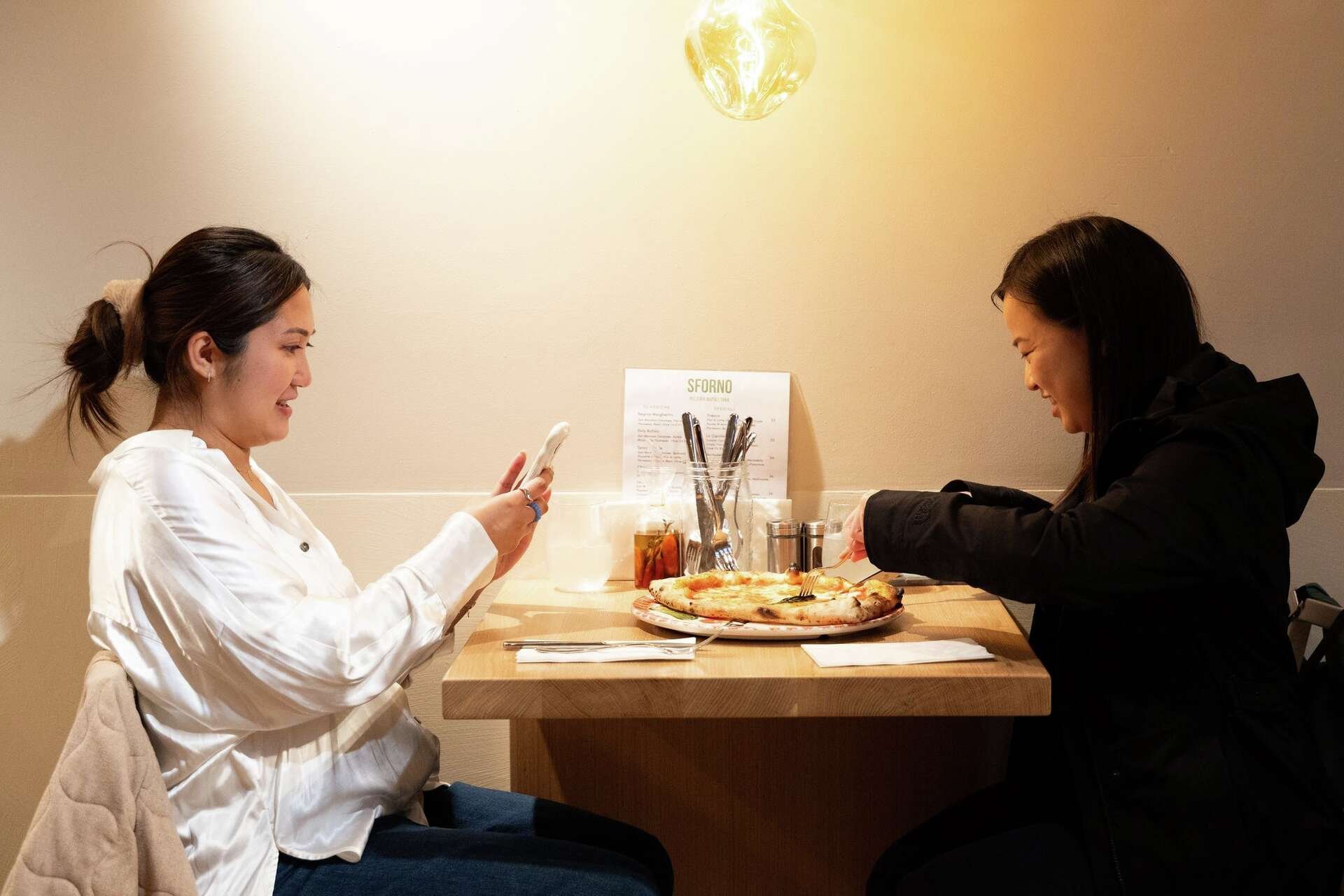
Walk into a counter-service pizzeria in Naples and the transaction is almost brutally simple: dough hits the oven, the pie comes out blistered and soft, and you fold it in quarters to eat it standing up. That format, pizza a portafoglio, is what Sforno brings to San Francisco, a city that has spent the better part of two decades in a different pizza conversation. The Bay Area's dominant register has been the sourdough-leavened, wood-fired, sit-down slice, a local adaptation that owes as much to the city's bread culture as it does to any Italian tradition. Sforno's arrival as a Neapolitan street-style operator represents a deliberate counter-position: less ceremony, less table service, more focus on whether the dough itself is worth eating.
That distinction matters because the ingredient logic of true pizza a portafoglio is unforgiving. A folded slice held in one hand has nowhere to hide. There is no architectural distraction from toppings piled high, no dramatic char performance to shift attention. The dough has to be hydrated correctly, the fermentation has to be long enough to develop flavour without collapsing structure, and the tomato has to carry acidity and sweetness without correction. In Naples, the classic benchmark is San Marzano tomatoes grown in volcanic soil south of the city, a designation that carries genuine organoleptic meaning rather than just marketing weight. The same applies to fior di latte, the fresh cow's milk mozzarella that defines the standard Margherita at street level, distinct from the buffalo mozzarella more associated with sit-down Neapolitan restaurants, and deliberately less rich so the dough remains the primary texture.
The Sourcing Logic Behind the Format
San Francisco occupies a particular position when it comes to ingredient access for this style of cooking. Northern California's proximity to artisan dairy producers, its established import networks for Italian pantry goods, and its general professional-kitchen culture around provenance all create a more favourable context for sourcing-driven pizza than most American cities can claim. The question for any Neapolitan-format operator here is not whether good ingredients exist nearby, but whether the production discipline matches the sourcing ambition. High-quality flour, correctly typed for Neapolitan dough (typically Tipo 00, milled fine enough to hydrate fully at the temperatures a wood or gas deck oven demands), is the foundation. A long cold ferment, often 24 to 72 hours, develops the complex flavour that quick-rise dough cannot replicate. These are not aesthetic choices; they are the technical prerequisites of the format.
San Francisco's wider dining culture, which runs from the four-figure tasting menus at places like Lazy Bear, Atelier Crenn, and Benu down through neighbourhood bistros and counter-service specialists, has normalised ingredient conversation at every price point. A Californian diner who will ask about the provenance of their roast chicken at Saison or their pasta at Quince brings the same expectation, at a lower price register, to a pizza counter. That expectation has pushed the serious end of the city's pizza market toward transparency about flour sourcing, fermentation time, and tomato origin in a way that would have seemed excessive in this category ten years ago.
Atmosphere and the Counter Experience
Pizza a portafoglio is a format built on immediacy. There is no staging, no amuse-bouche, no long hand-off from sommelier to server. The physical experience at a counter like Sforno is closer to a well-run market stall than to a restaurant: you see the dough, you watch the oven, you receive the folded slice within minutes. That compression of distance between production and consumption is itself an argument about what pizza should be. The format rewards operators who are confident enough in the product to let the sequence be that short.
For a city accustomed to the production spectacle of open-kitchen tasting menus, there is something pointed about a format where the spectacle is entirely in the dough and oven rather than in the mise en place. The counter experience at a portafoglio specialist places the cooking in full view without dressing it up. Whether Sforno's space leans into the Neapolitan vernacular of white tiles, marble counters, and minimal signage, or adapts the format to a more San Francisco aesthetic, the format itself imposes a discipline: this works or it doesn't, and the product is what determines the answer.
Where Sforno Fits in a City of High-Stakes Dining
The price and format gap between San Francisco's counter-service pizza operators and its tasting-menu tier is wide enough to suggest they occupy entirely different markets. In practice, the same diner often moves between them. Someone who books ahead for a counter omakase restaurant will also have strong opinions about the leading slice in their neighbourhood. The city's dining culture is not stratified by occasion in the way that New York's or Chicago's can be; in San Francisco, the serious eater applies the same analytical attention to a folded slice as to a twelve-course progression.
That context makes Sforno's position genuinely interesting. It is not competing with The French Laundry in Napa or Single Thread Farm in Healdsburg for the same occasion. But it is competing for the same diner's attention and loyalty in a city where casual format does not mean casual standards. The comparison set for a portafoglio specialist in San Francisco is not other casual pizza counters nationally, it is the handful of Neapolitan street-style operators in the US, including those in New York, who have demonstrated that the format can be executed with the same seriousness as the sit-down version.
Planning Your Visit
Counter-service pizza a portafoglio is walk-in territory by design. The format does not accommodate reservation logic, the product is made to order and consumed immediately, and the queue, if there is one, moves fast. Timing around peak meal hours is worth considering: Neapolitan street pizza is traditionally a morning or early-lunch food in Naples, though American operators typically run dinner service as their primary session. Arriving slightly before the main rush, whether that falls at noon or early evening, gives you a better read on dough condition at its freshest pull from the oven.
For context on how San Francisco's counter-service tier compares to more formal Italian-leaning dining in the city, Quince represents the opposite end of the Italian register at the $$$$ tier. Beyond San Francisco, Neapolitan and Italian-influenced fine dining can be tracked through operators like Le Bernardin in New York, Alinea in Chicago, Providence in Los Angeles, Atomix in New York, Emeril's in New Orleans, and at the European end, Alain Ducasse's Louis XV in Monte Carlo, all of which illustrate how different the serious-dining conversation looks when format and price register change.
Style and Standing
Comparable venues nearby, for context on price, style, and recognition.
| Venue | Cuisine | Price | Notes |
|---|---|---|---|
| SfornoThis venue — the venue you are viewing | Neapolitan Pizzeria | $$$ | Not listed |
| Credo | Rustic Italian with Northern California Sensibilities | $$$ | Financial District/South Beach |
| The Gold Mirror | Classic Italian Trattoria | $$$ | West of Twin Peaks |
| Caprizza Ristorante | Authentic Italian Trattoria | $$$ | Mission |
| Pescatore | Italian Seafood Trattoria | $$$ | North Beach |
| Delarosa | Roman-Style Italian Pizzeria | $$ | Marina |
Continue exploring
More in San Francisco
Restaurants in San Francisco
Browse all →

Bars in San Francisco
Browse all →
Hotels in San Francisco
Browse all →
Wineries in San Francisco
Browse all →
At a Glance
- Trendy
- Modern
- Casual Hangout
- Group Dining
- Open Kitchen
Casual pizzeria atmosphere focused on quick, high-quality pizza service.