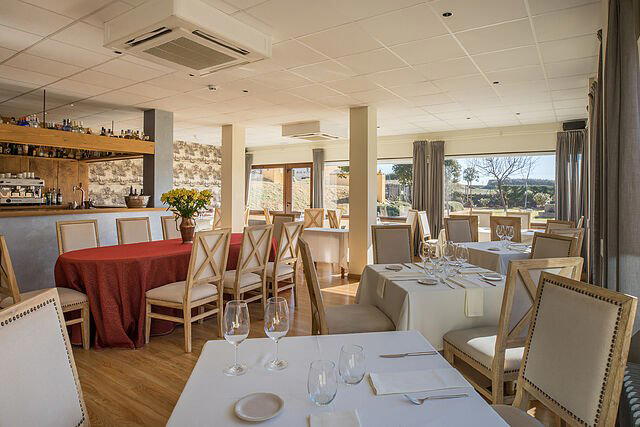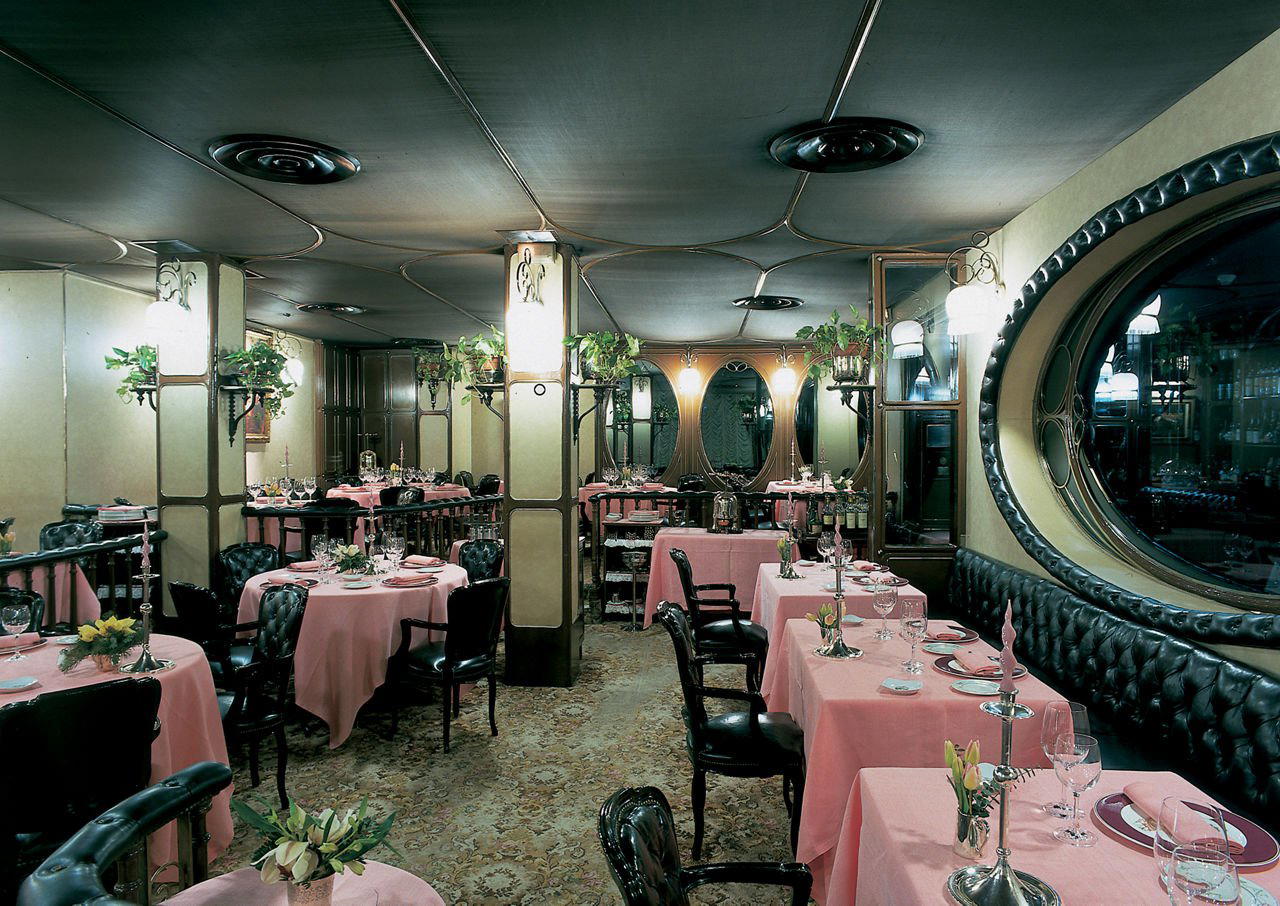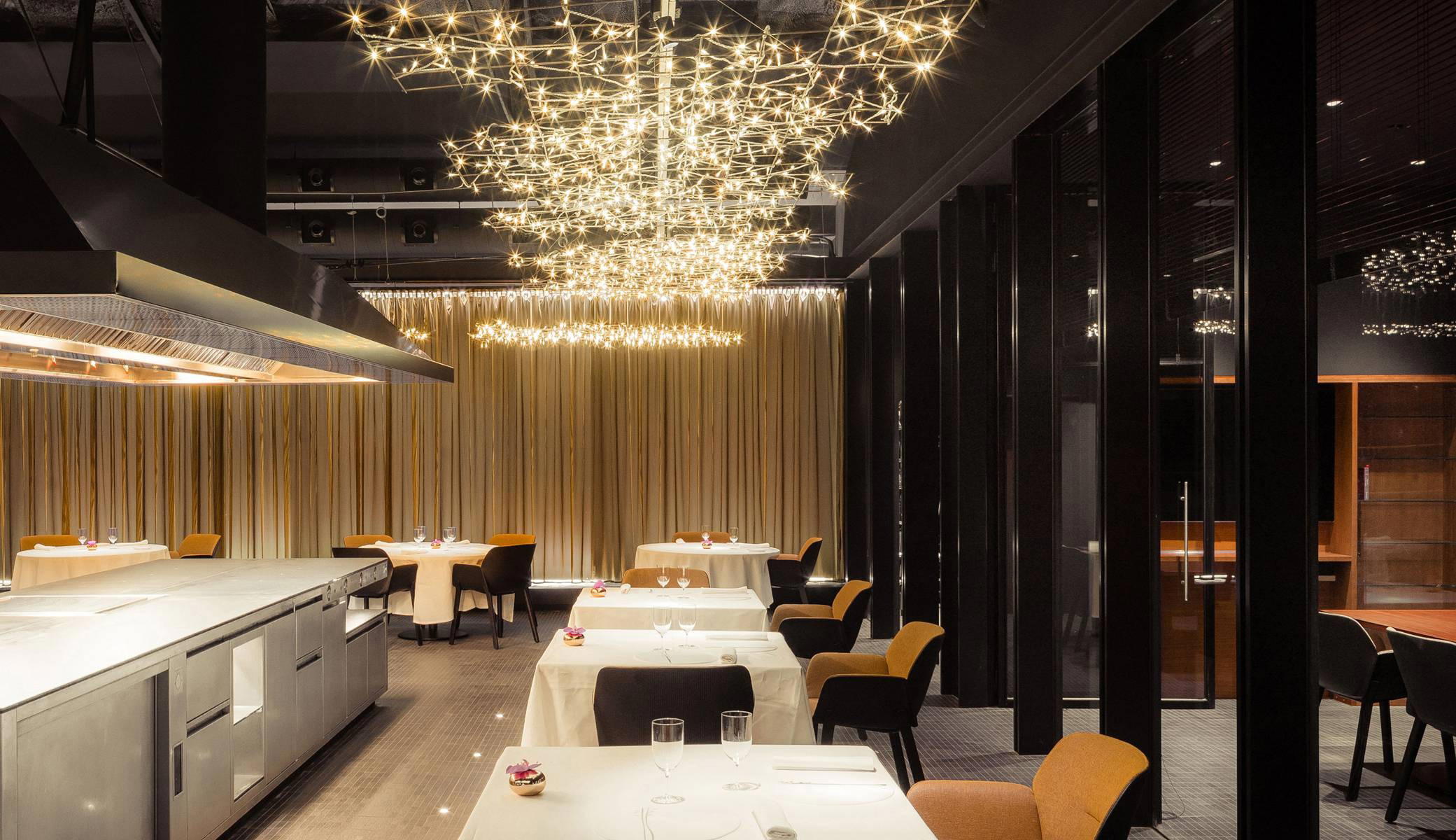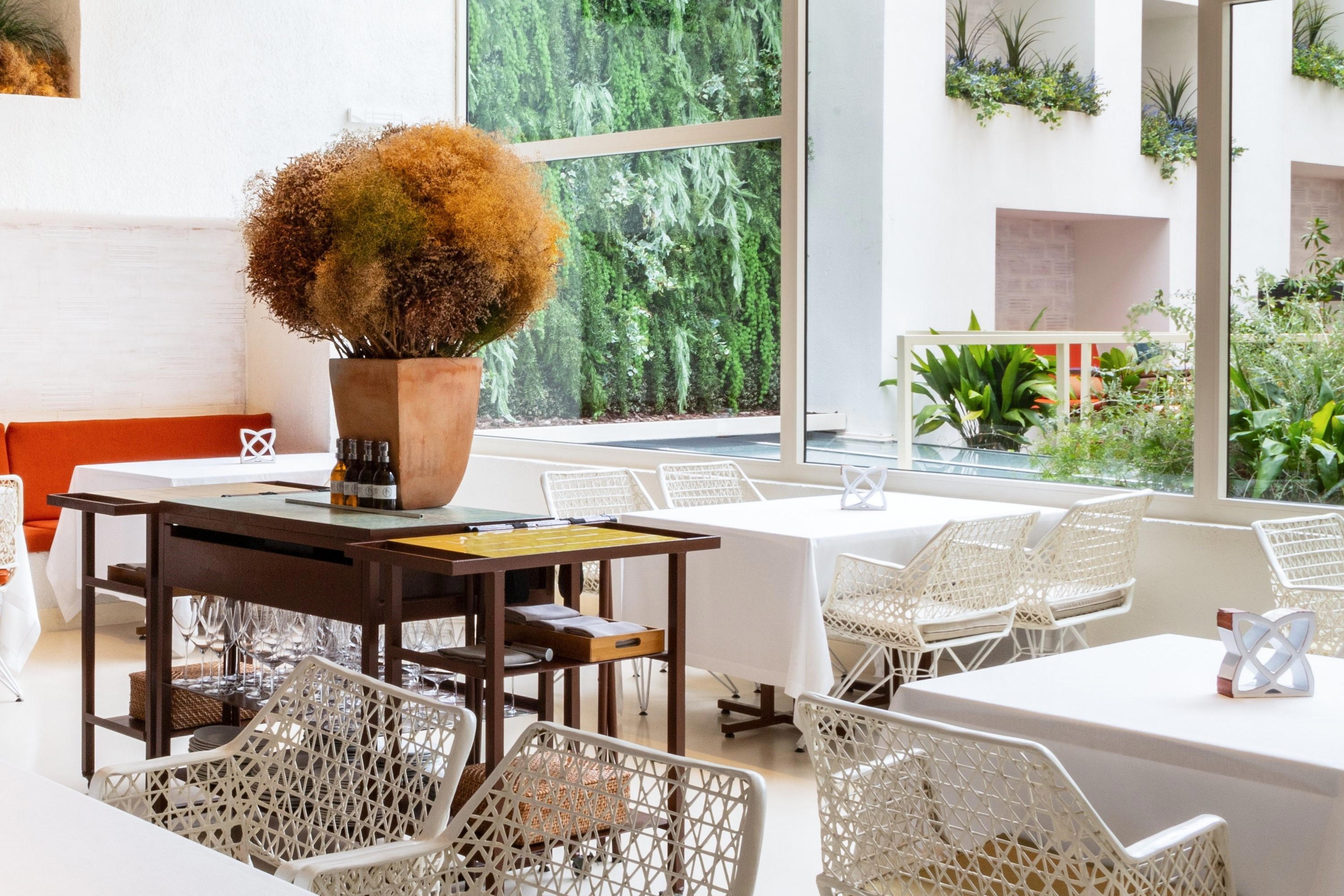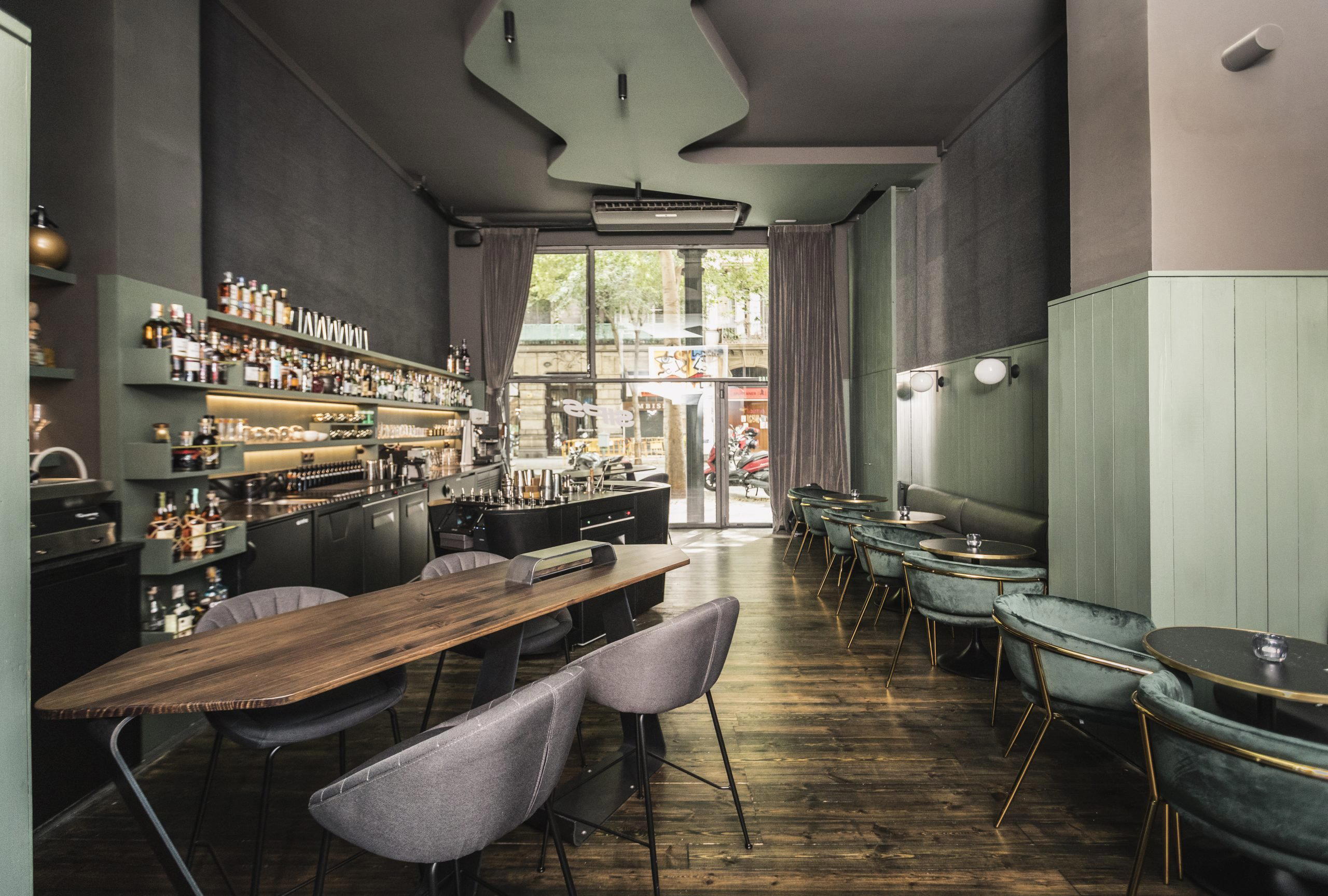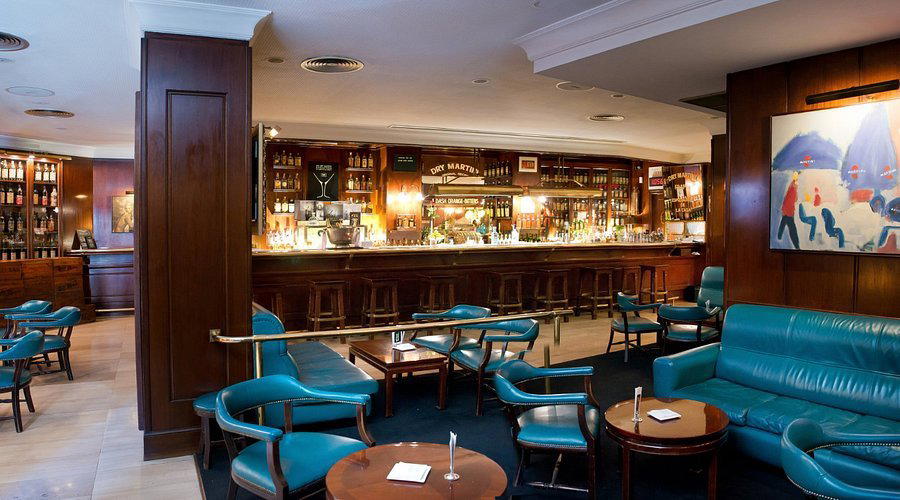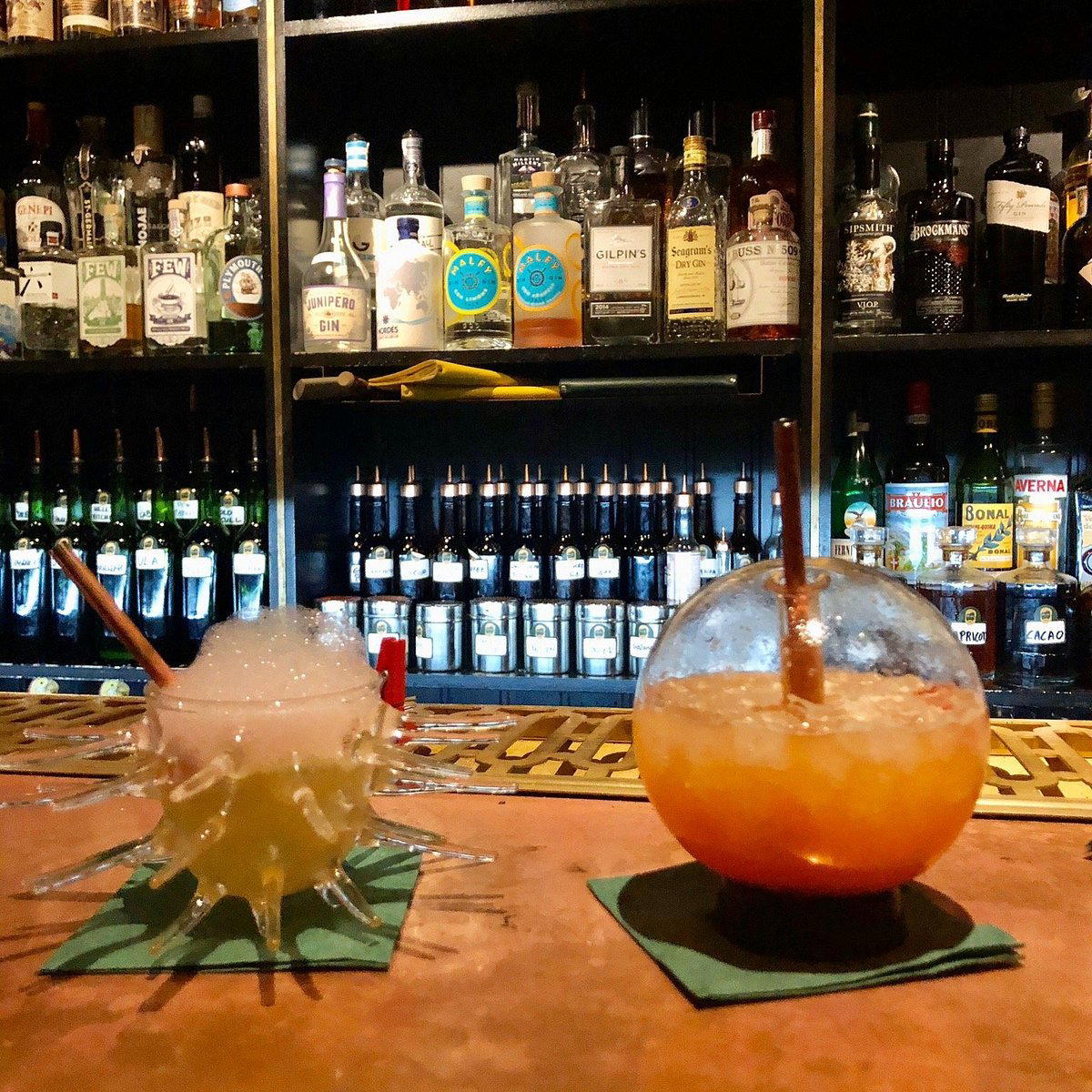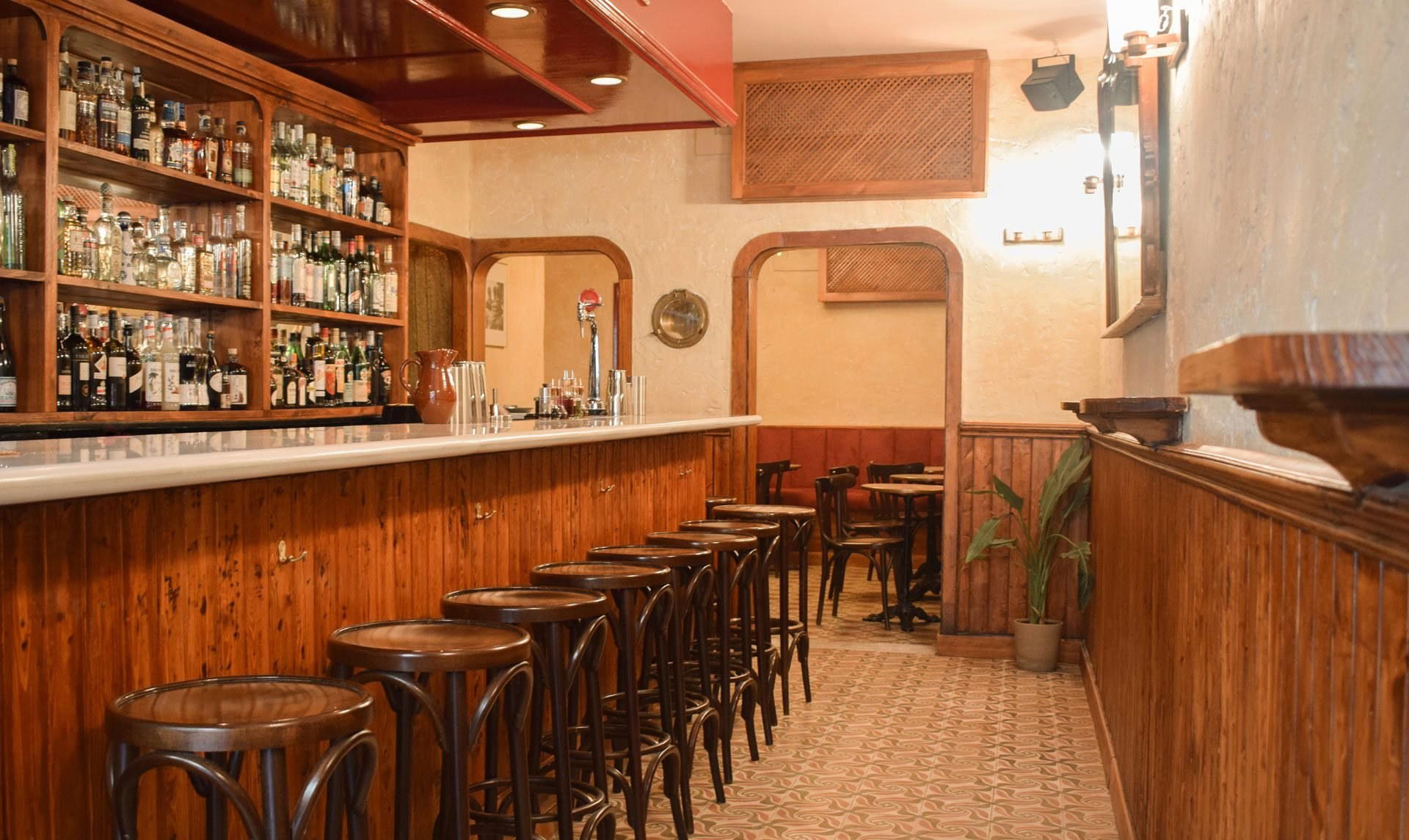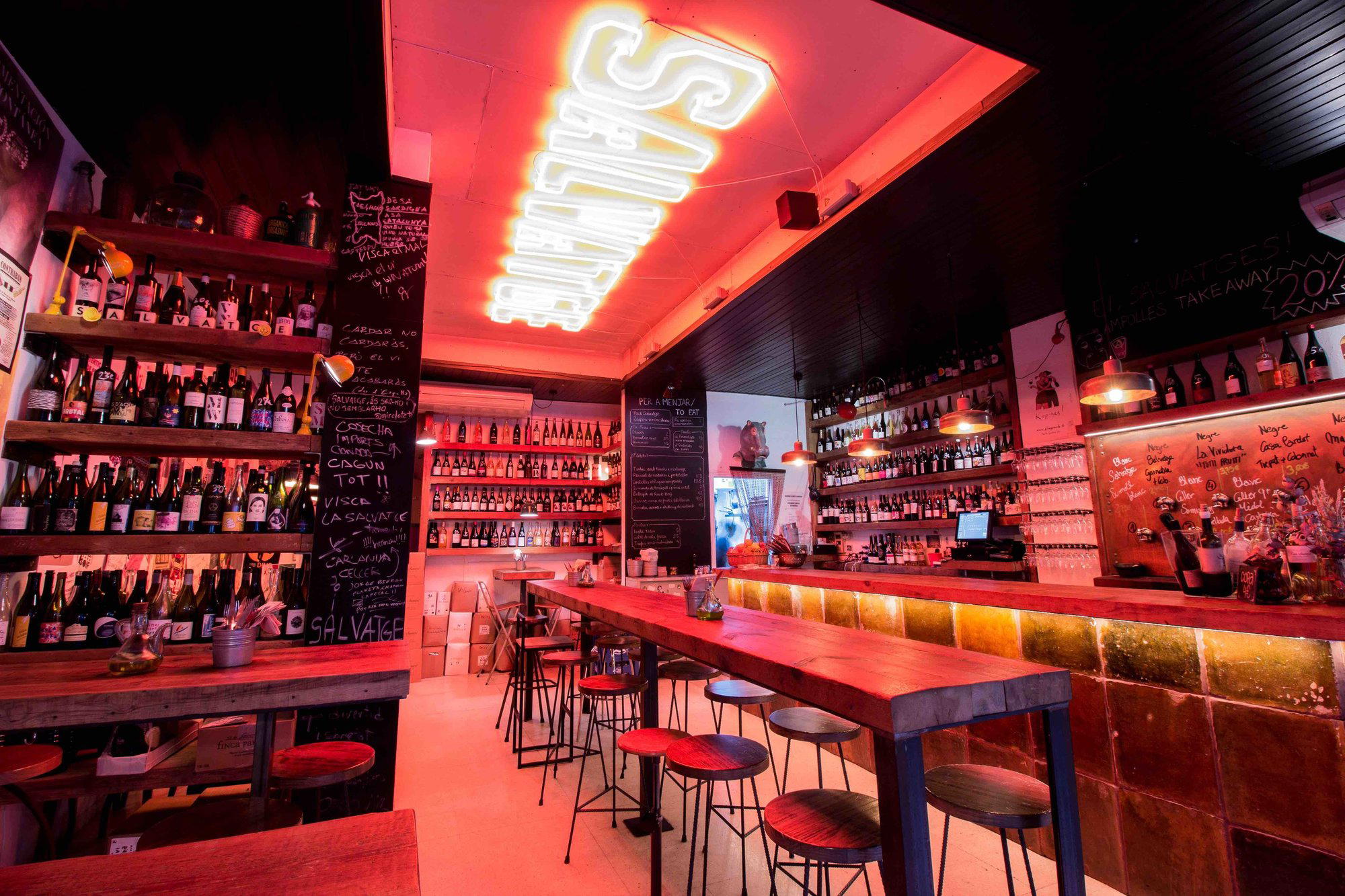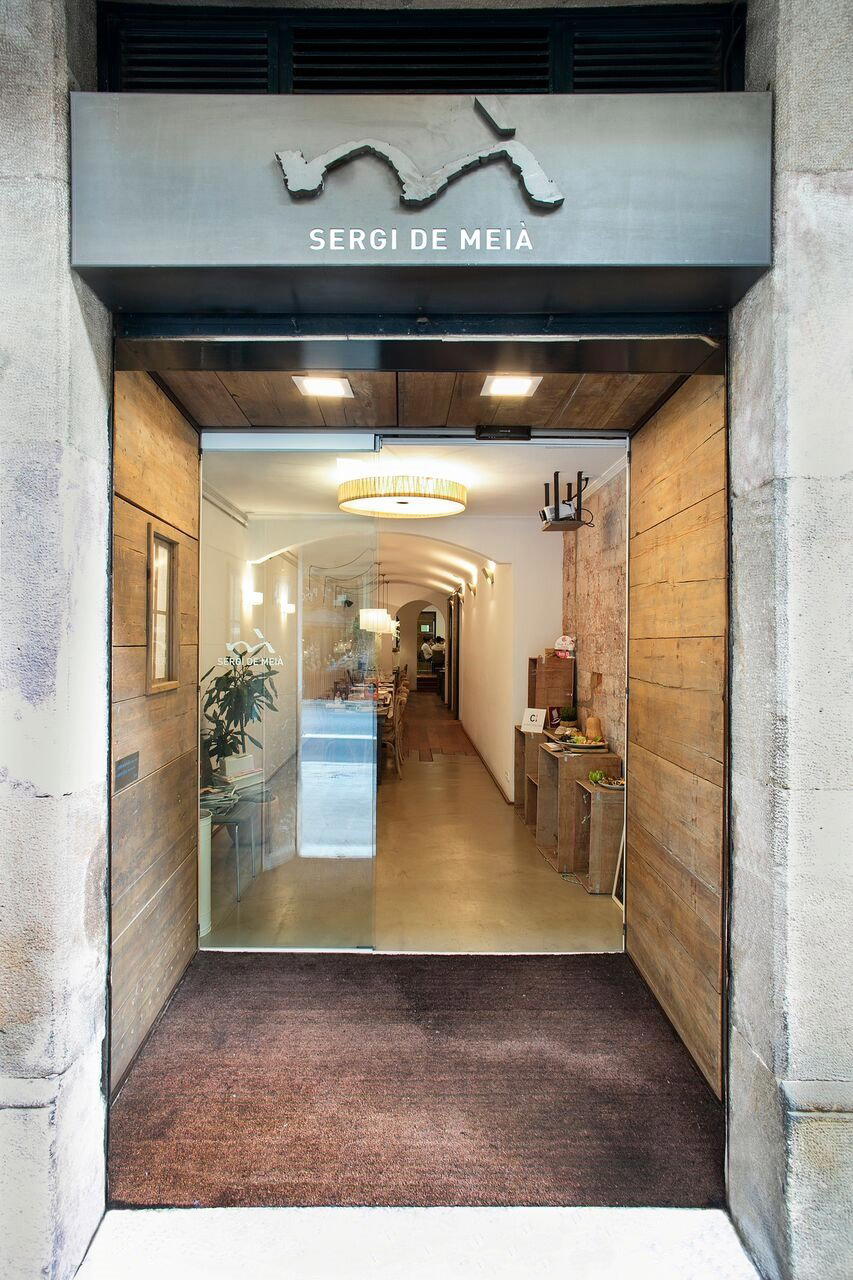
On Carrer Laforja in the Sarrià-Sant Gervasi district, Sergi de Meià operates as one of Barcelona's most committed organic Catalan kitchens, building its menu entirely from produce grown and raised within Catalonia. Seasonal combinations — langoustines with zucchini, duck with quince and mushrooms, pork leg with chocolate and scampi — frame the cooking as a study in regional produce rather than technical showmanship.

Where Catalan Cooking Grounds Itself in Soil and Season
There is a corner of Barcelona's dining scene that doesn't compete with the avant-garde labs of the Eixample or the multi-Michelin theatrics along the lower city. In the residential calm of Sarrià-Sant Gervasi, on Carrer Laforja, the conversation is quieter and the produce takes precedence. The streets here are lined with plane trees, the pace belongs to locals rather than tourists, and the restaurants that endure in this neighbourhood tend to do so through conviction rather than spectacle. Sergi de Meià sits within that pattern: a kitchen anchored in certified organic Catalan ingredients, building a menu that reads as a seasonal argument for what Catalonia's land and sea actually produce at any given point in the year.
The approach is not trend-chasing. Fully organic sourcing with no ecological impact, applied exclusively to Catalan dishes, is a discipline that shapes every decision from the supply chain forward. In a city where Disfrutar and Enigma redirect the conversation toward molecular technique and conceptual abstraction, and where Cocina Hermanos Torres operates at the scale of a grand creative project, Sergi de Meià occupies a different register entirely. The comparison that matters here is not between tasting menus and their theatrical ambitions, but between kitchens that treat Catalan produce as raw material for invention and those that treat it as the point itself.
A Meal That Moves with the Calendar
The sequencing at Sergi de Meià follows the logic of a Catalan spring pantry rather than a generic tasting arc. The meal opens in the garden and the coast simultaneously: a salad built from langoustines, zucchini, and tomatoes that reads as an inventory of what the season currently offers rather than a composed dish asserting its own cleverness. Langoustines at this price point and in this format are a statement of sourcing confidence — they require freshness that organic, regionally constrained supply chains either deliver consistently or expose immediately.
Middle section of the meal is where the kitchen's combinations become more deliberate. A duck salad with quince paste, mushrooms, and yoghurt places three Catalan autumn signals — the game bird, the orchard fruit, the forest floor , into a single plate, cut with the acidity and cooling weight of yoghurt. The combination is not instinctively obvious, and that is precisely the point. Catalan cooking has a long tradition of agridolç, the sweet-sour balance that distinguishes its flavour logic from the rest of Spain's regional kitchens, and dishes like this one sit squarely within that lineage while finding a contemporary expression of it.
Most ambitious plate in the spring menu is the pork leg with chocolate and scampi. This is mar i muntanya territory , the Catalan tradition of pairing land and sea proteins on a single plate, a practice documented in Catalan cuisine since at least the eighteenth century and one that separates this regional tradition from nearly every other in the Iberian Peninsula. The addition of chocolate pulls the dish further into agridolç logic, and the result is a plate that only makes sense within a specific culinary geography. It is the kind of combination that would read as eccentric in another context and reads as rooted here.
The Broader Picture: Organic Catalan Cooking as a Distinct Category
Spain's premium restaurant scene has largely been defined by its avant-garde wing: El Celler de Can Roca in Girona, Arzak and Martin Berasategui in the Basque Country, DiverXO in Madrid, Azurmendi outside Bilbao, Aponiente in El Puerto de Santa María. These are kitchens that export Spanish culinary identity internationally. Within Barcelona specifically, Lasarte and ABaC operate at the leading of the creative hierarchy. Sergi de Meià is doing something categorically different and in some ways more demanding: no imported ingredients, no non-Catalan produce, full organic certification, and a menu that changes to reflect what the region can actually supply at the current moment.
This constraint-based cooking model has parallels elsewhere in Europe , the locavore restaurants of the Nordic countries, certain farm-to-table formats in northern Italy , but in a Spanish context it remains a minority position. The reward for the diner is a meal that could not have been produced anywhere else, or at any other time of year. That specificity is not a marketing claim; it is the structural consequence of the sourcing rules the kitchen operates under.
For reference, comparable organic-led or produce-first Catalan kitchens tend to sit in the mid-to-upper price range without reaching the four-figure per-head territory of the city's Michelin-starred tasting menus. Sergi de Meià on Carrer Laforja 83 in the 08021 postcode positions itself within the serious-but-accessible tier of Barcelona dining, where the cooking demands attention without requiring the kind of advance planning or financial commitment that Disfrutar's multi-month waitlist and corresponding price point require.
Planning Your Visit
Carrer Laforja 83 sits in the Sarrià-Sant Gervasi district, a residential neighbourhood that requires a deliberate journey rather than a passing decision , the nearest metro stops are Diagonal or Muntaner on L5, and the walk through the upper Eixample grid is ten minutes or so. That location filters the dining room naturally toward people who came specifically, which shapes the atmosphere in the room. Spring and early summer represent the season most clearly expressed in the menu as currently documented, with langoustine, zucchini, and tomato all at their most relevant in those months; if timing a visit around the kitchen's most coherent seasonal argument, April through June is the window to target. Reservations should be made in advance given the neighbourhood restaurant scale typically associated with this format, though the lead time here is measured in days or a couple of weeks rather than the months required by the city's most-decorated addresses. There is no phone or website listed in public directories at the time of writing, so booking through a concierge or a restaurant reservation platform is the practical route for visitors arriving from outside Barcelona.
For a broader picture of where Sergi de Meià fits within the city's wider hospitality offer, the EP Club Barcelona restaurants guide maps the full range from creative tasting menus to neighbourhood dining. Travellers planning a longer stay will also find our Barcelona hotels guide, Barcelona bars guide, Barcelona wineries guide, and Barcelona experiences guide useful for building out the rest of a trip. Internationally, kitchens operating with comparable produce-led rigour in different culinary traditions include Le Bernardin in New York City and Emeril's in New Orleans, both of which demonstrate how regional identity and sourcing discipline can define a restaurant's long-term positioning independently of avant-garde technique.
Frequently Asked Questions
- What is the defining dish or idea at Sergi de Meià?
- The kitchen's core idea is that Catalan cooking has its own flavour logic , specifically the agridolç tradition of sweet-sour balancing and the mar i muntanya practice of combining land and sea proteins , and that this logic is leading expressed through fully organic, regionally sourced ingredients. The pork leg with chocolate and scampi is the dish that most clearly encodes both of those principles in a single plate. It reads as eccentric outside its context and precisely logical within it.
- What dish should I focus on at Sergi de Meià?
- The spring menu's langoustine salad is the clearest expression of what organic Catalan sourcing looks like at its most direct: a small number of seasonal components assembled without complication, where the quality of the produce carries the dish. If the kitchen's philosophy is what brought you here, that plate is where it shows most plainly. The duck with quince and yoghurt is the more complex expression of the same philosophy and worth ordering alongside it.
- How far ahead should I plan for Sergi de Meià?
- Sergi de Meià operates at a neighbourhood restaurant scale in a residential district, which means the booking horizon is considerably shorter than the city's Michelin-starred destinations. A few days to a week of lead time is typically sufficient, though popular spring evenings may fill faster. The more relevant planning variable is seasonal: the menu as documented reflects a spring configuration, so visiting between April and June aligns with the kitchen's most fully realised seasonal argument.
Same-City Peers
A fast peer set for context, pulled from similar venues in our database.
| Venue | Cuisine | Price | Notes |
|---|---|---|---|
| Sergi de Meià | This venue | ||
| Cocina Hermanos Torres | Creative | €€€€ | Creative, €€€€ |
| Disfrutar | Progressive, Creative | €€€€ | Progressive, Creative, €€€€ |
| Lasarte | Progressive Spanish, Creative | €€€€ | Progressive Spanish, Creative, €€€€ |
| Cinc Sentits | Modern Spanish, Creative | €€€€ | Modern Spanish, Creative, €€€€ |
| Enoteca Paco Pérez | Modern Spanish, Modern Cuisine | €€€€ | Modern Spanish, Modern Cuisine, €€€€ |
Need a table?
Our members enjoy priority alerts and concierge-led booking support for the world's most difficult tables.
Get Exclusive Access