Sear House Grill
Sear House Grill occupies a prominent position on Route 23 in Little Falls, NJ, placing it squarely in the tradition of American grill dining where fire, technique, and cut selection define the experience. The address puts it within reach of both suburban diners and those crossing over from the broader Passaic County area, making it a practical anchor for the local steakhouse circuit.
Pearl is the En Primeur Club membership app — saves, bookings, and concierge access live there. Same editors, same standards.
- Address
- 1 NJ-23, Little Falls Township, NJ 07424
- Phone
- +19737854225
- Website
- searhousegrillnj.com
- Directions
- Get directions
 Saves & bookings on Pearl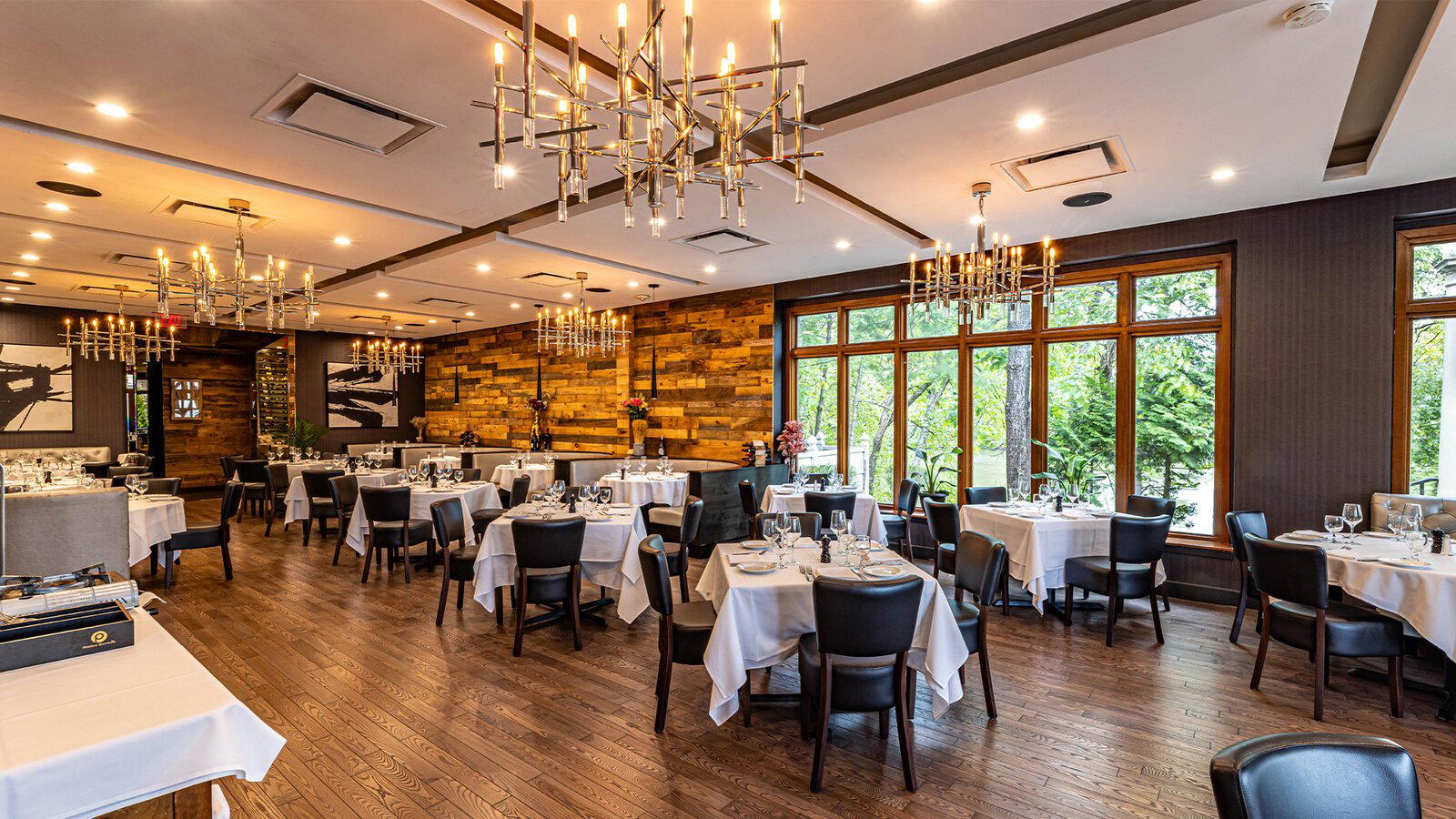
Fire and Iron: The American Grill Tradition in Northern New Jersey
The American steakhouse is one of the few dining formats that has survived every cycle of culinary fashion largely intact. From the dry-aged programs that spread out of New York's midtown corridor in the 1990s to the wood-fire revival that has reshaped grill menus across the country over the past decade, the core proposition has remained consistent: select the cut, apply heat with precision, and let the protein carry the meal. Sear House Grill is a restaurant in Little Falls Township, New Jersey, serving Premium Steakhouse & Seafood at a price tier of about $65 per person. It operates within that tradition. Its Route 23 address places it at a commercial intersection that draws from multiple surrounding communities in Passaic County, which is the defining geography of suburban New Jersey dining, accessible, car-dependent, and competitive on every level of the price spectrum.
Understanding where a grill restaurant sits in that spectrum matters more than it might appear. Northern New Jersey has a dense steakhouse market, with options ranging from national chains anchored in strip mall proximity to independent operators who price against Manhattan-adjacent expectations. The independent grill in this environment either competes on raw material quality, on neighbourhood familiarity, or on a combination of format and value that chain operators can't replicate at scale. Those are the three levers available, and the better suburban grill rooms tend to pull all three simultaneously.
What the Grill Format Means in Practice
The word "grill" in an American restaurant context carries more cultural freight than it might suggest. In the postwar decades, the grill room was a civic institution, the place where local business was conducted over prime rib and a whiskey, where the room itself conferred a kind of seriousness. That format has fractured since then. On one end sit the white-tablecloth steakhouse operators whose dining rooms read as theatre, institutions like Le Bernardin in New York City that operate at a level of technical precision and price point that places them in a genuinely different category. On the other end sit casual grill concepts that use the vocabulary of fire without the craft infrastructure behind it.
The middle tier, the serious independent grill room in a suburban or secondary market, is where interesting value dynamics play out. Venues like Blue Hill at Stone Barns in Tarrytown have demonstrated that diners in the greater New York metro area will travel for a dining room with a clear point of view, even if that point of view sits outside the city limits. The question for any grill in this geography is whether it has developed enough of a distinct identity to generate that kind of draw, or whether it primarily serves its immediate catchment area.
The Cultural Roots of Grill Cooking in the American Northeast
Grill culture in the American Northeast has always been shaped by two competing influences: the European steakhouse tradition brought over by immigrant communities in the mid-twentieth century, and the indigenous American tradition of open-fire cooking that predates the restaurant industry entirely. The Italian-American red sauce houses of New Jersey, many of which evolved their own versions of the veal chop and the porterhouse, represent one branch of this lineage. The wood-fire programs that have proliferated in the last fifteen years at restaurants like Lazy Bear in San Francisco and Brutø in Denver represent a more recent, technique-forward expression of the same underlying impulse.
New Jersey sits at a particular crossroads in this history. The state's proximity to New York meant that its independent restaurant operators absorbed both the classical steakhouse expectations of the city and the influence of the Italian-American communities that shaped the region's culinary vernacular. The result, at its most coherent, is a grill room that combines serious protein sourcing with a generosity of portion and hospitality that reads as distinctly regional.
Little Falls and Its Dining Position
Little Falls Township is not a dining destination in the way that, say, the Jersey Shore communities or Montclair have become. It is a commuter suburb with a commercial corridor running along Route 23, and its restaurant scene reflects that geography: functional, varied, and responsive to local demand rather than to outside attention. That context shapes how a restaurant like Sear House Grill functions within the community. It is not competing with the tasting-menu ambitions of Alinea in Chicago or the sourcing transparency of Single Thread Farm in Healdsburg. It is competing for the dinner occasions of people who live and work in Passaic County and want a reliable, serious grill experience without driving into Manhattan.
For that audience, proximity to the Route 23 corridor is a genuine logistical advantage. The address at 1 NJ-23 provides direct access from both the northbound and southbound directions, which in suburban New Jersey is not a trivial consideration. Parking availability along the commercial strip reduces the friction that shapes dining decisions at this price point and distance from the city. Locally, Casa Arturo Bistro and Rare, The Steak House represent the closest points of comparison within the immediate neighbourhood, each operating in a different register of the local dining market.
How to Approach a Visit
Suburban grill rooms at this address type often accommodate walk-ins on weekday evenings but fill quickly on Friday and Saturday nights, particularly in the warmer months when the surrounding communities generate higher dining traffic. Arriving with flexibility on timing, particularly for early seatings, generally produces the reliable outcome.
For vegetarian requests or specific dietary needs, direct communication with the venue before arrival is the practical step, grill-forward menus are built around protein, and side programming varies considerably between operators. The broader American grill tradition, particularly at independent houses, tends to handle dietary requests more capably when flagged in advance rather than at the table.
Where Sear House Grill Fits the Wider American Grill Conversation
The American grill room has produced some of the country's most discussed restaurant experiences, from the farm-driven ethos of Providence in Los Angeles to the Michelin-recognised precision of Addison in San Diego and the Southern market intelligence behind Bacchanalia in Atlanta. Those venues operate at a different scale of recognition and investment than a suburban New Jersey grill room, but they share a common root: the conviction that serious cooking over fire, applied to quality raw material, produces a dining experience that holds its own against any cuisine tradition. At its leading, that conviction is what the American grill format has always been selling. Whether Sear House Grill delivers on that conviction consistently is the question that a visit answers most directly. The address and the market context shape its role in the local dining scene.
Pricing, Compared
Comparable venues nearby, for context on price, style, and recognition.
| Venue | Cuisine | Price | Notes |
|---|---|---|---|
| Sear House GrillThis venue — the venue you are viewing | Not listed | $$$$ | Not listed |
| Rare, The Steak House | Not listed | $$$$ | Little Falls, Prime Steakhouse with Italian Touches |
| Casa Arturo Bistro | Little Falls, Seasonal Italian Trattoria | $$ | Not listed |
| Searhouse | Closter, Steakhouse & Seafood | $$$$ | Not listed |
| Chubby's Steakhouse | Not listed | $$$$ | Gloucester City, Classic American Steakhouse |
| Stage Left Steak | Not listed | $$$$ | Theater District, Wood-Grilled Steakhouse |
Continue exploring
More in Little Falls
Restaurants in Little Falls
Browse all →
Bars in Little Falls
Browse all →
Hotels in Little Falls
Browse all →




At a Glance
- Elegant
- Sophisticated
- Lively
- Date Night
- Business Dinner
- Special Occasion
- Celebration
- Private Dining
- Standalone
- Extensive Wine List
- Craft Cocktails
Current opening hours
- Monday
- 12–10 PM
- Tuesday
- 12–10 PM
- Wednesday
- 12–10 PM
- Thursday
- 12–10 PM
- Friday
- 12–11 PM
- Saturday
- 12–11 PM
- Sunday
- 12–9 PM
Hours can change for holidays and private events. Last verified .
Elegant and sophisticated with a lively atmosphere; guests praise the special-occasion-worthy setting with attentive service and refined dining experience.