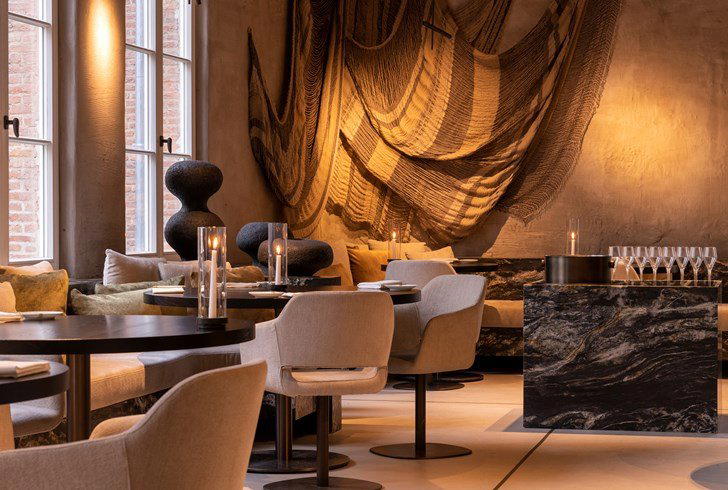
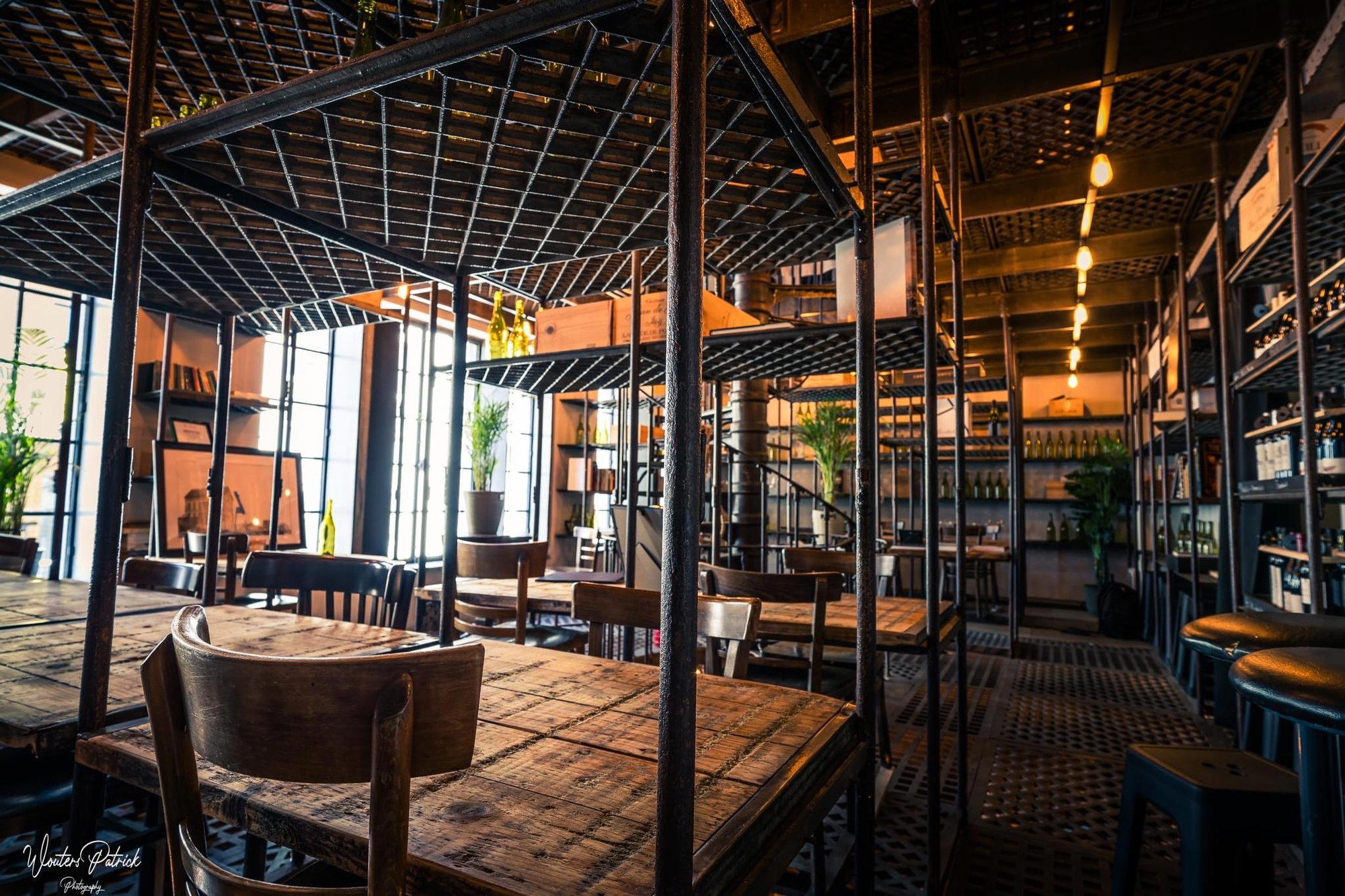
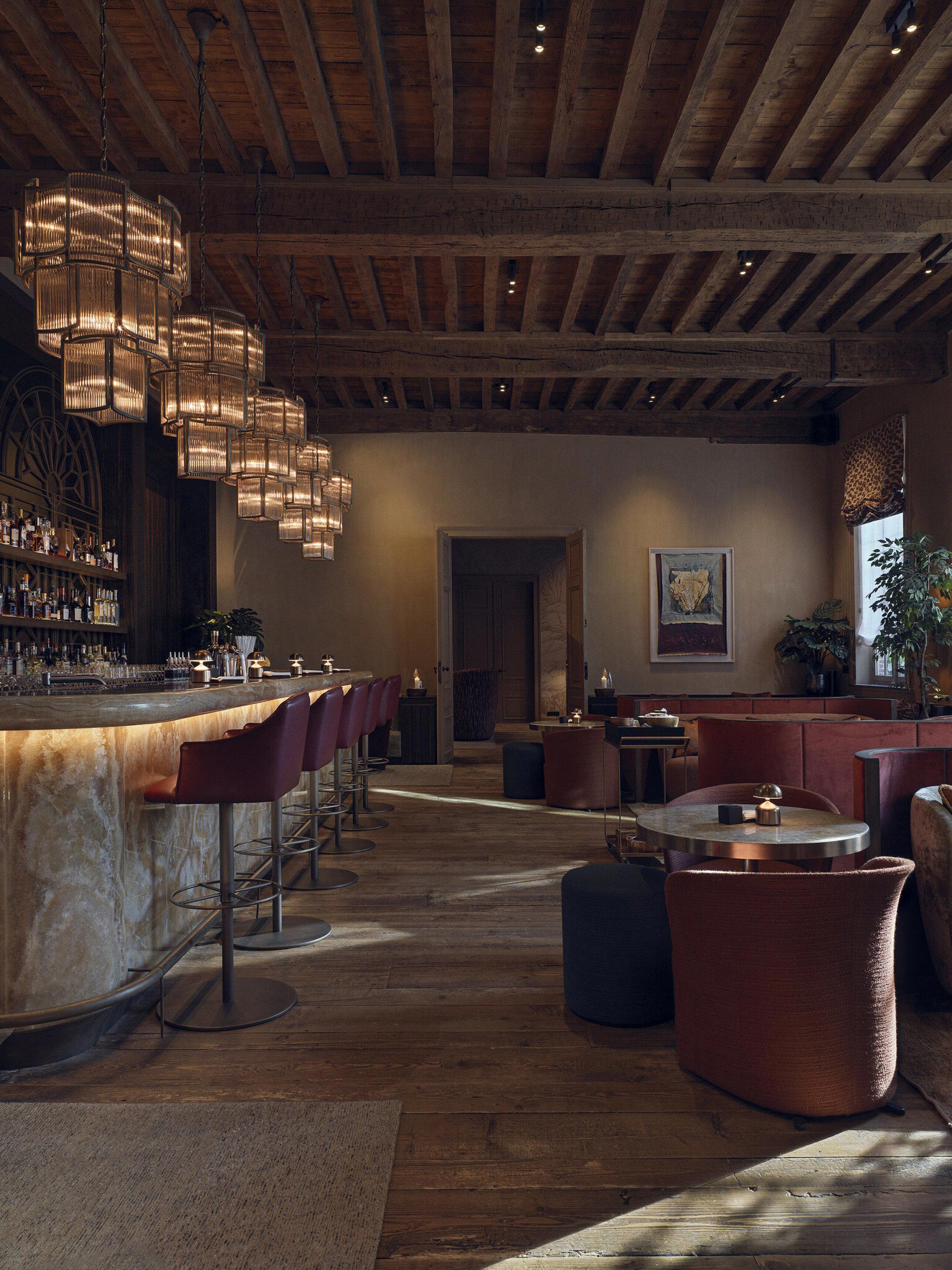
Schnitzel on Lange Kievitstraat earns consecutive Michelin Bib Gourmand recognition (2024 and 2025) for a sharing-format menu that positions it firmly in Antwerp's mid-price bracket without sacrificing seriousness. Chef Andreas Heidenreich leads a kitchen where the communal format drives the experience. The room's reputation extends well beyond the Bib Gourmand circuit.
- Address
- Lange Kievitstraat 52, 2018 Antwerpen, Belgium
- Phone
- +32 3 234 35 35
- Website
- hoffys.be
- Directions
- Get directions
Lange Kievitstraat and the Antwerp Neighbourhood That Earns Its Bib Gourmands
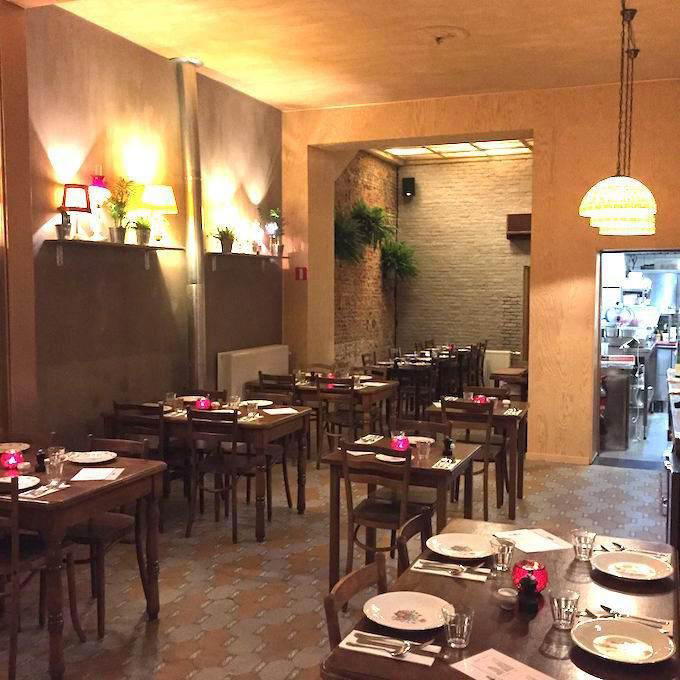
Schnitzel is a restaurant at Lange Kievitstraat 52 in Antwerp's 2018 district. The street runs parallel to the grander dining avenues closer to the historic centre, which means it attracts a local crowd that tends to eat more regularly and spend more deliberately than the weekend tourist trade. It is in this context that Schnitzel, at number 52, operates: not as an outlier but as a neighbourhood anchor with credentials that now span two consecutive Michelin Bib Gourmand cycles, 2024 and 2025.
The Bib Gourmand designation matters because of what it signals about the price-to-quality equation. Michelin awards the Bib specifically to kitchens that deliver cooking it considers worthy of attention at a price point that does not require a special-occasion budget. For Antwerp, where the upper tier is well-represented by operations like Zilte and Hertog Jan at Botanic at the €€€€ bracket, and where mid-tier French bistro cooking has its own established players, a double Bib at the €€ price range places Schnitzel in a distinct and smaller comparable set. It is not competing with the white-tablecloth circuit; it is making an argument that rigorous cooking does not require that price tier to be meaningful.
The Sharing Format as a Structural Choice
Schnitzel's classification as a sharing restaurant is a content decision as much as a format one. Across European cities, the shift toward sharing plates in quality-driven kitchens reflects both kitchen economics and a deliberate reconfiguration of how a meal unfolds. Courses designed for individual plates require precise timing and portion control; dishes designed for the table allow the kitchen to control pacing differently and encourage the kind of lateral exploration across the menu that suits a neighbourhood room better than a ceremonial progression.
In the Belgian context, this format positions Schnitzel alongside a wider regional cohort. Agnes in Sint-Martens-Bodegem operates a sharing format at a comparable quality tier, and internationally the approach has been formalised at places like IGNIV Zürich by Andreas Caminada, where the convivial logic of shared eating is applied to serious European technique. Schnitzel's version occupies the accessible end of that spectrum, where the €€ price range keeps the format democratic rather than aspirational.
Andreas Heidenreich and the Kitchen Behind the Recognition
Chef Andreas Heidenreich leads the kitchen at Schnitzel. In the editorial frame of the EA-GN-01 angle, what matters here is not a biographical narrative but what the double Bib retention signals about consistent execution. The Michelin Bib Gourmand is awarded annually and can be removed as easily as it is granted; two consecutive years of recognition suggests a kitchen that has stabilised its offer rather than coasted on an initial burst of quality. That kind of consistency in a sharing-format restaurant at the €€ tier requires the same discipline as any higher-priced operation: reliable sourcing, controlled food costs that do not compromise quality, and a front-of-house rhythm that handles a communal eating pace without the structure of a set tasting menu to lean on.
Heidenreich's kitchen sits within a Belgian dining environment that takes its Michelin credentials with particular seriousness. The country punches well above its size on the Michelin map, with celebrated houses like Hof van Cleve in Kruishoutem, Boury in Roeselare, and Willem Hiele in Oudenburg all holding significant recognition. Within Antwerp specifically, the conversation about where serious cooking happens at accessible price points is one Schnitzel now has a sustained claim to enter.
Antwerp's Mid-Price Dining and Where Schnitzel Sits
Antwerp's restaurant scene has consolidated around a recognisable hierarchy. At the leading, creative tasting-menu operations command €€€€ pricing. In the middle, French-influenced brasserie and bistro formats hold the €€€ bracket. Below that, the €€ segment historically skewed toward casual formats where the cooking received less critical attention. The double Bib Gourmand at Schnitzel is part of a broader pattern in which Michelin has been more willing, over the past five years across European cities, to flag quality at lower price points rather than treating the guide as primarily a fine-dining index.
For comparison within Antwerp, Cobra and l'Amitié represent different positions in the city's mid-range, while Antwerp's bar scene and venues like Bar Raket complete a neighbourhood circuit that rewards multiple visits over a single expensive evening. Belgium's wider dining culture supports exactly this kind of distributed quality: it is not unusual for serious eaters to plan a day in Antwerp around three or four stops rather than a single centrepiece meal.
The Numbers Behind the Reputation
At that volume, statistical outliers (both enthusiastic first-timers and disgruntled edge cases) tend to cancel out, leaving a score that reflects the median experience across a genuinely broad sample. A 4.7 at nearly 1,900 reviews is considerably harder to maintain than the same score across 200 reviews, and it places Schnitzel in a tier where the guest experience is reliably replicating what the Michelin assessment found worth noting.
That alignment between popular consensus and guide recognition is not guaranteed in either direction: Michelin-recognised restaurants sometimes generate polarised public reviews because the formality or price point creates mismatched expectations, and conversely, some high-volume crowd-pleasers never attract guide attention. Schnitzel's convergence on both axes suggests the kitchen is landing consistently with a wide range of diners, not just a narrow constituency of critics and guide-followers.
Planning a Visit
Schnitzel is located at Lange Kievitstraat 52 in Antwerp's 2018 district. The €€ price bracket means a meal here sits comfortably within a wider Antwerp itinerary rather than consuming the entire evening's budget. Belgium's wider table is also worth noting: Bozar Restaurant in Brussels, Bartholomeus in Heist, and d'Eugénie à Emilie in Baudour extend a Belgian itinerary well beyond Antwerp's city limits.
Recognition Snapshot
Comparable venues nearby, for context on price, style, and recognition.
| Venue | Cuisine | Price | Awards | Notes |
|---|---|---|---|---|
| SchnitzelThis venue — the venue you are viewing | Dining | €€ | Bib Gourmand | Not listed |
| Ko'uzi | Creative Japanese Sushi | $$ | Bib Gourmand | Leopoldplaats |
| Ni Shifu | Authentic Sichuan Chinese | $$ | Bib Gourmand | :null |
| Nage | Modern French Contemporary | $$$ | Michelin Plate | Historic Center |
| Ciro's | Classic French-Belgian Brasserie | $$ | Bib Gourmand | Antwerp Center |
| Bistrot L'îlot | French Contemporary Bistro | $$ | Michelin Plate | Eilandje |
Recognition history
Dated appearances from independent guides and award organizations, with the underlying list record or original source where available.
Michelin Bib Gourmand
Michelin
Michelin Bib Gourmand
Michelin