Satay House
Satay House on Sale Place in Tyburnia has been a reference point for Malaysian cooking in London for decades, drawing a neighbourhood crowd and deliberate repeaters rather than destination diners. The dining ritual here follows the communal logic of Southeast Asian eating, dishes arriving as they're ready, shared across the table, paced by appetite rather than a tasting menu clock.
Pearl is the En Primeur Club membership app — saves, bookings, and concierge access live there. Same editors, same standards.
- Address
- 13 Sale Pl, Tyburnia, London W2 1PX, United Kingdom
- Phone
- +44 20 7723 6763
- Website
- satayhouse.com
- Directions
- Get directions
 Saves & bookings on Pearl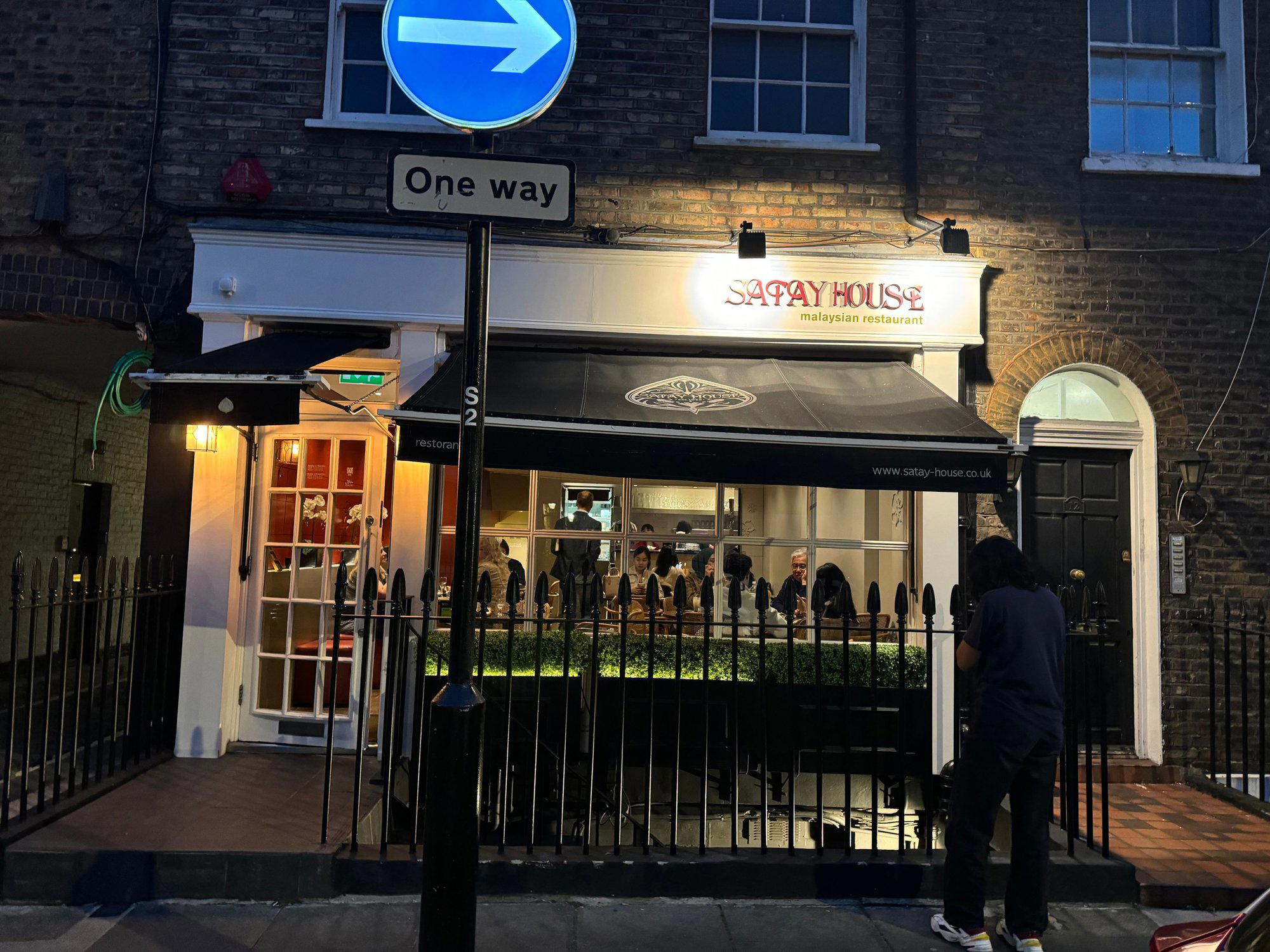
If you eat one thing in London that has nothing to do with tasting menus, eat here
London's premium dining conversation is dominated by the addresses you'd expect: CORE by Clare Smyth, The Ledbury, Sketch's Lecture Room, Restaurant Gordon Ramsay, Dinner by Heston Blumenthal. All excellent within their category; all operating from a fundamentally European premise about what a serious meal looks like. The case for Satay House at 13 Sale Place in Tyburnia is a different argument entirely. This is a restaurant that earns its place not through the machinery of awards and omakase pacing, but through decades of consistency in a cuisine that London has historically underserved at a serious level. For anyone interested in how Southeast Asian food actually works as a dining ritual, this address is the right starting point in the city.
Malaysian Eating as a Communal Discipline
The dining logic of Malaysian cooking does not map neatly onto European fine-dining conventions. There is no amuse-bouche, no palate-cleansing sorbet, no sommelier steering you through a progression of flavours designed by a single authorial voice. The structure is collective and lateral: multiple dishes ordered simultaneously, arriving as they come from the kitchen, placed in the centre of the table and shared. The diner's role is active, you compose each mouthful from what's in front of you, balancing heat, fat, and fermented depth across a plate of rice. This is not a passive experience shaped by the kitchen's narrative; it is a conversation between diners, dishes, and condiments.
Satay House operates within that tradition. The menu follows the categories you would find across Malaysian cooking: grilled satay skewers served with peanut sauce and compressed rice cake, slow-cooked curries, stir-fried noodle dishes, and rice-based plates that function as the structural base of the meal. The order in which dishes arrive is less choreographed than at the high-ticket counters of Mayfair or Notting Hill, and that is by design rather than oversight. Southeast Asian communal eating assumes a certain disorder at the table, a productive overlap of flavours that you resolve by combining rather than sequencing.
The Ritual of the Satay Counter and What It Signals
In Malaysia and Singapore, satay has the status of both street food and occasion food simultaneously. It is sold from roadside carts and served at family celebrations with equal seriousness. The grilled skewer, typically chicken or beef marinated in turmeric, lemongrass, and spices, then charcoal-cooked to a state where the exterior caramelises while the interior stays tight and moist, is accompanied by a peanut sauce that ranges from thin and sweet to thick and complex depending on the cook. The accompanying ketupat, a compressed rice cake cooked in palm leaf, acts as a palate-balancing starch rather than a side dish in the European sense.
A restaurant that names itself after this dish is making an editorial statement about where its identity sits: in the everyday-serious tradition of Malaysian food culture rather than the fine-dining-adjacent positioning that some Southeast Asian restaurants in London have adopted in recent years. That positioning matters when you are deciding how to approach the meal. You do not come to Satay House the way you come to The Fat Duck in Bray or L'Enclume in Cartmel, with a note-taking disposition and a fixed sequence of courses. You come the way you would approach a good meal in Kuala Lumpur's Bangsar neighbourhood or Penang's Georgetown: with a group, with an appetite, and with the expectation that the table will be covered in dishes before anyone has finished eating.
Where Satay House Sits in London's Southeast Asian Scene
London's Southeast Asian restaurant offering has expanded and stratified considerably over the past decade. At one end, there are high-concept operations drawing on Thai, Vietnamese, or Malaysian ingredients to produce tasting-menu formats aimed at the same demographic that books Moor Hall or Gidleigh Park. At the other, there are quick-service canteens where speed and price are the primary variables. The middle tier, neighbourhood restaurants serving authentic regional cooking at a pace and price point that allows for a full, unhurried meal without a tasting menu surcharge, is smaller than it should be in a city of London's size and diversity.
The restaurant occupies that middle tier in the W2 postcode, an area of Bayswater and Tyburnia that has long supported a concentration of Middle Eastern and South Asian restaurants alongside its more generic neighbourhood dining options. The Sale Place address is not a destination strip in the way that Heddon Street or Charlotte Street functions for restaurant-goers; it is a residential side street where the restaurant exists as a neighbourhood fixture rather than a venue that trades on its location. That ordinariness is part of the proposition.
How to Approach the Meal
The practical logic of eating here follows the same communal principles that govern the cuisine itself. A table of two or three should order more dishes than feels strictly necessary by European standards, the Malaysian table is supposed to have more food on it than any single diner can eat, because the point is to sample and combine, not to consume a single portion in sequence. Satay skewers make sense as a starting point, arriving from the grill before heavier dishes are ready. From there, a curry, rendang, or a coconut-based preparation, alongside a noodle dish and a vegetable preparation gives the table a working range of textures and heat levels to move between.
For diners planning a visit, the restaurant is in Tyburnia, a short walk from Paddington and within easy reach of the Bayswater and Edgware Road tube stations. The neighbourhood is informal, and the restaurant's atmosphere follows accordingly. Booking ahead is sensible for evening visits, particularly on weekends, though the format does not demand the months-in-advance planning required at the city's high-ticket counters. Compare that access to the forward-planning discipline required for Hand and Flowers in Marlow or Le Manoir aux Quat' Saisons in Great Milton, and the friction difference is significant.
If your London dining plan runs to multiple nights and includes a Michelin-heavy programme of the city's higher-end restaurants, the restaurant functions well as a decompression meal, a reminder that coherent dining traditions in the world did not develop around a single chef's tasting narrative. You can extend your London stay with guidance from our full London hotels guide, our full London bars guide, our full London experiences guide, and our full London wineries guide.
Comparable Options
Comparable venues nearby, for context on price, style, and recognition.
| Venue | Cuisine | Price | Notes |
|---|---|---|---|
| Satay HouseThis venue — the venue you are viewing | Authentic Malaysian | $$$ | Not listed |
| Gina | Modern British-Italian Chophouse | $$$ | Chingford |
| Myrtle | Modern Irish Fine Dining | $$$ | Chelsea |
| Mari Vanna | Russian & Eastern European | $$$$ | Knightsbridge |
| The Cuckoo Club | Modern European Fine Dining | $$$$ | Soho |
| Freud Cafe | Boho Cafe-Bar | $$ | St Giles |
Continue exploring
More in London
Restaurants in London
Browse all →
Bars in London
Browse all →
Hotels in London
Browse all →



At a Glance
- Intimate
- Elegant
- Cozy
- Family
- Group Dining
- Date Night
- Celebration
- Open Kitchen
- Standalone
- Beer Program
Current opening hours
- Monday
- 12–10 PM
- Tuesday
- 12–10 PM
- Wednesday
- 12–10 PM
- Thursday
- 12–10 PM
- Friday
- 12–10:30 PM
- Saturday
- 12–10:30 PM
- Sunday
- 12–10 PM
Hours can change for holidays and private events. Last verified .
Intimate and elegant with wooden decor, two-level seating (upstairs and downstairs), can be noisy with echoing wood floors and busy kitchen sounds, warm and welcoming atmosphere.