Saponara
A neighbourhood Italian on Prebend Street in Islington, Saponara sits within a broader London scene where small, independently run Italian kitchens have quietly held ground against the city's more celebrated dining rooms. Its address in N1 places it among a cluster of local restaurants where regularity of custom, not destination traffic, shapes the offer. For those exploring London's independent Italian dining tradition, it represents a useful reference point.
Pearl is the En Primeur Club membership app — saves, bookings, and concierge access live there. Same editors, same standards.
- Address
- 23 Prebend St, London N1 8PF, United Kingdom
- Phone
- +44 20 7226 2771
- Website
- saponarapizzeria.co.uk
- Directions
- Get directions
 Saves & bookings on Pearl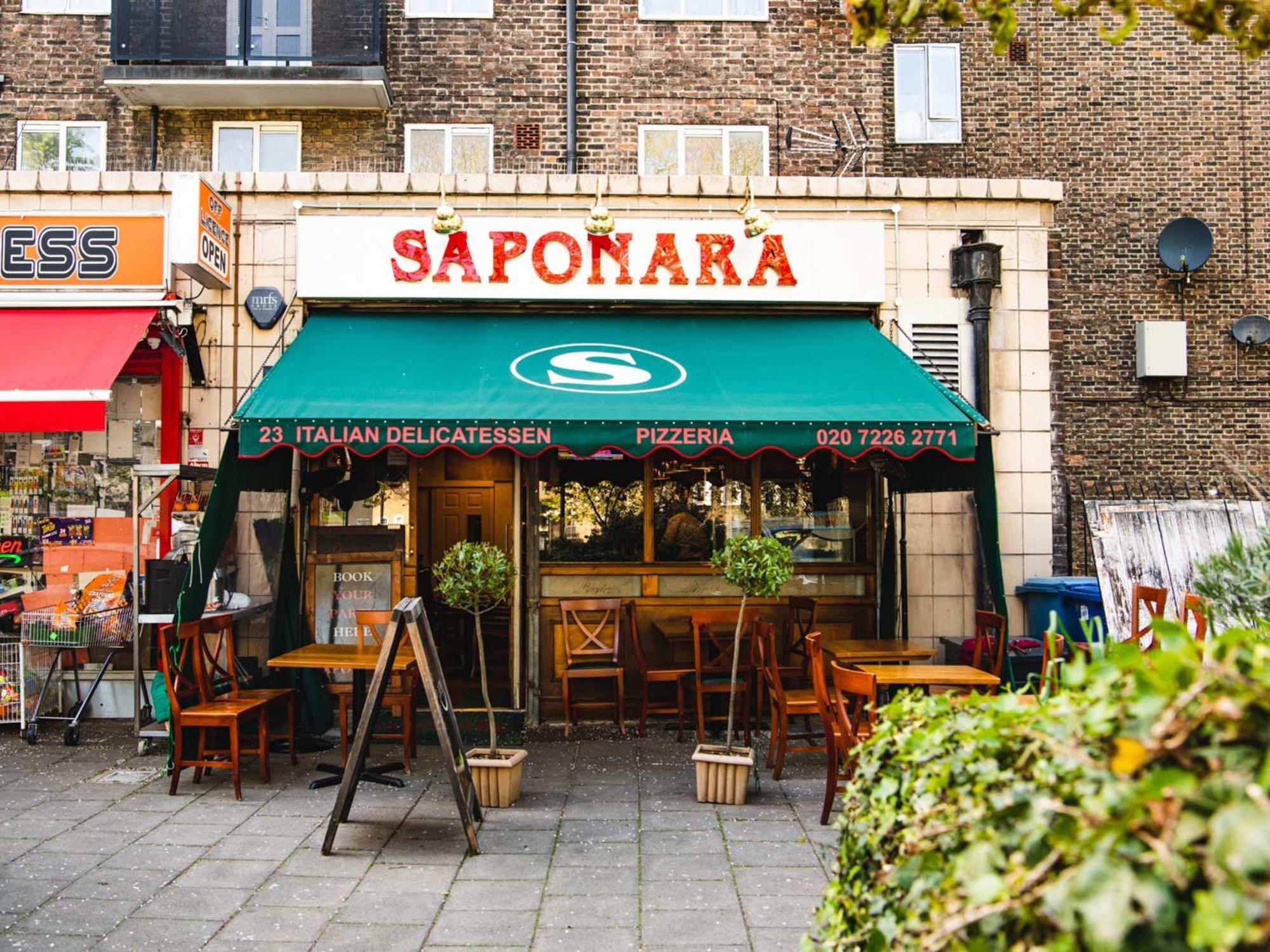
Islington's Italian Kitchen Tradition and Where Saponara Fits
London's Italian restaurant scene divides more sharply than it first appears. At one end sit the white-tablecloth institutions and the newer wave of high-concept pasta counters drawing reservation queues months in advance. At the other end, a quieter category of neighbourhood Italian has persisted across the city's inner boroughs for decades, shaped less by critical attention and more by the rhythms of the streets they serve. Islington, and specifically the stretch of residential streets east of Upper Street, belongs firmly to that second tradition.
Saponara is an authentic Italian pizza and pasta restaurant at 23 Prebend St, London N1 8PF, United Kingdom. The address puts it within walking distance of Angel and Highbury and Islington stations, but the street itself is residential in character, the kind of location that filters out destination-seekers and rewards those who already know where they are going. That self-selecting geography is not incidental; it defines the operating logic of a venue like this, where repeat local custom carries more weight than passing trade.
In the context of London's wider Italian dining offer, the neighbourhood independent occupies a different competitive register entirely from the flagship rooms that define the city's upper tier. Venues such as CORE by Clare Smyth or The Ledbury operate with the infrastructure of Michelin recognition, allocation-style booking systems, and price points that signal a different kind of commitment from the diner. Sketch, The Lecture Room and Library and Restaurant Gordon Ramsay similarly anchor the destination end of London dining. Saponara does not compete in that category. Its comparable set is the independently owned trattoria-style room that serves a neighbourhood over years, sometimes decades, building a customer base that measures value differently.
The Sustainability Argument for the Neighbourhood Italian
There is a sustainability dimension to the neighbourhood Italian model that rarely gets articulated clearly, but it matters. The long-running independent kitchen, particularly one operating at accessible price points in a residential setting, tends to generate less food waste per cover than the high-volume destination restaurant. Smaller menus, tighter procurement, and the ability to adjust daily purchasing based on actual custom rather than projected covers all contribute to a lower-waste operating profile. This is not a claim specific to Saponara, but a structural characteristic of the format itself.
Across London's Italian independents, the sourcing model has historically leaned on a small number of specialist importers, Italian delicatessens, and local wholesale markets, rather than the extended global supply chains that larger operations depend on. That proximity in the supply chain, while never fully transparent to the diner, tends to reduce both food miles and the over-ordering that drives kitchen waste. The Italian kitchen tradition, with its emphasis on whole-ingredient cookery, nose-to-tail use of vegetables, and dishes built around bread, pulses, and cured proteins rather than prime cuts, has an inherent efficiency that aligns with contemporary thinking about low-impact hospitality.
The question of whether any specific venue is delivering on those principles requires more than a postcode, of course. But the format, location, and scale implied by a small independent on a residential street in N1 create the conditions in which that kind of operation is most likely to be found. For diners who place environmental consciousness alongside food quality in their decision-making, the neighbourhood independent is a structurally better bet than the high-throughput destination room.
London's Broader Italian Dining Scene in 2024
Italian cooking in London has undergone a significant repositioning over the past decade. The old model of the red-sauce trattoria, which dominated the city's mid-market through the 1980s and 1990s, has fragmented into several distinct categories. Regional Italian has gained traction, with kitchens specialising in Neapolitan pizza, Sicilian seafood, Venetian cicchetti, and northern pasta traditions each carving out dedicated audiences. Simultaneously, a wave of higher-end Italian fine dining has arrived, drawing on the same serious-ingredient philosophy that has long defined the country's leading restaurants.
The neighbourhood Italian that predates these waves occupies an interesting position. It is neither the fashionable regional specialist nor the high-concept destination, but it has often proved more durable than either. The areas of London that retained strong Italian communities through the mid-twentieth century, including parts of Islington, Clerkenwell, and Soho, tend to support this kind of venue most naturally. The customer base is multigenerational and the expectation is consistency over novelty.
For those planning a wider London dining itinerary, the city's upper end extends well beyond the capital. The Fat Duck in Bray, L'Enclume in Cartmel, and Moor Hall in Aughton represent the country-house and destination-kitchen tier of British dining, while Gidleigh Park in Chagford, Hand and Flowers in Marlow, and Le Manoir aux Quat' Saisons in Great Milton offer destination experiences within day-trip distance of London. Internationally, Le Bernardin in New York City and Atomix in New York City benchmark the kind of rigour that defines serious tasting-menu dining at the global level.
Saponara does not sit in any of those categories. It is a local reference point in a city with enough dining range to accommodate every register of seriousness, from the three-Michelin-starred rooms at the upper end of London's restaurant scene to the street-level independents that feed the same postcode year after year.
Planning a Visit
Prebend Street is accessible from both Angel (Northern line) and Highbury and Islington (Victoria line and Overground), placing the venue within comfortable reach of central London without requiring a taxi. The residential character of the street means parking options are limited during peak evening hours, and the neighbourhood setting is better suited to arriving on foot or by public transport. As with most small independents operating without a significant digital footprint, contacting the venue directly in advance of a visit is advisable to confirm current hours and availability.
Budget and Context
Comparable venues nearby, for context on price, style, and recognition.
| Venue | Cuisine | Price | Notes |
|---|---|---|---|
| SaponaraThis venue — the venue you are viewing | Not listed | $$ | Not listed |
| Antica Pizzeria Da Michele | Soho, Authentic Neapolitan Pizza | $$ | Not listed |
| Caponata | Camden Town, Sicilian Italian | $$ | Not listed |
| La Mia Mamma King's Road | Not listed | $$ | Chelsea, Authentic Italian Regional Home Cooking |
| Bronzo | Not listed | $$ | Turnham Green, Authentic Sardinian Italian |
| Fatto a Mano Bethnal Green | Not listed | $$ | Bethnal Green, Authentic Neapolitan Pizza |
Continue exploring
More in London
Restaurants in London
Browse all →
Bars in London
Browse all →
Hotels in London
Browse all →


At a Glance
- Cozy
- Intimate
- Date Night
- Casual Hangout
- Family
- Standalone
Current opening hours
- Monday
- Closed
- Tuesday
- 5:30–10 PM
- Wednesday
- 5:30–10 PM
- Thursday
- 5:30–10 PM
- Friday
- 5:30–10 PM
- Saturday
- 5:30–10 PM
- Sunday
- Closed
Hours can change for holidays and private events. Last verified .
Cozy and welcoming with a homely Italian deli feel, warm lighting, and a lovely neighborhood atmosphere.