Sam's Pizza
Our verdict
Sam's Pizza sits on Cedar Street in Cedar Hill, TX, bringing a neighbourhood pizza format to a Dallas-Fort Worth suburb where casual dining options have grown steadily alongside the city's population. The address at 601 Cedar St places it within easy reach of central Cedar Hill, making it a practical stop for residents looking for a familiar format in a local setting.

Pearl is the En Primeur Club membership app — saves, bookings, and concierge access live there. Same editors, same standards.
- Address
- 601 Cedar St, Cedar Hill, TX 75104
- Phone
- (972) 293-0013
- Hours
- Mon ClosedTue–Thu 11 AM–9:30 PMFri–Sat 11 AM–10:30 PMSun 11 AM–9:30 PM
- Website
- samspizzapasta.com
- Directions
- Get directions
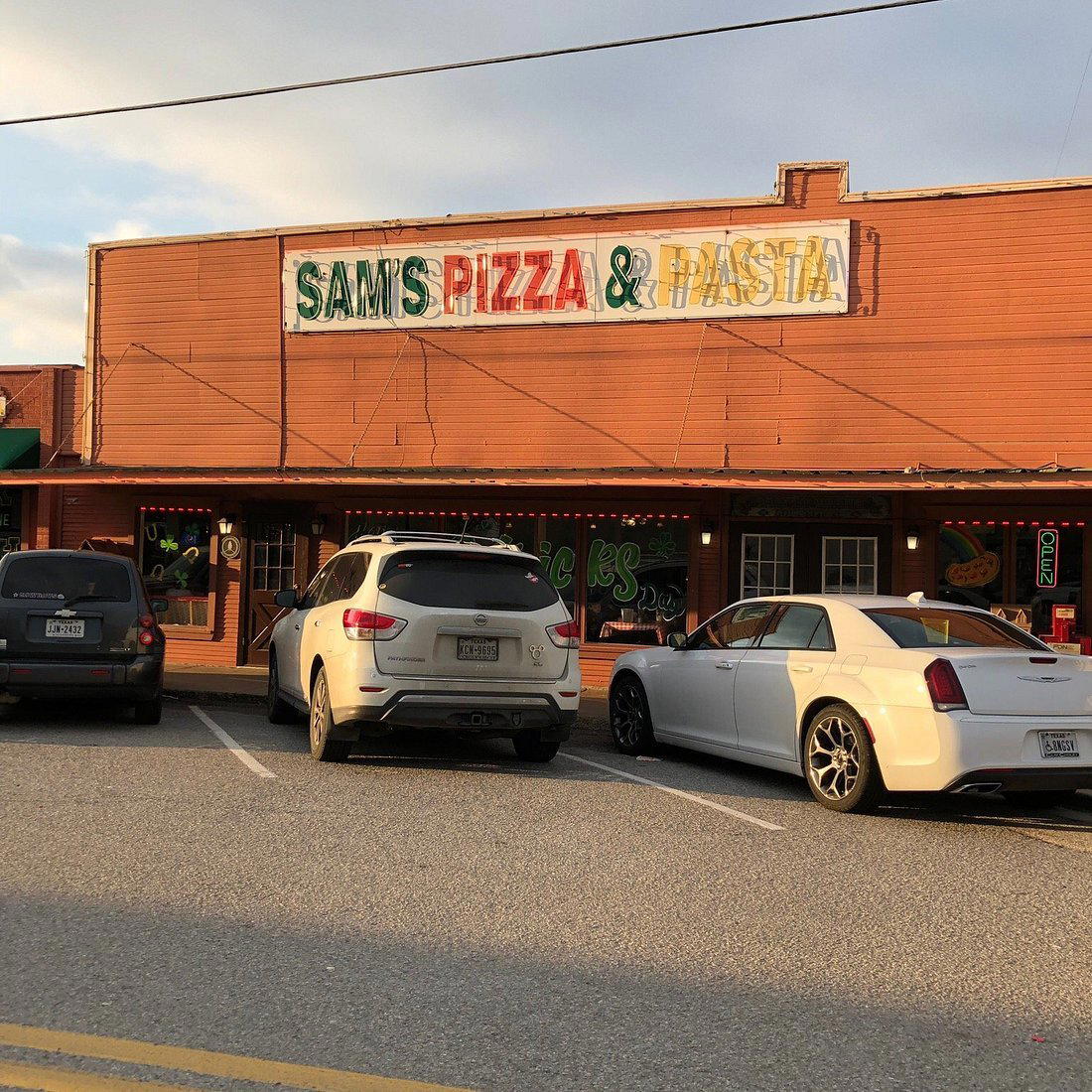
Pizza in the Suburbs: What Cedar Hill's Dining Scene Tells You
Cedar Hill occupies a position in the Dallas-Fort Worth metropolitan sprawl that many mid-size Texas suburbs share: a residential community that has grown fast enough to develop its own dining identity, but still sits in the gravitational pull of the larger urban restaurant scene to the north. In that context, neighbourhood pizza operations carry particular weight. They are often the anchor businesses around which a local food culture organises itself, the places that get recommended first, visited most frequently, and remembered longest by residents who might drive into Dallas for a special occasion but want something reliable closer to home.
Sam's Pizza, at 601 Cedar St in Cedar Hill, TX 75104, occupies that functional role in a city where the dining conversation is still developing. Across Cedar Hill, a small but growing set of independent operators, including Soul Shack and Hillside Social, have helped establish that the suburb can sustain more than chain-restaurant formats. A neighbourhood pizza address fits naturally into that pattern.
The Cultural Weight of American Pizza
Pizza's position in American casual dining is worth examining precisely because it is so rarely examined. The dish arrived in the United States with Italian immigrants in the late nineteenth and early twentieth centuries, concentrated initially in cities like New York, Chicago, and New Haven. Each of those cities developed a distinct structural tradition: New York's thin, foldable, coal-oven slice; Chicago's deep-dish, with its inverted tomato-on-leading architecture; New Haven's apizza, charred and blistered from intensely hot coal ovens. These are not just stylistic preferences but codified regional identities, each with its own partisans and its own claim to legitimacy.
What happened over the following decades was a simultaneous nationalisation and fragmentation of that tradition. Large chains standardised a version of pizza that prioritised consistency and delivery logistics over craft, while a counter-movement of independent pizzerias, particularly from the 2000s onward, pushed back toward wood-fired technique, long fermentation, and regional Italian references. Today, the American pizza conversation ranges from Neapolitan-certified practitioners to Detroit-style square specialists, with a parallel high-end track in which pizza appears as a studied format at serious restaurants. The neighbourhood pizzeria sits somewhere in the middle of that spectrum, drawing on the cultural familiarity of the form without necessarily staking out a strong ideological position.
That familiarity is itself a value proposition. Pizza is one of the few dishes that carries broad cross-demographic appeal without requiring any orientation from the diner. It needs no explanation, no education, no courage. In a suburb like Cedar Hill, where the dining population ranges from long-term residents to newer arrivals and families looking for a quick weeknight option, that accessibility matters. It is worth contrasting this with the kind of format discipline required at, say, Alinea in Chicago or The French Laundry in Napa, where the entry bar, both financial and conceptual, filters the audience considerably. The neighbourhood pizzeria operates by a different logic entirely: volume, frequency, and community trust over occasion dining.
Cedar Hill as a Dining Environment
Understanding where Sam's Pizza sits requires understanding Cedar Hill's position in the broader DFW dining ecosystem. The city's population growth over the past two decades has created demand for a fuller range of dining formats, but it has not yet produced the density of independent operators that characterises nearby urban cores. That means each established independent address carries more representational weight than it might in a denser market. When a neighbourhood pizza spot earns regular custom in Cedar Hill, it is not competing against a dozen comparable operations on the same block; it is likely one of a small set of non-chain options that residents can name from memory.
For visitors to the broader DFW area who are also planning time in more heavily documented dining markets, it is worth noting that the national conversation about serious American restaurant cooking runs through cities like New York, where Le Bernardin and Atomix anchor a very different tier, and through San Francisco, where Lazy Bear represents a format built on chef-driven tasting menus. In the South, addresses like Emeril's in New Orleans and Bacchanalia in Atlanta have set regional benchmarks. Cedar Hill's dining scene is not in competition with any of these; it is operating on a neighbourhood scale and neighbourhood logic, which is its own entirely valid register.
Within Cedar Hill itself, the comparison set is more local. Crumbl represents the premium-chain dessert format that has expanded aggressively into suburban markets. Soul Shack and Hillside Social represent independent operators building a local identity. Sam's Pizza, as a neighbourhood pizza address on Cedar Street, fits alongside these as part of a dining ecosystem that is suburban in character but not without its own internal variety. For a fuller picture of what Cedar Hill offers across formats and price points, our full Cedar Hill restaurants guide maps the options in more detail.
What to Know Before You Go
Sam's Pizza is located at 601 Cedar St, Cedar Hill, TX 75104, in a position that makes it accessible from central Cedar Hill without requiring a trip toward the larger commercial corridors. Neighbourhood pizza operations in Texas suburbs of this size typically operate across lunch and dinner, with walk-in formats being the norm rather than reservations. Visitors who have had reliable experiences at addresses like Single Thread Farm in Healdsburg or Blue Hill at Stone Barns in Tarrytown, where advance booking is essential and lead times run to weeks, should calibrate their expectations accordingly: the neighbourhood pizzeria operates on a different set of logistical assumptions, and that informality is part of its function in the community.
Frequently asked questions
What part of town is Sam's Pizza in?
Sam's Pizza is located at 601 Cedar St, Cedar Hill, TX 75104, Cedar Hill.
Is Sam's Pizza in Cedar Hill a good option for a casual weeknight meal?
Cedar Hill's suburban character makes Sam's Pizza on Cedar St a practical fit for low-friction weeknight dining, where the priority is proximity and familiarity rather than destination-restaurant logistics. Pizza as a format requires no special dietary navigation and scales easily for solo diners or small groups. No hours data is currently on file, so confirming service times before visiting is advisable.
What do people recommend at Sam's Pizza?
For a neighbourhood pizza address at 601 Cedar St in Cedar Hill, the practical route is to call ahead or check with locals, as community regulars at suburban spots like this tend to have consistent house favourites. Pizza operations at this scale typically anchor around a core set of signature pies that drive repeat visits.
How hard is it to get a table at Sam's Pizza?
Cedar Hill is a suburban residential market, not a high-pressure urban dining environment, so the booking dynamics differ sharply from city-centre restaurants with weeks-long waits. Sam's Pizza on Cedar St sits in that context: walk-in availability is the norm for neighbourhood pizza at this scale in a DFW suburb. No reservation data is on file, but demand pressure here is unlikely to match that of high-volume Dallas proper addresses.
What's the defining dish or idea at Sam's Pizza?
What can be said is that the format — neighbourhood pizza in Cedar Hill, TX — suggests a focus on accessible, familiar formats: the kind of operation where the product is the pizza itself, not a concept layered on top of it. For specifics, 601 Cedar St is the address to visit directly.
Booking and Cost Snapshot
Comparable venues nearby, for context on price, style, and recognition.
| Venue | Cuisine | Price | Notes |
|---|---|---|---|
| Sam's PizzaThis venue — the venue you are viewing | New York-Style Pizza & Pasta | $10–20 | Not listed |
| Hillside Social | Modern Southern Creole | $30–50 | Hillside Village, Modern Southern Creole |
| Crumbl - Cedar Hill | Gourmet Rotating Cookies & Desserts | $10–20 | Cedar Hill, Gourmet Rotating Cookies & Desserts |
| Soul Shack | Upscale Soul Food with Fusion Twists | $30–50 | Cedar Hill, Upscale Soul Food with Fusion Twists |
| Cane Rosso Arlington | Authentic Neapolitan Pizza | $20–30 | Downtown Arlington, Authentic Neapolitan Pizza |
| Zio Cecio | Sardinian-Italian Trattoria | $30–50 | Bluffview, Sardinian-Italian Trattoria |
Continue exploring
More in Cedar Hill
Restaurants in Cedar Hill
Browse all →
Bars in Cedar Hill
Browse all →
Hotels in Cedar Hill
Browse all →
Wineries in Cedar Hill
Browse all →
Details
- Cozy
- Classic
- Family
- Casual Hangout
- Group Dining
- Historic Building
- Byob
- A La Carte
- Vegetarian Friendly
Current opening hours
- Monday
- Closed
- Tuesday
- 11 AM–9:30 PM
- Wednesday
- 11 AM–9:30 PM
- Thursday
- 11 AM–9:30 PM
- Friday
- 11 AM–10:30 PM
- Saturday
- 11 AM–10:30 PM
- Sunday
- 11 AM–9:30 PM
Hours can change for holidays and private events. Last verified .
Warm family feel with friendly service in a historic building.