Saltwell Farm Kitchen

James Beard Award Semi Finalist
Our verdict
Saltwell Farm Kitchen sits on rural Route 800 in Overbrook, Kansas, where the farm-to-table model is less a marketing angle than a geographic fact. The kitchen draws from the agricultural land surrounding it, placing ingredient provenance at the center of every plate. For travelers seeking a meal grounded in regional agriculture rather than urban polish, this is the address in eastern Kansas worth planning around.

Pearl is the En Primeur Club membership app — saves, bookings, and concierge access live there. Same editors, same standards.
- Address
- 214 N 800 Rd, Overbrook, KS 66524
- Phone
- (785) 312-2498
- Website
- saltwellfarmkitchen.com
- Directions
- Get directions
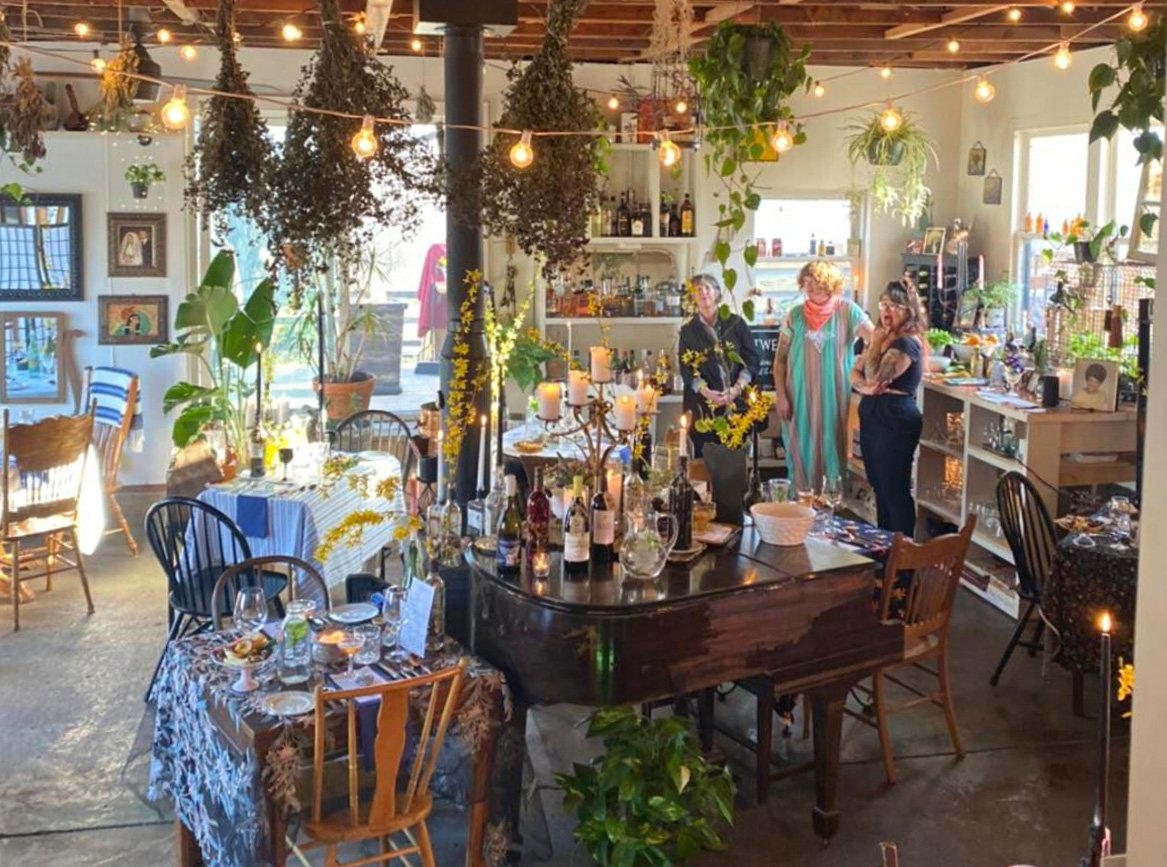
Where the Land Sets the Menu
Eastern Kansas does not position itself as a dining destination in the way that urban corridors do, which is precisely what makes a place like Saltwell Farm Kitchen worth understanding on its own terms. Along rural Route 800 outside Overbrook, the distance between the source of an ingredient and the plate it lands on collapses in a way that most farm-to-table restaurants in metropolitan centers can only approximate. The farm kitchen format, practiced here at 214 N 800 Rd, belongs to a broader American tradition of producer-led dining that has accelerated over the past two decades as diners have grown more attentive to agricultural supply chains and regional food identity.
The physical approach tells you something useful before you sit down. Rural Kansas highway, open sky, working land on both sides. This is not the curated pastoral aesthetic of a converted barn in a wine region; it is actual agricultural context, and that distinction shapes what the kitchen does and what it can credibly claim. In the farm kitchen category, geography is credentials. A restaurant that operates within the food system it describes occupies a different position than one that sources regionally from a city kitchen.
The Sourcing Logic Behind Farm Kitchen Cooking
Farm kitchens operating within or adjacent to working agricultural land follow a sourcing logic that differs structurally from conventional restaurant procurement. Rather than building a menu and then finding ingredients, the sequence often runs the other direction: what is available, at what maturity, in what quantity, drives what appears on the plate. This is a more demanding model to execute consistently, and it produces a different kind of dining experience, one where the menu is less a fixed document and more a seasonal report on what the surrounding land is producing.
The American Midwest has a long, underappreciated history of this model, distinct from the California farm-to-table wave that drew most of the national press attention. Kansas agriculture skews toward grains, beef, and pork at scale, with smaller vegetable and specialty crop operations occupying a niche that farm kitchens like this one help make economically legible. When a kitchen anchors itself to local producers, it also anchors itself to the seasonal and economic realities those producers face, which tends to produce menus that read as honest rather than performed.
Compare this to the sourcing frameworks at restaurants like Blue Hill at Stone Barns in Tarrytown or Single Thread Farm in Healdsburg, both of which have built national reputations on integrated farm-and-kitchen models. Those operations benefit from concentrated media attention and destination-dining infrastructure. A farm kitchen in Overbrook, Kansas operates without that apparatus, which changes the audience it serves and the expectations it can be held to, but does not diminish the integrity of the sourcing model itself.
Placing Saltwell in the Broader American Farm Kitchen Conversation
The farm kitchen category in the United States has diversified considerably. On one end, you have operations like The French Laundry in Napa or The Inn at Little Washington, where garden-to-table sourcing is one element of a much larger fine dining apparatus, backed by decades of recognition and price points that reflect that positioning. On the other end, rural farm kitchens operate closer to the agricultural source with fewer intermediary layers, lower overheads, and a guest experience shaped more by place than by technique theater.
Saltwell Farm Kitchen occupies the latter end of that range. For context on the full spectrum of producer-integrated American dining, our coverage of Lazy Bear in San Francisco, Bacchanalia in Atlanta, and Brutø in Denver tracks how the sourcing-forward model plays across different urban registers and price tiers. Saltwell's rural Kansas address places it in a different conversation entirely, one about regional food identity and agricultural community rather than competitive fine dining.
Eastern Kansas has more going on culinarily than the national food press tends to acknowledge. For those interested in the full range of what the region offers, our full Overbrook restaurants guide maps the local dining picture with more granularity.
The Case for Driving Out
Farm kitchens at this geographic remove from urban centers work leading when the drive itself is part of the decision. The meal is not separable from the context: the road, the land, the scale of the sky. Diners accustomed to the urban polish of places like Le Bernardin in New York City, Atomix in New York City, or Providence in Los Angeles will encounter a register that prioritizes agricultural honesty over technical showmanship. That is not a shortcoming; it is a different proposition, and one that a certain kind of traveler finds more satisfying precisely because of its lack of pretension.
Overbrook sits in Osage County, roughly 30 miles southwest of Topeka, which makes it accessible as a day trip from the state capital or a detour on a longer drive through the region. For those building a broader midwest itinerary, the farm kitchen model is well represented elsewhere in the region, and comparing Saltwell's rural Kansas approach to what operations like Frasca Food and Wine in Boulder or Addison in San Diego do with regional sourcing at a higher price tier is a useful exercise in understanding how the same underlying principle scales across very different contexts.
Current hours, booking requirements, and seasonal availability are best confirmed directly with the kitchen before planning a visit. Rural operations of this type often adjust schedules seasonally, and the gap between a published hour and an operational one can be significant. Arriving without confirmation is a risk worth avoiding on a rural route with limited alternatives nearby.
Frequently asked questions
Is Saltwell Farm Kitchen child-friendly?
Farm kitchen settings in working agricultural environments tend to be naturally accommodating to families — the open land context and informal, grounded format suit a range of ages. Saltwell Farm Kitchen sits at 214 N 800 Rd in Overbrook, KS, a rural address that signals space and a relaxed pace rather than the constraints of a tightly formatted urban dining room.
Is Saltwell Farm Kitchen better for a quiet night or a lively one?
The geographic reality of Overbrook, KS points toward quiet over lively. Farm kitchens at this remove from urban centers typically draw guests who have made a deliberate choice to drive out — that self-selection shapes the room. Expect a measured, unhurried atmosphere rather than a high-turnover dining floor.
Is Saltwell Farm Kitchen worth the drive from Topeka or Kansas City?
Overbrook sits in eastern Kansas, placing it within reasonable range of both Topeka and the Kansas City metro for drivers treating the journey as part of the outing rather than an inconvenience. Farm kitchens at this geographic remove function differently from destination restaurants in urban corridors — the meal and the landscape are not separable decisions. If the draw is farm-sourced food on working agricultural land, the address at 214 N 800 Rd, Overbrook, KS 66524 delivers a context that no urban approximation replicates.
What should I order at Saltwell Farm Kitchen?
The menu at Saltwell Farm Kitchen follows sourcing logic tied to the agricultural land surrounding it in eastern Kansas, which means the most reliable guide is whatever reflects current seasonal availability. Farm kitchens operating this close to working land tend to shift their offerings with what is ready to harvest rather than holding a fixed printed menu. check the venue's official channels at 214 N 800 Rd, Overbrook, KS 66524 for current offerings before your visit.
What's Saltwell Farm Kitchen's location?
Saltwell Farm Kitchen is located at 214 N 800 Rd, Overbrook, KS 66524, Overbrook.
Quick Comparison
| Venue | Cuisine | Price | Awards | Notes |
|---|---|---|---|---|
| Saltwell Farm KitchenThis venue — the venue you are viewing | Farm-to-Table American Tasting Menu | $100–150 | James Beard Award Semi Finalist | Not listed |
| Le Bernardin | French Seafood Fine Dining | $300–500 | 3 Michelin Stars · World's 50 Best #13 | French, Seafood |
| Atomix | Modern Korean Tasting Menu | $300–500 | 2 Michelin Stars · World's 50 Best #7 | Modern Korean, Korean |
| Lazy Bear | Modern American Tasting Menu | Not listed | 2 Michelin Stars · World's 50 Best #25 | Progressive American, Contemporary |
| Alinea | Avant-Garde Molecular Gastronomy | $300–500 | 2 Michelin Stars · World's 50 Best #37 | Progressive American, Creative |
| Atelier Crenn | Contemporary French Fine Dining | $300–500 | 3 Michelin Stars · World's 50 Best #44 | Modern French, Contemporary |
Recognition history
Dated appearances from independent guides and award organizations, with the underlying list record or original source where available.
James Beard Award Semi Finalist
James Beard Award
Continue exploring
More in Overbrook
Restaurants in Overbrook
Browse all →
Saltwell Farm Kitchen
The wine
- Wine program
- Curated wine list
- Extensive wine list
- Craft cocktails
- Beer program
Details
- Rustic
- Cozy
- Scenic
- Intimate
- Date Night
- Special Occasion
- Celebration
- Garden
- Courtyard
- Historic Building
- Standalone
- Craft Cocktails
- Beer Program
- Extensive Wine List
- Farm To Table
- Local Sourcing
- Garden
- Tasting Menu
- Prix Fixe
- Wine
- Cocktails
- Beer
- Vegetarian Friendly
- Gluten Free Options
Rustic and intimate, with a cozy countryside feel that shifts between a shady outdoor garden setting and a warm winter parlor around an antique wood-burning stove.