
Tabelog 100 #92
Our verdict
Sakaeya belongs to Nikko’s low-cost sweets tradition rather than its formal dining circuit: a small, station-side stop for Japanese traditional sweets and kakigori, selected for Tabelog 100 Japanese traditional sweets / Japanese sweets cafe EAST 2023. Its value lies in Nikko’s yuba culture and the way a quick take-out format can carry local food identity without ceremony.

Pearl is the En Primeur Club membership app, where members save venues, book tables and use the concierge.
The menu
What to order
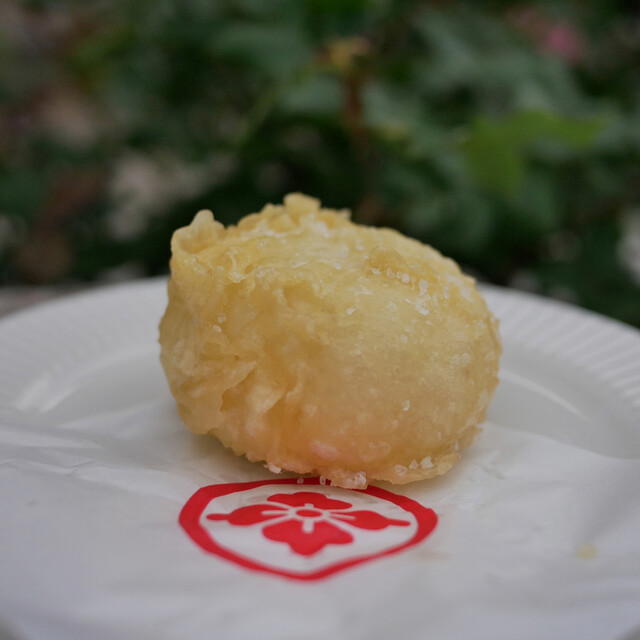
- Age yuba manju (deep-fried tofu-skin bun with red bean paste)
- Kakigori (shaved ice)
In Nikko, the city quickly shifts from transit to shrine-bound movement: day bags, bus queues, mountain air, and hot snacks eaten standing before the next connection. Sakaeya fits that rhythm. It is not competing with Nikko’s hotel dining rooms or larger sit-down counters; it belongs to the older, useful category of Japanese sweets shops that feed a town between trains, temple visits, and weather changes.
That matters in Nikko, where food identity often splits between heritage dining and compact local shops serving quick, approachable specialties. Sweets and light snacks sit close to that second tradition, turning local food culture into something portable, inexpensive, and repeatable. A modest shop can carry more local meaning than a longer, more staged meal.
Japanese sweets, kakigori, and the snack economy around Nikko
Nikko’s casual food culture is not decorative. In a mountain temple town shaped by visitor flow, quick snacks can become practical markers of place. At the casual end, that identity appears not as a course sequence but as something bought quickly and eaten before the day reorganizes around trains, buses, and shrine precincts.
Sakaeya is listed under Japanese traditional sweets and kakigori. The planning detail that defines the experience is its small-shop format: this is a quick sweets stop rather than a dining room for lingering over multiple courses. Read it as part of Nikko’s everyday snack economy, not as a formal restaurant appointment.
The Tabelog Hyakumeiten 2023 recognition gives the shop a useful signal inside Japan’s crowded wagashi and sweets field. Tabelog’s Hyakumeiten lists are category-specific recognition, not luxury rankings. The award places Sakaeya among notable sweets addresses, while its format remains modest, local, and quick.
That low-friction format explains why Sakaeya should be read alongside, not beneath, Nikko’s formal dining. Comparing it with Main Dining Room or Gourmands Wagyu means comparing different meals: a planned sit-down occasion versus a regional snack stop between movements. For another compact Nikko sweets reference, Fudaraku Honpo Ishiya chou ten sits in the same broad low-cost orbit, though each shop expresses the category through its own local product logic.
A small room changes the tempo
The room is modest, and that scale shapes expectations. This is not for a long, quiet dinner or private celebration. It is a Nikko food ritual: arrive, choose, eat, and continue. In a city where visitors move between rail connections, shrine visits, local excursions, and hotel check-ins, that tempo is an asset.
The listed price bracket of - JPY 999 - JPY 999 puts Sakaeya far from Nikko’s premium dining tier and close to the everyday sweets economy Japanese travelers understand well. Nikko can read as a destination of set meals and heritage dining rooms. Other Nikko dining rooms belong to a different pacing, where architecture, service, and meal length matter more. Sakaeya works because it refuses that scale.
For a broader Nikko day, place this stop around movement rather than meal structure. Its Nikko setting suits early arrivals, post-shrine returns, or the gap before onward travel. It also pairs naturally with our full Nikko restaurants guide when balancing quick regional food with formal reservations. Overnight visitors can match the eating plan against our full Nikko hotels guide; the city feels different when day-trip crowds thin and dinner becomes a separate decision.
How to place it in a Nikko itinerary
The strongest case for Sakaeya is not that it replaces a meal. It gives Nikko a fast, accessible sweets stop at a price point that leaves room for a more serious lunch or dinner elsewhere. It is especially useful for travelers who want local specificity without turning every food stop into an appointment.
Flexibility matters because Nikko’s visitor flow is weather-dependent. Rain, cold, and bus timing can change the day quickly, and a quick sweets stop has a practical advantage in a mountain town. The setting also points visitors back toward Nikko’s walkable and transit-friendly patterns, rather than treating every stop as a separate errand.
For a fuller Nikko circuit, sweets should not be isolated from the city’s hospitality map. Drinks are thinner here than in Tokyo or Osaka, but our full Nikko bars guide helps separate hotel lounges from casual evening options. Wine travel is not the main draw, though our full Nikko wineries guide helps readers trace regional drinking culture beyond restaurants. For shrine visits, craft, nature, and guided formats, our full Nikko experiences guide gives the food stops better context.
Readers extending beyond Tochigi can use the contrast to see how Japanese casual dining shifts by city. The station-snack logic here differs from beef-led destination meals, urban seafood-and-grill formats, or larger-city cafe culture elsewhere. Regional casual food is never one category; it changes with commute patterns, ingredients, and local habits.
That contrast stretches across Japan and abroad. Other compact restaurants, cafes, and snack counters show how a narrow format can define a stop without ceremony. Even outside Japan, small-format concepts make the same point: focused shops often carry food culture more clearly than longer menus.
The editorial verdict is simple: use Sakaeya as a precise Nikko food stop, not a substitute for the city’s dining rooms. Its value lies in category recognition, small scale, low price, and timing. In a town where visitors can over-plan around shrines and hotels, a short sweets stop may be the cleaner expression of place.
Frequently asked questions
Is Sakaeya okay with children?
Sakaeya is a small sweets stop in Nikko. Check the venue's official channels for the latest details on visits with children.
Is Sakaeya better for a quiet night or a lively one?
Sakaeya is better understood as a quick, low-key sweets stop than as a lively evening venue. Check the venue's official channels for current opening details.
What does dinner at Sakaeya typically cost?
Pricing at Sakaeya is listed as - JPY 999 - JPY 999.
What is Sakaeya known for?
Sakaeya is known in Nikko for Japanese traditional sweets and kakigori, with Tabelog Hyakumeiten recognition in 2023.
Quick Comparison
Comparable venues by cuisine and price in the same metro.
| Venue | Cuisine | Price | Awards | Notes |
|---|---|---|---|---|
| SakaeyaThis venue (the venue you are viewing) | Traditional Japanese sweets & age yuba manju shop | $1–10 | Tabelog 100 #92 | Not listed |
| 三たてそば 長畑庵 | Traditional Soba Noodles | $10–20 | Not listed | 長畑 |
| Fudaraku Honpo Ishiya chou ten | Traditional Japanese wagashi & onigiri shop | $1–10 | Tabelog 100 #78 | near Tobu Nikko Station |
| Uotoku | Traditional Unagi (Eel) | $30–50 | Tabelog 100 #14 | Imaichi |
| The Japanese Restaurant (日本料理 By ザ・リッツ・カールトン日光) | Kaiseki, Sushi & Teppanyaki | Not listed | Not listed | 中宮祠 |
| Tenkyoya Genpei | Traditional Soba & Tempura | $10–20 | Tabelog 100 #22 | Shimotsuke Osawa |
Recognition history
Dated appearances from independent guides and award organizations, with the underlying list record or original source where available.
Tabelog 100 #92 · No. 92
Tabelog · Tabelog 100 - Japanese traditional sweets / Japanese sweets cafe - EAST - 2023
Continue exploring
More in Nikko
Details
- Cozy
- Classic
- Lively
- Solo
- Family
- Casual Hangout
- Late Night
- Standalone
- Historic Building
- Street Scene
- A La Carte
- Counter Dining
- Tea
- Vegetarian Friendly
A small, casual wagashi shop with just a few tables, bright and busy during the day, where guests pop in for freshly fried sweets and takeout rather than lingering for long, full meals.