Saint Anejo
Our verdict
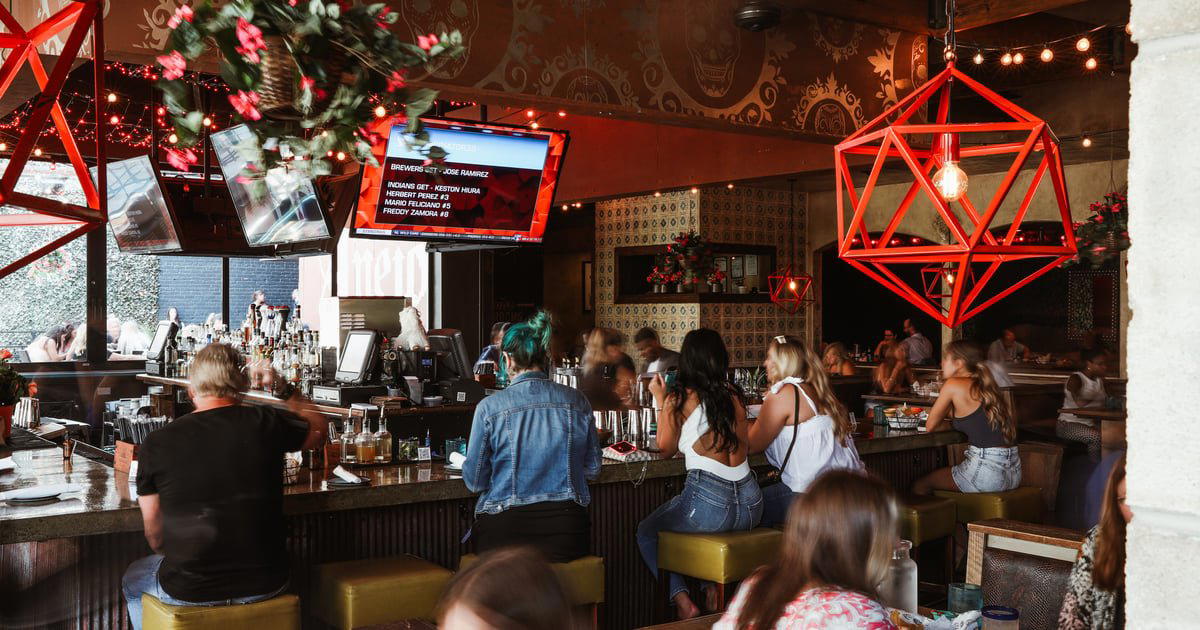
"This Mexican joint from M Street is the kind of place where it's easy to camp out at a table and spend the afternoon. You'll find a big, wide patio outside and a ton of seats, meaning they can accommodate big parties even on busy brunch mornings and weekend nights, then the bar starts to heat up. Menu-wise, they're known for excellent brunch-time cocktails, like their Bloody Marias (a ridiculously good Bloody Mary that subs tequila for vodka) and Mexican breakfast classics, like huevos rancheros and smothered breakfast burritos. Don't miss the chips and guac. "

Pearl is the En Primeur Club membership app — saves, bookings, and concierge access live there. Same editors, same standards.
- Address
- 1120 McGavock St, Nashville, TN 37203
- Phone
- (615) 736-5301
- Hours
- Mon–Sat 11 AM–10 PMSun 10 AM–9 PM
- Website
- saintanejonashville.com
- Directions
- Get directions
- Booking
- Book on SevenRooms
The menu
What to order
- Creative tacos
- House made guacamole
Agave and the American South: Where Mexican Tradition Meets Nashville's Evolving Dining Scene
The stretch of McGavock Street in Nashville's Gulch district has become one of the more telling indicators of how the city's dining scene has matured. What was once a corridor of mid-range sports bars and chain concepts now holds a more considered set of addresses, and Saint Anejo at 1120 McGavock St occupies a position in that shift. The name itself signals intent: añejo refers to the aged classification of tequila, the category that sits above reposado in complexity and patience. For a city historically defined by whiskey culture, a restaurant built around the language and spirit of Mexican agave traditions represents a genuine counter-programming choice.
The Cultural Weight of Mexican Cuisine in an Unlikely Setting
Mexican cooking in the American South carries a different cultural charge than it does in border states or coastal cities. In Nashville, where the food conversation has long centered on hot chicken, meat-and-three traditions, and a newer wave of upscale American cooking represented by venues like Bastion and Locust, Mexican cuisine has often occupied a peripheral position in editorial coverage. Saint Anejo's address in the Gulch rather than in a neighborhood with established Latino community roots is itself an editorial statement about audience and ambition.
The broader American conversation about Mexican regional cuisine has accelerated considerably over the past decade, with critics and James Beard committees increasingly recognizing the distance between Tex-Mex tropes and the complexity of Oaxacan moles, Veracruz seafood preparations, or the mezcal culture of the Sierra Madre. Nashville's dining scene, which has seen its own critical recognition grow through institutions like The Catbird Seat and newer entrants reshaping the city's reputation nationally, is fertile ground for that conversation to take hold.
Tequila as Architecture
The añejo framing at Saint Anejo does substantive work. Aged tequila programs require genuine investment: añejo must rest a minimum of one year in oak barrels under Mexican law, and extra añejo classifications extend that to three years. A restaurant naming itself around that tier signals that the bar program is intended as a serious part of the experience, not an afterthought to the food. This positions Saint Anejo within a growing cohort of American concepts where agave spirits receive the same sourcing and education effort that wine programs command at higher-end venues.
This approach mirrors what has happened in craft cocktail culture nationally, where cities from San Francisco to Chicago have moved away from novelty-driven menus toward programs grounded in category expertise. At venues like Lazy Bear in San Francisco or Smyth in Chicago, beverage programs are treated as equal editorial weight to the kitchen. The agave-forward approach at a Nashville address applies a similar logic to a different spirit category.
Nashville's Mexican Dining Tier: Reading the Room
Within Nashville specifically, Mexican and Latin-leaning concepts have tended to cluster at opposite ends of the pricing spectrum: fast-casual taqueria formats serving the city's growing Latino population, or upscale fusion accounts aimed at the downtown entertainment and convention visitor. The middle register, where regional Mexican culinary tradition is treated with the same seriousness that Peninsula applies to Southern American cooking or 12 South Taproom and Grill applies to its neighborhood format, has historically been underserved.
Saint Anejo's Gulch location places it in the tier of concepts competing for the visitor dollar alongside hotel restaurants and the broader Honky Tonk Highway ecosystem, but its naming and apparent positioning suggest an appeal beyond that transient audience. In cities where Mexican cooking has broken through to sustained critical attention, the pattern has generally required concepts willing to stay specific about regional origins: the Yucatan versus Puebla versus Mexico City traditions carry as much distinction as French regional cooking does in serious culinary contexts.
Situating Saint Anejo in the National Conversation
At the highest tier of American dining, concepts anchored in Mexican culinary heritage have attracted serious institutional attention. The James Beard Foundation has expanded its recognition of Mexican and Latin cooking significantly since 2015, and American cities from Los Angeles to New York have seen Mexican-rooted concepts move into the kind of editorial company occupied by Le Bernardin in New York City or The French Laundry in Napa. The comparison is not about price tier equivalence but about the shift in critical framing: Mexican cuisine has moved from ethnic category to subject of serious gastronomic analysis in American food writing.
Nashville is not yet in the same critical weight class as Los Angeles, where Providence sits, or New York, where Atomix has redefined what Korean cooking commands in fine dining terms. But the city's trajectory, which includes national coverage in the New York Times food section and growing Michelin interest in Southern cities, positions it as a market where a well-executed Mexican concept could achieve genuine cross-market relevance. For a broader view of where Saint Anejo fits in Nashville's current dining map, the full Nashville restaurants guide offers the most current editorial picture.
Further afield, properties like Blue Hill at Stone Barns in Tarrytown, Single Thread Farm in Healdsburg, and Addison in San Diego demonstrate how regional specificity combined with serious sourcing credentials has become the dominant grammar of American fine dining. The same pattern, applied to Mexican regional cuisine in a Southern city with growing critical mass, is a coherent and ambitious proposition. Reference points from Emeril's in New Orleans to The Inn at Little Washington to Atelier Moessmer Norbert Niederkofler in Brunico all point toward the same underlying logic: places that commit to a specific culinary tradition rather than hedging across genres tend to build the more durable critical reputations.
Planning a Visit
Saint Anejo is located at 1120 McGavock St in Nashville's Gulch district, walkable from the major downtown hotel corridor and accessible from Lower Broadway in under fifteen minutes on foot. The Gulch's concentration of evening dining and drinking concepts means the neighborhood operates on a later schedule than residential Nashville, with peak dinner traffic running from 7pm onward on weekends. For current hours, booking availability, and pricing, contacting the venue directly or visiting their current online presence is the most reliable approach, as the specifics of reservation policy and seasonal programming are subject to change. Nashville's dining scene is at its most active between March and May and again from September through November, when conference and tourism traffic combines with milder temperatures to fill the Gulch's outdoor-adjacent spaces.
Frequently asked questions
What should I eat at Saint Anejo?
The añejo-focused bar program is the clearest editorial anchor at Saint Anejo, and orienting a visit around the agave spirit selection alongside food is consistent with the concept's stated emphasis. Mexican regional cuisines reward attention to proteins prepared with chili-based sauces, corn preparations, and slow-cooked formats that distinguish the tradition from Tex-Mex conventions.
Is Saint Anejo reservation-only?
Nashville's Gulch district operates at high capacity on weekend evenings, and concepts at this address and positioning tier generally recommend advance booking for dinner. The venue's current reservation policy is best confirmed through direct contact, as walk-in availability varies significantly by day of week and season. Nashville's peak dining season runs spring and fall, when booking lead times across the city's popular addresses extend noticeably.
What makes Saint Anejo worth seeking out?
In a Nashville dining scene where the critical conversation has centered on Southern cuisine evolution (represented by venues like The Catbird Seat) and progressive American cooking, a concept genuinely committed to Mexican agave tradition and regional cuisine fills a specific and underserved position. The añejo naming signals a bar program with more depth than the average tequila-and-margarita operation, which in a city defined by its whiskey culture is a meaningful distinction.
Can Saint Anejo adjust for dietary needs?
Mexican regional cooking encompasses a wide range of preparations, including many that are naturally vegetable-forward, corn-based, or seafood-centric, which gives most kitchens in this culinary tradition flexibility for common dietary requirements. For specific allergen or dietary accommodation requests, contacting Saint Anejo directly before your reservation is the recommended approach, as accommodation policies vary by kitchen and by specific menu configuration.
How does Saint Anejo fit into Nashville's broader agave and cocktail scene?
Nashville's cocktail culture has grown significantly since 2018, with the Gulch and East Nashville leading a shift toward more ingredient-driven bar programs. Saint Anejo's agave focus places it in a small cohort of Nashville addresses treating tequila and mezcal with the sourcing seriousness more commonly associated with the city's whiskey bars. For visitors arriving from cities with established agave bar cultures, such as Los Angeles or Austin, Saint Anejo represents Nashville's most explicit engagement with that tradition at a sit-down dining format.
Peers Worth Knowing
Comparable venues nearby, for context on price, style, and recognition.
| Venue | Cuisine | Price | Awards | Notes |
|---|---|---|---|---|
| Saint AnejoThis venue — the venue you are viewing | Modern Mexican Tex-Mex | Not listed | Not listed | Not listed |
| Nectar Urban Cantina | Modern Mexican Taqueria | $20–30 | Not listed | Merry Oaks |
| Nacho Daddy - Nashville | Gourmet Nachos & Tex-Mex | $20–30 | Not listed | Music Row |
| Mesero - 12South, Nashville | Modern Tex-Mex | $20–30 | Not listed | 8th Ave South |
| Pancho & Lefty's Cantina | Nash-Mex Taqueria | Not listed | Not listed | 8th Ave South |
| Alebrije | Mexico City-Style Tacos | $10–20 | Resy Best of the Hit List | East Nashville |
Continue exploring
More in Nashville
Restaurants in Nashville
Browse all →
Bars in Nashville
Browse all →
Hotels in Nashville
Browse all →

Wineries in Nashville
Browse all →
Details
- Lively
- Trendy
- Energetic
- Group Dining
- Casual Hangout
- Late Night
- Brunch
- Open Kitchen
- Craft Cocktails
- Small Plates
- A La Carte
- Tequila
- Mezcal
- Margaritas
- Vegetarian Friendly
- Vegan Options
- Gluten Free Options
Current opening hours
- Monday
- 11 AM–10 PM
- Tuesday
- 11 AM–10 PM
- Wednesday
- 11 AM–10 PM
- Thursday
- 11 AM–10 PM
- Friday
- 11 AM–10 PM
- Saturday
- 11 AM–10 PM
- Sunday
- 10 AM–9 PM
Hours can change for holidays and private events. Last verified .
Lively and casual atmosphere with a cool, trendy vibe ideal for groups and late-night gatherings.