
Michelin Plate
Our verdict
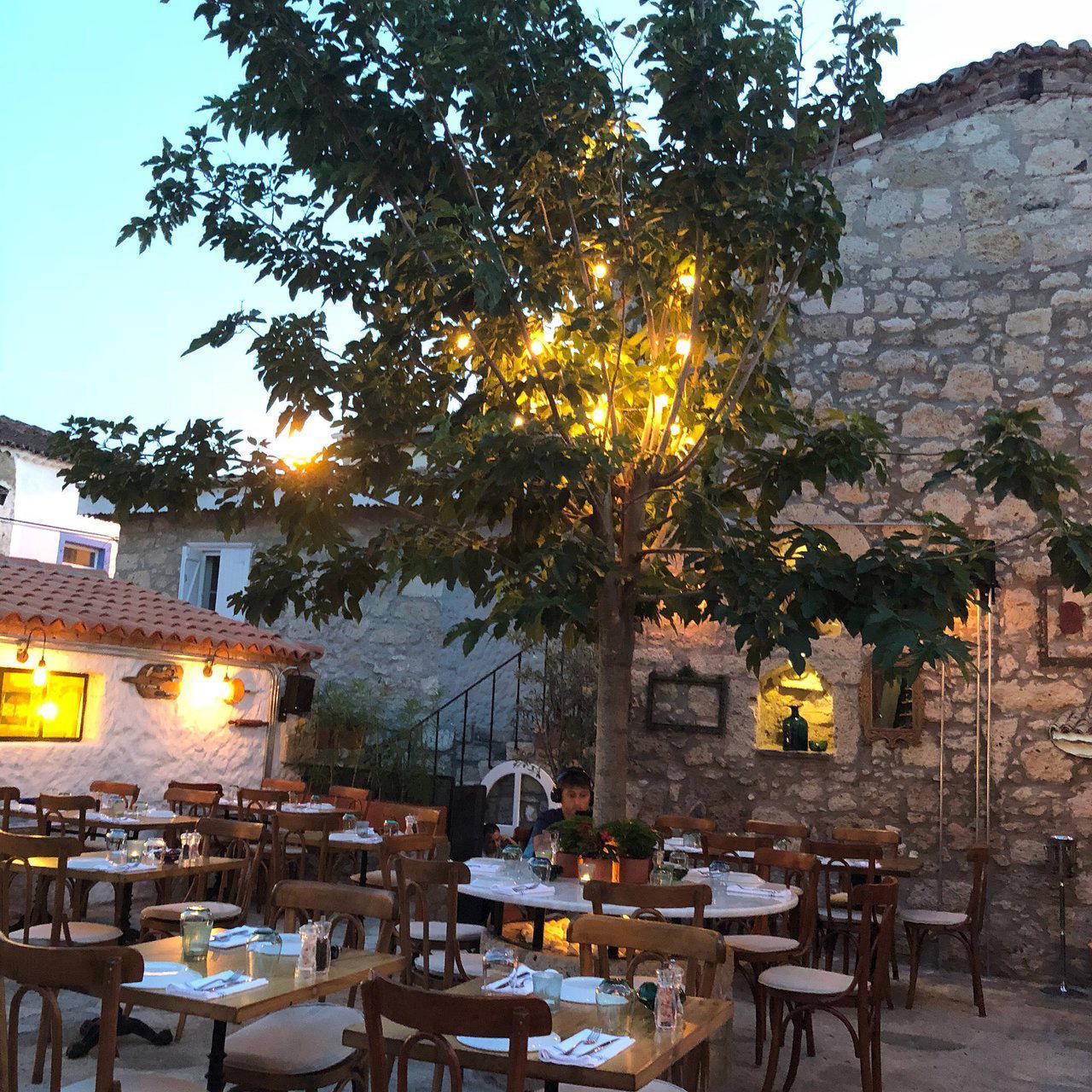
In the stone-paved lanes of Alacatı, Roka Bahçe runs an alfresco kitchen where Turkish cooking meets Bosnian tradition. Chef Gökhan Safkan's menu moves from orange-infused artichoke broth to grilled sea bass and pljeskavica, the Balkan meat patties that mark this as something other than a standard Aegean taverna. The atmosphere is deliberately convivial, and the kitchen keeps pace with it.

Pearl is the En Primeur Club membership app, where members save venues, book tables and use the concierge.
The menu
What to order
- Pljeskavica
- Grilled_sea_bass
- Artichokes
Stone Lanes, Open Tables: Alacatı's Cross-Cultural Kitchen
Alacatı has spent the last two decades evolving from a quiet Aegean stone village into one of Turkey's most visited seasonal destinations, its restored Greek architecture now framing boutique hotels, wine bars, and restaurants that draw Istanbul's design-literate crowd every summer. The dining scene here has split accordingly: there are places that lean into the Aegean formula of fresh fish and olive oil, and then there are kitchens that use the village's growing profile to do something less predictable. Roka Bahçe belongs to the second category. Positioned on one of the narrow lanes off Alacatı's main circuit, it operates as an outdoor restaurant where the setting and the food work together rather than one compensating for the other.
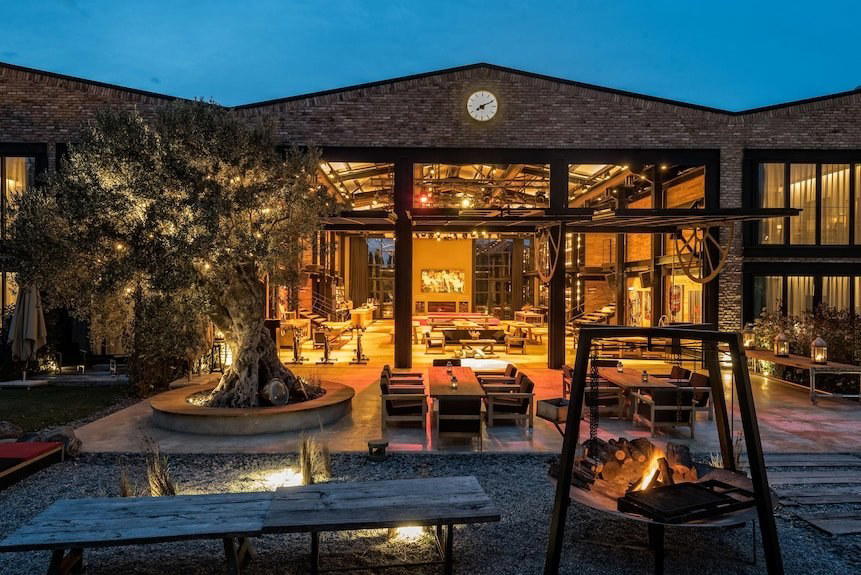
The physical approach tells you something about what to expect. Stone-paved streets, the ambient noise of a neighbourhood still in use, tables arranged for a crowd that is clearly there for the evening rather than a quick meal. The format is alfresco throughout, which in the Çeşme peninsula's climate means late spring through early autumn is the operating window. Arriving without a reservation during peak summer weeks is a gamble, the restaurant attracts a loyal local following alongside seasonal visitors, and the combination fills tables early.
Where the Menu Sits in the Aegean Tradition
The Aegean coast of Turkey has its own culinary grammar: zeytinyağlı vegetables cooked low and slow in olive oil, ultra-fresh fish from the Aegean, and mezes that function as a meal in themselves rather than a prelude. Roka Bahçe works within that grammar but introduces a second voice. Chef Gökhan Safkan draws on Bosnian culinary tradition alongside the Turkish baseline, a combination that is less arbitrary than it might initially sound. Ottoman-era food culture connected Anatolian and Balkan kitchens for centuries, and the crossover between Turkish and Bosnian cooking runs deeper than geography suggests.
That connection appears on the plate in specific ways. Artichokes cooked with onion and garlic in an orange-infused broth represent the Aegean side of the menu at its most considered: the bitterness of the artichoke, the sweetness of orange, and the low-heat technique that is characteristic of Aegean vegetable cooking. Against that, pljeskavica, the Balkan meat patty that is a staple of Bosnian and Serbian grilling culture, sits as a direct reference point from a different tradition. The sea bass, grilled cleanly, connects back to the Aegean again. The back-and-forth between traditions is the menu's defining quality, not an accident of sourcing.
In a region where comparison restaurants are leaning hard into specific identities, OD Urla with its farm-to-table and Creative French positioning, Teruar Urla in the premium Mediterranean tier, Vino Locale with its country cooking approach, Roka Bahçe occupies a less easily categorised space. That is not a weakness. It reflects the genuine hybridity of its menu rather than indecision about format.
Reading the Room: Atmosphere as Format
The atmosphere at Roka Bahçe is explicitly part of the offer. This is not a restaurant where the room is kept quiet so food can be contemplated in silence. Dishes arrive steadily, the pace is set by a kitchen that is clearly accustomed to volume, and the outdoor setting amplifies the social energy of the street around it. For a certain kind of dining, that energy is exactly the point. The convivial format connects it to the broader meyhane tradition in Turkish dining, where the emphasis is on duration, shared plates, and a table that accumulates rather than resets between courses.
The approach differs from the more formal register found at kitchens like Turk Fatih Tutak in Istanbul or the sustained pace of Maçakızı in Bodrum. Those are restaurants built for considered, seated dining where each course is an event. Roka Bahçe is built for an evening that unfolds without a script, where the food keeps arriving because the kitchen has more to offer and the table is still interested.
Alacatı in Context: What Draws the Crowd Here
Çeşme district, of which Alacatı forms the most celebrated part, sits at the western tip of the Izmir province. The town draws visitors from Izmir city, roughly 80 kilometres to the east, as well as domestic and international travellers using Izmir's Adnan Menderes Airport as their entry point. The wind conditions that make the area a windsurfing destination also shape the outdoor dining calendar: summer evenings here are warm but rarely still, and an alfresco table benefits from the Aegean breeze rather than suffering it.
For the broader Izmir dining scene, Alacatı sits alongside Urla and Çeşme town as the peninsula's main restaurant destinations. The full Izmir restaurants guide covers the spread from urban Izmir through to the coastal villages. Those exploring beyond the table will find context in the Izmir hotels guide, the bars guide, and the wineries guide, given that the Urla wine corridor sits immediately adjacent to this stretch of coastline. The Izmir experiences guide covers the wider Çeşme peninsula for those structuring a longer visit.
Elsewhere on the Aegean and Mediterranean coast, comparable alfresco formats appear at Ahãma in Göcek and Agora Pansiyon in Milas, while 7 Mehmet in Antalya represents the longer-established tradition of regional Turkish cooking in a destination setting. For something at the opposite end of the formality scale, Aravan Evi in Ürgüp makes the point that Turkey's most interesting eating often happens well outside the major cities.
Within the Izmir region itself, Narımor and Adil Müftüoğlu represent the Turkish end of the spectrum, the latter operating at a significantly lower price point for those calibrating a multi-restaurant visit to the region.
Planning a Visit: What to Know Before You Go
Roka Bahçe operates seasonally, aligned with Alacatı's summer calendar. The village at peak season runs from late June through August, and table competition is real during those weeks. The lane setting and outdoor format mean there is no fallback if weather turns, though the Çeşme peninsula's summer climate makes rain an unlikely disruption between June and September. Walk-in availability during peak weeks is uncertain at leading; the restaurant draws a consistent crowd that books ahead. Arriving earlier in the evening gives better odds for those without a reservation, but the kitchen's steady output and the table turnover patterns of a convivial alfresco format mean later sittings remain active well into the night.
No booking phone or website details are currently listed through EP Club's records, so the practical approach is to confirm reservation options directly via the venue's social media presence or through your accommodation in Alacatı, where local knowledge about current-season logistics is generally reliable.
Frequently asked questions
Where exactly is Roka Bahçe?
Roka Bahçe is located at Hacımemiş Mahallesi, 2027. Sokak No:6, Çeşme, Izmir.
Has Roka Bahçe won any awards?
Roka Bahçe has received recognition including: The narrow, stone-paved streets of Alacati are always buzzing with activity. Tucked away in one such lane is this alfresco restaurant, whose lively atmosphere instantly draws you in. Gökhan Safkan allows Turkish flavours to seamlessly merge….
What should I eat at Roka Bahçe?
The two dishes that define the menu's cross-cultural range are the artichokes cooked with onion and garlic in an orange-infused broth, which anchors the Aegean vegetable tradition, and the pljeskavica, Balkan meat patties that reflect chef Gökhan Safkan's Bosnian influence. The grilled sea bass, sourced from local Aegean waters, rounds out the seafood side of the menu. Ordering across all three gives the clearest read on what Roka Bahçe is actually doing.
Do they take walk-ins at Roka Bahçe?
Alacatı's stone-lane dining scene compresses significant seasonal demand into a small footprint, and Roka Bahçe draws crowds from both Izmir city and the wider Çeşme district throughout summer. Walk-ins are more viable outside peak season (late June through August), but arriving early in the evening is the practical strategy if you haven't booked ahead during that window.
Cost and Credentials
Comparable venues nearby, for context on price, style, and recognition.
| Venue | Cuisine | Price | Awards | Notes |
|---|---|---|---|---|
| Roka BahçeThis venue (the venue you are viewing) | Turkish-Bosnian Fusion | $50–100 | Michelin Plate | Not listed |
| Terakki | Modern Turkish Aegean | Not listed | Michelin Plate | Alaçatı, Modern Turkish Aegean |
| Seyhan Et | Turkish Steakhouse & Grill | $30–50 | Michelin Plate · Gault & Millau Türkiye 1 Toque | Urla, Turkish Steakhouse & Grill |
| Kasap Fuat Çeşme | Turkish Grill & Butcher | Not listed | Michelin Plate | Altınyunus, Çeşme, Turkish Grill & Butcher |
| Asma Yaprağı | Traditional Turkish Farm-to-Table | $20–30 | Michelin Bib Gourmand | Alaçatı, Traditional Turkish Farm-to-Table |
| Gula Urla | Modern Aegean Seafood | $30–50 | Michelin Plate · Gault & Millau Türkiye 1 Toque | Kuşçular, Modern Aegean Seafood |
Recognition history
Dated appearances from independent guides and award organizations, with the underlying list record or original source where available.
Michelin Plate
Michelin · 2026 Michelin Plate
Continue exploring
More in Izmir
Restaurants in Izmir
All restaurants in Izmir →
Bars in Izmir
All bars in Izmir →
Details
- Lively
- Cozy
- Date Night
- Group Dining
- Casual Hangout
- Terrace
- Local Sourcing
- A La Carte
- Small Plates
- Raki
- Wine
- Vegetarian Friendly
- Vegan Options
Current opening hours
- Monday
- 6 PM–12 AM
- Tuesday
- 6 PM–12 AM
- Wednesday
- 6 PM–12 AM
- Thursday
- 6 PM–12 AM
- Friday
- 6 PM–12 AM
- Saturday
- 6 PM–12 AM
- Sunday
- 6 PM–12 AM
Hours can change for holidays and private events. Hours as of .
Lively alfresco atmosphere with pleasant terrace seating and nice music in a charming stone-paved street.