
Michelin Plate
Our verdict
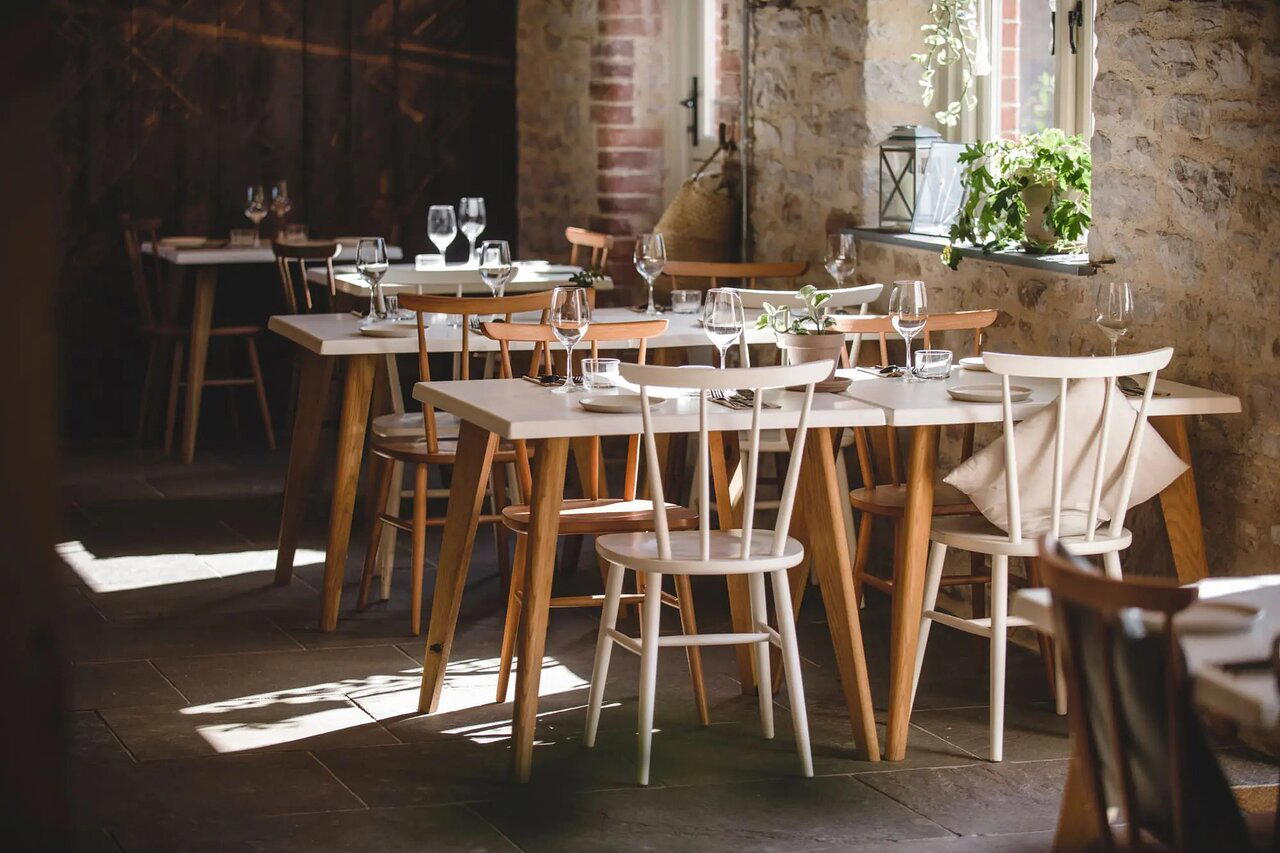
Set on the Sandridge Barton wine estate in the South Devon village of Stoke Gabriel, Roam operates from a converted barn as a lunch-only restaurant with a daily-changing menu built around hyperlocal sourcing: fish from Brixham, wild mushrooms from Dartmoor, and estate wines poured alongside. The terrace overlooks the farm, with a stream providing a constant low backdrop. It is a deliberate, unhurried format in a part of England where that approach fits the land.

Pearl is the En Primeur Club membership app — saves, bookings, and concierge access live there. Same editors, same standards.
- Address
- Sandridge Barton Wines, Lower Well Farm, Waddeton Road
- Phone
- +44 1803 732203
- Website
- roamrestaurant.co.uk
- Directions
- Get directions
- Booking
- Book on the venue's website
The menu
What to order
- Roast beef
- Roast lamb
- Cured mackerel
Where the Farm Meets the Table
There is a particular kind of Devon lunch that has nothing to do with cream teas or pub roasts. It happens on working farms, in old stone buildings, where the distance between field and plate is measured in metres rather than supply-chain spreadsheets. Roam, on the grounds of Sandridge Barton wines at Lower Well Farm in Stoke Gabriel, belongs to that tradition — and takes it seriously. The converted barn sits in a sheltered position just behind the estate's shop and tasting room, and the terrace it opens onto is soundtracked by a nearby stream rather than traffic. Approaching from the lane, the setting reads less as a restaurant destination and more as something you might stumble across on a walk through South Devon's rolling countryside. That quality is not accidental.
For anyone exploring what Stoke Gabriel offers beyond its famous yew tree and tidal creek, Roam represents a distinct category of hospitality: farm-rooted, produce-led, and anchored to one estate's identity rather than the broader dining market. Our full Stoke Gabriel restaurants guide sets that local context, but Roam operates in a niche of its own — one where the wine and the food share the same postcode.
Sourcing as the Central Argument
British farm dining has expanded considerably over the past decade, from awkward barn conversions with limited menus to genuinely considered operations that challenge what a rural lunch can mean. The format works well when the sourcing is not just a talking point on the menu but the actual structural logic behind the cooking. At Roam, that logic holds. The daily menu draws from Brixham, the South Devon fishing port that supplies some of the most consistently handled day-boat fish in England, and from Dartmoor, where ceps and other foraged ingredients follow the season rather than a fixed schedule.
This is not the same sourcing story you find at a city restaurant with supplier credits printed below each dish. The geography is compressed: Brixham sits roughly twelve miles south, Dartmoor's nearest edges begin within a similar radius to the north and west. Ingredients are moving through a tight regional loop, which means the menu has no credible option but to reflect what is actually available rather than what corporate supply chains can guarantee year-round. That constraint, in practice, is an advantage. It produces the kind of wholesome, season-specific cooking where the flavour of the ingredient is the point, not the technique applied to it.
This approach aligns Roam with a cohort of British restaurants that have built reputations on restraint and provenance rather than technical complexity. Operations like L'Enclume in Cartmel and Moor Hall in Aughton have established that rural England can support serious dining built around local produce. Roam operates at a different register, without the multi-course architecture or Michelin infrastructure of those rooms, but the underlying philosophy, let the ingredient lead, is shared. At the other end of the formality spectrum, destinations like Gidleigh Park in Chagford, just across the moor, demonstrate how Devon's larder has long supported restaurants with genuine ambition. Roam makes the same larder accessible in a far less formal key.
The Wine Estate Dimension
What distinguishes Roam from comparable farm-to-table lunch operations in the South West is the wine. Sandridge Barton is a working vineyard, and the estate's own bottles are on the list. This is not an add-on or a gift-shop gesture. English wine has moved from curiosity to credible category over the past fifteen years, with Devon producers occupying a specific niche within it, cooler and wetter than Kent or Sussex, with a terroir that suits aromatic whites and certain sparkling styles. Ordering a glass of Sandridge Barton wine at Roam means drinking something produced on the same soil you can see from the terrace, which is a more direct relationship between glass and landscape than most wine lists in England can offer.
For readers interested in Devon's wine scene specifically, our Stoke Gabriel wineries guide maps that territory further. Those planning a longer stay in the area will also find useful context in our Stoke Gabriel hotels guide, bars guide, and experiences guide.
Format and Expectations
Roam operates as a lunch-only restaurant with a daily-changing menu. The lunch-only format is common among farm dining operations because it aligns with how agricultural estates function, daylight hours, farm-adjacent activity, the rhythm of a working property rather than a hospitality business. It also sets clear expectations for the visitor: this is a midday event, not an evening destination. Plan accordingly.
The barn conversion and terrace suit a relaxed pace. The stream and the farm setting provide enough ambient character that the experience does not depend on the cooking alone to hold attention, though the cooking, by all accounts, is doing its share of the work. The emphasis on letting ingredients speak, the ceps, the Brixham fish, whatever the season is producing, keeps the menu grounded in a way that rewards those who value clarity over elaboration.
Compared to the formal country-house dining of, say, Le Manoir aux Quat' Saisons in Great Milton or the urban precision of The Ledbury in London, Roam is a different proposition entirely. It does not compete with those rooms and does not try to. The point here is seasonal honesty and a strong sense of place, delivered in a format that suits the land it sits on. For visitors to South Devon who have already covered the obvious stops, or who are building an itinerary around local produce and regional identity rather than name recognition, Roam fills a gap that most conventional restaurant guides do not address.
Booking in advance is advisable given the lunch-only format and the limited capacity implied by a converted barn setting. The estate's shop and tasting room offer an easy pre- or post-lunch extension if you want to spend more time with the wine before committing to a glass at the table.
The Broader Devon Dining Picture
Devon has, over the past decade, built a legitimate case for serious food travel. Brixham's fishing fleet, Dartmoor's foragers, and a growing cohort of small producers have given local restaurants material to work with that would satisfy any sourcing-focused kitchen. The county does not yet have the density of high-end destination dining that one finds in the Cotswolds or parts of Scotland, but individual operations have made strong arguments for the region. Roam contributes to that case at the informal end of the register, while places like Gidleigh Park anchor the formal tier.
For context on how other British regions approach the farm-and-produce format at different price points and scales, Hand and Flowers in Marlow, hide and fox in Saltwood, and Midsummer House in Cambridge each demonstrate how ingredient-led cooking translates across different regional settings. Further afield, Waterside Inn in Bray, Opheem in Birmingham, Restaurant Sat Bains in Nottingham, Le Bernardin in New York City, and Emeril's in New Orleans illustrate how fish-forward menus and regional sourcing operate across different culinary cultures. None of those comparisons diminish Roam; they simply locate it within a wider conversation about what it means to cook from a specific place.
Planning Your Visit
Roam operates lunch service only, on the grounds of Sandridge Barton wines at Lower Well Farm, Waddeton Road, Stoke Gabriel. The daily menu changes with what is available locally, so arriving with fixed expectations about specific dishes is not recommended. Booking ahead is the practical approach given the format. The estate's shop and tasting room sit adjacent to the restaurant, and the wines produced on-site are available both by the glass inside and to take home from the shop. The terrace, sheltered and streamsided, is the place to sit when Devon's weather permits, which, in summer months, it often does.
Frequently asked questions
Is Roam good for families?
The converted barn on Lower Well Farm and the terrace overlooking the stream at Sandridge Barton make it a practical choice for families with children. The format is lunch-only, which suits younger travellers better than an evening sitting. The farm setting adds context that holds attention beyond the plate.
What's the vibe at Roam?
Roam sits in a sheltered converted barn behind the Sandridge Barton shop and tasting room, with a terrace backed by the sound of a nearby stream. The pace is unhurried and the format — daily-changing, lunch-only — keeps things focused rather than sprawling. It reads as a working farm that happens to feed people well, not a restaurant that happens to have fields.
What's Roam known for in terms of accolades?
Roam has received recognition including: On Lower Well Farm, the home of Sandridge Barton wines, you’ll find this lovely converted barn serving a fresh taste of the seasons. The restaurant is in a sheltered spot tucked behind the shop and tasting room, with its own extensive terra….
What should I eat at Roam?
The menu changes daily, so specific dishes can't be predicted, but the kitchen draws on Brixham fish and Dartmoor-foraged ingredients including ceps. Order whatever the kitchen is doing with those two sources on the day you visit, and add a glass from Sandridge Barton's own wine production — drinking the estate wine here is the most coherent version of the meal.
Where is Roam in Stoke Gabriel?
Roam is located at Sandridge Barton Wines, Lower Well Farm, Waddeton Road, Stoke Gabriel.
Do they take walk-ins at Roam?
Roam operates lunch service only at Lower Well Farm, Waddeton Road, Stoke Gabriel, and the barn-conversion scale means capacity is limited. Walk-in availability is likely tighter on weekends and during peak Devon summer months. Contacting Sandridge Barton directly before arriving is the practical approach.
What's the standout thing about Roam?
The sourcing triangle is what gives Roam its coherence: Brixham fish, Dartmoor ceps, and Sandridge Barton's estate wine, all coming from within the same regional frame. Most farm-dining operations in the South West can claim local produce; fewer can also pour wine they grew themselves on the same property where you're eating.
At-a-Glance Comparison
Comparable venues nearby, for context on price, style, and recognition.
| Venue | Cuisine | Price | Awards | Notes |
|---|---|---|---|---|
| RoamThis venue — the venue you are viewing | Modern British Gastropub | Not listed | Michelin Plate | Not listed |
| Old Bushmills Distillery | British Comfort Food | Not listed | Not listed | Bushmills |
| Café Ode | Sustainable British Cafe | $20–30 | The Good Food Guide GFG Good | Shaldon |
| The Highland Laddie | Modern British Gastropub | $30–50 | Not listed | Burley |
| Castle Inn | Modern British Gastropub | Not listed | Michelin Plate | Castle Combe |
| Seacliff | Modern British Fine Dining | $50–100 | Michelin Plate · AA Rosettes 3 Rosettes | Berrynarbor |
Recognition history
Dated appearances from independent guides and award organizations, with the underlying list record or original source where available.
Michelin Plate
Michelin
Continue exploring
More in Stoke Gabriel
Restaurants in Stoke Gabriel
Browse all →

Bars in Stoke Gabriel
Browse all →

Details
- Rustic
- Cozy
- Scenic
- Relaxed
- Family
- Terrace
- Extensive Wine List
- Local Sourcing
- Garden
- Small Plates
- A La Carte
- Gluten Free Options
Relaxed and pleasant atmosphere with beautiful indoor and outdoor surroundings enhanced by natural light and countryside views.