Our verdict
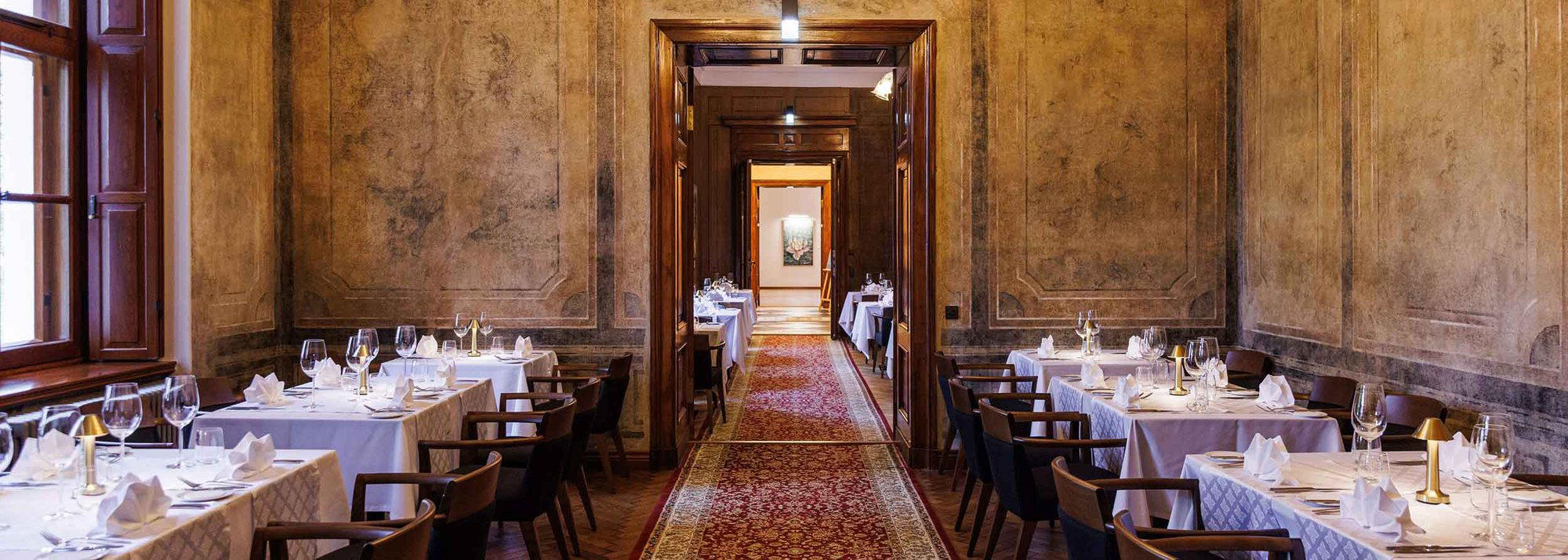
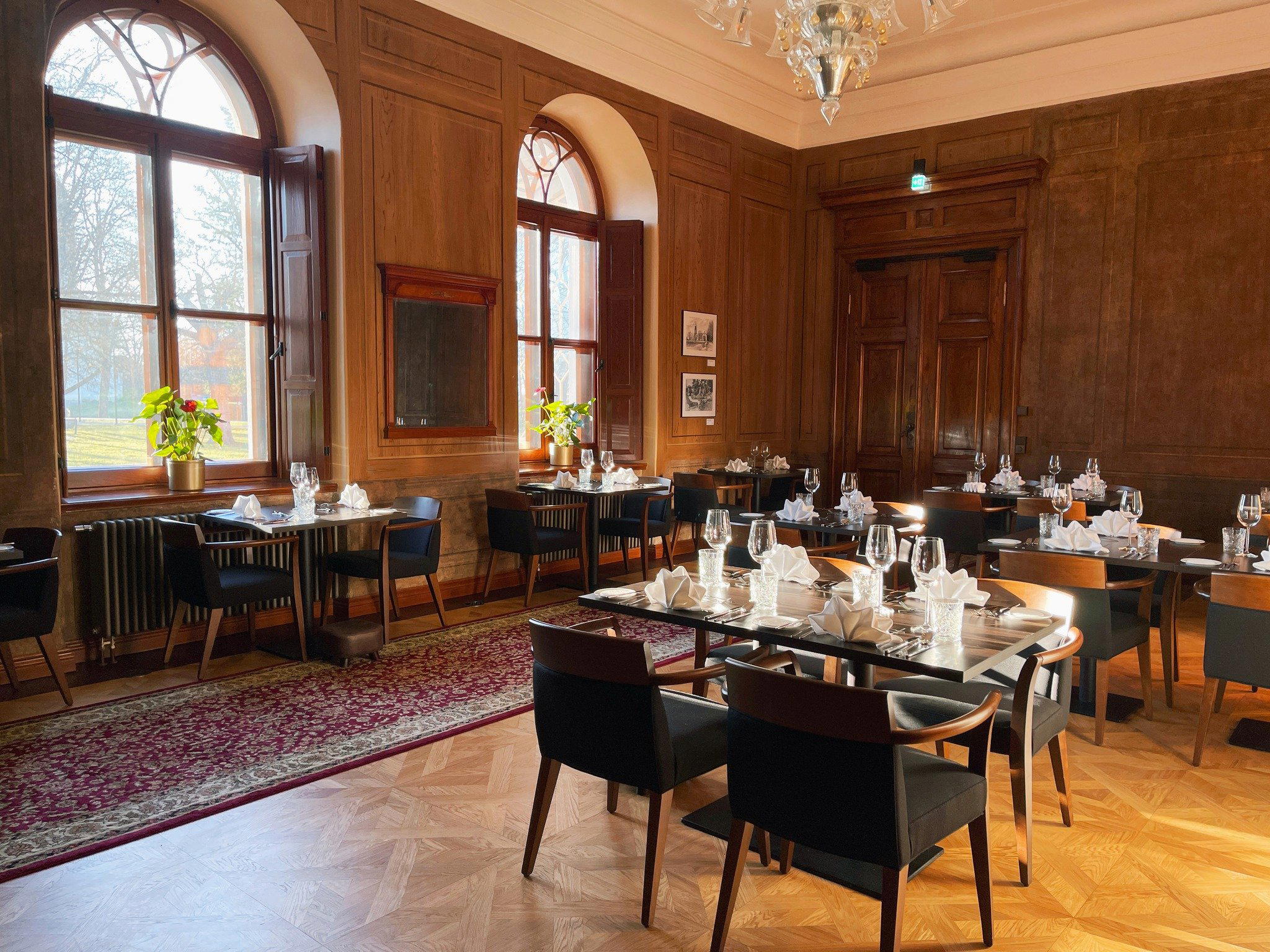
Restoran Schloss occupies an address on Tasuja pst in central Viljandi, placing it within walking distance of the town's lake and castle ruins. In a small-city dining scene where most options lean toward casual café formats, Schloss positions itself at the more formal end of the local spectrum. For visitors arriving from Tallinn or Tartu, it represents the clearest point of entry into Viljandi's sit-down restaurant circuit.

Pearl is the En Primeur Club membership app, where members save venues, book tables and use the concierge.
The menu
What to order
- Beef tartare
- Pike-perch
- Beef filet mignon
Dining in a Town Built Around a Ruin
Viljandi is a town that wears its history visibly. The castle ruins above the lake are not a backdrop, they are the organizing principle of the entire old quarter, and the streets that radiate from that ridge carry the weight of a place that has been a trading post, a regional capital, and a cultural anchor at different points over eight centuries. Restoran Schloss sits on Tasuja pst 4, within the gravitational pull of that historic core, and the address alone frames the dining experience before a guest walks through the door. In Estonian small-city dining, location inside the heritage district signals something specific: an intention to serve visitors and residents who are already oriented toward the town's cultural life, not just passing through for fuel.
That context matters because Viljandi's restaurant scene is genuinely small. The town of roughly 17,000 people supports a cluster of dining options Fellin, which anchors the traditional Estonian end of the spectrum at the €€ tier, alongside café-format operations like koduKOHVIK, Kohvik, and Restaurant Ormisson, but the total count of sit-down restaurants with full evening service remains low by any regional comparison. In that context, Restoran Schloss occupies a position at the more structured end of the local dining offer. The name itself, Schloss is German for castle, makes the reference to Viljandi's Teutonic past explicit, a common naming convention in a region where the Livonian Order left a physical and cultural imprint that persists in architecture, street names, and civic identity across southern Estonia.
What Small-City Dining in Southern Estonia Actually Looks Like
To understand Restoran Schloss, it helps to understand the structural difference between dining in Tallinn and dining in towns like Viljandi. In Tallinn, venues like 180° by Matthias Diether operate in a competitive environment dense enough to sustain high-concept tasting menus, international ingredient sourcing, and a guest base that rotates between local regulars and European short-break visitors. The economics and the ambition are calibrated to a capital-city audience.
Southern Estonian towns operate under entirely different conditions. The guest mix leans toward domestic tourism concentrated in the summer festival season, Viljandi Folk Music Festival alone draws tens of thousands in late July, alongside a local population whose dining-out frequency and price tolerance track more closely to provincial European norms than to capital-city benchmarks. Restaurants in this environment tend to serve broader menus rather than narrow tasting formats, keep pricing accessible, and rely on repeat local custom through the quieter winter months. The venues that survive across multiple years in this context tend to be those that read their room correctly: offering enough ambition to attract festival visitors and day-trippers from Tartu, while maintaining a consistency that keeps regulars coming back in February.
That structural reality shapes every decision a restaurant in Viljandi's heritage district makes, from menu scope to service style to interior investment. Restoran in Võru, Kuur in Vihtra, and Franzia in Narva-Jõesuu, each navigating the same tension between local sustainability and visitor-facing quality.
The Viljandi Address and What It Signals
Tasuja pst runs along the southern edge of Viljandi's town centre, connecting the main street to the park and lake area that defines the town's recreational geography. A restaurant on this corridor sits at an intersection of pedestrian traffic patterns: people walking toward the ruins and lake in summer, residents moving between the centre and residential neighbourhoods year-round. That positioning is different from being tucked into a side street or located in a commercial zone on the town periphery, it places Restoran Schloss in the flow of Viljandi's daily civic life rather than apart from it.
For visitors arriving from elsewhere in Estonia, Tartu is roughly an hour by road, Tallinn closer to two, Viljandi itself functions as a day-trip or short-break destination with a defined cultural identity. The folk festival, the castle ruins, the lake beach, and the preserved wooden architecture of the old town collectively make Viljandi one of the more coherent small-city experiences in the Baltics. A restaurant that positions itself within that heritage narrative, rather than against it, is making a calculated bet that visitors who have come specifically for the place will want their meal to feel continuous with the experience rather than interchangeable with something they could find in any Estonian town. The name Schloss is the clearest evidence of that positioning choice.
Planning Your Visit
Viljandi is most accessible by road from Tartu or Tallinn, with regular bus connections from both cities running throughout the day. The town is compact enough that the central address on Tasuja pst is reachable on foot from the main bus station in under ten minutes. Visitors planning around the Viljandi Folk Music Festival in late July should expect the entire town to operate at capacity during that period; accommodation and dining reservations made well in advance are standard practice for that window, and the same logic applies to any summer weekend when the castle ruins and lake attract day-trippers from across the region. Outside festival season, Viljandi's dining options are quieter and more immediately accessible, making the shoulder months of May, June, and September a reasonable time to visit if the priority is the town rather than the event. For a broader look at where Restoran Schloss fits within the local dining circuit, the full Viljandi restaurants guide maps the complete picture. Those building a wider Estonian itinerary beyond Viljandi might also consider the dining scenes in Pärnu, where Everest Thai/Nepalese Restaurant offers an interesting outlier in the regional context, or the coastal options like KABE Beach in Kaberneeme, Wana Kala Kõrts in Neeme, and Valgeranna Veinitall in Audru. For those combining a Viljandi stop with time in Narva or Tartu, Kohvik Kaar in Narva and Eva Sushi in Tartu represent two distinct points on Estonia's provincial dining spectrum. In Rakvere, Burger Bros illustrates the casual end of small-city dining that coexists with more formal options across the region.
Frequently asked questions
What's Restoran Schloss's location?
Restoran Schloss is located at Tasuja pst 4, Viljandi, 71020 Viljandi maakond, Estonia, Viljandi.
Is Restoran Schloss a good option for dining near Viljandi's castle ruins and lake?
The restaurant's address on Tasuja pst places it along the southern edge of the town centre, which connects directly to the park and lake area below the medieval castle ruins, the geographical and cultural centre of Viljandi. For visitors spending time at the ruins or walking the lake path, it sits closer to that route than most of the town's other dining addresses.
What should I eat at Restoran Schloss?
Southern Estonian dining at this scale typically draws on local seasonal produce and regional tradition rather than imported fine-dining formats. Your clearest guide is to check the venue's official channels at Tasuja pst 4 before visiting to confirm current offerings.
How far ahead should I plan for Restoran Schloss?
Viljandi is a compact town with a limited number of sit-down restaurants, which means the better-regarded addresses fill quickly on weekends and during the annual Viljandi Folk Music Festival in late July. Booking at least a week ahead for weekend visits is a reasonable approach, and further in advance during festival periods. Arrival by bus from Tallinn or Tartu takes roughly two hours, so coordinating your table with transit schedules is worth factoring in early.
At a Glance
Comparable venues nearby, for context on price, style, and recognition.
| Venue | Cuisine | Price | Awards | Notes |
|---|---|---|---|---|
| Restoran SchlossThis venue (the venue you are viewing) | Modern Estonian Fine Dining | $30–50 | Not listed | Not listed |
| Kohvik | European Bistro with Local Estonian Flavors | Not listed | Not listed | Old Town, European Bistro with Local Estonian Flavors |
| koduKOHVIK | Estonian Café with Local Flavors | Not listed | Not listed | Viljandi city centre, Estonian Café with Local Flavors |
| Restaurant Ormisson | Modern European with Estonian influences | Not listed | Not listed | Viljandi center, Modern European with Estonian influences |
| Fellin | European Café-Bistro | Not listed | Michelin Bib Gourmand · White Guide Baltic Restaurants - Fine Level | Viljandi Old Town, European Café-Bistro |
| Tulivee | Estonian Coastal Seafood | Not listed | White Guide Baltic Restaurants - Fine Level | Liimala, Estonian Coastal Seafood |
Continue exploring
More in Viljandi
Details
- Elegant
- Sophisticated
- Cozy
- Date Night
- Special Occasion
- Historic Building
- Terrace
- Extensive Wine List
- Craft Cocktails
- Local Sourcing
- Garden
- Tasting Menu
- A La Carte
Current opening hours
- Monday
- Closed
- Tuesday
- Closed
- Wednesday
- Closed
- Thursday
- Closed
- Friday
- 5–11 PM
- Saturday
- 5–11 PM
- Sunday
- Closed
Hours can change for holidays and private events. Hours as of .
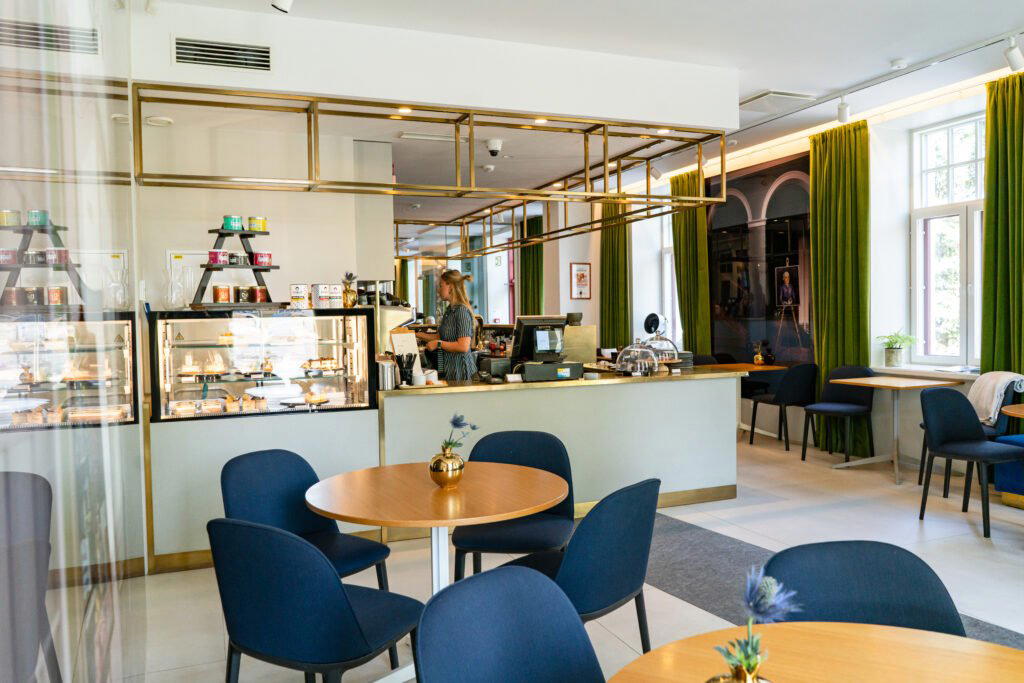
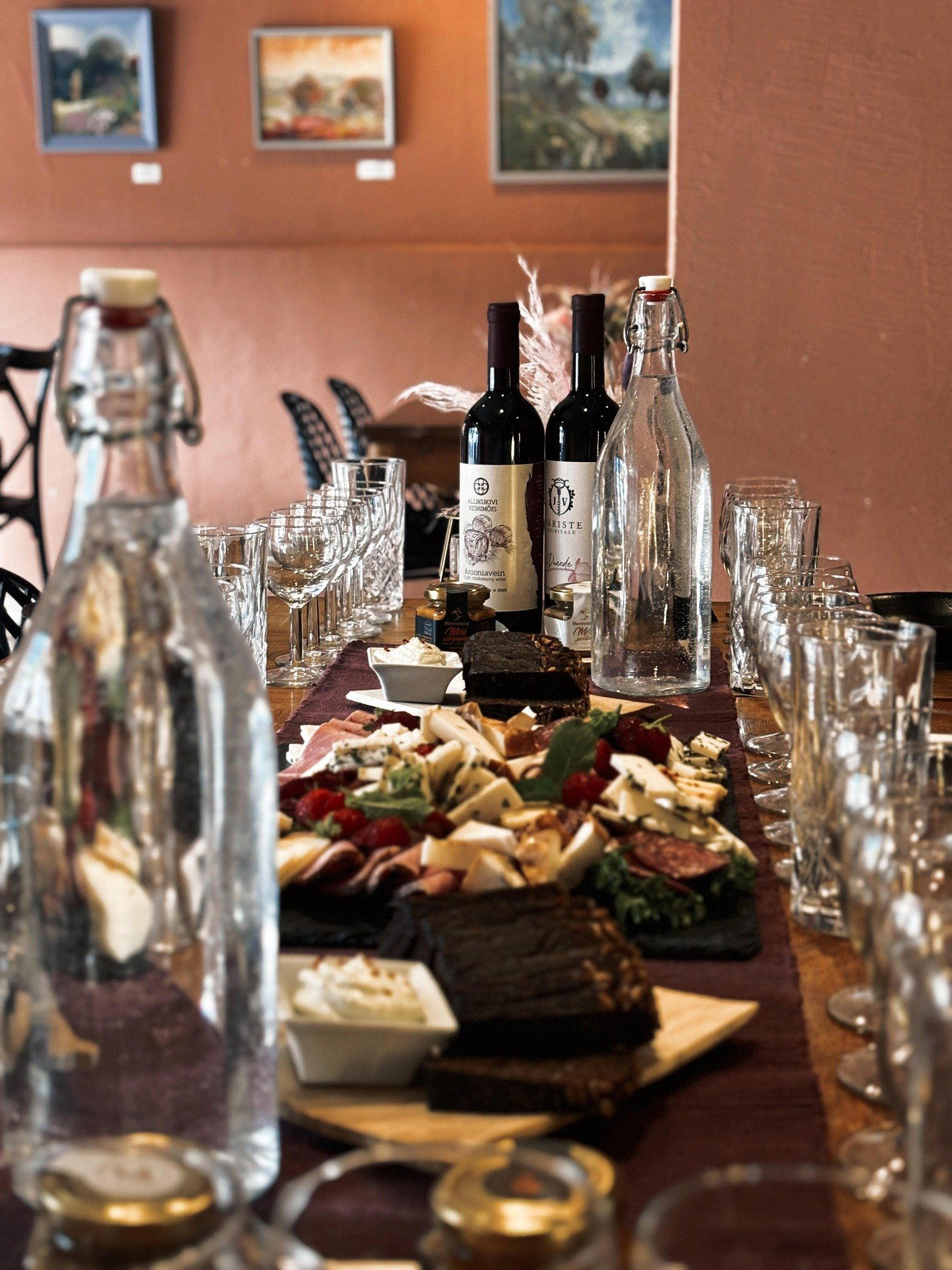
Luxurious interiors with pleasant service and charming atmosphere.