
Macarfi 6.7 Food Rating
Our verdict
On Málaga's quieter eastern edge, Restaurante Haruki occupies a stretch of Avenida de Príes where the city's Japanese dining conversation is still forming. The name signals a deliberate cultural reference point in a city better known for its Andalusian larder, placing it as an outlier worth tracking for anyone mapping Málaga's broader contemporary dining moves.

Pearl is the En Primeur Club membership app — saves, bookings, and concierge access live there. Same editors, same standards.
- Address
- Av. de Príes, 4, Málaga-Este, 29016 Málaga, Spain
- Phone
- +34951955076
- Hours
- Mon 1:30–4 PM, 7–11:30 PMTue ClosedWed–Fri 1:30–4 PM, 7–11:30 PMSat–Sun 1:30–4:30 PM, 7–11:30 PM
- Website
- harukimalaga.es
- Directions
- Get directions
- Booking
- Book on the venue's website
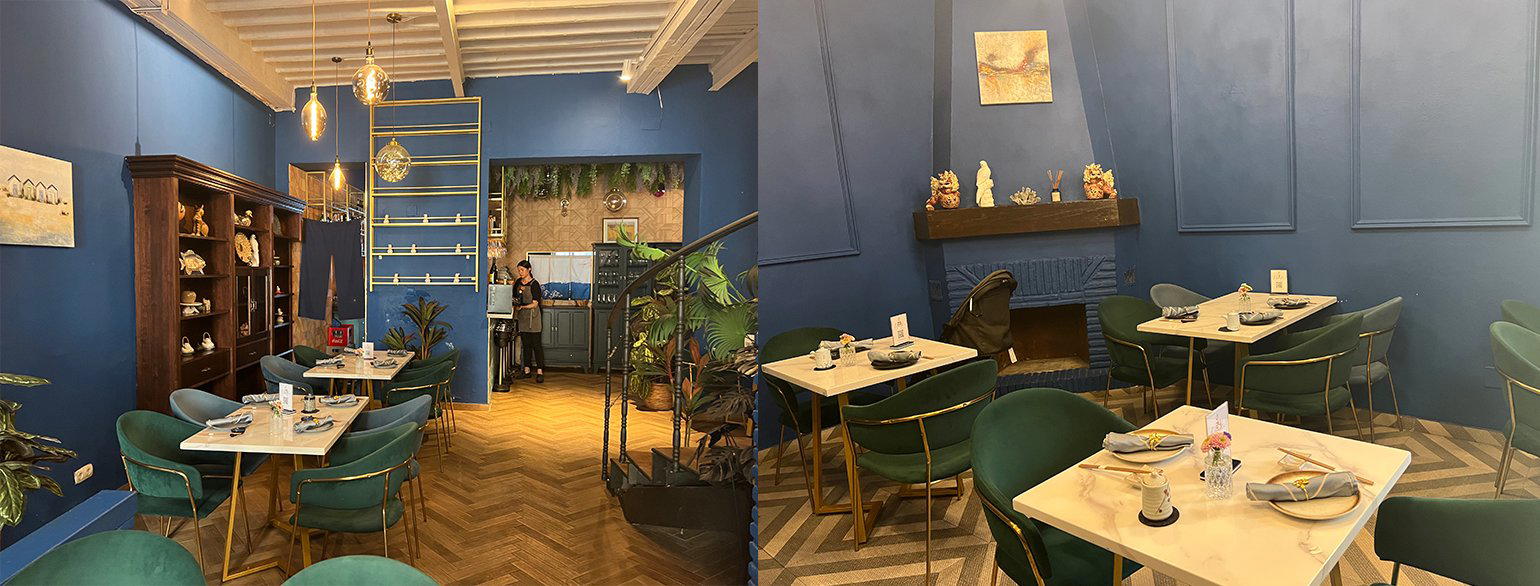
The menu
What to order
- Tuna tartar with truffle
- Scallops with foie gras
- Wagyu nigiri
Where the City Quiets Down
The eastern margin of Málaga, along Avenida de Príes, operates at a different register than the historic centre's packed terrace circuit. The street runs close to the Baños del Carmen coastline, where afternoon light sits low and flat off the Mediterranean and the foot traffic thins to a residential rhythm. In a city where the dining conversation clusters around the cathedral quarter and Soho, venues on this stretch tend to draw a local crowd rather than a tourist sweep — and that self-selection shapes the room before anyone sits down. Restaurante Haruki occupies this address, bringing a Japanese culinary reference into a neighbourhood that has no particular precedent for it, which is either an eccentricity or an opportunity depending on how the kitchen reads it.
A Japanese Signal in an Andalusian City
Málaga's restaurant identity has been consolidating around two poles: the high-end contemporary Andalusian model, represented by places like Kaleja, and a looser fusion tier where international references get filtered through southern Spanish produce. Blossom represents the Chinese-fusion end of that second category. Haruki's name plants it firmly in a Japanese register, which remains a smaller and less consolidated part of Málaga's dining scene compared to cities like Madrid or Barcelona.
Spanish fine dining at the national level has a well-documented Japanese influence running through it, visible in the tasting menus at places like DiverXO in Madrid and in the precision-led kitchens of El Celler de Can Roca in Girona. At the coastal end of Spain's gastronomic spectrum, the integration of Japanese technique with Atlantic and Mediterranean product has become a coherent approach rather than a novelty, as Aponiente in El Puerto de Santa María demonstrates through its marine-focused tasting format. Haruki's position in Málaga puts it at the early end of what could become a broader pattern in the city's mid-to-upper dining tier.
The Sensory Register of the Address
Eating on Málaga's eastern edge in the warmer months means encountering the city in a less orchestrated state. The scent off the sea carries differently here than in the tourist-dense port area, saltier, less interrupted by restaurant exhaust and foot traffic. A venue on Avenida de Príes can, if it chooses, lean into that coastal adjacency in a way that feels earned rather than marketed. Japanese dining traditions have their own relationship with coastal produce and with restraint as a design principle, which makes the geographical context a potential asset rather than incidental. The question any kitchen in this position faces is whether the physical environment informs what arrives at the table, or whether it remains purely decorative backdrop.
Within Spain's broader Japanese-influenced dining tier, the venues that have built durable reputations tend to commit to a consistent format, whether counter-based omakase, kaiseki-style tasting sequences, or hybrid approaches that foreground local product through Japanese technique. For comparison, Atomix in New York City represents a Korean-influenced variant of this format-discipline approach, where the editorial clarity of the experience (what the kitchen does, how it sequences, what the counter communicates) is as load-bearing as the food itself. Format clarity is often what separates a Japanese-reference restaurant that builds a following from one that reads as an experiment.
Málaga's Contemporary Dining Context
For readers mapping the city's restaurant options, Haruki sits in a different geographic and conceptual zone than the concentration of serious kitchens in the city centre. Aire and Alaparte both operate closer to the urban core, as does Arte de Cozina, which anchors the more traditional Malagueño end of the spectrum. Haruki's eastern-edge address means it functions more as a destination than a walk-in, which is an asset if the experience justifies the deliberate trip, and a friction point if it does not.
Spain's most decorated kitchens have historically been concentrated in the Basque Country and Catalonia. Arzak in San Sebastián, Azurmendi in Larrabetzu, and Martín Berasategui in Lasarte-Oria represent the northern pole of that tradition, while Mugaritz in Errenteria and Quique Dacosta in Dénia define its more conceptual edges. Andalusia has been building its own serious dining identity more recently, with Málaga increasingly functioning as its most dynamic city for restaurant development. Ricard Camarena in València and Cocina Hermanos Torres in Barcelona point to how Mediterranean coastal cities have been developing their own high-end culinary identities separate from the northern axis, a trajectory Málaga is tracking, at its own pace.
Planning a Visit
Restaurante Haruki's address on Avenida de Príes, in the Málaga-Este district, places it a few kilometres east of the historic centre. Visitors without a car should factor in a taxi or rideshare, particularly for evening meals when public connections along the coastal route are less frequent. For the wider Málaga dining picture, the EP Club Málaga restaurants guide maps the full range of the city's options across price tiers and neighbourhoods.
Frequently asked questions
Where is Restaurante Haruki located?
Restaurante Haruki is located at Av. de Príes, 4, Málaga-Este, 29016 Málaga, Spain, Málaga.
Is Restaurante Haruki worth visiting if I'm staying in central Málaga?
The restaurant's address on Avenida de Príes places it a few kilometres east of Málaga's historic centre, in the Málaga-Este district. That distance filters out casual foot traffic and gives the area a residential quietness absent from the packed central terrace circuit. For visitors specifically seeking Japanese cuisine in Málaga — a category with limited representation in the city — the journey east has a clear purpose that the centre's more generic options don't offer.
What's the best thing to order at Restaurante Haruki?
What is clear is that the venue operates within the Japanese category in Málaga, a city where that cuisine remains relatively sparse compared to Andalusian or Mediterranean options. Asking the kitchen directly about their current focus when you book is the most reliable approach.
How far ahead should I plan for Restaurante Haruki?
As a general pattern across Málaga's dining scene, summer demand — particularly from June through August — compresses availability at smaller independent restaurants more sharply than at larger venues. Given Haruki's position in the Málaga-Este district away from the main tourist circuit, contacting them directly ahead of peak season is advisable.
What is Restaurante Haruki known for?
Haruki is associated with Japanese cuisine in Málaga, a city whose restaurant identity has been consolidating around high-end contemporary Andalusian cooking and a crowded central terrace circuit. That makes a Japanese-focused address on the quieter Avenida de Príes, in the Málaga-Este district, a conceptually distinct proposition from most of what the city's dining conversation centres on. It occupies a different geographic and culinary register than the concentration of serious kitchens closer to the historic centre.
How does Restaurante Haruki handle allergies?
Under Spanish law, all restaurants are required to provide allergen information for the 14 major allergens defined by EU regulation No. 1169/2011, either on menus or verbally on request. Japanese cuisine commonly involves soy, sesame, fish, and shellfish-derived ingredients, so flagging any restrictions directly with the restaurant before your visit is practical regardless of their in-house procedures.
Comparable Venues
Comparable venues nearby, for context on price, style, and recognition.
| Venue | Cuisine | Price | Awards | Notes |
|---|---|---|---|---|
| Restaurante HarukiThis venue — the venue you are viewing | Japanese Sushi | $20–30 | Macarfi 6.7 Food Rating | Not listed |
| Ta-Kumi Málaga | Japanese sushi & teppanyaki with Mediterranean produce | Not listed | Not listed | Málaga |
| El Yerno | Fresh Andalusian Seafood | $20–30 | Not listed | Centro Historico |
| Meet Vegano | Creative Vegan Fusion | $20–30 | Not listed | Centro Historico |
| Nusa Malaga | Cocktail Bar with Tapas | $10–20 | Falstaff Bar - 92 Falstaff Points | Puerto |
| Terraza Catedral Málaga | Mediterranean Tapas with Spanish Influences | $30–50 | Not listed | Centro Historico |
Recognition history
Dated appearances from independent guides and award organizations, with the underlying list record or original source where available.
Macarfi 6.7 Food Rating
Macarfi
Continue exploring
More in Málaga
Restaurants in Málaga
Browse all →
Bars in Málaga
Browse all →
Hotels in Málaga
Browse all →

Details
- Relaxed
- Cozy
- Date Night
- Special Occasion
- Open Kitchen
- Sake Program
- A La Carte
- Vegetarian Friendly
- Vegan Options
- Gluten Free Options
Current opening hours
- Monday
- 1:30–4 PM, 7–11:30 PM
- Tuesday
- Closed
- Wednesday
- 1:30–4 PM, 7–11:30 PM
- Thursday
- 1:30–4 PM, 7–11:30 PM
- Friday
- 1:30–4 PM, 7–11:30 PM
- Saturday
- 1:30–4:30 PM, 7–11:30 PM
- Sunday
- 1:30–4:30 PM, 7–11:30 PM
Hours can change for holidays and private events. Last verified .
Relaxed and nice atmosphere with friendly staff as per guest reviews.