Restaurant De Buren
Our verdict
In the village square of Terheijden, Restaurant De Buren occupies the kind of address that Dutch provincial dining has long relied upon: a neighbourhood setting where the food rather than the postcode carries the argument. The kitchen draws on regional sourcing traditions common to Noord-Brabant, placing De Buren within a broader conversation about ingredient-led cooking that has quietly defined the province's better tables for a generation.

Pearl is the En Primeur Club membership app — saves, bookings, and concierge access live there. Same editors, same standards.
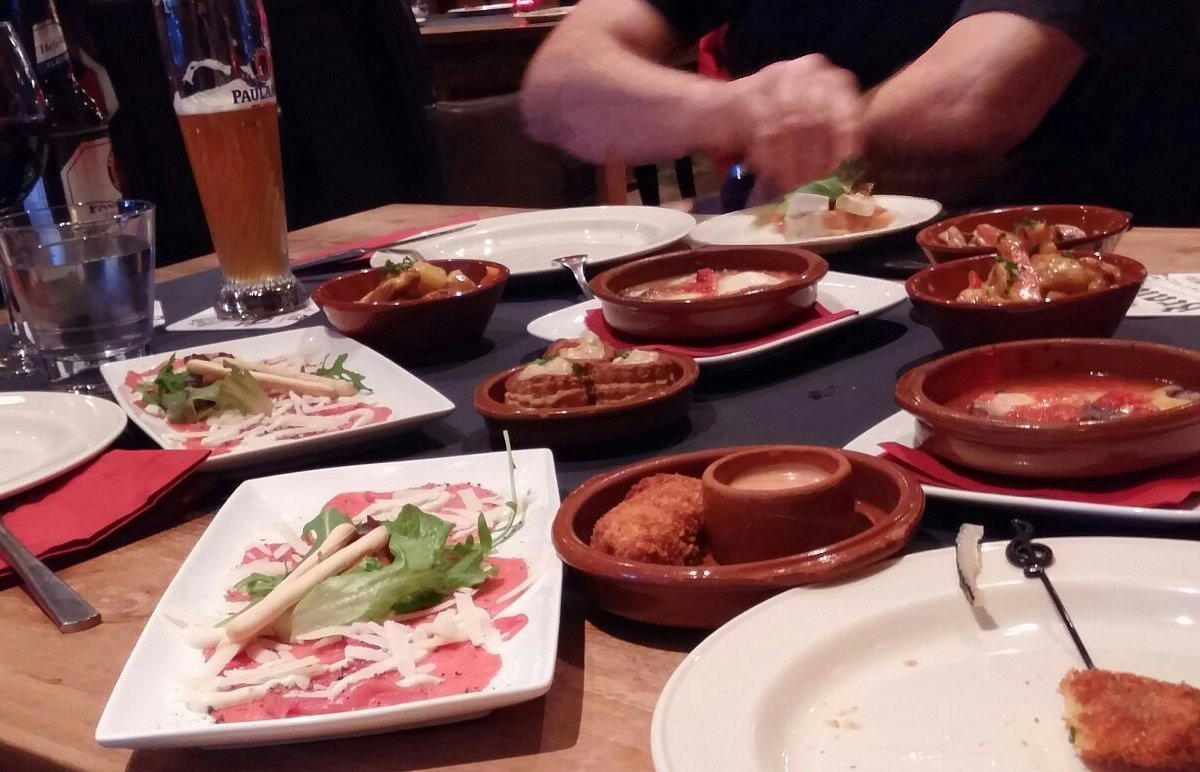
The menu
What to order
- Biefstukje Met Saus
- Tapas Assorti
- Spareribs
- Diamond Tenderloin
A Village Square Address in Noord-Brabant's Dining Circuit
The village of Terheijden sits in the western edge of Noord-Brabant, a province that has produced a disproportionate share of the Netherlands' serious kitchens. The address at Dorpsplein 2 places Restaurant De Buren directly on the village square, the kind of civic anchor point that Dutch communities have built their social life around for centuries. Arriving on foot, the square frames the restaurant before you reach the door: the proportions are human, the setting unhurried, and the surrounding architecture sets an expectation of substance over spectacle. In a country where urban fine dining has increasingly concentrated in Amsterdam and Rotterdam, restaurants like De Buren are part of a quieter but persistent counter-argument: that the most considered kitchens are sometimes found where rents are lower and supplier relationships can be built over years rather than months.
For a broader picture of where De Buren sits within Terheijden's dining options, see our full Terheijden restaurants guide. The village's closest peer at the table is Ripasso, which operates on a different register but speaks to the same local appetite for food that takes its ingredients seriously.
The Sourcing Logic Behind Noord-Brabant's Village Kitchens
Noord-Brabant's agricultural geography explains a great deal about why its restaurants eat differently from those in the Randstad. The province's sandy soils, polders, and proximity to the Biesbosch wetlands create a supply environment with genuine seasonal texture. Asparagus from the Brabant sand belt in spring, game from the Biesbosch corridor in autumn, freshwater fish from the delta waterways running into Zeeland: these are not marketing narratives, they are the practical sourcing options available to any kitchen willing to build relationships with producers rather than ordering from a national distributor.
The ingredient-led approach that has come to define serious Dutch cooking at the regional level draws heavily on this logic. At the Michelin tier, you see it articulated at places like De Lindehof in Nuenen and De Treeswijkhoeve in Waalre, both of which have built their reputations on a similar geographic premise: cook from the land and water within reach, and let the menu follow the season rather than dictate it. De Buren, at its scale and in its village context, participates in the same tradition without necessarily operating at the same price point or formality level.
This sourcing discipline is not unique to the south. De Groene Lantaarn in Staphorst has made a comparable argument from the northern provinces, while De Nieuwe Winkel in Nijmegen has pushed the organic and plant-forward dimension of Dutch regional sourcing further than almost anyone in the country. The point is that ingredient provenance has become the central competitive axis for Dutch kitchens operating outside the major cities, and restaurants in villages like Terheijden are positioned to exploit that axis more directly than a city kitchen ever could.
Placing De Buren in its competitive context requires thinking about two different peer groups simultaneously. The first is local: other tables in and around Terheijden and the broader West-Brabant area, where the competition is for a dining public that often has Amsterdam-level expectations but prefers to stay closer to home. The second is regional: the tier of serious Dutch provincial restaurants that have achieved national recognition without chasing the Michelin circuit as their primary objective.
At the upper register of Dutch provincial fine dining, the reference points are well established. De Librije in Zwolle operates at the three-star level and has defined what creative modern Dutch cuisine can look like at full stretch. 't Nonnetje in Harderwijk and Inter Scaldes in Kruiningen represent the two-star cohort, where technique and produce sourcing are both held to the highest standard. Below that tier but above the casual bracket sit dozens of restaurants doing honest, intelligent work with local ingredients, and De Buren's village square address and neighbourhood character position it in that middle register, where the kitchen's ambition can be measured against its context rather than against the full Michelin hierarchy.
For comparison, Brut172 in Reijmerstok and Tribeca in Heeze occupy similar terrain in the southern Netherlands: destination-worthy without the formal ceremony of a tasting-menu-only format. Aan de Poel in Amstelveen and FG - François Geurds in Rotterdam show what happens when similar ambitions are applied in a more urban, more formally structured environment. Internationally, the question of what regional sourcing can accomplish at the top of a kitchen's register is answered differently by Le Bernardin in New York City, where oceanic sourcing is the entire premise, or by Atomix in New York City, where Korean regional traditions are applied through a modernist lens. De Buren does not operate in that rarefied company, but the underlying editorial question is the same: does the food on the plate reflect where it comes from?
Planning a Visit to Terheijden
Terheijden is a small municipality in the Drimmelen area, most easily reached by car from Breda, which lies roughly 15 kilometres to the east and is served by direct rail connections from Amsterdam, Rotterdam, and Eindhoven. The village itself offers limited public transport options, which means the majority of diners arrive by car or taxi. The Dorpsplein address is central and immediately visible upon entering the village, removing any navigation uncertainty. For visitors combining De Buren with a broader exploration of the region's dining, the route between Breda and the Biesbosch National Park passes through Terheijden and rewards a slower approach: the polder landscape along the Mark river and the flat agricultural terrain between the Brabant heartland and the Zeeland delta provide the geographic context from which much of the region's seasonal produce originates. De Bokkedoorns in Overveen and De Lindenhof in Giethoorn demonstrate how other Dutch restaurants have built itinerary value into landscape settings; De Buren's village square equivalent of that logic is more modest in scale but shares the same underlying proposition.
Frequently asked questions
Is Restaurant De Buren suitable for children?
De Buren sits on Dorpsplein 2 in the centre of Terheijden, a quiet village setting that generally suits a relaxed, unhurried pace.
Is Restaurant De Buren better for a quiet night or a lively one?
Terheijden is a small municipality in the Drimmelen area with a village-square address, which points toward a measured, convivial atmosphere rather than a high-energy urban dining room. Expect the kind of pace that suits a long dinner with wine rather than a quick pre-theatre sitting.
How far is Restaurant De Buren from Breda, and is it worth the drive from the city?
Terheijden sits roughly 15 kilometres west of Breda, making De Buren a straightforward drive of around 15–20 minutes. Noord-Brabant has produced a disproportionate share of the Netherlands' serious kitchens relative to its population, and village addresses like this one on Dorpsplein have attracted attention from diners willing to leave the Randstad for produce-driven cooking rooted in the province's agricultural geography.
What do regulars order at Restaurant De Buren?
For the current menu, checking directly with De Buren before your visit is the most reliable approach.
Where is Restaurant De Buren located?
Restaurant De Buren is located at Dorpsplein 2, 4844 CN Terheijden, Netherlands, Terheijden.
Can I walk in to Restaurant De Buren?
Walk-in availability at De Buren on Dorpsplein 2 in Terheijden is not confirmed. Village restaurants in Noord-Brabant that have developed a local following tend to fill midweek as well as weekends, so securing a reservation in advance is the more practical approach.
At-a-Glance Comparison
Comparable venues nearby, for context on price, style, and recognition.
| Venue | Cuisine | Price | Notes |
|---|---|---|---|
| Restaurant De BurenThis venue — the venue you are viewing | Spanish Tapas | $30–50 | Not listed |
| Ripasso | Modern French Fine Dining | Not listed | Terheijden |
| De Boterhal | International Tapas | $20–30 | Breda centrum |
| BasQ Kitchen | Basque Spanish Tapas & Grill | Not listed | Stadsdriehoek |
| Leef Tapas | Shared Tapas Dining | Not listed | Markt |
| De Zwarte Vosch | Authentic Spanish Tapas & Pintxos | $30–50 | Oudegracht |
Continue exploring
More in Terheijden
Restaurants in Terheijden
All restaurants in Terheijden →
Bars in Terheijden
Browse all →
Hotels in Terheijden
Browse all →
Wineries in Terheijden
Browse all →
Details
- Cozy
- Lively
- Casual Hangout
- Date Night
- Standalone
- Beer Program
- Small Plates
- Beer
- Wine
Current opening hours
- Monday
- Closed
- Tuesday
- Closed
- Wednesday
- Closed
- Thursday
- 5 PM–12 AM
- Friday
- 5 PM–12 AM
- Saturday
- 5 PM–12 AM
- Sunday
- 5 PM–12 AM
Hours can change for holidays and private events. Last verified .
Warm and inviting atmosphere with lively energy.