
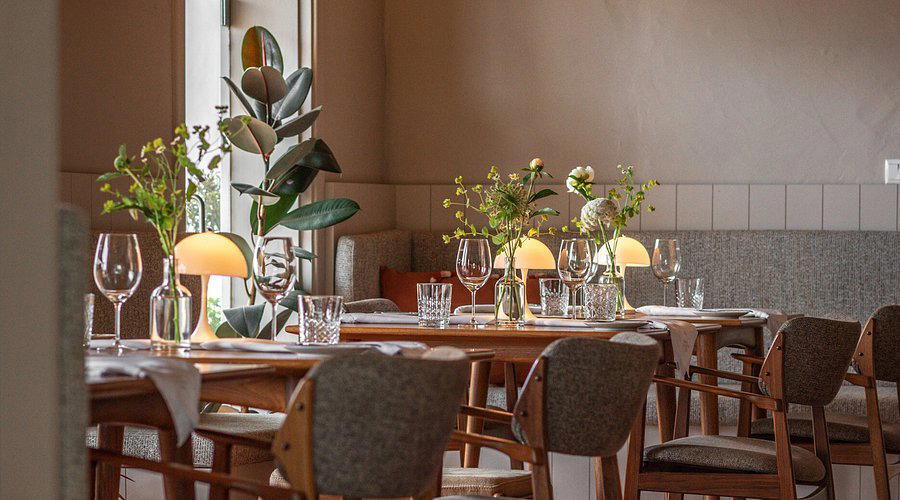
Creative cooking in rural Beja is less about urban theatre than estate logic: vineyards, vegetable gardens, olive trees and beehives shaping the table. Restaurant at Herdade da Malhadinha Nova gives Chef Joachim Koerper a distinctly Alentejo frame, where oils, honeys and seasonal vegetables carry as much weight as technique.
Pearl is the En Primeur Club membership app — saves, bookings, and concierge access live there. Same editors, same standards.
- Address
- Herdade da Malhadinha Nova, Albernoa
- Phone
- +351 284 965 432
- Website
- widget.thefork.com
- Directions
- Get directions
 Saves & bookings on Pearl
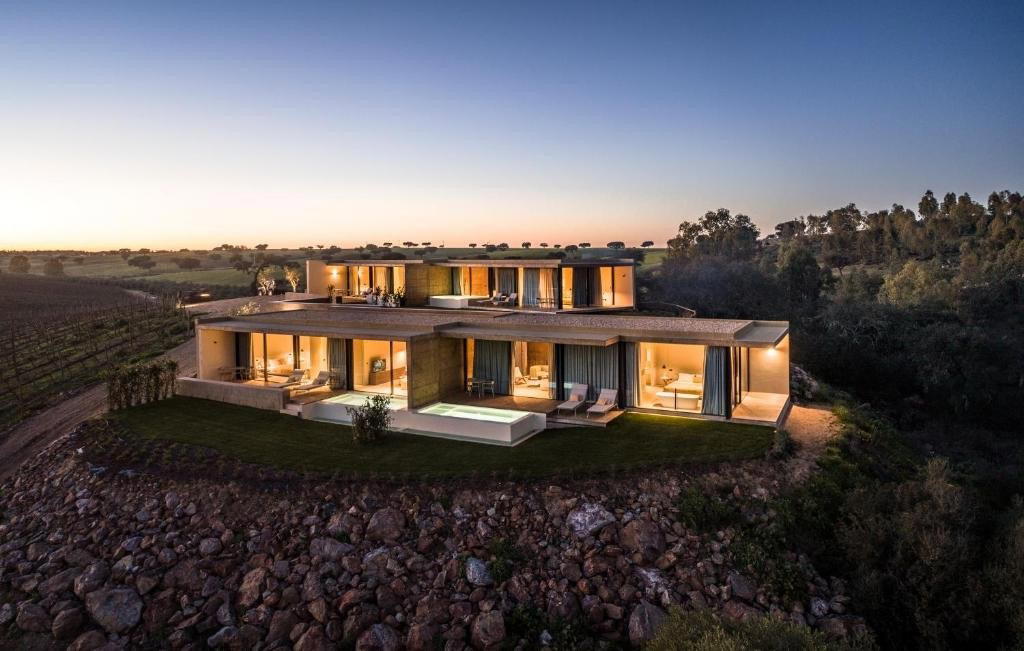
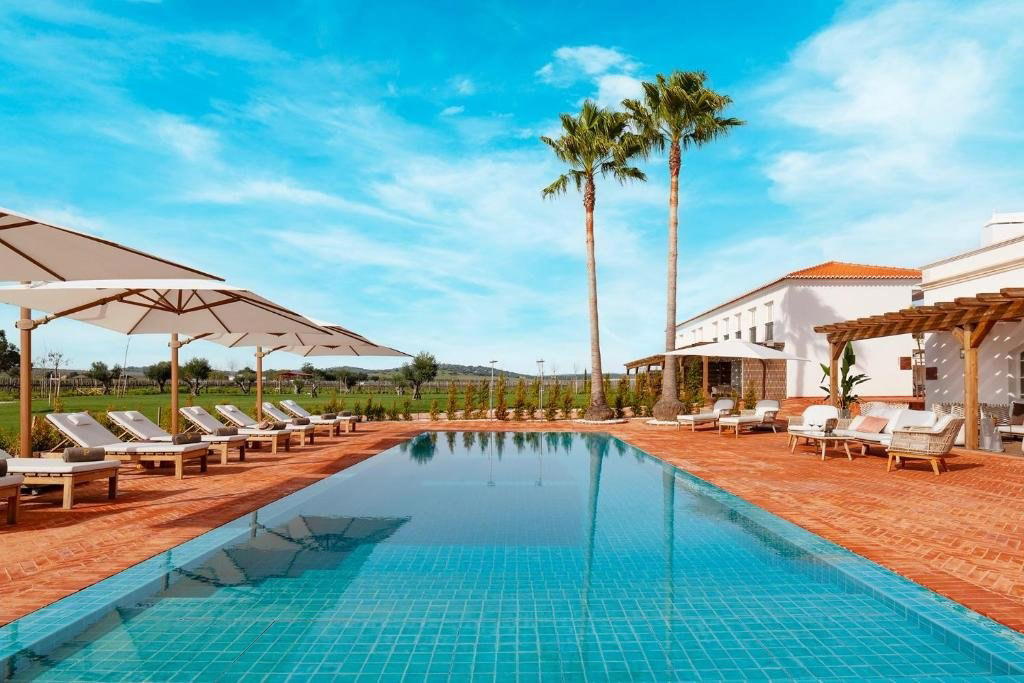
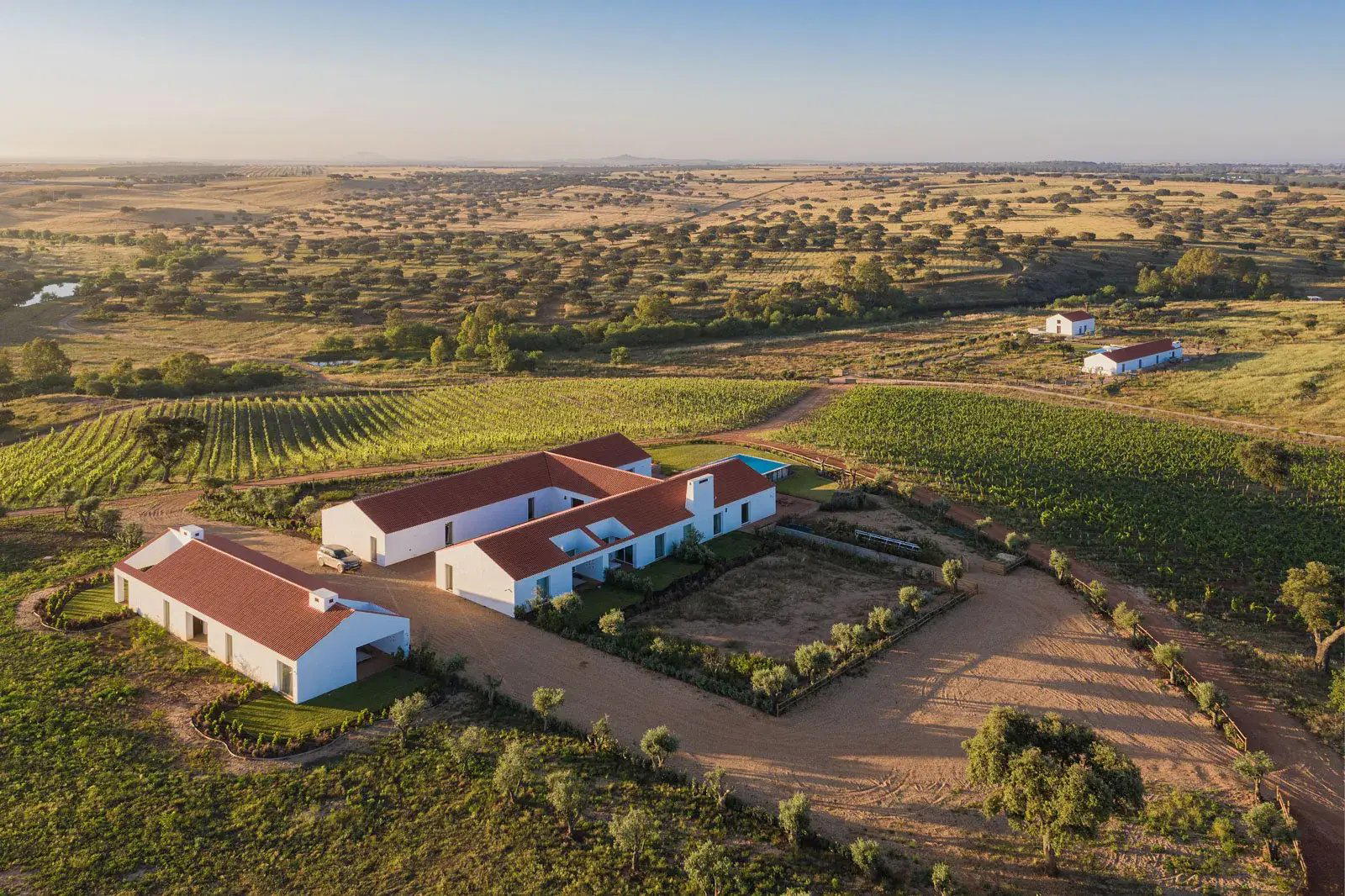
The approach to Albernoa resets the terms of dinner before a menu appears. Beja’s countryside is broad, dry and agricultural, with vineyards and olive groves reading less as scenery than as working infrastructure. At Herdade da Malhadinha Nova, that infrastructure matters: vines are cultivated alongside vegetable gardens, olive trees and beehives, and the cooking takes its cues from that estate ecology rather than from the faster signals of a city dining room.
That distinction is useful in Alentejo, where the region’s food culture has long been built from bread, olive oil, pork, herbs, grains and seasonal scarcity as much as abundance. Contemporary rural restaurants can misread that heritage by turning it into rustic theatre. Here, the more persuasive idea is restraint: the estate’s oils, honeys and vegetables are treated as carriers of place, not garnish. The result places Beja inside Portugal’s wider shift toward destination dining, but without pretending that the countryside needs Lisbon’s tempo to justify the trip.
Estate biodiversity gives the cooking its argument
Creative cooking in Portugal often divides between urban tasting-menu ambition and rural kitchens anchored by terroir. Restaurant belongs to the second camp. Its strongest editorial signal is the way the estate’s biodiversity shapes the plate: vineyards, garden produce, olive trees and beehives form a closed, legible vocabulary. That does not mean the food is simple. It means the technique has to remain disciplined enough for the ingredients to stay identifiable.
Chef Joachim Koerper’s role is important, but it is more useful as a credential than as a biography. The cooking is described as finessed and rooted in Alentejo, which points to a chef operating within regional limits rather than using the region as a backdrop. In a country where contemporary dining can swing between Atlantic minimalism, conventual sweetness, spice-route memory and Iberian meat culture, this table narrows the lens to land-based Alentejo: oil, honey, vegetables, wine-country agriculture and a dry-climate sense of season.
That gives the meal a different pace from Portugal’s coastal restaurants. Fish and shellfish do not define the argument here; the estate does. Seasonal vegetables carry more interpretive weight than they would in a conventional luxury meal, while olive oil and honey act as direct markers of production. The cooking’s honesty matters because Alentejo cuisine is easily over-romanticised. A polished room in a wine estate can slide into lifestyle imagery, but the more serious reading is agricultural: what is grown, harvested and preserved nearby determines the restaurant’s authority.
Beja's rural dining scene rewards slower, place-specific cooking
Beja sits outside the country’s headline restaurant circuits, and that distance changes the decision for travellers. A meal here is not an add-on between museum visits or a late booking after cocktails. It belongs to the rhythm of rural Alentejo, where driving, daylight and the estate setting shape the evening as much as the kitchen. For readers planning around the region rather than a single table, Our full Beja restaurants guide, Our full Beja hotels guide, Our full Beja bars guide, Our full Beja wineries guide and Our full Beja experiences guide help place the restaurant within a broader rural itinerary.
The comparison that matters is not with another Beja address, but with the wider Portuguese habit of using place as a serious culinary structure. Lisbon’s contemporary rooms, such as 100 Maneiras in Lisbon, often read through urban authorship and tasting-menu momentum. Northern wine-country dining, represented in different registers by 1638 Restaurant & Wine Bar in Porto, 1638 Restaurant by Nacho Manzano in Vila Nova de Gaia and 16Legoas in Peso da Régua, tends to speak through river, cellar and granite-country references. In the Algarve, addresses such as 2 Passos in Almancil and A Costa in Porches pull the conversation back toward the coast. Beja’s version is quieter and more agrarian.
That wider map helps explain why this restaurant is better approached as a regional expression than as a trophy reservation. The estate format gives it a built-in clarity: ingredients and setting come from the same argument. Other Portuguese country and regional tables, including 3 Pipos in Tonda, 34 in Guimaraes, A Bolota in Terrugem, A Carvalheira in Ponte de Lima and A Cozinha do Paço in Évora, show how varied Portuguese locality can be once the capital is no longer the default reference point. International Relais & Châteaux-style rural cooking, from A-Bay Beach Bar, Creative cooking in Stari Grad to Ars Vivendi, Creative cooking in Bad Laasphe, underlines the same point: estate and region can be a more meaningful luxury language than spectacle.
Who should plan a meal here
This is a strong fit for travellers who want Alentejo to taste of agriculture rather than nostalgia. The appeal is not maximalism; it is the confidence to let olive oil, honey and seasonal vegetables carry the emotional weight of the meal. That makes it especially persuasive for wine-country stays, slow itineraries through Beja and guests who read a restaurant through its supply chain as much as through its plating.
The setting also implies a particular kind of evening. This is not the obvious choice for a spontaneous city night or a loud group looking for pace and turnover. It suits a quieter table, an interest in regional produce and a willingness to let the estate context do some of the work. Within Beja, that is the point: the restaurant does not need metropolitan noise to feel ambitious. It uses the Alentejo’s slower grammar, then sharpens it through a chef trained to keep finesse and restraint in balance.
Comparable Venues Nearby
Comparable venues nearby, for context on price, style, and recognition.
| Venue | Cuisine | Price | Notes |
|---|---|---|---|
| RestaurantThis venue — the venue you are viewing | Modern Portuguese & Mediterranean | $$ | Not listed |
| Restaurant | Traditional Alentejo Portuguese | $$ | Beja |
| Restaurante a Petisqueira | Modern Mediterranean Petiscos | $$ | Old Town |
| EmbaiXada | Contemporary Portuguese with Gin Focus | $$ | Bairro Alto |
| Mesa De Frades | Traditional Portuguese Petiscos & Fado | $$ | Alfama |
| Biclaque X | Modern Portuguese with European Influences | $$ | Olivais Sul |
Recognition history
Dated appearances from independent guides and award organizations, with the underlying list record or original source where available.
Relais Chateaux Award
Relais Chateaux
At a Glance
- Date Night
- Business Dinner
- Group Dining
- Special Occasion
- Hotel Restaurant
- Standalone
- Extensive Wine List