Google: 4.8 · 456 reviews
Reflet d'Obione



Reflet d'Obione holds a Michelin star and a clear position in Montpellier's plant-forward fine dining scene, where locally sourced produce from the Cévennes to the Camargue anchors a monthly-changing menu. Chef Laurent Cherchi's commitment to vegetable-led cooking extends to a fully vegan menu option — a rarity in French starred kitchens — while custom-made tableware and décor by local artisans complete the picture of a kitchen and room working from the same set of values.
 Discover on Pearl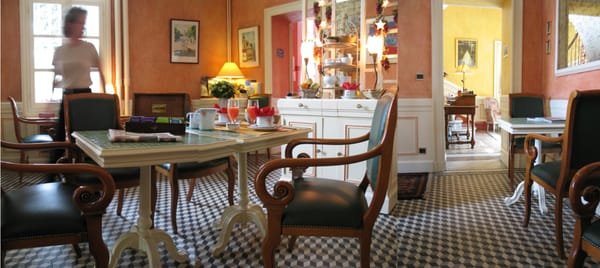
Where the Room and the Kitchen Share the Same Logic
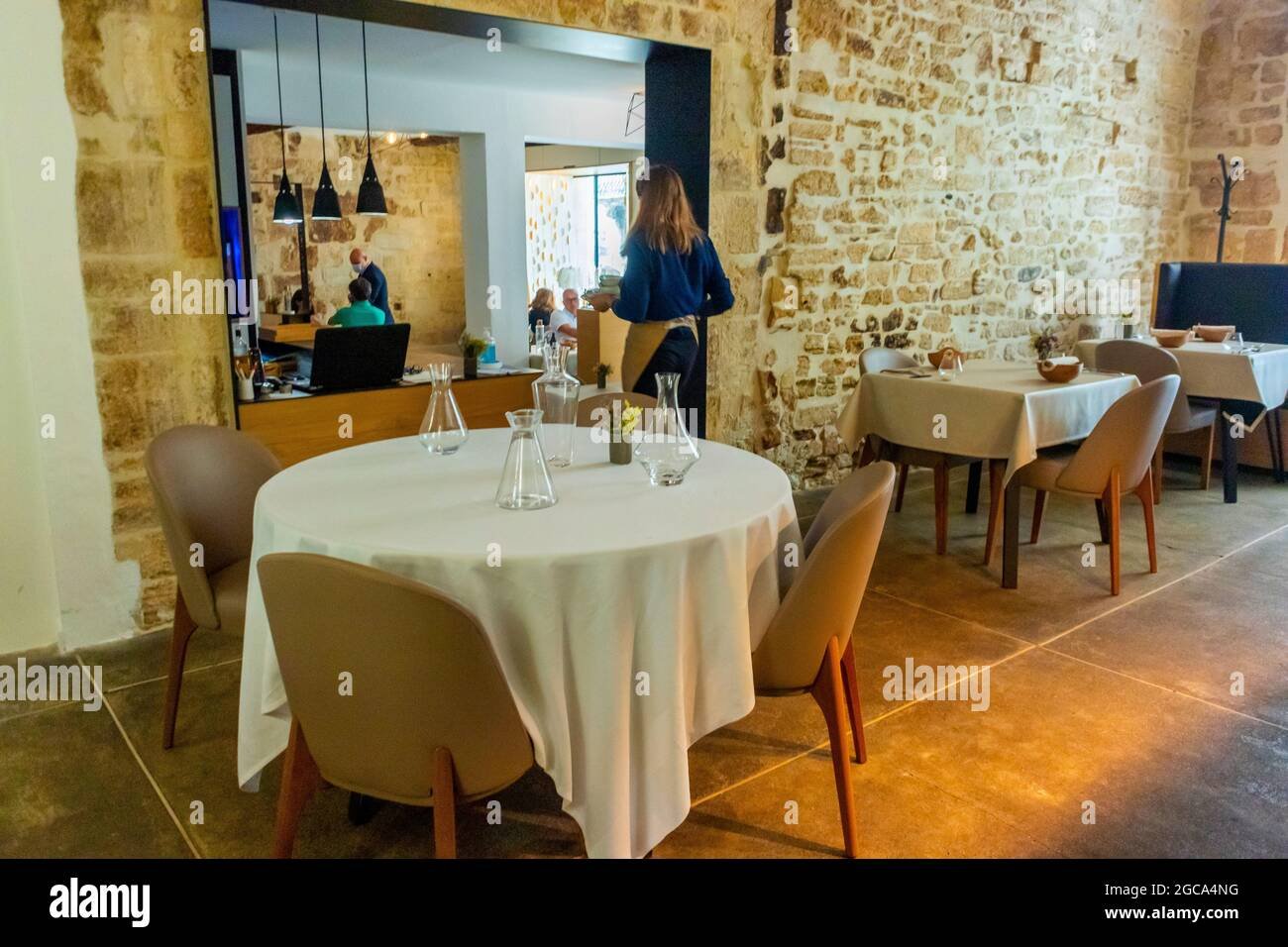
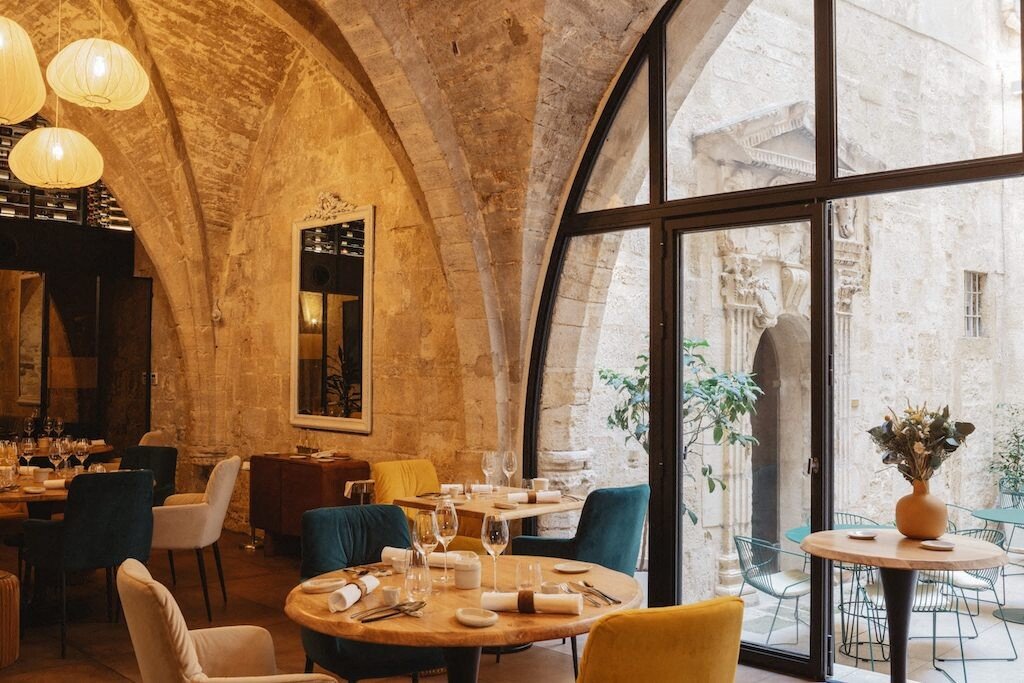
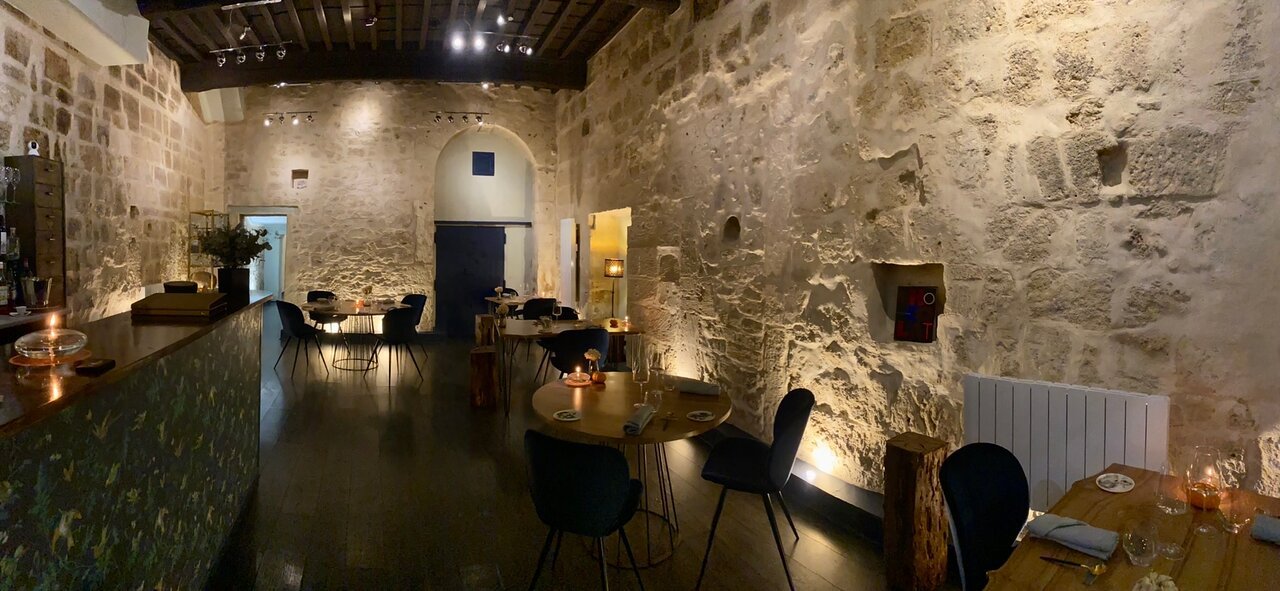
Rue Jean Jacques Rousseau is not Montpellier's most theatrical address, but Reflet d'Obione earns its place quietly. The three dining rooms read as stripped back rather than sparse: custom-made tableware, wooden formwork crafted by local artisans, and a palette that tracks the muted ochres and terracotta of inland Provence. Nothing in the room contradicts what arrives at the table. That coherence between space and plate is rarer than it sounds in the current wave of Occitanie fine dining, where interiors often skew to international minimalism regardless of what the kitchen produces.
The restaurant takes its name from the obione, a salt-tolerant coastal plant — halimione portulacoides — that grows along the edges of the Camargue wetlands. The choice of name signals the kitchen's orientation before a menu has been read: this is cooking that starts with the plant world, not with protein.
The Montpellier Starred Tier and Where Reflet d'Obione Sits Within It
Montpellier's fine dining room is smaller than Lyon or Bordeaux but more differentiated than its size might suggest. At the leading of the market, La Réserve Rimbaud and Leclère occupy the classic French gastronomic register at the €€€ tier, while Pastis Restaurant and Aliro push toward more contemporary formats. Reflet d'Obione, also at the €€€ price point and holding a Michelin star awarded in 2024, occupies a distinct lane within this peer set: vegetable-led, locally anchored, and structurally committed to plant-based menus in a way that French starred kitchens have historically resisted.
That last point is worth dwelling on. The decision to offer not just a vegetarian option but a fully vegan tasting menu , no animal ingredients , runs against the grain of classical French fine dining, where butter, cream, and animal-derived stocks have long served as the technical foundation. Starred kitchens in France that offer this are counted in small numbers. Anga - Beaulieu, also in Montpellier, moves in a comparable direction, but the two restaurants address plant-forward cooking from different starting points and with different culinary lineages.
For a wider map of where Reflet d'Obione fits among Montpellier's full dining options, our full Montpellier restaurants guide covers the city's range from neighbourhood bistros to starred kitchens.
The Produce Logic: Cévennes to the Mediterranean
French starred kitchens have increasingly adopted a localism rhetoric that does not always extend to practice. Reflet d'Obione's sourcing is sufficiently specific to read as structural rather than decorative. Beef from Aubrac, saltbush lamb from the Camargue, tomme cheese from Larzac, and vegetables drawn from the corridor between the Cévennes and the Mediterranean coast: the kitchen maps its suppliers to a defined geography, and the front-of-house team is trained to articulate those origins at the table.
This level of provenance transparency places Reflet d'Obione in a broader movement within French fine dining that has accelerated since the early 2010s , the shift from a kitchen-as-auteur model (where the chef's technique was the story) toward a supply-chain model (where the producer is named and the chef's role is to clarify rather than transform). Bras in Laguiole established part of this grammar with its decades-long focus on the Aubrac plateau's flora. Reflet d'Obione applies a version of that logic to southern Occitanie, with the addition of a stronger commitment to plant-based preparation as a primary mode rather than a secondary accommodation.
Chef Laurent Cherchi brings training from starred establishments in Switzerland, France, and Australia to this regional framework , a range that explains the technical range visible in the kitchen's use of fermentation and extraction without requiring the food to announce its international references.
The Menu Structure: Monthly Change, Vegetable Primacy
The menu changes every month, which at a starred level requires ongoing sourcing discipline and a kitchen that can prototype dishes at pace. Both the lacto-ovo-vegetarian menu and the fully vegan menu are permanent structural features rather than occasional additions , they exist alongside the main menu as equal offerings, not afterthoughts. This is a meaningful distinction: the kitchen has developed the technical vocabulary to make plant-based cooking function at starred precision, not merely at acceptable parity.
Technique at this level tends toward fermentation, extraction, and the use of condiments as a third register between seasoning and sauce. Most dishes arrive with an accompanying condiment designed to add texture and shift flavour in a specific direction, a construction that rewards attention and extends the life of each course. The EP Club assessment notes that dishes are rounded and balanced, with a clear Provençal register in both flavour and atmosphere.
The menu's coherence from month to month , adapting to seasonality while maintaining structural design , places it closer to the approach of kitchens like Mirazur in Menton, where the seasonal calendar governs the menu's logic, than to a fixed tasting format. Flocons de Sel in Megève operates in a similarly mountain-terroir-anchored mode, though in a colder, Alpine register. The comparison is useful for understanding where Reflet d'Obione fits within French contemporary fine dining: this is a kitchen working from place rather than from a fixed canon of classical preparation.
The Wine Angle: What a Vegetable-Led Kitchen Demands of Its Cellar
The editorial angle most relevant here is not the wine list's depth in isolation but the particular challenge that vegetable-led, fermentation-forward cooking poses to wine curation. Classical pairing logic was built around protein: the fat content of meat and fish calibrated which acidity, tannin, or sugar a wine should carry. A kitchen where vegetables , often fermented, often acidic, often constructed around umami-adjacent condiments , are the primary ingredient forces a different curation conversation.
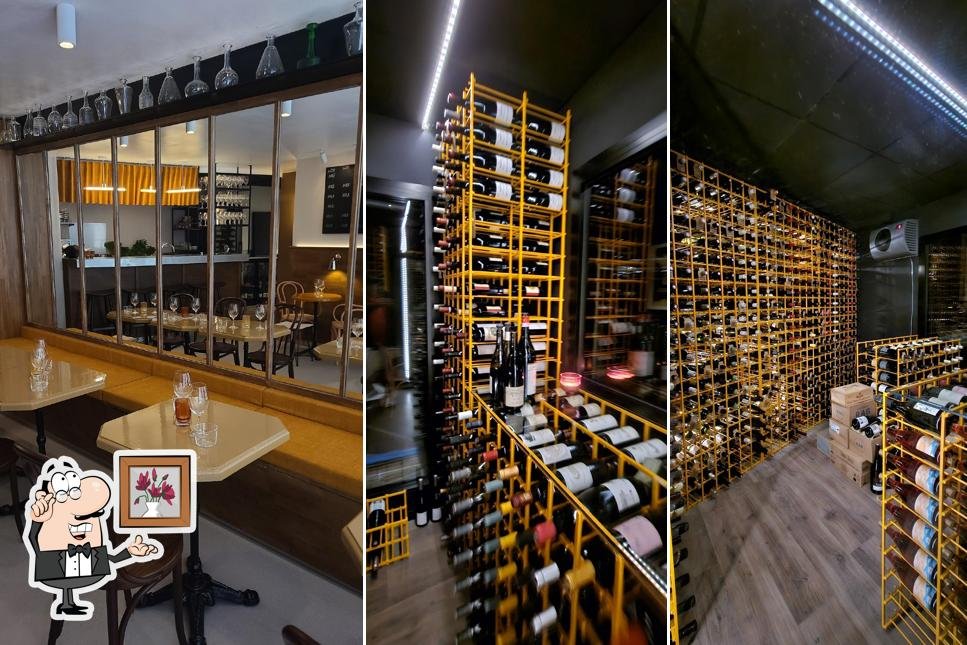
Languedoc-Roussillon, the wine region immediately surrounding Montpellier, produces a range that has historically skewed toward structured reds built around Grenache, Syrah, and Mourvèdre, but the region's whites and rosés from appellations including Picpoul de Pinet, Saint-Chinian Blanc, and Roussanne-heavy blends from the Hérault have gained traction in exactly the kind of context where plant-based cooking requires a cellar that can move laterally. A kitchen committed to local produce logic and a room decorated with locally made objects has every reason to lean on regional wines as the first option. Whether Reflet d'Obione's list extends beyond Languedoc into the Loire, Jura, or natural wine producers whose acidity and low intervention align with fermented vegetable preparations is not documented in the current record , but the kitchen's logic creates a clear framework for what those choices would need to do. For visitors whose interest extends to the region's vineyards, our full Montpellier wineries guide maps the surrounding appellation structure.
For context on how contemporary European kitchens are approaching wine curation in plant-forward formats, Frantzén in Stockholm and FZN by Björn Frantzén in Dubai represent the northern European end of this conversation, where the sommelier program has been recalibrated to match a vegetable-forward tasting structure.
Planning a Visit
Reflet d'Obione is at 29 Rue Jean Jacques Rousseau in central Montpellier, within reach of the city's tram network. At the €€€ price point with a Michelin star awarded in 2024 and a Google rating of 4.8 across 420 reviews, this is a kitchen that draws an audience beyond the city , advance planning is advisable, particularly for weekend sittings. The monthly menu rotation means that timing a visit around a specific season will produce different results: the Provençal summer and early autumn produce window will read differently from a late winter sitting built around the Cévennes and Larzac's cold-season supply.
Visitors building a broader Montpellier trip around the restaurant will find the city's other offerings mapped across our full Montpellier hotels guide, our full Montpellier bars guide, and our full Montpellier experiences guide. For those whose itinerary extends into France's broader starred kitchen network, Alléno Paris au Pavillon Ledoyen and Troisgros - Le Bois sans Feuilles in Ouches represent the upper tier of the French classical and contemporary spectrum against which Reflet d'Obione's more regionally anchored approach can be measured. Paul Bocuse - L'Auberge du Pont de Collonges remains the historical reference point for French institutional cooking, a useful counterpoint to understanding how far Reflet d'Obione's vegetable-led, Camargue-inflected cooking sits from the classical canon.
A Tight Comparison
A quick look at comparable venues, using the data we have on file.
| Venue | Notes | Price |
|---|---|---|
| Reflet d'Obione | This venue | €€€ |
| Leclère | Modern Cuisine, €€€ | €€€ |
| Jardin des Sens | French Gastronomic, €€€€ | €€€€ |
| Ébullition | Creative, €€€ | €€€ |
| Soulenq | Modern Cuisine, €€ | €€ |
| L'Arbre | Traditional Cuisine, €€ | €€ |
Continue exploring
More in Montpellier
Restaurants in Montpellier
Browse all →
Bars in Montpellier
Browse all →
At a Glance
- Elegant
- Intimate
- Cozy
- Sophisticated
- Date Night
- Special Occasion
- Open Kitchen
- Extensive Wine List
- Sommelier Led
- Farm To Table
- Local Sourcing
- Organic
Warm and intimate atmosphere with wood and terracotta decor, open kitchen views, well-lit with a cozy, epure style across three simple, elegant rooms.