Raku Sushi
Raku Sushi at 805 Harbor Blvd brings Japanese-inspired dining to West Sacramento's evolving food corridor. Positioned in a city increasingly drawing diners away from its more-heralded neighbor across the river, it operates as a neighborhood anchor in a local scene with growing ambitions. Ingredient sourcing and kitchen craft are the lenses through which Raku earns its place in a competitive regional dining conversation.
Pearl is the En Primeur Club membership app — saves, bookings, and concierge access live there. Same editors, same standards.
- Address
- 805 Harbor Blvd, West Sacramento, CA 95691
- Phone
- (916) 372-6168
- Website
- rakurestaurant.com
 Saves & bookings on Pearl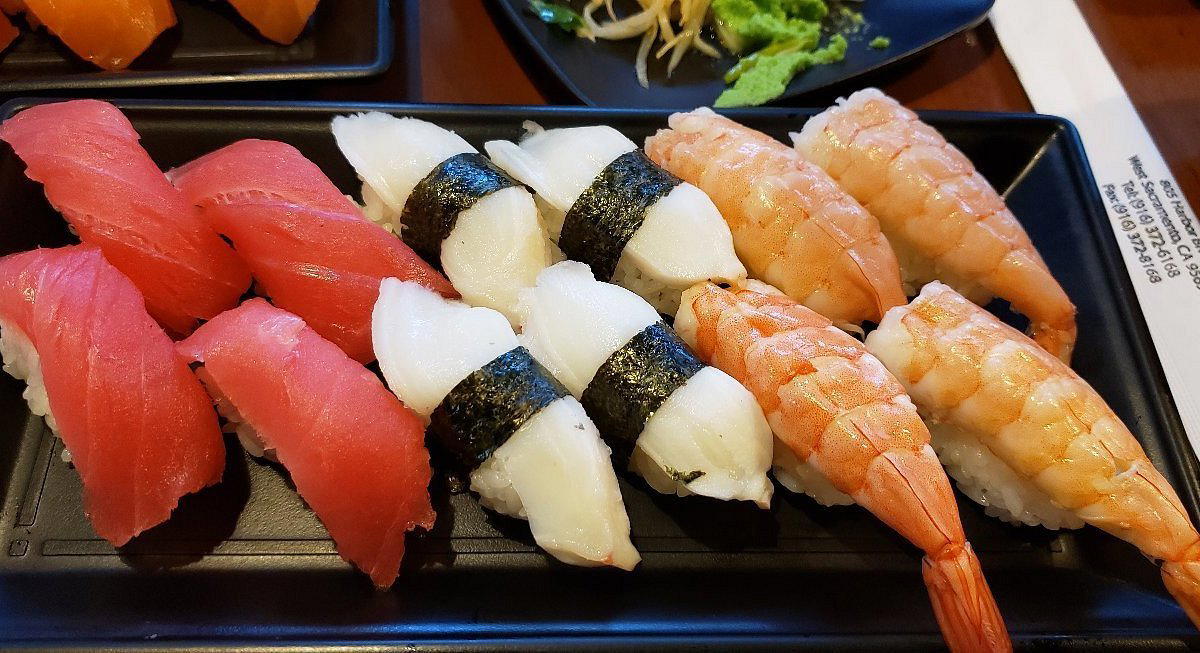
Where West Sacramento's Dining Ambitions Meet the Harbor
West Sacramento's Harbor Boulevard strip has spent the better part of a decade quietly accumulating dining options that reflect the city's changing identity. Raku Sushi is a casual all-you-can-eat sushi restaurant in West Sacramento with a price tier of 2 and an average Google rating of 4.5 from 1,948 reviews. Once dismissed as little more than a throughway between Sacramento's more celebrated restaurant rows and the industrial waterfront, the corridor has developed enough critical mass to warrant its own assessment. Raku Sushi, at 805 Harbor Blvd, sits inside that shift: a Japanese dining proposition in a city learning to ask harder questions about what its food scene can become.
The broader context matters here. Sacramento and its immediate surrounds occupy an agricultural position that few American metro areas can match. The Sacramento Valley is one of the most productive farming regions in the country, supplying rice, stone fruits, and a range of specialty produce that, in a different city with a different marketing apparatus, would be the cornerstone of a farm-to-table narrative commanding national attention. West Sacramento, across the river from a capital city increasingly proud of its food credentials, is positioned to benefit from that supply chain, if its kitchens choose to engage with it seriously.
Ingredient Sourcing as a Lens on West Coast Japanese Dining
Japanese cuisine in California occupies a complicated place in the sourcing conversation. At the premium end, counters like those clustered in Los Angeles's omakase tier, or the handful of serious sushi destinations operating across the Bay Area, the sourcing question is front and center: what fish, from where, handled how, aged to what specification. Those counters benchmark against Tokyo's Tsukiji-adjacent tradition and price accordingly, with omakase menus frequently running north of $200 per head at venues like the California operations that compete in the same tier as Le Bernardin in New York City or Providence in Los Angeles for seafood-led tasting experiences.
At the neighborhood level, where most Japanese restaurants in mid-sized California cities actually operate, the sourcing question becomes more practical: does the kitchen have the supplier relationships to get fish of reasonable quality, and does it know what to do with what arrives? A sushi restaurant's output is almost entirely a function of its purchasing decisions and its refrigeration discipline. The gap between a kitchen sourcing from a regional Japanese seafood distributor with daily Sacramento Valley deliveries and one relying on general broadline suppliers is visible on the plate, even if the menus look similar at first read.
For diners approaching Raku Sushi from outside the immediate neighborhood, that sourcing question is worth holding in mind. The Sacramento region's proximity to the coast via Highway 50 and the broader Northern California distribution network means access to quality seafood is not the barrier it would be in a landlocked mid-continent city. The question is whether individual operators engage with that access deliberately. Venues operating at a comparable register of culinary ambition in the region, such as Single Thread Farm in Healdsburg and Lazy Bear in San Francisco, have made sourcing specificity central to their editorial identity and pricing logic. West Sacramento's neighborhood Japanese dining operates in a different tier, but the underlying question of supply-chain engagement still defines the ceiling of what any kitchen can deliver.
West Sacramento in Context: A City Building Its Own Story
Understanding Raku Sushi requires understanding what West Sacramento is in 2024. It is not Sacramento, and that distinction cuts in multiple directions. The city lacks the density of restaurant press coverage, the established fine-dining anchors, and the tourism infrastructure that has allowed Sacramento to position itself as a farm-to-fork destination with some national credibility. What West Sacramento has instead is a lower cost base, a waterfront development corridor in active flux, and a dining population drawn from both its own residential base and overflow from across the river.
This pattern, a secondary city developing a food identity adjacent to a more-celebrated neighbor, is familiar across American dining geography. It produces a specific type of restaurant: competent, neighborhood-scaled, rarely award-chasing, often more honest about what it is than venues operating under greater scrutiny. Contrast this with the pressure-tested positioning of places like Alinea in Chicago or The French Laundry in Napa, where every sourcing decision is an extension of a public-facing culinary argument. Neighborhood Japanese dining in a city like West Sacramento operates without that overhead, which can be a constraint on ambition or, depending on your perspective, a kind of freedom.
Birdies Social Club is among the venues in the same corridor worth tracking as the area's identity continues to develop.
Planning a Visit: What to Know Before You Go
Raku Sushi is located at 805 Harbor Blvd, West Sacramento, CA 95691. It is walk-in friendly, with regular hours of Mon: 11 AM-2:30 PM, 4:30-9 PM; Tue: Closed; Wed: 11 AM-2:30 PM, 4:30-9 PM; Thu: 11 AM-2:30 PM, 4:30-9 PM; Fri: 11 AM-2:30 PM, 4:30-9:30 PM; Sat: 11 AM-2:30 PM, 4:30-9:30 PM; Sun: 11 AM-2:30 PM, 4:30-9 PM.
Diners comparing options in the broader Northern California market who are weighing a trip to West Sacramento against the Bay Area's Japanese dining tier should calibrate expectations accordingly: this is neighborhood dining in a developing corridor, not the omakase circuit that defines the premium end of West Coast Japanese cuisine. For that conversation, venues like Atomix in New York City or Blue Hill at Stone Barns in Tarrytown, which have made sourcing philosophy the explicit core of their public positioning, offer a useful reference point for where the ceiling sits when sourcing discipline is treated as a first-order priority.
Addison in San Diego, Frasca Food and Wine in Boulder, or Brutø in Denver for a sense of how ingredient sourcing operates as a differentiator across the American West's current dining conversation.
Fast Comparison
Comparable venues nearby, for context on price, style, and recognition.
| Venue | Cuisine | Price | Awards | Notes |
|---|---|---|---|---|
| Raku SushiThis venue — the venue you are viewing | All-You-Can-Eat Sushi | $$ | , | |
| Birdies Social Club | California Comfort Food | $$ | , | West Sacramento |
| Franquette | wine_bar | $$ | , | Bridge District |
| Ramen House Ryowa | Japanese Ramen | $$ | , | Downtown Berkeley |
| Yuzu Ramen & Broffee | Japanese Ramen & Broffee | $$ | , | Emeryville |
| iza | Authentic Japanese Ramen | $$ | , | Lower Haight |
Continue exploring
More in West Sacramento
Restaurants in West Sacramento
Browse all →
Bars in West Sacramento
Browse all →
Hotels in West Sacramento
Browse all →
Wineries in West Sacramento
Browse all →
At a Glance
- Casual
- Cozy
- Family
- Casual Hangout
- Open Kitchen
- Sake Program
Casual and comfortable with a busy atmosphere during peak hours.