




Épure serves Contemporary French Fine Dining at Ocean Centre in Harbour City, with waterfront and skyline views, an extensive wine list, and recent Michelin and regional recognition.
Pearl is the En Primeur Club membership app — saves, bookings, and concierge access live there. Same editors, same standards.
- Address
- Shop 403, Level 4, Ocean Centre, Harbour City, Canton Rd, Tsim Sha Tsui, Hong Kong
- Phone
- +852 3185 8338
- Website
- epure.hk
- Directions
- Get directions
 Saves & bookings on Pearl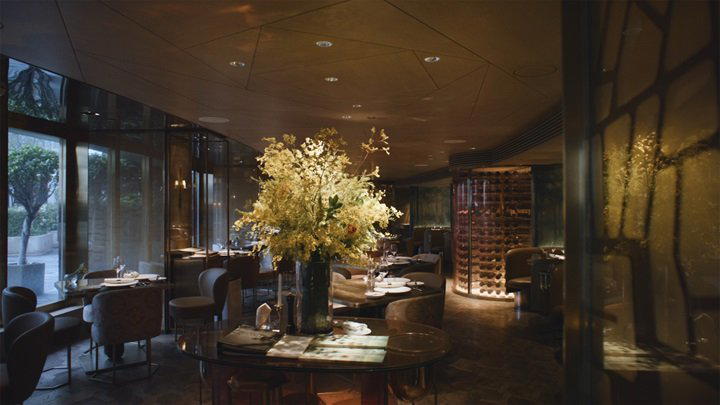
French Precision in Harbour City
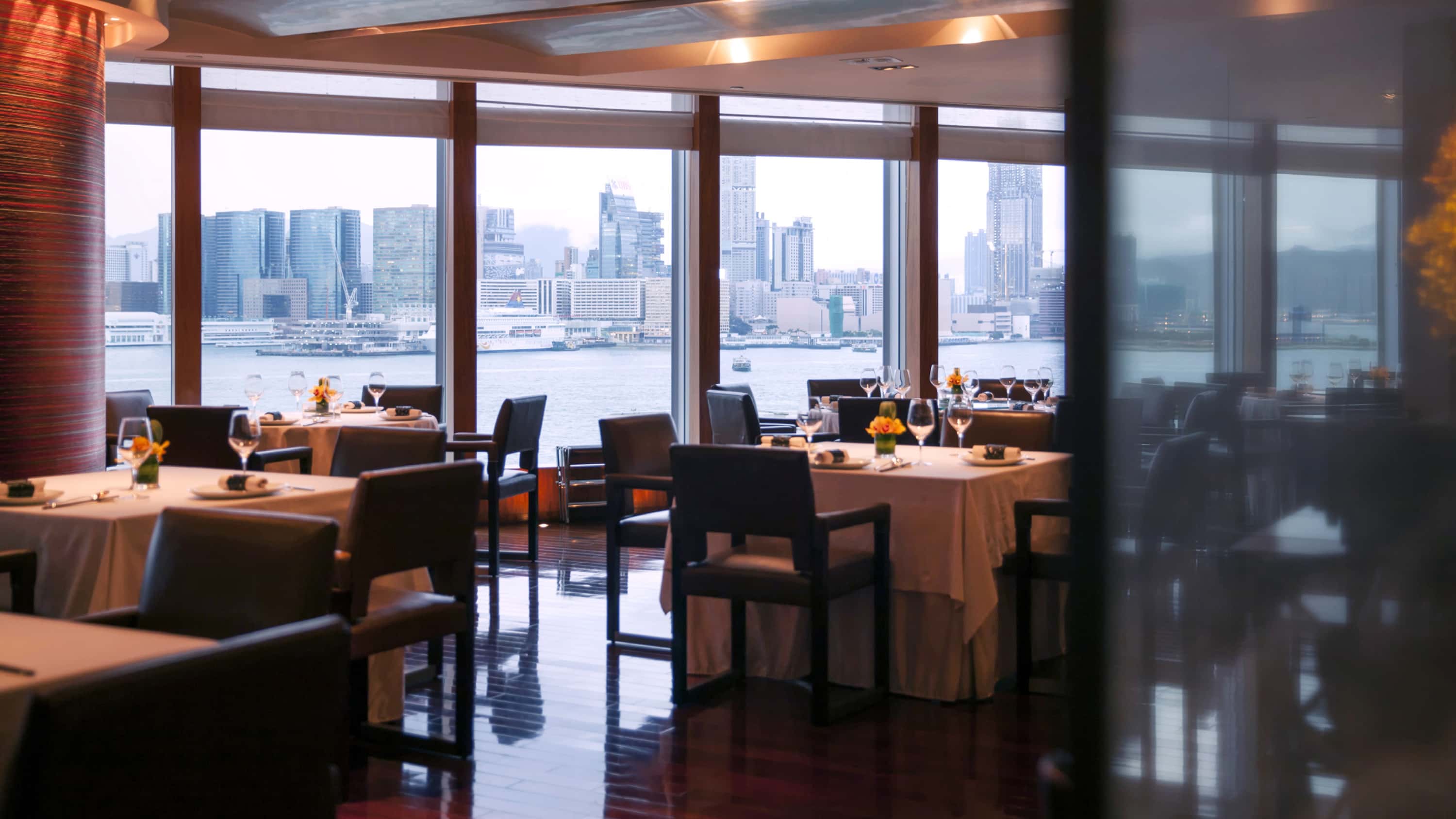
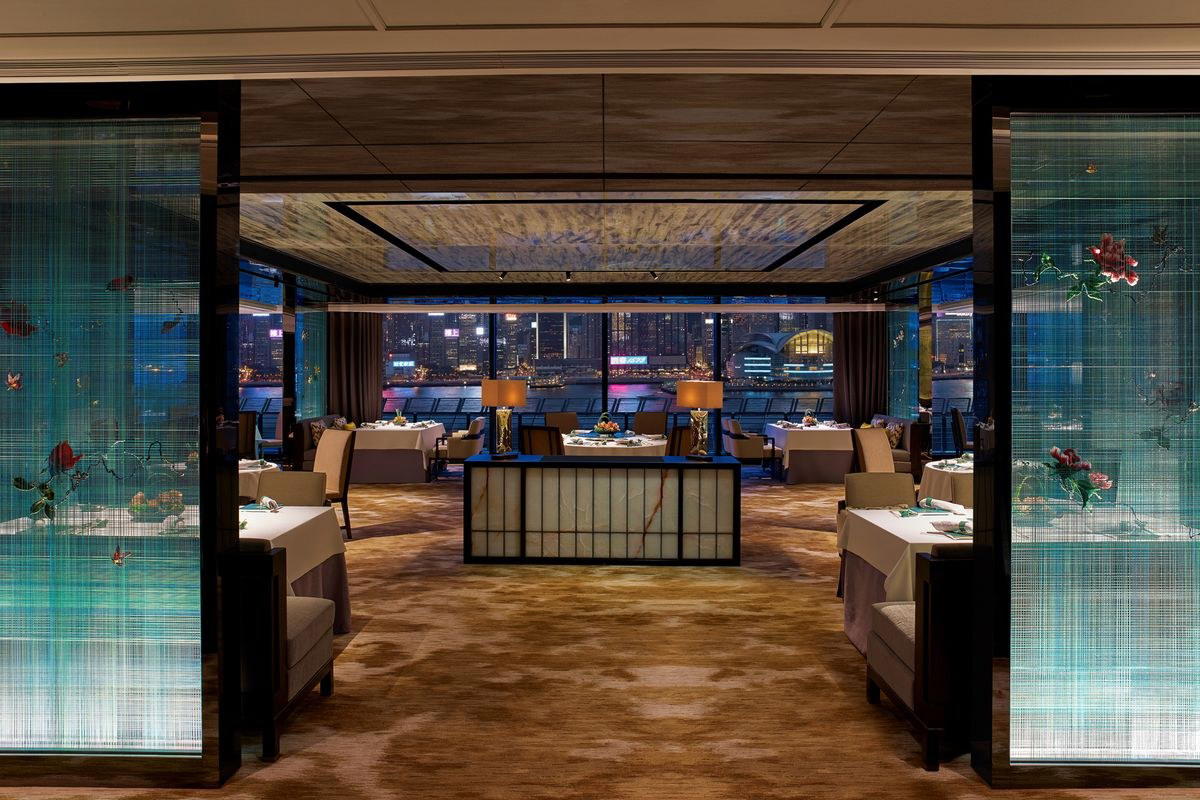
Level 4 of Ocean Centre sits above the retail din of Harbour City, and the transition from mall corridor to dining room is more abrupt than most Tsim Sha Tsui restaurants allow. That contrast is part of the point. Épure is a one-Michelin-star restaurant in Hong Kong serving Contemporary French Fine Dining at about USD 200 per person. Épure occupies a space that rewards intention: you come here having decided on French contemporary cooking done with discipline, not on impulse from a shopping detour. The patio, available before the meal, frames the harbour without the pressure of a formal start. It is a practical suggestion that also tells you something about the restaurant's pace: unhurried, with a clear sequence in mind.
Where Épure Sits in Hong Kong's French Dining Tier
Hong Kong has sustained a French fine-dining corridor since the Mandarin Oriental era, but the category has diversified considerably over the past decade. At the upper end, Caprice operates at three Michelin stars and a $$$$ price point, setting a benchmark that positions single-star French rooms at a meaningfully different level of spend and formality. Épure sits at $$$, which places it below that ceiling but still inside the serious end of the market, closer in ambition to Belon and Louise than to the more theatrical, multi-course productions that dominate the three-star tier.
The Michelin single star confirms the kitchen's technical standing without putting it in competition with rooms that spend considerably more on room-build and service ratio. That positioning is neither apologetic nor incidental: the French contemporary category in Asia has a long tradition of single-star kitchens delivering cooking that punches above their price tier, and Épure reads as a deliberate participant in that pattern rather than an aspirant to the floor above. For context on how the French contemporary format operates across the region, Lerouy in Singapore and Le Normandie in Bangkok each occupy analogous positions in their respective cities: French technique applied with local inflection, at a price point that sits below the top tier but above the casual end of European dining in Asia.
The Cooking: French in Structure, Japanese in Register
Épure's most discussed characteristic is the integration of Japanese technique and sensibility into a framework that remains French in architecture. This is a specific mode of fusion that has become more common across Asia's high-end French rooms over the past fifteen years, but the execution varies considerably. The Opinionated About Dining entry describes a programme that is "French in essence but enhanced by subtle Japanese touches," and credits chef Aven Lau with matching flavours and textures in a way that avoids over-elaboration. The phrase "not overly fancy" in that write-up is worth taking at face value: restraint in plating and composition is harder to sustain at this price tier than it might appear, particularly when tasting menu formats encourage accumulation.
Lau's training trajectory across Europe and Asia is relevant here as context rather than biography. Kitchens that develop cooks across both French classical traditions and Japanese precision tend to produce a particular kind of dish-making: technically grounded, attentive to temperature and texture, reluctant to use sauce as a crutch. That is the sensibility OAD's description implies, and it aligns with the broader shift in regional French cooking away from the cream-and-butter orthodoxy of an earlier generation toward something leaner and more ingredient-led. The same shift is visible at Amber in Hong Kong's Central district, which has moved through multiple iterations of its French contemporary programme over the years. Épure operates on a smaller canvas but within a similar philosophical direction.
The format is tasting menus, two of them, which is now standard for French fine dining at this level in Asia. Two menus allow a kitchen to signal a price gradient and a depth gradient simultaneously: shorter menus capture those who want the register without the full commitment, while longer formats serve the guest who came specifically for the cooking.
The Wine Programme: Curation as Editorial Statement
The wine programme is doing real work here. In Hong Kong's French fine-dining context, wine curation at the single-star level operates as a kind of institutional position-taking. The city removed its wine duty in 2008, which catalysed significant investment in restaurant cellars and sommelier programmes across the upper tier. The result, fifteen years on, is that restaurants at the $$$-$$$$ range are expected to operate wine lists with genuine depth, not simply to offer food-friendly bottles from large négociants.
At Épure, the pairing structure is integrated into the tasting menu format, which suggests the wine programme is not an afterthought but a co-equal part of the offer. Pairings at this level in Hong Kong French rooms tend to work in one of two directions: either a classical French regional logic (Burgundy and Bordeaux anchoring the reds, Loire and Alsace doing structural work across whites) or a more global curation that treats grape variety and producer story as the organising principle rather than appellation. The OAD description does not specify, but the Japanese inflection in the cooking suggests the wine team may favour the latter: dishes with high umami density and restrained fat profiles pair differently than classical French preparations, and a programme attuned to that cooking would likely look further than Bordeaux for its pairings.
The adjacent café extends the wine programme's reach into a lower-commitment format. In a mall environment, this is a practical differentiator: it creates a lower-threshold entry point for guests who are curious about the kitchen's sensibility without committing to a tasting menu booking. It also functions as a revenue-diversification mechanism that Hong Kong's premium French rooms in hotel settings, like Caprice, do not have in the same form.
For those interested in how French contemporary wine programmes operate across other global cities, Essential by Christophe in New York and Restaurant Yuu, also in New York, each run pairings programmes within the same format tradition. IDAM by Alain Ducasse in Doha and Blue by Alain Ducasse in Bangkok represent the larger-footprint end of the same category. Cuivre in Shanghai and Ephernité in Taipei each show how the French contemporary format adapts further across northeast Asia.
Consistency and Recognition Over Three Years
Épure has appeared in Opinionated About Dining's Asia rankings in three consecutive years: ranked 111th in 2023, 97th in 2024, and 112th in 2025. The trajectory is not a linear climb, but consistency across three cycles of a survey that depends on diner votes is a meaningful signal in itself. OAD rankings weight repeat visits and experienced diners heavily, which means a restaurant that holds its position across multiple years is retaining the attention of guests who eat widely and critically. The minor fluctuation between 2024 and 2025 is not unusual for restaurants at the 97-112 range, where the population of voters is more variable and individual meal variance plays a larger role than at the summit of the list.
The gap between a strong OAD position and a moderate Google average is a pattern common to French fine-dining rooms, where the format and price point generate a broader range of expectations among general guests than among specialist diners. Épure's 4.2 at 561 reviews does not contradict the OAD standing; it reflects the different population.
Planning a Visit
Épure opens daily from noon to 11 PM, seven days a week, which is a less common schedule for a formal French tasting menu room. Many peer restaurants at this level in Hong Kong close for Monday lunch or take a full day off. The all-day schedule is likely connected to the Harbour City context: the mall draws traffic continuously, and a restaurant on Level 4 has access to a lunchtime audience of business diners and hotel guests from the adjacent Marco Polo hotels that a standalone-site restaurant would not. Reservations are advisable, particularly for dinner; OAD-ranked rooms at this price point in Tsim Sha Tsui fill their prime evening slots well in advance.
Harbour City is accessible directly from Tsim Sha Tsui MTR station or by ferry from Central.
The Essentials
Comparable venues nearby, for context on price, style, and recognition.
| Venue | Cuisine | Price | Notes |
|---|---|---|---|
| ÉpureThis venue — the venue you are viewing | French, French Contemporary | $$$$ | Not listed |
| Cristal Room by Anne-Sophie Pic | Not listed | $$$$ | Central, Modern French Fine Dining with Asian Influences |
| Ami | Central, Modern French Fine Bistronomie | $$$$ | Not listed |
| Duddell's | Central, Modern Cantonese | $$$$ | Not listed |
| Roganic | Wan Chai, Modern British Farm-to-Table | $$$$ | Not listed |
| Yong Fu | Wan Chai, Chinese | $$$$ | Not listed |
Recognition history
Dated appearances from independent guides and award organizations, with the underlying list record or original source where available.
Michelin 1 Star
Michelin
Opinionated About Dining Top Restaurants in Asia Ranked #129
Opinionated About Dining
SCMP 100 Top Tables Restaurants
SCMP 100 Top Tables
Star Wine List
Star Wine List
Michelin 1 Star
Michelin
Opinionated About Dining Top Restaurants in Asia Ranked #112
Opinionated About Dining
The Best Chef One Knife
The Best Chef
Michelin 1 Star
Michelin
Opinionated About Dining Top Restaurants in Asia Ranked #97
Opinionated About Dining
Opinionated About Dining Top Restaurants in Asia Ranked #111
Opinionated About Dining
Continue exploring
More in Hong Kong
Restaurants in Hong Kong
Browse all →
Bars in Hong Kong
Browse all →
At a Glance
- Elegant
- Sophisticated
- Intimate
- Romantic
- Date Night
- Special Occasion
- Business Dinner
- Waterfront
- Private Dining
- Hotel Restaurant
- Extensive Wine List
- Sommelier Led
- Local Sourcing
- Waterfront
- Skyline
Current opening hours
- Monday
- 12–11 PM
- Tuesday
- 12–11 PM
- Wednesday
- 12–11 PM
- Thursday
- 12–11 PM
- Friday
- 12–11 PM
- Saturday
- 12–11 PM
- Sunday
- 12–11 PM
Hours can change for holidays and private events. Last verified .
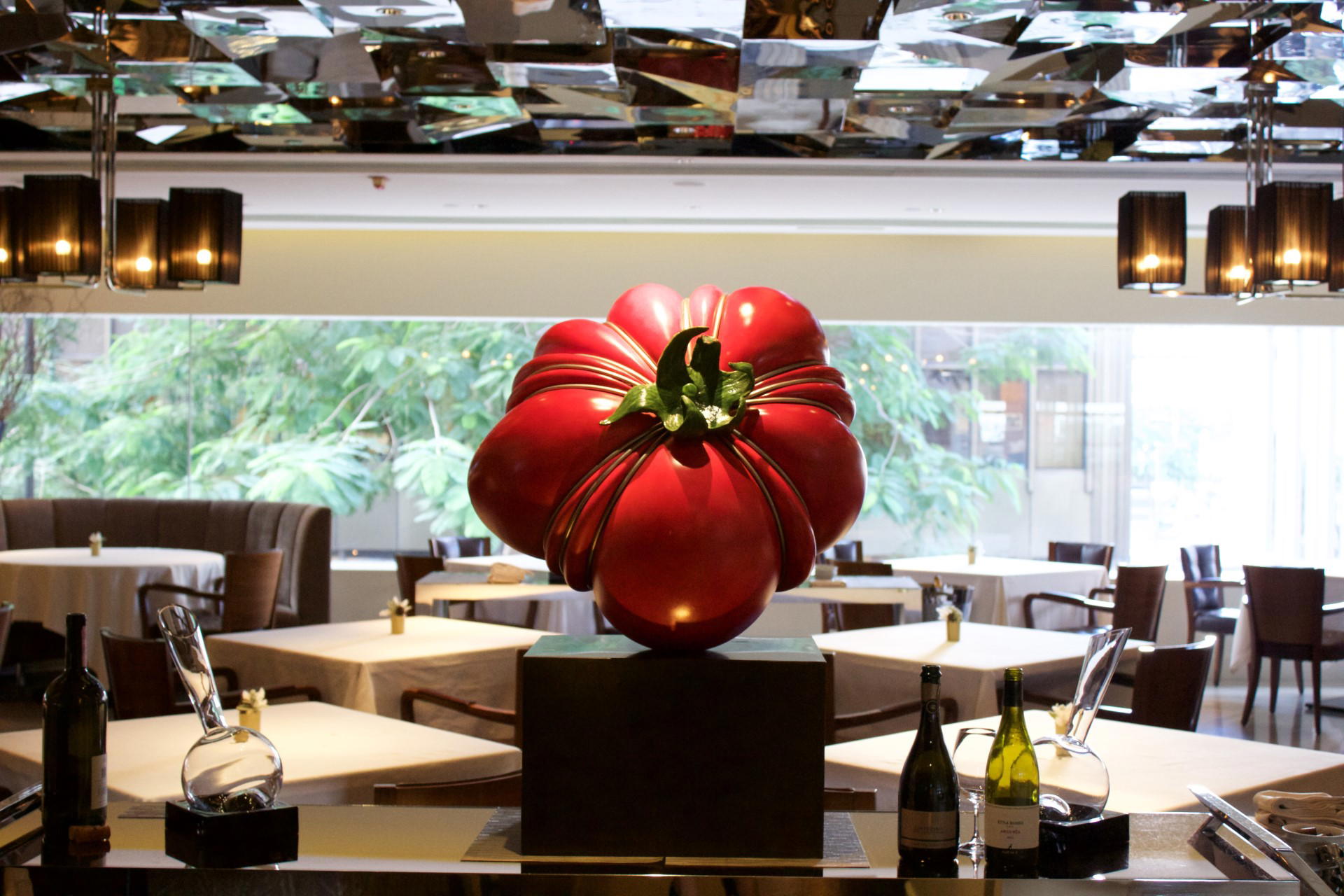
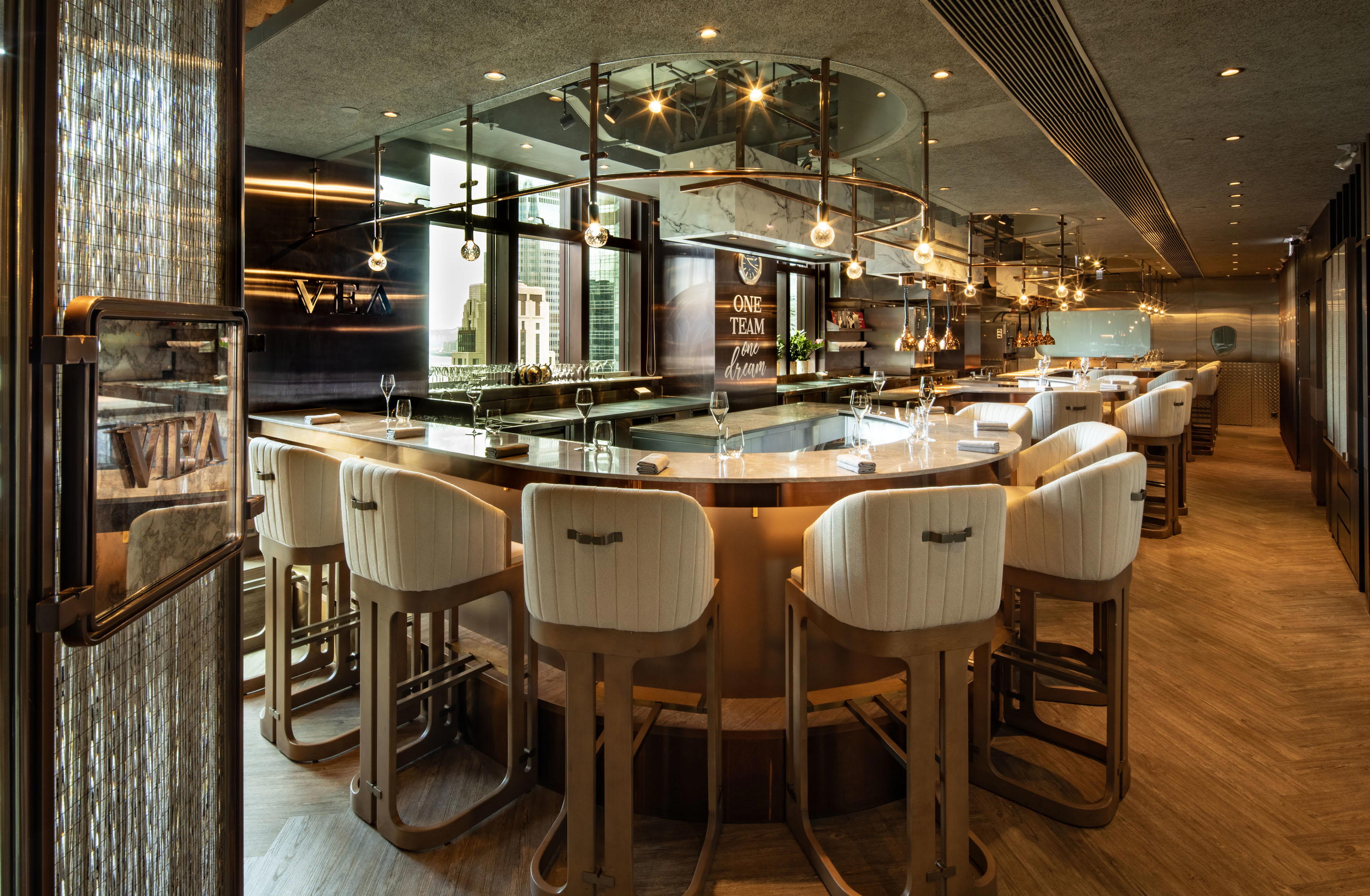
Elegant and stylish with golden-red interior, refined lighting creating a sophisticated, secluded luxury atmosphere overlooking Victoria Harbour.