Provisions Hearth & Kitchen
Our verdict
Provisions Hearth & Kitchen sits in Framingham's expanding independent dining circuit, where sourcing transparency and live-fire cooking have become the organizing principles for a new wave of neighborhood restaurants. The hearth format signals a commitment to ingredient provenance over technique showmanship, placing it in a growing cohort of American kitchens that let raw material quality do the argumentative work.

Pearl is the En Primeur Club membership app — saves, bookings, and concierge access live there. Same editors, same standards.
- Address
- Framingham, United States
Fire, Provenance, and the New Suburban Kitchen
There is a particular kind of restaurant that has emerged in American suburbs over the past decade, one that borrows the vocabulary of farm-to-table earnestness and refines it through the discipline of live-fire cooking. The hearth is not decorative here. In kitchens built around wood and flame, the sourcing decisions made before service begins determine nearly everything that arrives at the table. Provisions Hearth & Kitchen occupies this territory in Framingham, a city whose dining identity has been quietly reshaping itself beyond the Route 9 corridor of chain restaurants and strip-mall takeout.
Framingham sits roughly twenty miles west of Boston, and its restaurant scene has followed a pattern visible in several mid-size Massachusetts cities: a slow consolidation of serious independent operators filling gaps left by national brands that never quite fit the community. For context on where Provisions lands within that broader local picture, the full Framingham restaurants guide maps the range from Sichuan specialists like Sichuan Gourmet to the neighborhood ease of Tara Cafe.
The Hearth as an Editorial Statement
American kitchens that commit to hearth cooking are making a supply-chain argument as much as a culinary one. Wood-fired and ember-based techniques amplify ingredient quality rather than mask it, which means the margin for sourcing shortcuts is close to zero. A protein from a commodity distributor behaves differently over live fire than one raised with attention to breed, feed, and time. Kitchens that build menus around the hearth format are, in effect, publicly wagering on their procurement relationships every night.
This is the same structural logic that defines the most recognized farm-integrated restaurants in the country. Blue Hill at Stone Barns in Tarrytown made sourcing transparency a founding principle, effectively arguing that the farm behind the plate is as much a part of the dining experience as the cooking. Single Thread Farm in Healdsburg extended that logic to hospitality and beverage, building a fully vertically integrated farm-to-table-to-room operation. At the fine dining ceiling, The French Laundry in Napa has maintained kitchen gardens across the road from the restaurant for years, treating proximity to the source as a non-negotiable creative condition.
Provisions is not operating at that altitude, nor is it trying to. But the hearth-and-kitchen format it has chosen situates it within the same philosophical current, scaled to a neighborhood dining room rather than a destination tasting counter.
What the Name Signals
The word "provisions" carries specific weight in American culinary culture. It predates the restaurant as an institution, referring to the act of procuring and laying in food supplies, a process that required relationships with growers, fishmongers, butchers, and foragers before refrigeration changed the calculus of sourcing entirely. Naming a restaurant after that act is a statement of intent: the kitchen positions its procurement work as the visible center of its identity, not a background operational detail.
Kitchens that lean into this framing tend to build menus that change with market availability rather than against it. Seasonal rotation, reduced menu size, and a willingness to 86 items when the supply does not meet internal standards are the operational consequences of genuine sourcing commitment. That model is harder to execute at volume and requires a guest base willing to accept variability as a feature rather than a flaw.
Framingham as a Context
Framingham's dining market has characteristics that make it a reasonable incubator for this kind of restaurant. The city's population is genuinely diverse, with strong Brazilian, South Asian, and East Asian communities that have built restaurant culture around ingredient quality rather than presentation theater. That baseline expectation for good raw materials creates a guest population that reads sourcing signals without needing them spelled out on a chalkboard.
The city also has proximity to several active Massachusetts farming corridors, including the Pioneer Valley to the west and the smaller-scale produce and protein operations that supply the Boston-area restaurant market. A kitchen committed to regional sourcing in Framingham is not logistically disadvantaged relative to a Boston restaurant; the supply chains largely overlap.
For travelers extending a visit, the broader picture of what Framingham offers across categories is covered in the Framingham hotels guide, the bars guide, the wineries guide, and the experiences guide.
Where This Fits in the American Fire-Kitchen Conversation
The past five years have seen hearth-forward cooking move from a niche positioning to something close to a mainstream aspirational category in American independent dining. Restaurants as different in scope as Lazy Bear in San Francisco, with its communal-table progressive American format, and Emeril's in New Orleans, which spent decades building a vocabulary around Louisiana sourcing and bold technique, represent different expressions of the same underlying argument: that the origin and handling of ingredients is a legitimate subject for a restaurant to make central to its identity.
At the more technique-forward end of that spectrum sit kitchens like Alinea in Chicago and Le Bernardin in New York City, where the conversation is primarily about what the kitchen does to the ingredient rather than where the ingredient came from. Provisions sits at the other end of that axis, where the sourcing decision is the primary creative act and the hearth is the method by which that decision is made legible to the guest.
Other points of reference in the ingredient-first American dining conversation include Addison in San Diego, Providence in Los Angeles, and internationally, Alain Ducasse at Louis XV in Monte Carlo and 8½ Otto e Mezzo Bombana in Hong Kong, both of which have built reputations partly on procurement relationships that extend the sourcing story across international supply chains.
Planning a Visit
Framingham is accessible by commuter rail from Boston's South Station on the Framingham/Worcester line, making it a practical dinner destination from the city without requiring a car. Restaurants in this format category tend to operate with shorter reservation windows than tasting-menu destinations, though weekend tables at well-regarded neighborhood hearth kitchens typically require booking at least a week in advance.
Frequently asked questions
Does Provisions Hearth & Kitchen work for a family meal?
Hearth-format restaurants in Framingham's price range tend to work well for families comfortable with a relaxed, ingredient-forward setting rather than a kid's-menu structure. The ambient activity of an open fire kitchen holds attention across age groups, and the format rewards curiosity about food. That said, confirm current hours and booking options directly before planning a group visit.
What is the atmosphere like at Provisions Hearth & Kitchen?
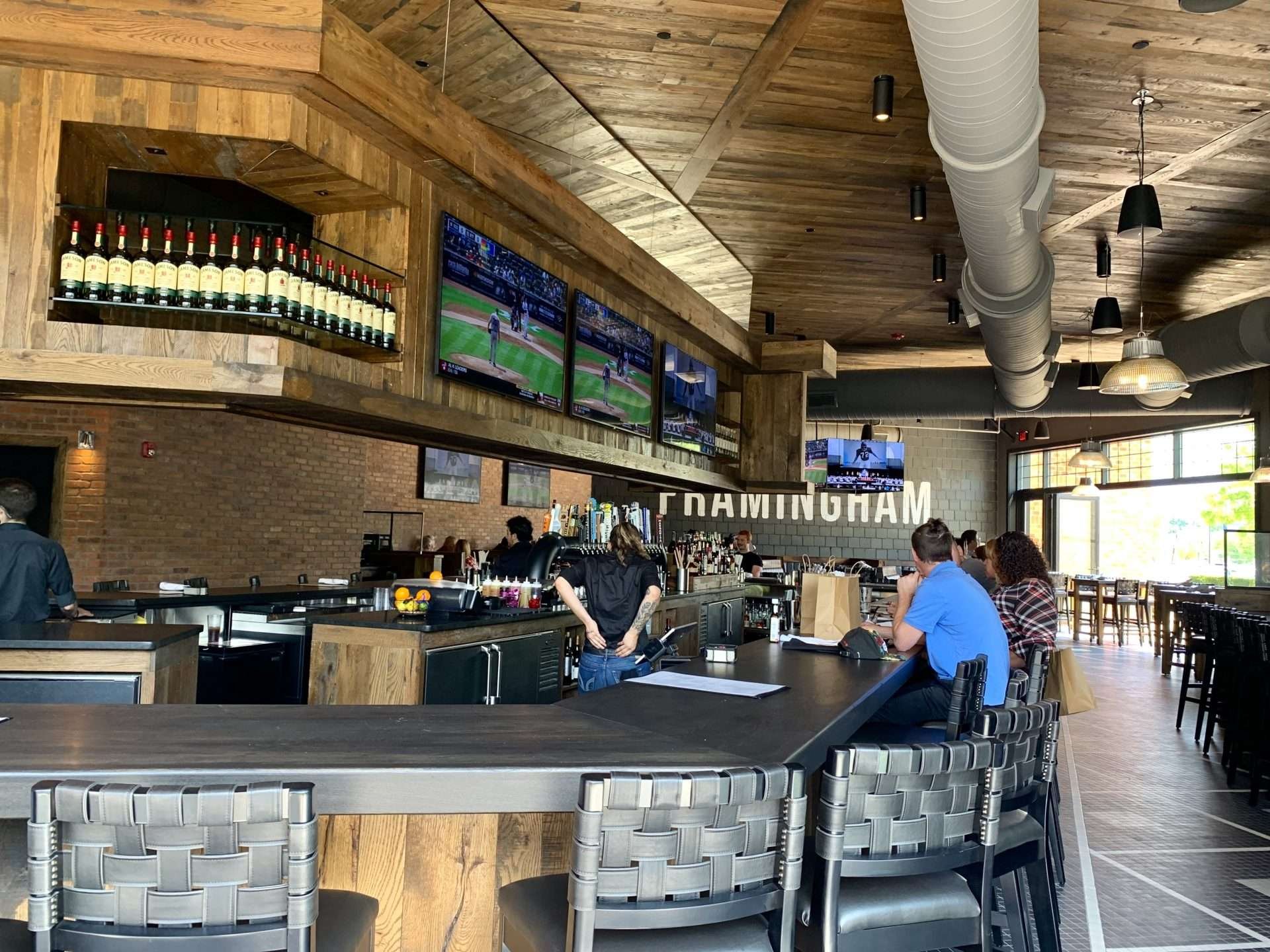
Hearth kitchens in the American independent dining category typically run warm rather than formal: exposed wood, the ambient sound of a working fire, and a kitchen that functions as part of the dining room rather than hidden behind it. In Framingham, that translates to a neighborhood-scale room where the cooking is visible and the pace is unhurried. Expect a setting oriented around the hearth as a physical centerpiece, not just a menu concept.
Is Provisions Hearth & Kitchen accessible from Boston by public transit?
Framingham sits on the MBTA Framingham/Worcester commuter rail line out of South Station, making it a practical dinner destination from central Boston without a car. Travel time from South Station is roughly 45 to 55 minutes depending on the service. For a hearth-kitchen dinner that does not require a drive into the city, that rail connection makes Framingham a genuinely convenient option for Boston-based diners.
What do people recommend at Provisions Hearth & Kitchen?
Confirmed menu data for Provisions Hearth & Kitchen is not available at publication, so specific dish recommendations cannot be made here. In hearth-kitchen formats generally, the most consistently praised plates are those that most directly express the fire: proteins rested over embers, roasted vegetables with char and smoke, and breads or flatbreads pulled from the wood-fired chamber. Check the venue directly for current menu details.
Comparison Snapshot
| Venue | Cuisine | Price | Awards | Notes |
|---|---|---|---|---|
| Provisions Hearth & KitchenThis venue — the venue you are viewing | New England Inspired American Breakfast | Not listed | Not listed | Not listed |
| Le Bernardin | French Seafood Fine Dining | $300–500 | 3 Michelin Stars · World's 50 Best #13 | French, Seafood |
| Lazy Bear | Modern American Tasting Menu | Not listed | 2 Michelin Stars · World's 50 Best #25 | Progressive American, Contemporary |
| Alinea | Avant-Garde Molecular Gastronomy | $300–500 | 2 Michelin Stars · World's 50 Best #37 | Progressive American, Creative |
| Atelier Crenn | Contemporary French Fine Dining | $300–500 | 3 Michelin Stars · World's 50 Best #44 | Modern French, Contemporary |
| Benu | Modern Asian Fusion Fine Dining | $150–200 | 3 Michelin Stars · World's 50 Best #33 | French - Chinese, Asian |
Continue exploring
More in Framingham
Restaurants in Framingham
Browse all →
Details
- Cozy
- Brunch
- Hotel Restaurant
- A La Carte
Warm and hospitable morning gathering place with thoughtful service.