In Ravenna's centro storico, Profumo di Piadina 'Laboratorio del Palato' on Via Cairoli makes the region's most democratic flatbread its entire focus. The piadina romagnola, thin, lard-enriched dough cooked on a terracotta teglia, is sourced and assembled with the seriousness this Emilia-Romagna staple deserves. For visitors tracing the city's Byzantine mosaics, it offers an equally instructive lesson in how local ingredient tradition shapes a cuisine.
Pearl is the En Primeur Club membership app — saves, bookings, and concierge access live there. Same editors, same standards.
- Address
- Via Cairoli, 24, 48121 Ravenna RA, Italy
- Phone
- +393332928079
- Website
- profumodipiadina.it
- Directions
- Get directions
 Saves & bookings on Pearl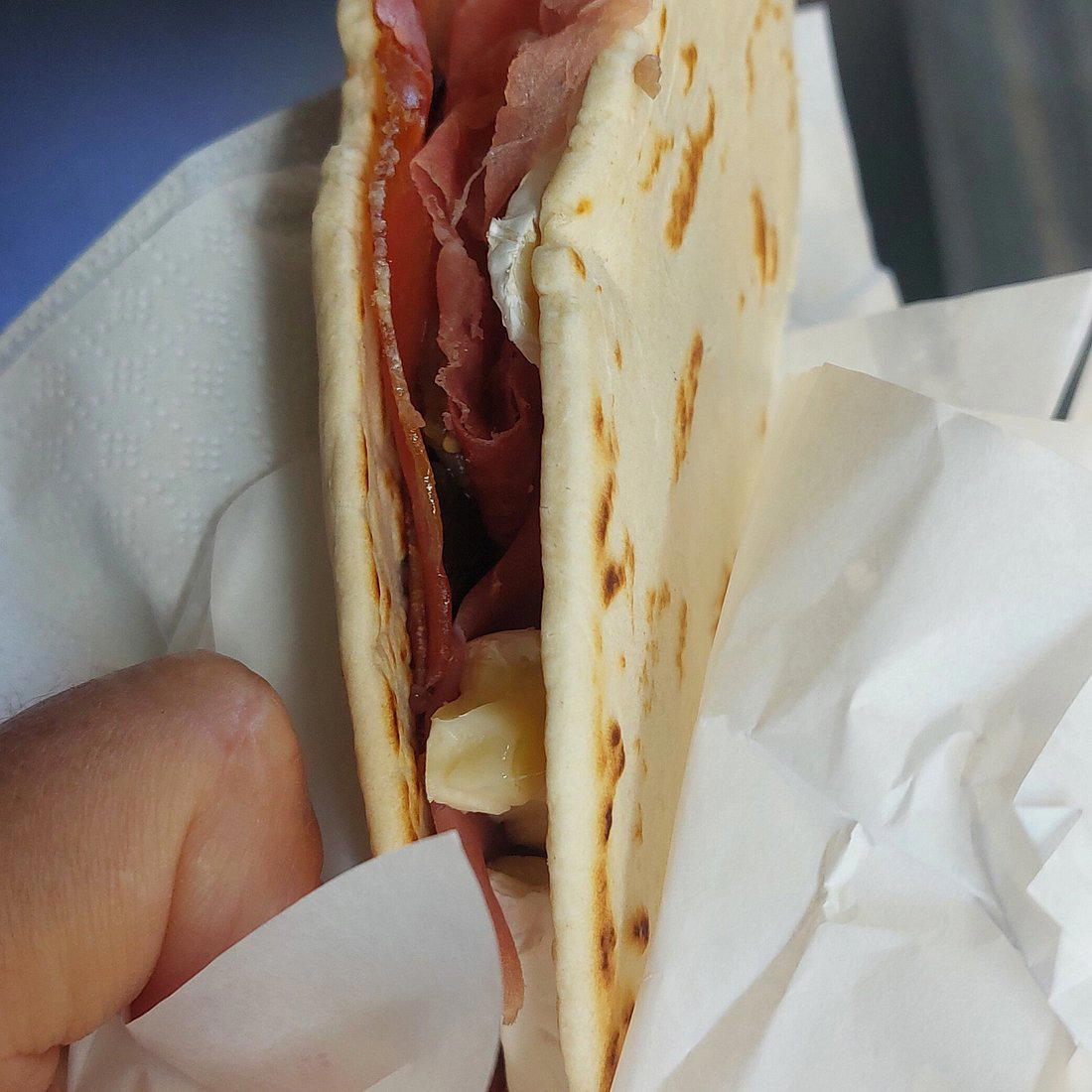
Where Flatbread Becomes the Argument
Approach Via Cairoli in the late morning and the smell arrives before the sign does: warm dough meeting a hot surface, a faint richness from rendered fat, a thread of cured meat cutting through it all. Ravenna's medieval street grid concentrates its daily commerce in tight corridors, and Profumo di Piadina 'Laboratorio del Palato' sits in that pedestrian rhythm, drawing locals on lunch breaks and visitors who have spent the morning in the Basilica di San Vitale and need something grounding before the Mausoleo di Galla Placidia.
The name signals intent. 'Laboratorio del Palato', laboratory of the palate, positions this as a place where the piadina is not incidental but studied. In a region that takes its flatbread as seriously as it takes its ragù, that framing is not pretension; it is a declaration of category.
The Piadina Romagnola in Context
To understand what this kind of establishment offers, it helps to understand what the piadina romagnola actually is and why it divides Emilia-Romagna the way baguette quality divides Paris bakeries. The flatbread has a firmly documented place in Ravenna's food culture and in the broader Romagna tradition, distinct from the thinner, crisper versions made closer to the Adriatic coast and the thicker, doughier rounds found inland toward Forlì. The Ravenna iteration tends to sit in the middle register: pliable enough to fold without cracking, substantial enough to carry a full filling.
The ingredient logic of a serious piadina operation is compressed but exacting. The dough requires lard (or in some contemporary versions, olive oil, which produces a noticeably different texture), fine flour, salt, and water or milk. The ratio and the resting time determine whether the result is supple or dense. The cooking surface, traditionally a flat terracotta teglia, now sometimes a steel plate, contributes a dry, lightly spotted exterior that no oven replication achieves. A venue that calls itself a 'laboratorio' is making a claim about that process: that the sourcing of fat, the milling of flour, and the management of heat are points of craft rather than production shortcuts.
This connects to a broader pattern in Italian regional food, where particularly compelling eating often happens not at the tasting-menu tier occupied by Osteria Francescana in Modena or Le Calandre in Rubano, but at the street and counter level where a single product is made with accumulated local knowledge. The piadina functions here the way a tagliere of salumi might at a serious Bolognese enoteca: as the lens through which sourcing philosophy becomes edible.
Filling Logic and Ingredient Sourcing
Ravenna sits at the eastern edge of Emilia-Romagna, close enough to the Adriatic that fish and salt-cured products from the coast appear alongside the cured meats and soft cheeses that define the inland tradition. A piadina operation working within that geography has access to Mora Romagnola salumi, squacquerone (the region's fresh, spreadable cow's-milk cheese, with a mild acidity that cuts through fat), piadina-ready crescioni filled with erbe di campo, and the wild greens that appear on market stalls from March through June.
Squacquerone in particular is worth noting as a sourcing reference point. The cheese is IGP-protected, produced within a specific Emilia-Romagna zone, and highly perishable, it travels poorly and is rarely found outside the region in recognisable form. A piadina filled with squacquerone and rucola is not a generic cheese-and-salad combination; it is a product of specific geography, and a venue that sources it properly is making a decision about provenance that most casual food stops in the same street do not make.
For a broader read of Ravenna's more formal dining options, Antica Trattoria al Gallo 1909 represents the city's long-form Italian trattoria tradition, while L'Acciuga handles Adriatic seafood with a sharper contemporary focus and Osteria del Tempo Perso occupies the Italian contemporary register. Profumo di Piadina sits outside all three of those categories: it is a single-product specialist, closer in logic to a serious pizzeria than to any of those full-menu operations.
Ravenna's Broader Food Geography
Ravenna is not Italy's most discussed food city. The attention in Emilia-Romagna concentrates on Bologna and Modena, with the latter now anchored by global recognition for its fine-dining scene in ways that have reshaped tourism patterns across the region. The Adriatic coast draws visitors for seafood, Uliassi in Senigallia operates two hours south and demonstrates what the coastal ingredient set can become in high-technique hands. Ravenna's own culinary identity remains quieter, organised more around Byzantine cultural tourism than around any food-specific reputation.
That relative quietness is precisely what makes a focused local producer like Profumo di Piadina worth noting. Cities with lower food tourism density tend to support ingredient-forward street food more reliably, because the customer base is primarily local and locals have reference points for quality. A piadina that fails the squacquerone test or produces a teglia-cooked result that could have come off a gas burner will lose repeat business fast in a city where the population has grown up eating the product. The standard is set by lived knowledge, not guidebook expectation.
Visitors making the wider Emilia-Romagna circuit, which might include fine-dining stops at Dal Pescatore in Runate or ambitious contemporary Italian in the north at Enrico Bartolini in Milan, often find that particularly instructive regional eating happens at the opposite scale: a counter, a single product, an ingredient sourced within thirty kilometres. That is the scale at which Profumo di Piadina operates.
Planning a Visit
Via Cairoli, 24 places the venue in Ravenna's central historic district, walkable from the major Byzantine monument sites. Lunch hours are the practical window for a stop of this type in Italian cities, midday to mid-afternoon covers the main service period for counter piadina operations. The dynamic is queue, order, and eat. This is daytime food, leading absorbed standing or on a nearby bench in the centro storico. Budget for a price point around $8 per person, comfortably below the €€ tier that defines Ravenna's sit-down trattorie.
For context on what the wider Italian fine-dining circuit looks like at the other end of the cost and format spectrum, EP Club covers properties from Enoteca Pinchiorri in Florence to Piazza Duomo in Alba, Reale in Castel di Sangro, Atelier Moessmer Norbert Niederkofler in Brunico, Quattro Passi in Marina del Cantone, Da Vittorio in Brusaporto, Casa Perbellini 12 Apostoli in Verona, and internationally at Le Bernardin in New York City and Atomix in New York City.
Fast Comparison
Comparable venues nearby, for context on price, style, and recognition.
| Venue | Cuisine | Price | Awards | Notes |
|---|---|---|---|---|
| Profumo di Piadina "Laboratorio del Palato"This venue — the venue you are viewing | Traditional Romagnola Piadine | $ | Not listed | Not listed |
| Antica Trattoria al Gallo 1909 | Traditional Emilia-Romagna Trattoria | $$$ | Michelin Plate | San Biagio |
| L'Acciuga | Modern Italian Seafood Osteria | $$ | Michelin Plate | :null |
| Osteria del Tempo Perso | Italian Seafood Trattoria | $$ | Michelin Plate | historic centre |
| Gelateria 5 Terre | Artisanal Italian Gelato | $ | Not listed | Manarola |
| Ino | Tuscan Artisanal Panini | $ | Not listed | San Niccolo |
Continue exploring
More in Ravenna
Restaurants in Ravenna
Browse all →
Bars in Ravenna
Browse all →
Hotels in Ravenna
Browse all →

At a Glance
- Rustic
- Well Known
- Casual Hangout
- Solo
- Open Kitchen
- Standalone
- Beer Program
- Local Sourcing
- Organic
Current opening hours
- Monday
- 11 AM–3 PM
- Tuesday
- 11 AM–3 PM
- Wednesday
- 11 AM–3 PM
- Thursday
- 11 AM–3 PM
- Friday
- 11 AM–3 PM
- Saturday
- 11 AM–3 PM
- Sunday
- Closed
Hours can change for holidays and private events. Last verified .
Casual, warm, and welcoming street food atmosphere with a focus on quality craftsmanship and authentic regional flavors.