
Michelin Plate
Our verdict
A fish-forward restaurant on one of Frankfurt's most prosperous residential streets, PEYSK takes its name from a Proto-Indo-European root meaning "fish" and builds its menu around seafood shaped by the chef-patron's time in Singapore and Japan. Dishes like hamachi with wasabi and kosho sit alongside a four-or-five-course tasting menu, with terrace seating available through summer. It occupies a distinct position in the Westend's dining scene.

Pearl is the En Primeur Club membership app — saves, bookings, and concierge access live there. Same editors, same standards.
The menu
What to order
- Hamachi with wasabi and kosho
- Octopus with mussel, curry, coconut and chilli
- Scallops
- Cod
A Quiet Address With a Specific Culinary Argument
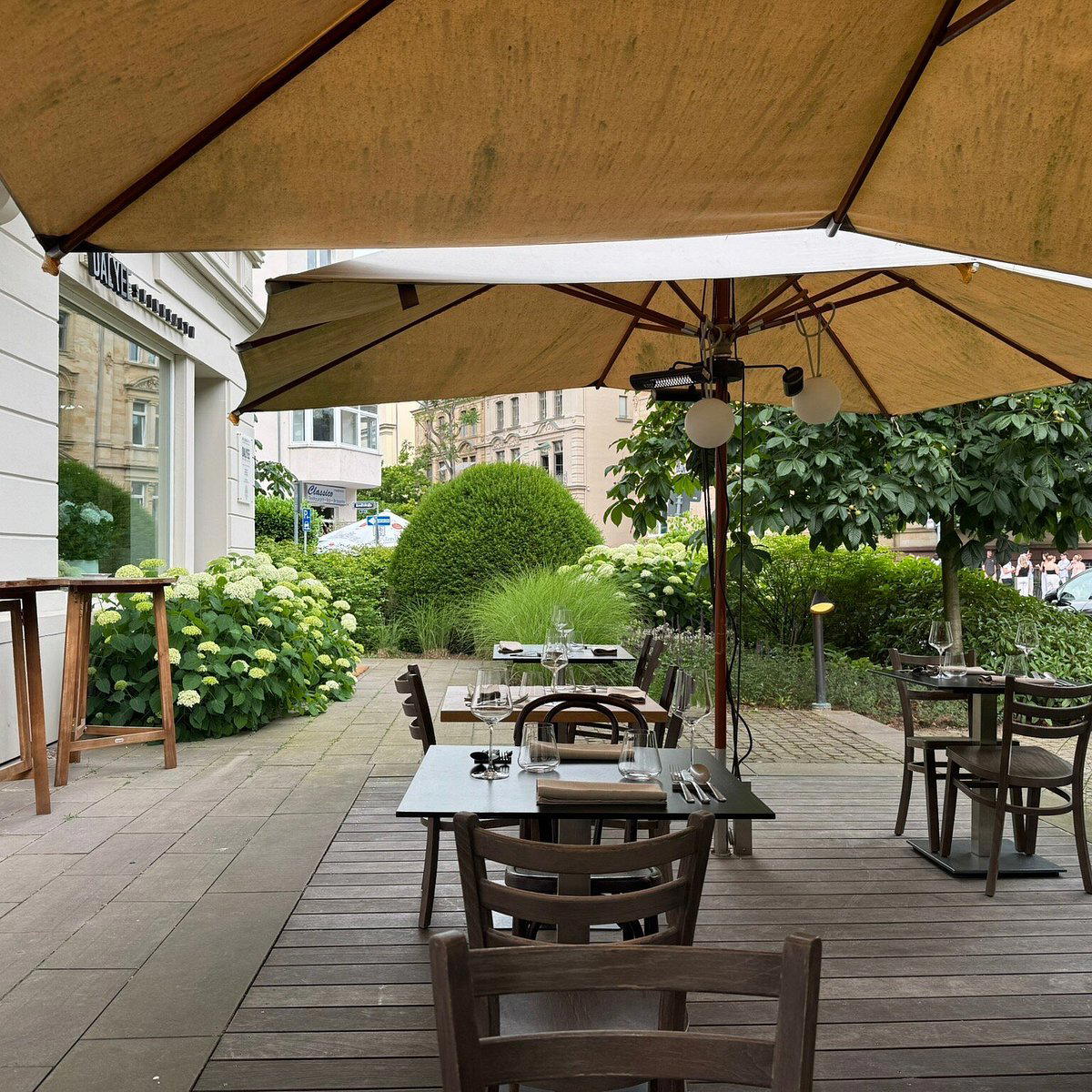
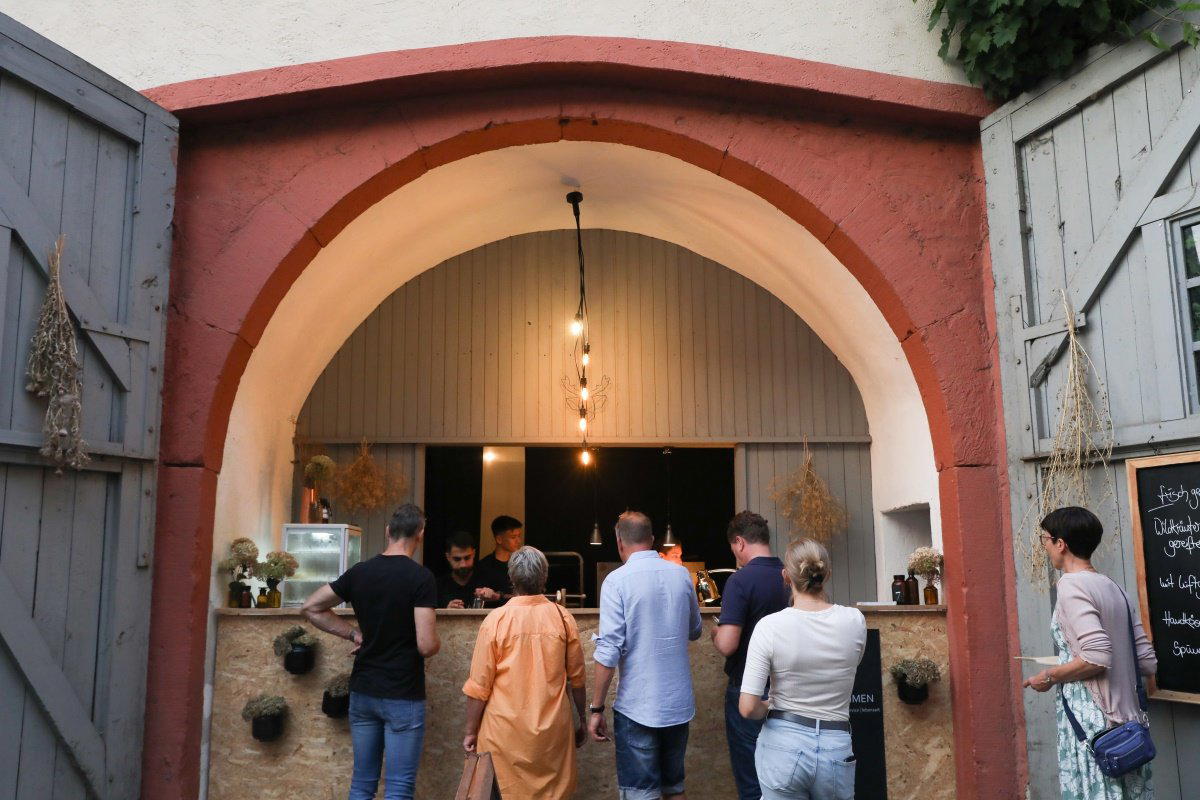
Westendstraße runs through one of Frankfurt's most prosperous residential quarters, lined with late-nineteenth-century townhouses and a density of established restaurants that reflects the neighbourhood's appetite for considered dining rather than passing trade. It is not the city's most theatrical dining corridor, and that restraint suits PEYSK. The restaurant announces itself without fanfare, its summer terrace set in the shade in front of the building: a quiet, composed entry point that signals what follows inside. Frankfurt's dining scene tends to get filed under finance-district formality, but the Westend has its own register, closer to neighbourhood permanence than corporate occasion. PEYSK fits that register precisely.
The Cultural Logic of a Seafood-Centred Kitchen
The restaurant's name is not a casual choice. Derived from a Proto-Indo-European root meaning "fish," it sets an expectation that the kitchen honours without equivocation: the menu is built on fish and seafood, with the cultural influences that define its character drawn from the chef-patron's time in Asia, specifically Singapore and Japan. This is worth pausing on, because it places PEYSK in a particular culinary tradition that is worth understanding as context for the food itself.
Japanese technique, particularly in the handling of raw and lightly cured fish, has become one of the more productive cross-cultural transfers in European fine dining over the past two decades. The influence arrives not as pastiche but as precision: an attention to fish temperature, texture, and cut that European kitchens have absorbed selectively. Singapore adds a different register entirely, one of layered spicing, coconut-based richness, and the kind of curry-inflected saucing that sits at the intersection of Malay, Chinese, and South Indian traditions. When both influences appear in the same kitchen, the risk is incoherence. The evidence at PEYSK suggests the opposite: dishes described as clearly structured and harmonious in taste, with combinations that read as considered rather than assembled.
Dishes like hamachi with wasabi, kosho, and radish sit squarely in the Japanese-influenced European seafood idiom that has defined a certain tier of ambitious cooking in Germany and beyond. Kosho, the fermented Japanese citrus and chilli paste, has become a marker of technical seriousness in kitchens that use it well, its intensity requiring careful calibration against delicate fish. The octopus preparation, built around mussel, curry, coconut, and chilli with egg, is a more overtly Southeast Asian construction, its richness balanced by the saline depth of shellfish. These are not separate sections of a menu hedging its identity; they are two coherent points on the same culinary line, both anchored in the treatment of seafood as primary material.
Format and Structure at the Table
PEYSK offers a choice between à la carte and a tasting menu of four or five courses, a format that places it in the mid-tier of Frankfurt's serious dining options. Compared to the fixed multi-course commitments at restaurants like Lafleur, where the tasting menu format is near-total, or the classic French rigour of Erno's Bistro, PEYSK's dual-format approach allows a degree of flexibility that suits both the neighbourhood context and the style of food. Smaller plates, including oysters and sardines, function as openers or supplements rather than as a separate small-plates programme, which keeps the structure clear.
The selection varies, which in practice means the menu responds to availability, a logical disposition for a kitchen built around fish and seafood. Seasonal and market-driven menus are more demanding to execute consistently, but they also tend to produce food that reflects actual conditions rather than a static formula. For a restaurant in which the primary ingredient is this perishable and this varied, that responsiveness is appropriate rather than merely fashionable.
Germany's seafood-forward fine dining tier is not crowded. When compared against the broader map of ambitious German restaurants, from Aqua in Wolfsburg to JAN in Munich, most operate in frameworks where meat and game carry significant weight on the menu. Restaurants that centre fish and seafood as the primary creative material occupy a smaller cohort. Internationally, the tradition runs deep at places like Le Bernardin in New York City, where seafood exclusivity has defined a benchmark for decades. PEYSK operates at a different scale and register, but it shares that commitment to fish as the structural premise of the kitchen rather than one option among many.
The Westend Table in Frankfurt's Dining Ecology
Frankfurt's dining offer is broader than its reputation for banking lunches suggests. The Westend in particular supports a range of serious restaurants at different price points and cultural orientations. Carmelo Greco anchors the Italian end of the neighbourhood with precision and consistency. bidlabu represents a farm-to-table bistro approach at a more accessible price. MAIN TOWER Restaurant and Lounge operates with Asian influences at a different address and altitude. In that context, PEYSK fills a gap that was genuinely open: a seafood-centred kitchen with a non-European cultural framework embedded in a residential neighbourhood rather than a hotel or landmark building.
The summer terrace deserves specific mention. In a city where outdoor dining is seasonal and therefore valued, a quiet shaded terrace on a relatively calm stretch of the Westend is a practical asset. Summer bookings at well-regarded Frankfurt restaurants tend to compress, particularly for outside tables, so advance planning for terrace seating is worth factoring into any visit. The indoor space, by contrast, operates year-round without the seasonal variable, which gives the restaurant a stable rhythm that pure summer-terrace venues lack.
Planning a Visit
PEYSK is at Westendstraße 73 in Frankfurt's Westend district, accessible by U-Bahn to Westend station. The tasting menu runs to four or five courses, with à la carte available alongside. Smaller plates including oysters and sardines provide entry points for lighter appetite or supplementary ordering. Summer terrace availability makes timing a consideration for those specifically seeking outdoor seating. For broader Frankfurt context, see our full Frankfurt restaurant guide, hotels guide, bars guide, wineries guide, and experiences guide.
Elsewhere in Germany, those drawn to similarly specific culinary propositions might consider Schwarzwaldstube in Baiersbronn, Vendôme in Bergisch Gladbach, CODA Dessert Dining in Berlin, or ES:SENZ in Grassau. For a different expression of Asian-influenced seafood in a fine dining context internationally, Emeril's in New Orleans offers a useful point of reference for how seafood-focused kitchens absorb non-European technique.
Frequently asked questions
Is PEYSK child-friendly?
PEYSK's format, a tasting menu built around fish and seafood with Asian spicing including wasabi, curry, and chilli, is better suited to adults with an appetite for considered, course-led dining. Younger diners or those with selective palates may find the menu's narrow focus limiting. The à la carte option, which includes oysters and sardines alongside the main dishes, offers slightly more flexibility.
What kind of setting is PEYSK?
PEYSK sits at Westendstraße 73 in Frankfurt's Westend, a prosperous residential quarter of late-nineteenth-century townhouses. The indoor room operates year-round, and in summer a terrace in front of the building offers shaded, quiet outdoor seating. The address feels residential rather than commercial, which shapes the atmosphere considerably.
What kind of recognition has PEYSK received?
PEYSK has received recognition including: The name of this restaurant in the well-heeled Westend district is a Proto-Indo-European word meaning "fish", so it will come as no surprise that the cuisine is fish- and seafood-driven. The chef-patron spent time in Asia (including Singapo….
What's the best thing to order at PEYSK?
The four- or five-course tasting menu gives the clearest view of the kitchen's range, connecting the Asian-influenced dishes with smaller plates such as oysters or sardines in a logical sequence. Those who prefer flexibility can order à la carte, though the tasting menu more coherently reflects the chef-patron's culinary argument. Either way, the fish and seafood dishes are the point of the visit.
What's PEYSK's location?
PEYSK is located at Westendstraße 73, Frankfurt on the Main.
Can I walk in to PEYSK?
No booking information is publicly confirmed, but a specific, fish-forward restaurant of this character in a well-regarded Frankfurt neighbourhood is unlikely to hold many unreserved covers on any given evening. Contacting the restaurant directly in advance is advisable, particularly if visiting during summer when the terrace adds to demand.
What is PEYSK known for?
PEYSK is a fish- and seafood-driven restaurant whose name derives from a Proto-Indo-European word for fish, signalling the kitchen's focus from the outset. The chef-patron trained and cooked across Asia, including Singapore and Japan, and that background surfaces in dishes such as hamachi with wasabi and kosho, and octopus with curry, coconut, and chilli. The cooking is structured and deliberate, with clear flavour logic rather than fusion for its own sake.
Price and Positioning
Comparable venues nearby, for context on price, style, and recognition.
| Venue | Cuisine | Price | Awards | Notes |
|---|---|---|---|---|
| PEYSKThis venue — the venue you are viewing | Modern Asian-Influenced Seafood | $50–100 | Michelin Plate | Not listed |
| Carte blanche | Modern German Seasonal Tasting Menu | $100–150 | Michelin Plate | Nordend-Ost, Modern German Seasonal Tasting Menu |
| RAUSCH | Modern German Fine Dining | Not listed | 2 Michelin Stars | Westend, Modern German Fine Dining |
| l'Ecume | Modern French Fine Dining | Not listed | Michelin Plate | Nordend-Ost, Modern French Fine Dining |
| Zenzakan | Pan-Asian Fusion with Robata Grill | $100–150 | Michelin Plate | Westend-Süd, Pan-Asian Fusion with Robata Grill |
| The Sakai | Modern Japanese Omakase | $100–150 | Michelin Plate | Frankfurt-Süd, Modern Japanese Omakase |
Recognition history
Dated appearances from independent guides and award organizations, with the underlying list record or original source where available.
Michelin Plate
Michelin · 2026 Michelin Plate
Continue exploring
More in Frankfurt
Restaurants in Frankfurt
All restaurants in Frankfurt →
Bars in Frankfurt
All bars in Frankfurt →

Hotels in Frankfurt
All hotels in Frankfurt →

PEYSK
The wine
- Wine program
- Curated wine list
- Sommelier-led
- Natural wine
Details
- Elegant
- Intimate
- Sophisticated
- Trendy
- Date Night
- Special Occasion
- Celebration
- Terrace
- Standalone
- Natural Wine
- Sommelier Led
- Sustainable Seafood
- Tasting Menu
- A La Carte
- Natural Wine
- White Wine
- Red Wine
- Pescatarian Friendly
Current opening hours
- Monday
- Closed
- Tuesday
- Closed
- Wednesday
- 7–10:30 PM
- Thursday
- 12–2 PM, 7–11:30 PM
- Friday
- 12–2 PM, 7–11:30 PM
- Saturday
- 7–11:30 PM
- Sunday
- 12–4 PM
Hours can change for holidays and private events. Last verified .
Elegant and cozy with dimmed lighting; summer terrace seating offers a pleasant, quiet spot in the shade of the well-heeled Westend district.