Petty Fours

Michelin Plate
Our verdict
Petty Fours occupies a quietly ambitious corner of Truro's dining scene, positioned in the shadow of the cathedral on Old Bridge Street. The kitchen runs an amuse-bouche-led format with a concise seasonal menu, linen-laid tables, and cooking that punches well above what the compact room might suggest. For Cornwall's county town, it represents a serious commitment to technique-led, ingredient-focused cooking.

Pearl is the En Primeur Club membership app, where members save venues, book tables and use the concierge.
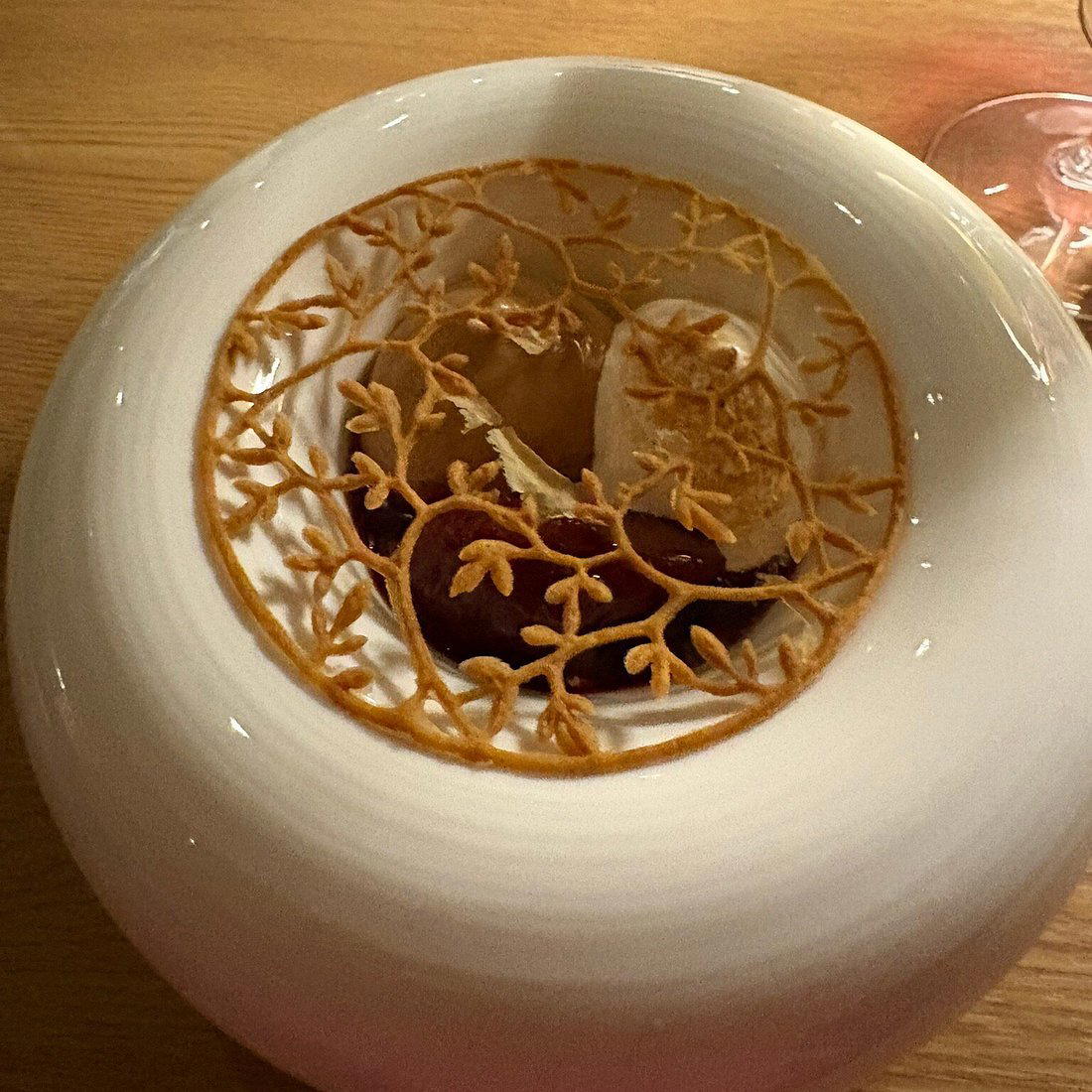
The menu
What to order
- Scallops
- Wild_mushroom_risotto
- Fillet_steak
Cathedral City, Serious Plate
Truro sits at an interesting juncture in Cornwall's evolving food story. The county has long drawn attention through its coastal produce, shellfish from the Helford, day-boat catches landed at Newlyn, salt marsh lamb from the peninsula's edge, yet the county town itself has historically played second fiddle to the destination restaurants clustered around harbour villages and clifftop hotels. That picture has been shifting. A small number of restaurants in central Truro have started treating the city's proximity to that produce as an opportunity rather than background noise, building menus around what is available at short range rather than what looks good on a standing menu. Petty Fours, on Old Bridge Street within clear sight of Truro Cathedral's three spires, belongs to that shift.
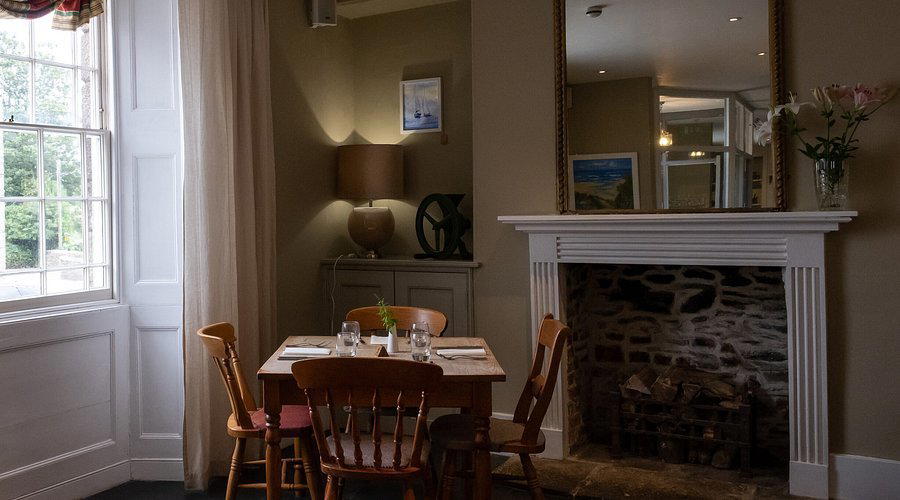
The room signals intent before a plate arrives. Linen-laid tables and chess piece artwork referencing the Petty family's affection for board games give the space a considered, slightly playful character that sits at a remove from both the scrubbed-pine-and-chalkboard aesthetic of casual Cornish dining and the chandeliered formality of country house hotels. It is a room that knows what it is, and that clarity carries through into the cooking.
The Architecture of the Menu
The format here follows a progression that has become a reliable marker of ambition in British fine dining: snacks and an amuse-bouche anchor the opening, before the main menu deploys a deliberately concise set of choices. This structure is not incidental. A tight menu is, in ingredient terms, a discipline. It requires the kitchen to source with precision rather than variety, to know that every component on a short list will face scrutiny, and to change with the market rather than rest on a fixed blueprint.
Cornwall is well-suited to this kind of cooking. The county's fishing fleets and small-scale growers operate on a short supply chain to the restaurants that choose to use them, and chefs who commit to seasonal variation rather than year-round consistency can draw on a larder that changes meaningfully across the year. Scallops, for example, feature on the menu here with a sauce that rotates rather than fixes, a combination described as roe and 'nduja lands as a smooth, punchy emulsion that uses the scallop's own offal as a bridge between the sweetness of the meat and the heat of the cured pork. That kind of thinking, using the whole animal and building sauces from internal logic rather than classical template, reflects a broader movement in British cooking that prioritises coherence over convention.
For broader context on how British restaurants at this level approach ingredient sourcing and seasonal menus, the approaches taken at Moor Hall in Aughton, L'Enclume in Cartmel, and Gidleigh Park in Chagford offer useful reference points within the same broader tradition of regionally grounded fine dining. The South West has produced some of England's most produce-committed kitchens, and Petty Fours operates within that lineage at the county town level.
Where Cornwall's Larder Meets the Plate
The ingredient story in Cornwall is worth understanding on its own terms. The county's position at England's southwestern tip, surrounded on three sides by the Atlantic and the Channel, creates a microclimate that extends growing seasons and a coastline that produces shellfish of consistent quality. Oysters, crab, lobster, and various species of flatfish pass through Cornish ports in volumes that support serious restaurant cooking at multiple price points. What distinguishes the more ambitious end of that spectrum is not access to the produce, proximity is shared, but what the kitchen does with it.
A rotating sauce on a scallop dish is one signal. It indicates a kitchen tracking what is available and interesting rather than holding to a fixed specification. The amuse-bouche format serves a similar editorial function: small, technique-intensive bites at the start of a meal are where many British kitchens now do their most expressive work, introducing ingredients and ideas that the main menu develops at a different pace. At restaurants like hide and fox in Saltwood or Midsummer House in Cambridge, that opening sequence functions as a statement of sourcing priorities before the formal courses begin. The approach at Petty Fours reads from the same playbook.
Service and Setting in Context
The service at Petty Fours is described as attentive, a term that in the context of a cathedral-city restaurant with linen on the tables means something specific: knowledgeable about the menu, present without hovering, capable of explaining sourcing decisions without reading from a script. That standard is harder to maintain at this scale than it looks from outside. Smaller rooms with ambitious menus require front-of-house staff who can carry detail across every table simultaneously, and in a city like Truro, where the staffing pool is smaller than in London or Bristol, consistent service at this level represents a genuine operational commitment.
The name itself carries a joke that rewards attention. Petits fours are the sweet closing gesture of a formal meal; the name Petty Fours converts that culinary reference into a family portrait, the four Petty brothers whose connection to the kitchen and the project gives the restaurant its identity without centring the room on a single personality. The chess artwork on the walls operates in the same register: personal, specific, but not self-important.
Planning Your Visit
Petty Fours is located at 5 Old Bridge Street in central Truro, close enough to the cathedral that orientation is direct from most arrival points in the city. The menu format, running from snacks through amuse-bouche to a concise main selection, positions the meal at the longer end of the evening dining spectrum rather than as a quick midweek dinner. Book ahead; a room of this ambition and this scale in a city of Truro's size fills on reputation, and the concise menu means the kitchen is not running the kind of volume that absorbs walk-ins. For those exploring beyond the restaurant itself, our full Truro hotels guide covers where to stay nearby, and our full Truro bars guide maps the options for a drink before or after. The wider picture of where Petty Fours sits in the city's dining offer is covered in our full Truro restaurants guide.
For reference alongside comparable British fine dining in regional settings, Hand and Flowers in Marlow, Restaurant Sat Bains in Nottingham, and Opheem in Birmingham each illustrate how serious kitchens outside London have built strong reputations on regional produce and technique-led cooking. Petty Fours operates at that same register, within a county whose larder is, by most measures, among England's most compelling. For context on how ambitious fine dining looks at the international level, Le Bernardin in New York City and Waterside Inn in Bray set the formal upper bracket against which technical ambition at any level is informally measured.
Frequently asked questions
Is Petty Fours a family-friendly restaurant?
The format at Petty Fours, snacks, an amuse-bouche, and a concise set of composed courses, is designed for a considered dining pace rather than a casual family meal. Families with older children who appreciate that kind of progression will find it rewarding. Younger children may struggle with the format and quiet room.
Is Petty Fours formal or casual?
Linen-laid tables and attentive service set a clear expectation at Petty Fours: this is a dressed occasion, not a drop-in. The chess piece artwork and the name's backstory (a nod to chef Alfred Petty and his three brothers) give the room personality, so the formality reads as considered rather than stiff.
What distinctions does Petty Fours have?
Petty Fours has received recognition including: Amusingly named after Chef Alfred Petty and his three brothers, this keenly run restaurant sits in the shadow of Truro Cathedral. It’s a smartly designed place with linen-laid tables and a few decorative nods to the Petty boys’ love of boar….
What should I order at Petty Fours?
The scallop course is the one to watch. The kitchen pairs it with a regularly rotating sauce, one documented version uses a smooth roe and 'nduja combination, which signals how the kitchen approaches the wider menu: classical technique, Cornish produce, and enough heat and depth to avoid playing it safe.
What's the address for Petty Fours?
Petty Fours is located at 5 Old Bridge Street, Truro.
Do I need a reservation for Petty Fours?
Given the concise, structured format and a room described as smartly designed rather than sprawling, covers are limited. A restaurant of this type in a cathedral city with linen service rewards advance planning; booking ahead is the more reliable approach than arriving on the night.
What has Petty Fours built its reputation on?
Petty Fours has built its standing on generous, ambitious cooking that goes further than the cathedral-city setting might lead you to expect. The kitchen commits to a full progression from snacks through composed courses, and the attentive service signals that this is not a venue coasting on Cornwall's coastal-produce reputation but actively working within it.
Quick Comparison
Comparable venues nearby, for context on price, style, and recognition.
| Venue | Cuisine | Price | Awards | Notes |
|---|---|---|---|---|
| Petty FoursThis venue (the venue you are viewing) | Modern British Fine Dining | Not listed | Michelin Plate | Not listed |
| Sole Plaice | Traditional British Fish & Chips | $10–20 | Not listed | Truro |
| Barnaby's | Modern British Seafood with Middle Eastern Twists | Not listed | Michelin Plate | Saint Issey |
| Claridge's Bakery | Modern British bakery & café | Not listed | Not listed | Mayfair |
| The Millbrook Inn | Modern British Gastropub with French Influence | $50–100 | Michelin Plate · The Good Food Guide GFG Good | South Pool |
| The Tartan Fox | Modern British Gastropub | $30–50 | Michelin Plate · World's Best Wine Lists Awards WBWL 2-Star | Summercourt |
Recognition history
Dated appearances from independent guides and award organizations, with the underlying list record or original source where available.
Michelin Plate
Michelin
Continue exploring
More in Truro
Restaurants in Truro
All restaurants in Truro →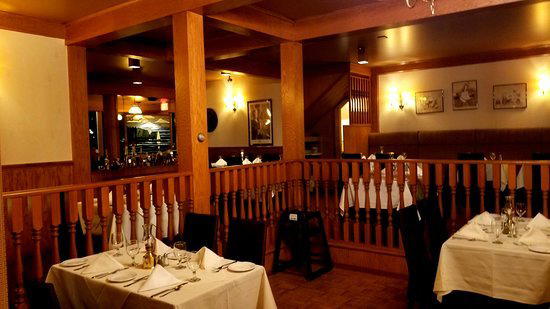
Bars in Truro
Browse all →
Details
- Elegant
- Modern
- Intimate
- Sophisticated
- Date Night
- Special Occasion
- Celebration
- Open Kitchen
- Extensive Wine List
- Local Sourcing
- Tasting Menu
- Set Menu
- A La Carte
Current opening hours
- Monday
- Closed
- Tuesday
- Closed
- Wednesday
- 5–8:30 PM
- Thursday
- 12–2 PM, 5–8:30 PM
- Friday
- 12–2 PM, 5–8:30 PM
- Saturday
- 12–2 PM, 5–8:30 PM
- Sunday
- Closed
Hours can change for holidays and private events. Hours as of .
Elegant yet relaxed atmosphere with smartly designed interior, linen-laid tables, chess-themed artwork, and warm, inviting lighting.